



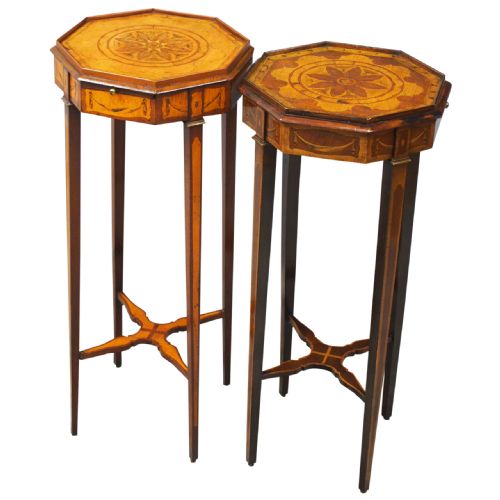


Neoclassical Display Table
A neoclassical display table is a refined surface designed to elevate small treasures, drawing on classical forms to bring architectural order to a room.
Neoclassical Display Table
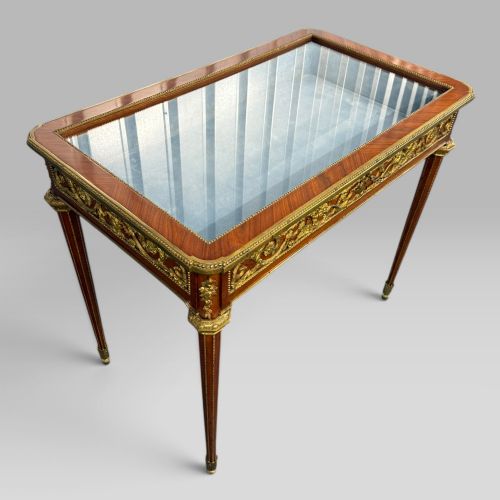
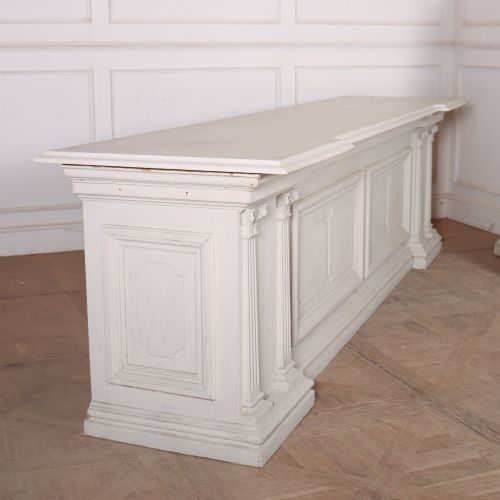
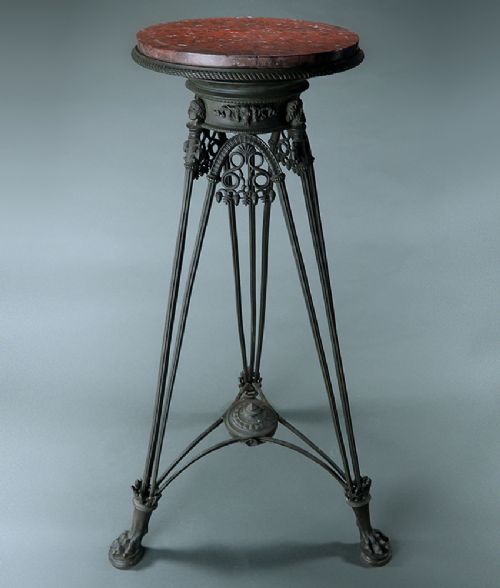
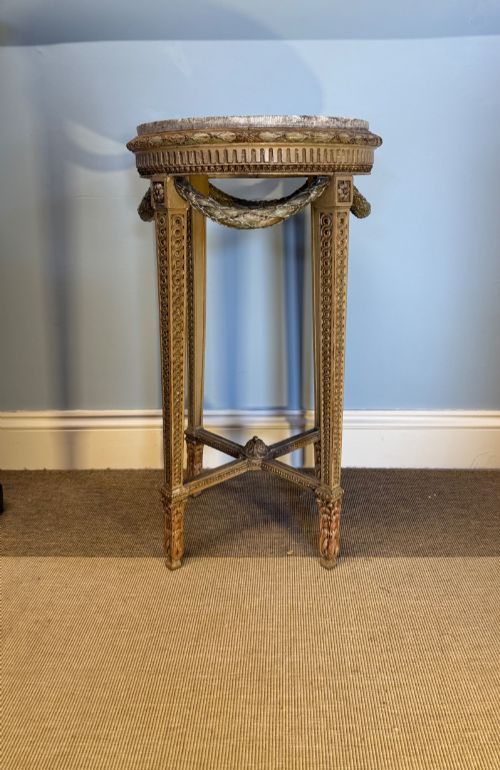
When you search for a neoclassical display table, you encounter furniture built to exhibit objects of curiosity rather than to serve utilitarian functions. These pieces take various forms across this selection, including bijouterie tables with glazed tops, cabinets on stands, pedestals, and occasional tables.
The objects seen here originate across several periods, from the eighteenth century through the nineteenth century to the mid-twentieth century. French styling predominates, particularly Louis XVI Revival and French Empire forms, alongside Sheraton and Edwardian interpretations.
You are most likely to meet glazed vitrines and bijouterie tables framed in mahogany, satinwood, or painted wood, often raised on slender legs. These display surfaces allow light to reach the items placed within while protecting them from dust.
How they were made
Cabinetmakers constructed these tables using dense timbers such as mahogany, satinwood, burr elm, and harewood, frequently applying decorative inlay or painted finishes to the surfaces. Structural frames support glazed panels and heavy marble tops.
Metal ornament defines the neoclassical aesthetic, with ormolu, brass, and silver plating mounted to corners, friezes, and legs. Carved giltwood and alabaster also appear among the decorative elements recorded in the evidence.
Neoclassical Display Table Retail Price Guide 2026
Typical asking prices for neoclassical display table among the pieces listed under this phrase on Sellingantiques today, from the lower quarter to the upper quarter. They describe what is for sale here now, not the wider market.
Listings feature mahogany, marble, glass, satinwood, ormolu, painted wood, brass, and giltwood across multiple centuries.
What varies in quality
Quality rests in the precision of the joinery and the crispness of the applied bronze or ormolu mounts rather than surface ornament alone. Finer examples display meticulous timber selection, such as figured mahogany or intricate marquetry.
The integration of glass panels and the weight of marble tops distinguish sturdier constructions from lighter occasional pieces. The architectural proportion of the legs and the refinement of the carved details dictate the standing of each table.
François Linke
The Neoclassical Display Table Glossary
- Bijouterie table
- A glass-topped display table created specifically for holding small valuable items, medals, or jewellery. These tables typically feature hinged or lift-off lids.
- Ormolu
- Gilded bronze mounts applied to furniture for decorative accent, characteristic of French neoclassical design. This technique provides metallic contrast against dark timbers.
- Guéridon
- A small circular table supported by one or more central columns or legs, often topped with marble. Originating in seventeenth-century France, the form persisted into the nineteenth century.
- Vitrine
- A glass-fronted or glass-topped cabinet designed for the display of porcelain and curiosities. Glazed panels enclose the sides to maximise visibility from multiple angles.
- Inlay
- The technique of embedding contrasting pieces of wood or other materials into a solid surface to form decorative patterns. This ornament appears frequently on eighteenth-century and revival furniture.
Neoclassical Display Table: Frequently Asked Questions
What is a neoclassical display table used for?
These tables provide a secure surface for exhibiting small collectables, ceramics, and personal ornaments under glass. The enclosed design protects delicate items while keeping them visible within a principal room.
Historically, they served as focal points in drawing rooms and boudoirs for displaying the refined tastes of the household. Today, they function similarly in modern interiors to showcase cabinet collections.
How do I identify Louis XVI style?
Louis XVI style relies on straight lines, classical symmetry, and architectural motifs derived from ancient Rome and Greece. You spot this in fluted legs, rectangular frames, and restrained geometric ornament.
In contrast to earlier curving rococo forms, this aesthetic values order, balance, and classical proportion. Ormolu mounts on these pieces often depict floral swags, ribbons, or classical trophies.
Where should I place a display table?
Position your table in a well-lit reception room where natural light enhances the objects placed inside the glass top. Avoid placing timber frames in direct sunlight to prevent fading of sensitive woods like mahogany and satinwood.
Standalone pedestals and gueridon tables suit corners or hallway spaces where vertical display creates height. Ensure the surrounding floor space allows comfortable access to lift-off lids or doors.
How do I care for marble-topped tables?
Marble surfaces require gentle cleaning with a damp cloth and mild soap to avoid dulling the polished finish. Acidic liquids such as wine or citrus juice can etch the stone if left unattended.
Support the stone evenly from underneath if moving the table, as heavy marble tops are brittle. Periodic dusting preserves both the stone and the supporting wooden frame.