

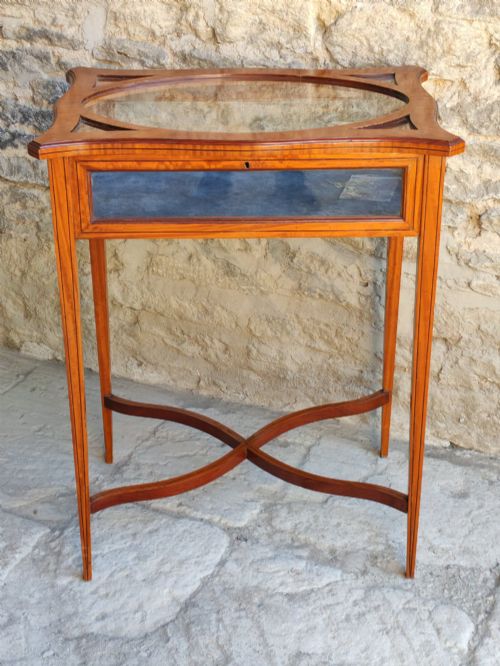


Display Table for Jewellery
These pieces are a display table for jewellery, standing as glazed vitrines designed to showcase small treasures beneath a glass lid.
Display Table for Jewellery
A display table for jewellery takes several distinct shapes across the nineteenth and twentieth centuries, including serpentine, oval, kidney-shaped, and octagonal forms. These pieces function primarily as elevated glass cases to protect precious items while keeping them visible from above.
The selection ranges from Victorian and Edwardian examples to French revival styles drawing upon Louis XV and Louis XVI designs. Makers constructed these cabinets in mahogany, satinwood, kingwood, and rosewood, often mounting them on slender legs suited for drawing rooms and boudoirs.
Materials and construction
Cabinets utilise timber frameworks of mahogany, satinwood, or kingwood, frequently enhanced with marquetry inlay or brass and ormolu mounts. Glazed tops and sides provide complete visibility for the contents housed within.
Interiors typically feature lined platforms using velvet or fabric surfaces to cushion jewellery and small objects. Gilt-bronze and brass mounts frame the glass panels, reflecting the influence of French cabinet-making techniques.
Display Table for Jewellery Retail Price Guide 2026
Typical asking prices for display table for jewellery among the pieces listed under this phrase on Sellingantiques today, from the lower quarter to the upper quarter. They describe what is for sale here now, not the wider market.
Listings feature mahogany, satinwood, kingwood, and rosewood framed with ormolu and brass mounts.
Craftsmanship and detail
Quality rests upon the crispness of the cabinet work, from the tight fit of the glazed lid to the precision of the satinwood inlay or marquetry. Heavier ormolu and gilt-bronze mounts show greater hand-chiselling compared to simpler cast brass borders.
The choice of timber grain also dictates distinction, with highly figured mahogany, burr walnut, and rich kingwood marking out the superior examples. Structural elegance, seen in well-proportioned legs and stable hinges, separates standard production from finer workshop pieces.
François Linke
The Display Table for Jewellery Glossary
- Bijouterie table
- A glazed cabinet table specifically designed to exhibit small valuable items such as jewellery and trinkets under glass. It typically stands on slender legs at a height suitable for seated viewing.
- Ormolu
- Gilded bronze mounts applied to furniture to decorate corners, legs, and borders. The technique originated in France and defines much of the continental revival furniture.
- Vitrine
- A glass-fronted or glass-topped display case used for showing ornaments and precious objects. These range from table-height versions to larger floor-standing cabinets.
- Marquetry
- Decorative woodwork where thin pieces of various veneers are fitted together to form geometric or floral patterns. It appears across the tabletops and surfaces of finer nineteenth-century cabinets.
- Satinwood
- A pale, highly reflective hardwood imported from the tropics and utilised for fine inlay and banding. Cabinet-makers favoured it for its bright contrast against darker timbers like mahogany.
Display Table for Jewellery: Frequently Asked Questions
What is a bijouterie table?
A bijouterie table is a raised glazed case designed to display small precious items, trinkets, and jewellery beneath a glass top.
These pieces allowed owners to curate and show their collections safely in formal rooms without exposing them to dust or handling.
Where were these tables placed?
They typically stood in drawing rooms, boudoirs, or reception spaces where guests could inspect the contents at close range.
Their slender proportions ensured they functioned as both decorative furniture and practical display surfaces in domestic interiors.
How do I care for the velvet lining?
The fabric and velvet interiors require gentle dusting with a soft brush and protection from direct sunlight to prevent fading.
Avoiding moisture is essential to preserve both the textile lining and the underlying timber frame of the display case.
How do I distinguish Edwardian from Victorian examples?
Victorian pieces often feature heavier carved mahogany or rich burr walnut with darker finishes and substantial brass mounts.
Edwardian examples tend to show lighter satinwood inlays, refined marquetry, and a brighter overall aesthetic influenced by eighteenth-century revival styles.