







Curio Display Table
A curio display table lets you curate your most cherished small objects beneath glass, bringing intimate collections right up to eye level.
Curio Display Table
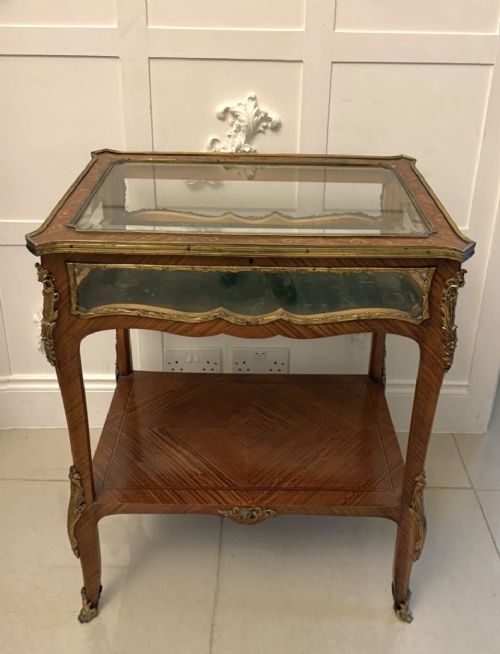
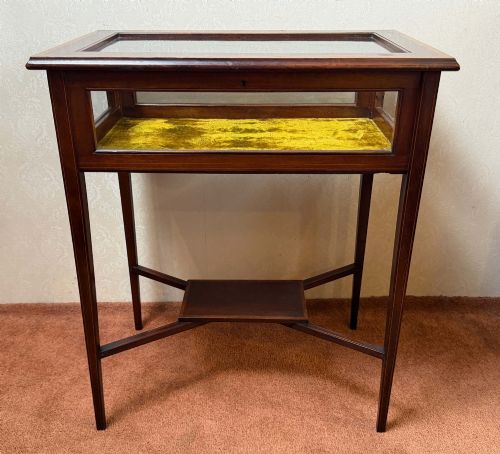
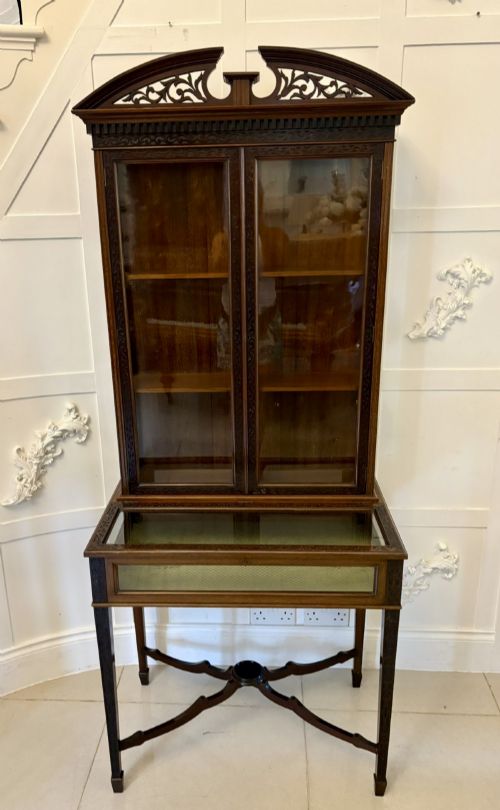
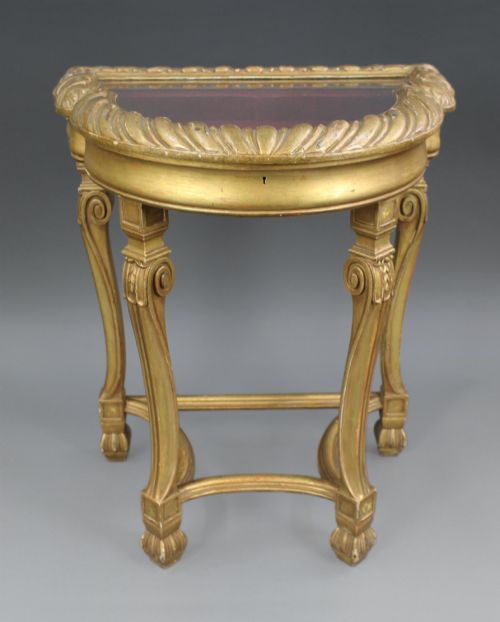
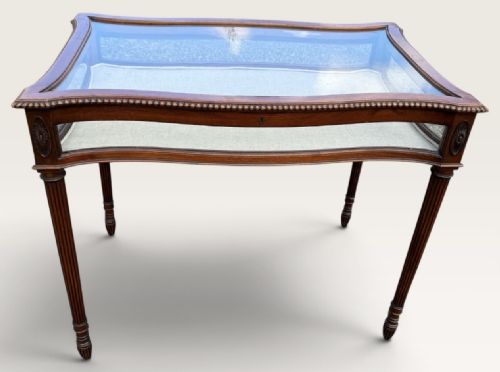
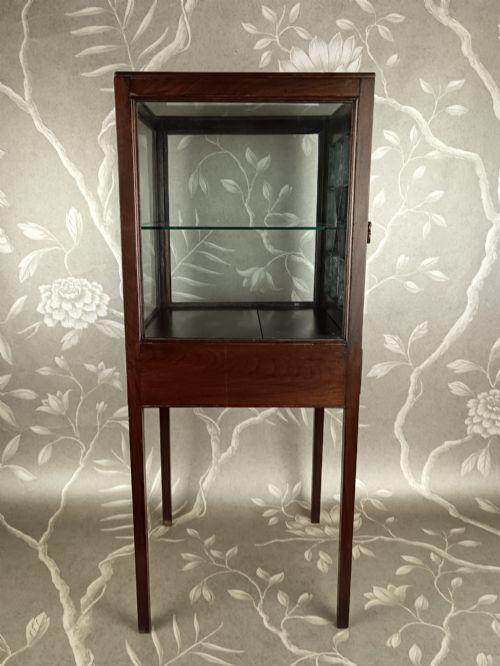
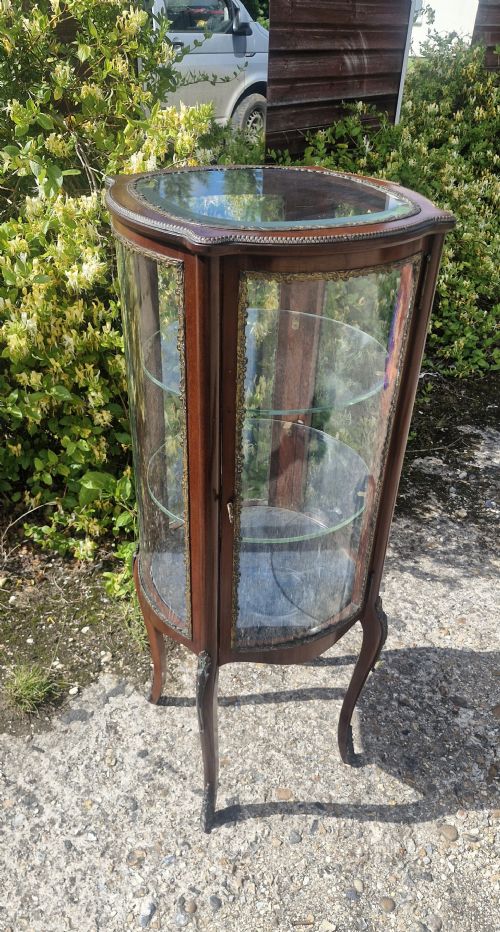
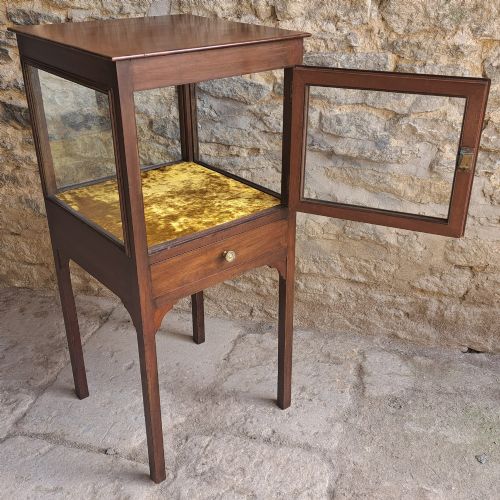
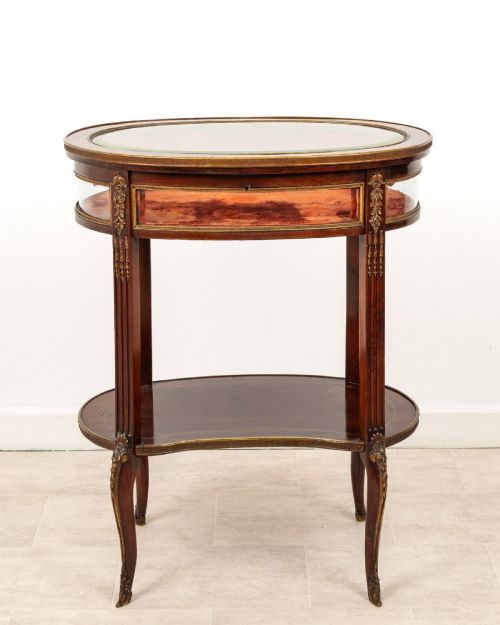
When you search for a curio display table, you are looking at glazed cabinets and vitrines designed specifically to showcase small treasures, jewellery, and collectors' pieces. The selections on this page span the Victorian, Edwardian, and nineteenth-century periods, capturing the height of domestic display culture. These pieces typically take the form of bijouterie tables, serpentine cabinets, and small vitrines raised on slender legs.
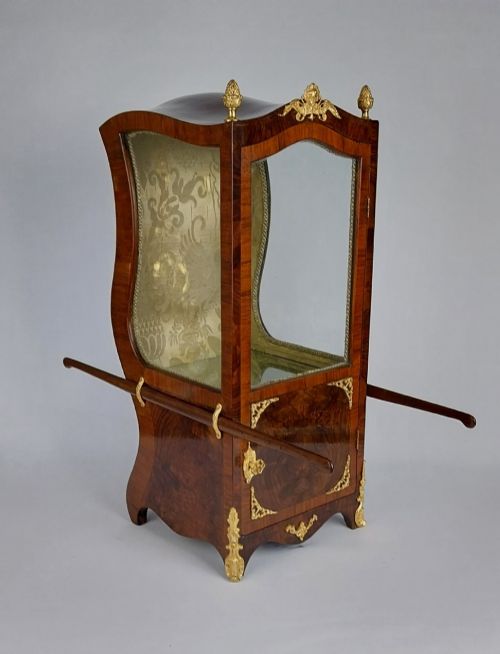
You are most likely to meet mahogany and kingwood structures enhanced with glass panels and fabric-lined interiors. The origins range from standard English cabinet-making to French Louis XV and Louis XVI revival pieces mounted in gilt-bronze or ormolu. Each variation provides a secure, visible surface for objects that deserve more than storage in a drawer.
Materials and construction
Makers built these tables using dense timbers such as mahogany, kingwood, and satinwood, often applying marquetry inlay to enrich the surface. Structural elements rely on precise cabinet-making techniques to support glazed lids and delicate display wells without warping.
Metal mounts in brass, ormolu, and gilt-bronze accent the woodwork, framing the glass panels and protecting vulnerable edges. Interiors are traditionally fitted with velvet, fabric, or silk linings to cushion delicate collectibles and contrast with the exterior timber.
Curio Display Table Retail Price Guide 2026
Typical asking prices for curio display table among the pieces listed under this phrase on Sellingantiques today, from the lower quarter to the upper quarter. They describe what is for sale here now, not the wider market.
Listings feature mahogany, kingwood, and satinwood structures paired with velvet, brass, and gilt-bronze materials.
Distinctions in quality
The division between standard production and the top of the range rests on the ambition of the timber work and the crispness of the bronze mounts. Fine examples feature complex serpentine shapes, intricate satinwood marquetry, and substantial gilt-bronze details rather than plain veneers.
Internal execution also dictates standing, with superior tables offering hand-stitched velvet linings, perfectly fitted glass panes, and robust locking mechanisms. The integration of recognizable maker signatures elevates a piece further, distinguishing standard workshop output from exceptional cabinet-making.
Edwards and Roberts
The Curio Display Table Glossary
- Bijouterie table
- A glass-topped table specifically designed for displaying small valuables, jewellery, and trinkets. These pieces often feature hinged lids and fabric-lined wells.
- Ormolu
- Gilded bronze mounts applied to furniture to accent corners, legs, and glass frames. This technique was widely utilised in French revival pieces.
- Marquetry
- Decorative patterns created by fitting thin pieces of wood veneer into a timber ground. It appears on Edwardian and nineteenth-century examples to form floral or geometric motifs.
- Vitrine
- A glass-fronted or glass-topped cabinet intended for exhibition. The term covers both standing display cases and table-height cabinets.
- Serpentine
- A curved line or shape that bends inward centrally and outward at the ends. This contour gives tables a fluid, undulating profile.
Curio Display Table: Frequently Asked Questions
What is a curio display table used for?
These tables are designed to exhibit small collectibles, coins, medals, and jewellery under a protective glass cover. They lift intimate objects into plain view while keeping them safe from dust and handling.
The glazed top and velvet-lined interior turn the act of storage into a permanent exhibition within a drawing room or study.
How do I date a curio display table?
Dating relies on identifying the prevailing timber choices, mount styles, and structural characteristics recorded across the Victorian and Edwardian periods. Pieces from the nineteenth century often lean towards heavy mahogany and ornate ormolu, while later Edwardian examples frequently feature lighter satinwood marquetry.
Examining the construction methods inside the table and the cut of the glass provides further clues to its era of manufacture.
Are the interiors usually lined?
Most of these tables feature fabric-lined wells, typically using velvet or similar textiles to cushion delicate items. This lining provides a contrasting background that highlights the objects placed inside.
Over time, original fabrics may show fading or wear, which collectors often choose to preserve or replace depending on the piece's condition.
How do French revival styles differ?
French revival pieces draw heavily on Louis XV and Louis XVI aesthetics, incorporating pronounced curves, kingwood veneers, and elaborate gilt-bronze mounts. They tend to emphasise decorative metalwork and serpentine forms more than standard English cabinet designs.
These variations reflect the ongoing nineteenth-century fascination with historical continental furniture styles.