





Glass Display Table
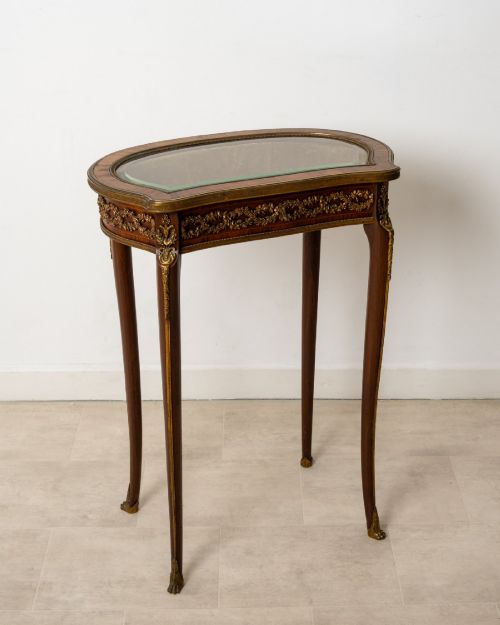
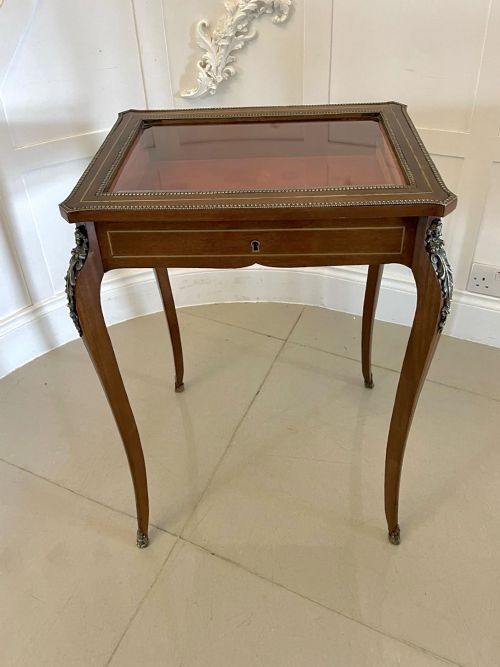
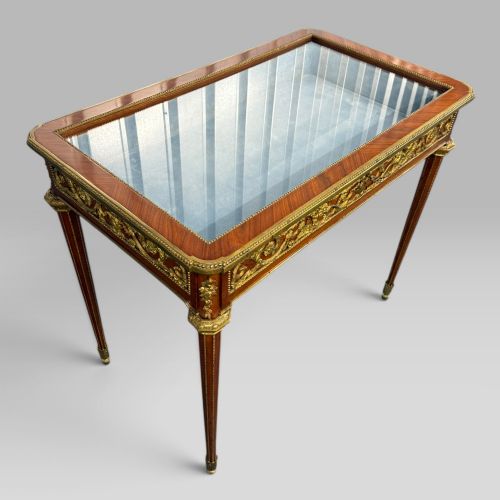
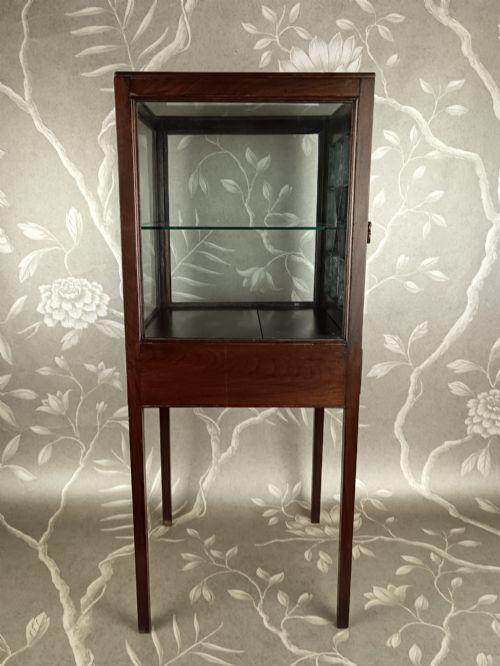
When you search for a glass display table, you are looking at glazed cabinets and vitrines designed to showcase small collections under glass.

Glass Display Table
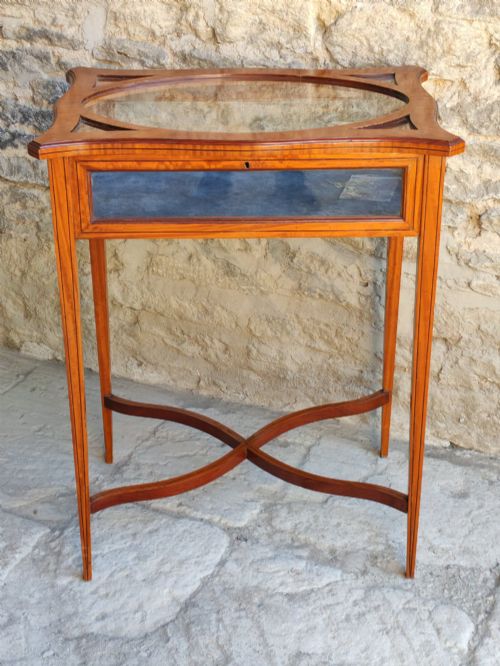
A glass display table bridges the gap between functional furniture and a personal museum case, offering a clear top to examine items from above. You will frequently encounter Edwardian and Victorian examples on this page, alongside earlier Georgian forms and later twentieth-century variations.
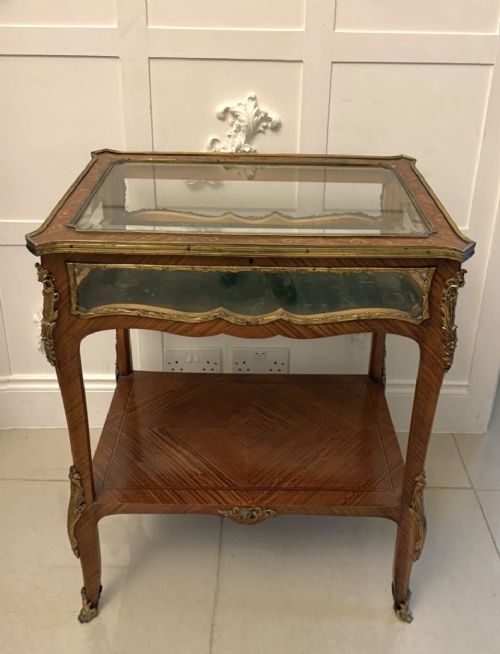
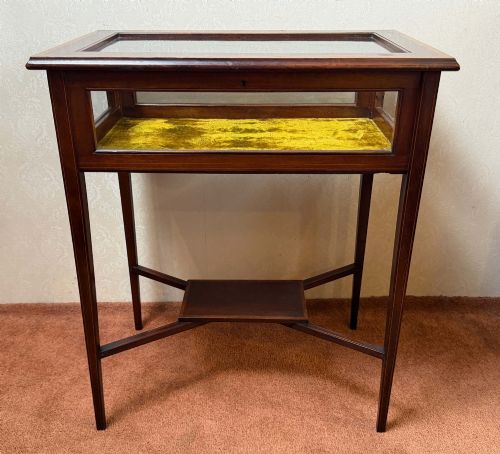
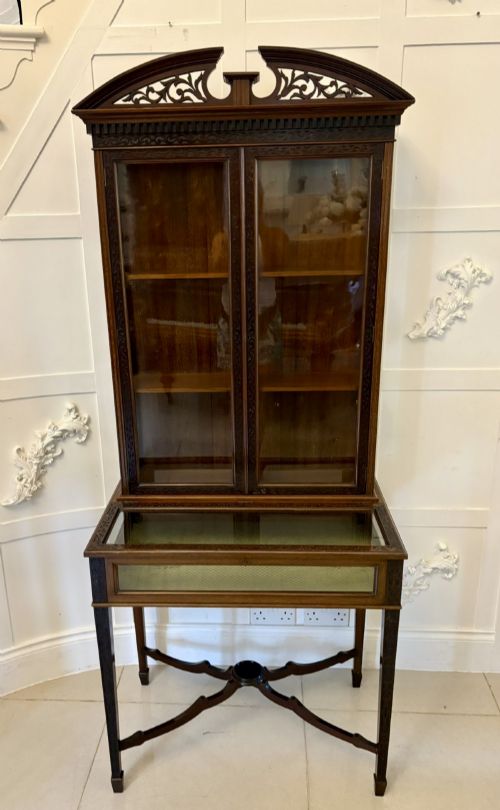
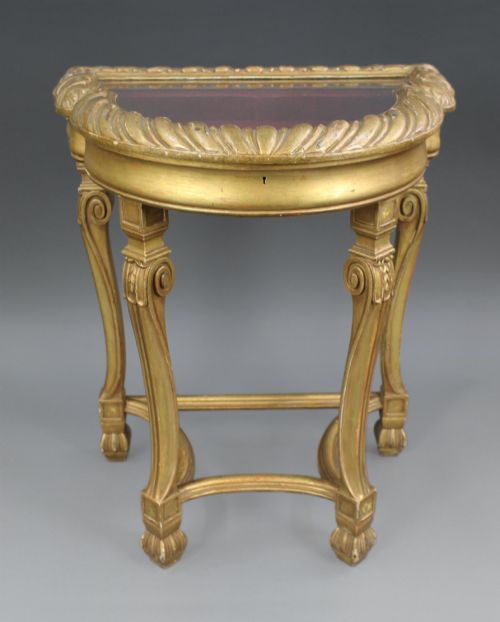
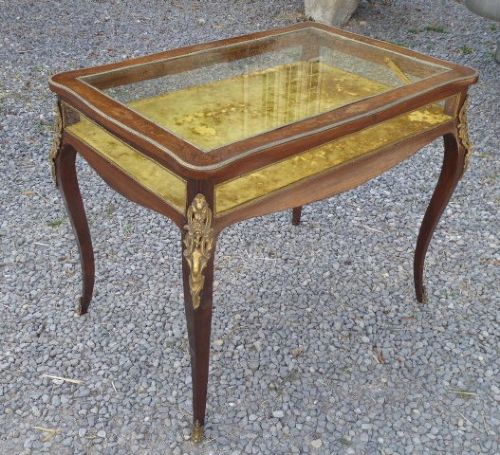
The primary forms include standalone bijouterie tables with glazed tops and interior velvet or fabric linings, alongside table-top display cases and console tables. These pieces were originally used in drawing rooms and salons to display curiosities, medals, and fine ornaments.
How they were made
Cabinet makers utilised dense hardwoods such as mahogany, walnut, satinwood, and kingwood, often enhanced with marquetry or delicate inlay work. Frames frequently incorporate cast brass or ormolu mounts to edge the glazed panels and support the hinged lids.
Interiors are typically lined with plush fabrics like velvet or silk to cushion displayed objects. Glazing relies on bevelled or flat glass plates set securely into timber or metal frameworks.
Glass Display Table Retail Price Guide 2026
Typical asking prices for glass display table among the pieces listed under this phrase on Sellingantiques today, from the lower quarter to the upper quarter. They describe what is for sale here now, not the wider market.
Some tables double as tea trolleys with drop sides, proving that Victorians loved snacks alongside their curiosities.
What varies in quality
Quality rests in the crispness of the timber carving, the precision of the marquetry, and the weight of the metal mounts. Better examples feature substantial cast ormolu or gilt-bronze detailing rather than thin stamped brass plating.
The structural integrity of the glazed lid and the smoothness of the table hinges dictate daily usability. Superior pieces display thoughtful proportions, fine wood grains, and cleanly bevelled glass panes that remain tight within their frames.
François Linke·Crisford & Norris·Edwards & Roberts
The Glass Display Table Glossary
- Bijouterie table
- A small glazed display table designed specifically for holding jewellery, medals, and small decorative items. These pieces feature hinged glass tops and lined compartments.
- Ormolu
- Gilded bronze mounts applied to furniture for decorative effect. This technique was widely utilised in French revival pieces during the nineteenth century.
- Vitrine
- A glass-fronted or glass-topped cabinet used for exhibiting porcelain, curiosities, and fine objects. The term covers both standalone tables and tall display furniture.
- Marquetry
- Decorative woodwork where pieces of veneer are fitted into a backing to form geometric or floral patterns. It appears frequently on the tabletops and borders of satinwood and mahogany pieces.
- Satinwood
- A lustrous, yellowish timber native to India and Ceylon. It was prized by cabinet makers for contrasting inlays and delicate borders on Georgian and Edwardian furniture.
Glass Display Table: Frequently Asked Questions
What is a bijouterie table?
A bijouterie table is a specialised display piece featuring a glazed top and a velvet-lined interior tray. It was created to exhibit small valuable items, coins, and trinkets within a drawing room.
The glass top allows viewers to inspect objects from all angles while protecting them from dust and handling.
How do I clean the fabric lining?
Original velvet or fabric linings inside display tables require delicate care to preserve the fibres. Gentle surface dusting with a soft brush is usually sufficient for maintenance.
Avoid using liquid cleaners or water directly on aged textiles, as moisture can damage the underlying timber and adhesives.
Are the glass tops original?
Many surviving display tables retain their original flat or bevelled glass panels, though replacements occur due to accidental damage over the decades. Examining the glass edge and its fit within the rebate can reveal signs of age or modern cutting.
Slight surface scratches often accompany genuine older glass, bearing witness to past use.
Where were these tables used?
These tables traditionally stood in nineteenth-century and Edwardian reception rooms, drawing rooms, and boudoirs. They served as conversation pieces where hosts displayed personal collections to visiting guests.
Today, they function similarly in domestic interiors, holding small collections of contemporary or antique objects.