

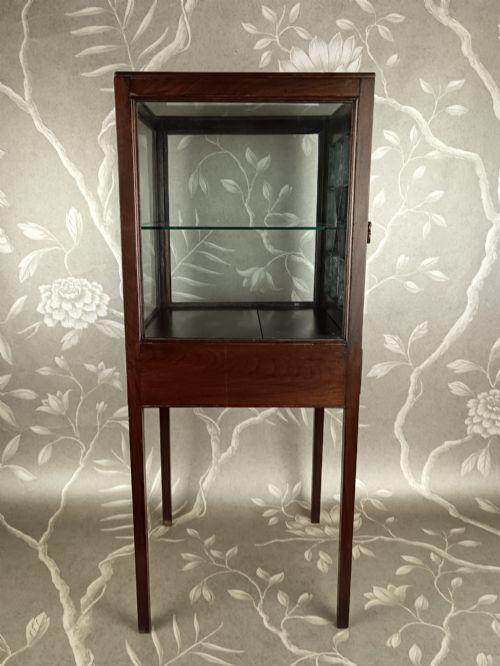
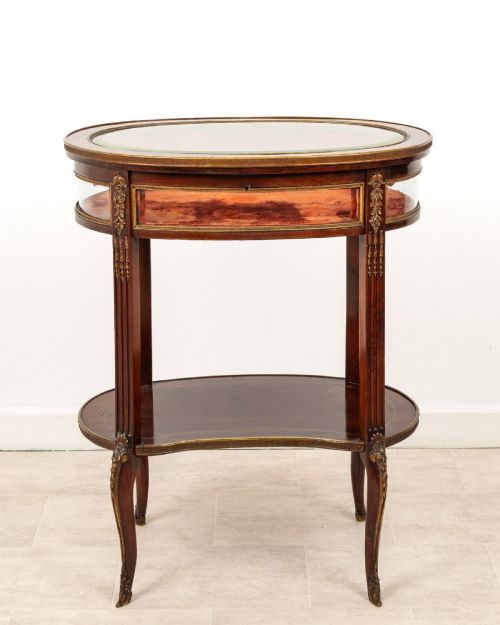


Vintage Curio Table
These vintage curio table pieces let you display treasured collections beneath glass while adding polished timber elegance to a room.
Vintage Curio Table
When you search for a vintage curio table, you are looking at specialised display furniture designed to showcase small possessions beneath glass tops or within glazed cases. These objects serve both as functional display surfaces and secure cabinets for treasured items.
The pieces on this page span several distinct periods, drawing heavily from Edwardian workshops alongside Georgian, Victorian, and early twentieth-century examples. Most items you will meet here take the form of display tables, bijouterie tables, or compact cabinets.
Makers utilised diverse regional styles, including French Louis XVI influences, Sheraton motifs, and Edwardian revival designs. Mahogany forms the backbone of these offerings, frequently accompanied by satinwood, brass mounts, and glazed panels.
Materials and construction methods
Cabinet makers built these frames primarily using solid mahogany and satinwood veneers, shaping timber to form both slender legs and secure display boxes. Glass panels insert cleanly into the tops and sides to allow light into the interior chamber.
Metal ornamentation played a crucial role in finishing these surfaces, with brass inlays and ormolu mounts fitted carefully around glass edges and table skirts. Interior compartments often feature linings of velvet, felt, or fabric to cushion delicate objects on display.
Vintage Curio Table Retail Price Guide 2026
Typical asking prices for vintage curio table among the pieces listed under this phrase on Sellingantiques today, from the lower quarter to the upper quarter. They describe what is for sale here now, not the wider market.
The selection includes Edwardian, Georgian, and Victorian periods executed primarily in mahogany with glass, brass, and velvet.
Quality variations in display furniture
Differences in quality stem from the precision of the timber joinery and the sophistication of decorative detailing such as inlaid satinwood or cast ormolu mounts. Finer examples display meticulous hand-carved elements on the legs and frame borders.
The choice of secondary woods and the quality of the glass panels also distinguish standard commercial productions from finer cabinet work. Interior treatments, including the selection of fitted fabric or velvet linings, reflect the original tier of manufacture.
Quincy Showcase Works Illinois
The Vintage Curio Table Glossary
- Bijouterie table
- A specialised display table with a glazed top and compartment designed specifically for holding small trinkets, jewellery, and curiosities.
- Vitrine
- An enclosed glass cabinet used for exhibiting porcelain, silverware, and decorative objects.
- Ormolu
- Gilt-bronze mounts applied to furniture frames to provide decorative metallic contrast against dark timbers.
- Satinwood
- A light-coloured, lustrous exotic timber frequently utilised for delicate inlays and contrasting borders on mahogany furniture.
- Inlay
- A decorative technique where contrasting pieces of wood or metal are inserted into depressions within the primary surface.
Vintage Curio Table: Frequently Asked Questions
What is a curio table?
A curio table is a specialised piece of furniture featuring a glazed top or compartment designed to display small collections, jewellery, and decorative items safely.
These tables lift treasures to eye level while protecting them from dust and handling within a secure glass enclosure.
How were these tables used?
Original owners used these tables in drawing rooms and parlours to exhibit portrait miniatures, medals, small silver, and delicate trinkets.
Guests could inspect the collections closely through the glass top while conversing in formal reception rooms.
Where should I place one?
These tables suit sitting rooms, hallways, or studies where natural light can illuminate the items displayed inside the glass compartment.
Position them away from direct sunlight to protect sensitive interior fabrics and vulnerable collectibles from fading.
How do I date an Edwardian piece?
Edwardian examples often feature light mahogany construction, subtle inlaid satinwood, and refined Edwardian proportions dating from the early twentieth century.
Examining the interior linings, glass thickness, and joinery style helps confirm the manufacturing period alongside any stamped maker marks.