
Small Glass Cabinet
A small glass cabinet lets you display fragile objects safely, bringing character and clear visibility to any room.
Small Glass Cabinet
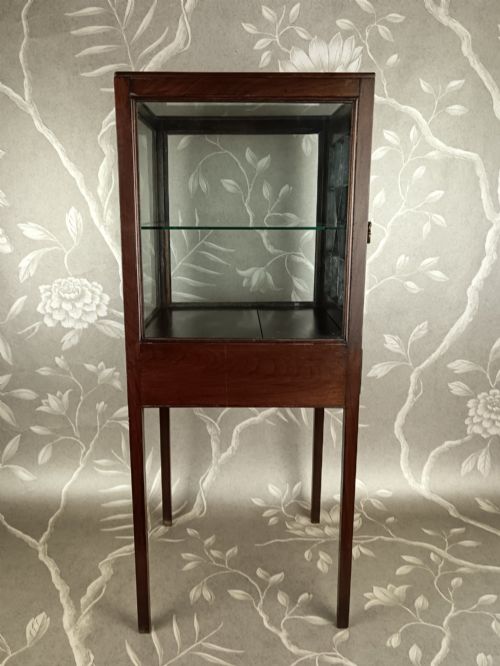
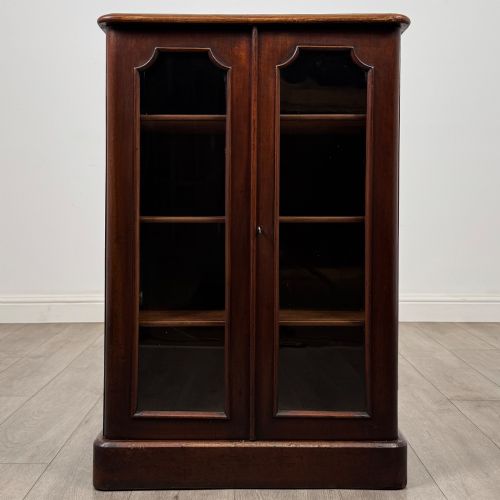
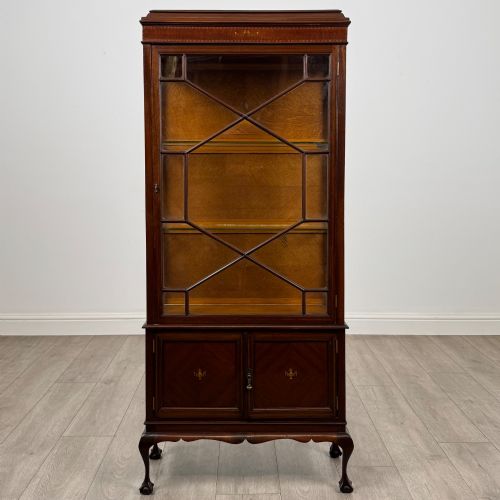
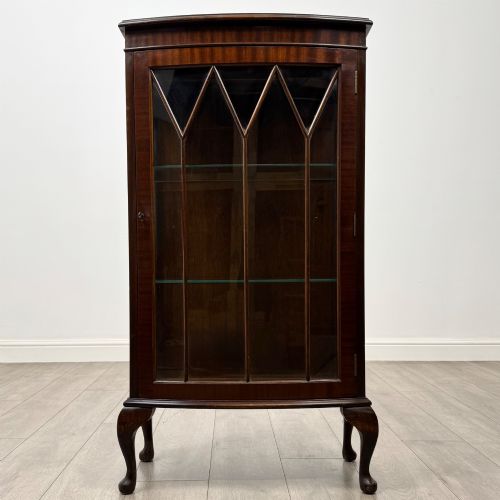
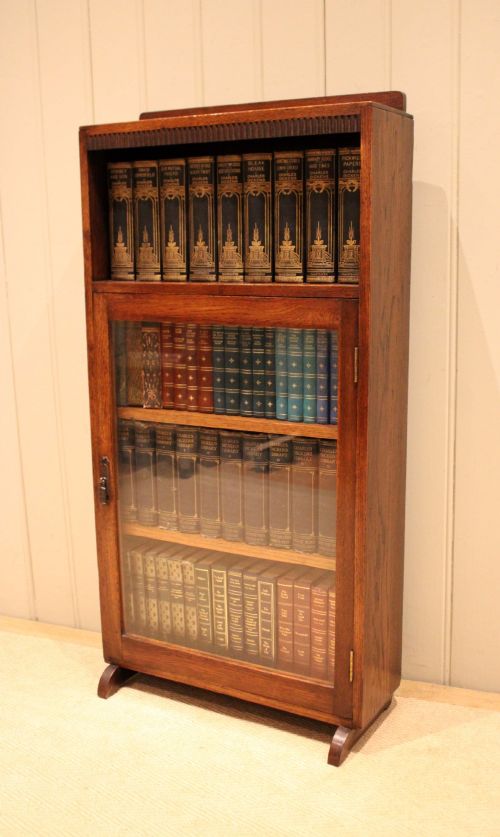
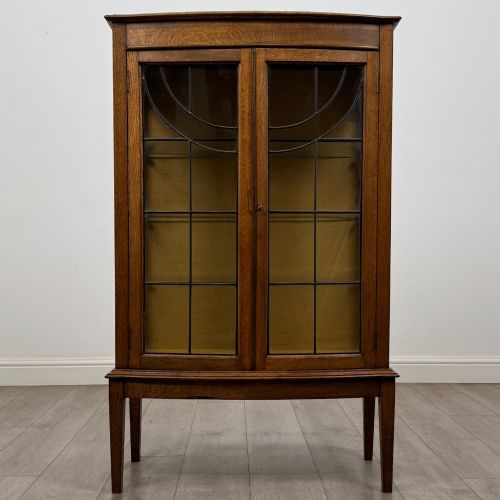
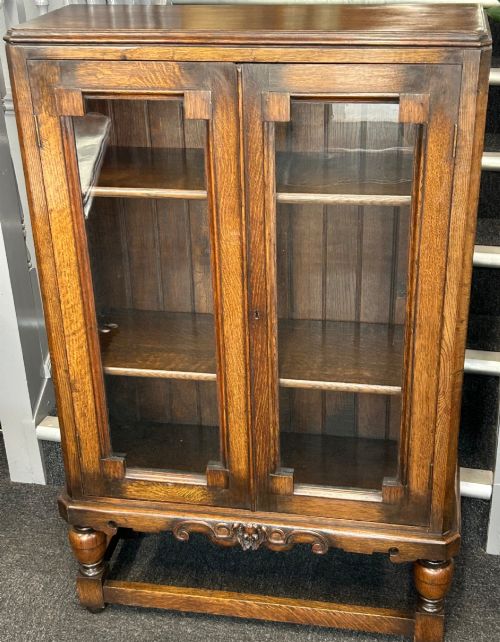
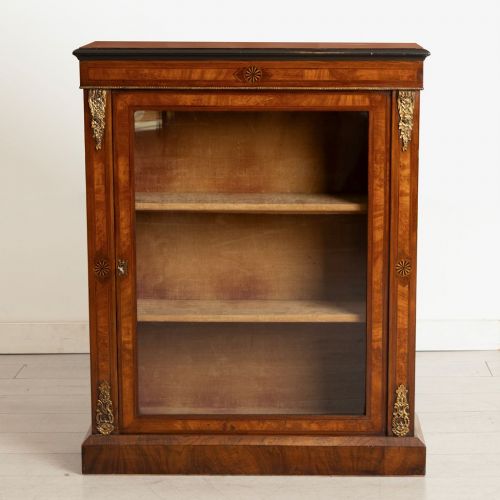
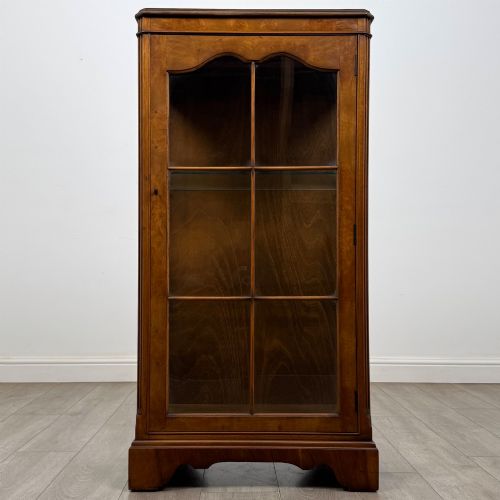
A small glass cabinet serves primarily to exhibit ceramics, books, or small collectables while protecting them from dust. These compact pieces include display cabinets, bookcases, pier cabinets, bijouterie tables, and glazed cabinets suited for restricted spaces.
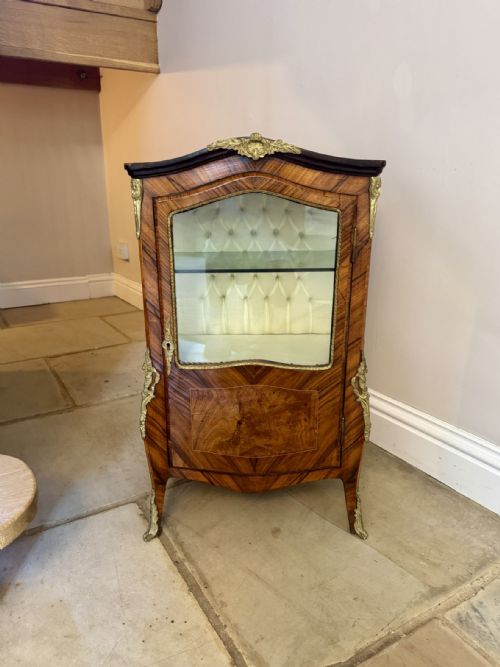
The selections span distinct historical eras such as the Victorian and Edwardian periods alongside the 19th and 20th centuries. Revivalist aesthetics like Louis XV Style, Georgian Revival, Jacobean Revival, and Queen Anne Revival appear frequently among the pieces.
Buyers encounter dwarf proportions, countertop versions, and narrow pier designs intended for specific domestic settings. These variations offer practical storage combined with transparent frontage across diverse historical iterations.
How they were made
Cabinet makers utilised dense hardwoods including mahogany, oak, walnut, and burr walnut for the primary structure, sometimes adding satinwood or exotic veneers. These timbers provided stable framing for glass panels and brass fittings.
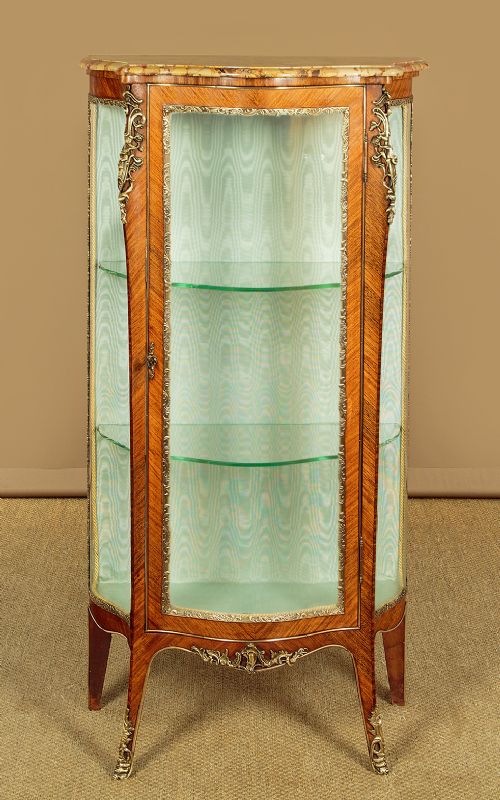
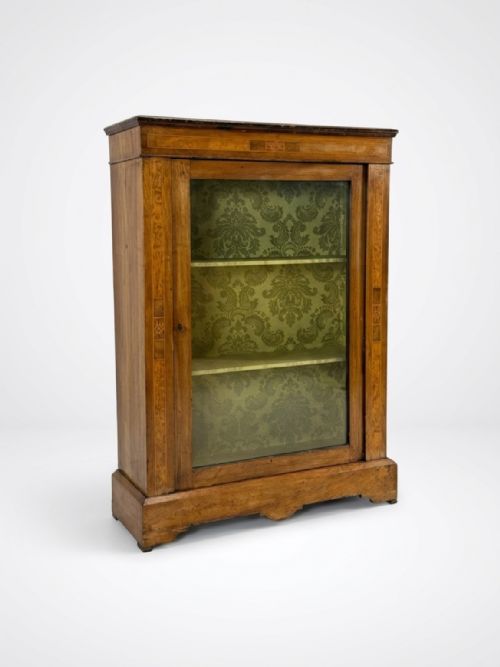
Glazing techniques allowed maximum light penetration into the interior shelves, while brass panels, ormolu mounts, and fabric linings offered decorative contrast. Inlaid details involving rosewood and ebony completed the exterior surfaces.
Small Glass Cabinet Retail Price Guide 2026
Typical asking prices for small glass cabinet among the pieces listed under this phrase on Sellingantiques today, from the lower quarter to the upper quarter. They describe what is for sale here now, not the wider market.
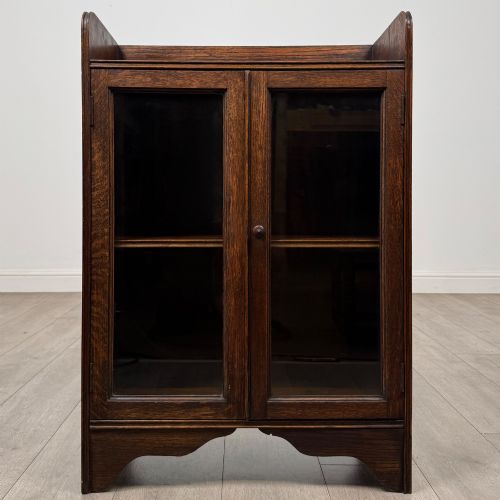
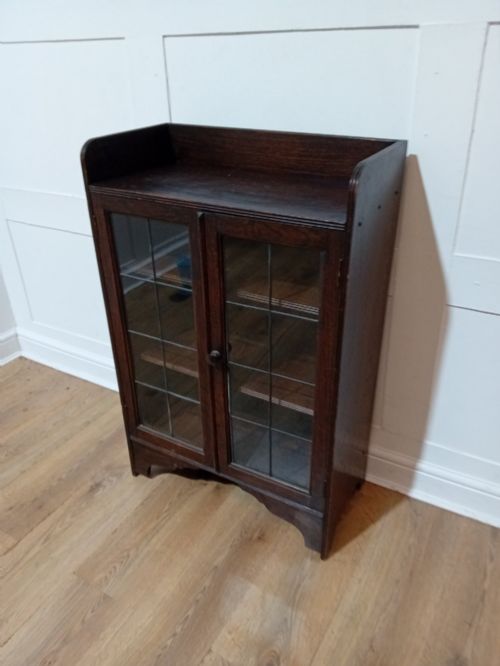
Several cabinets include tiny raised galleries on top, proving that earlier generations also worried about ornaments rolling off.
What varies in quality
The refinement of the timber selection dictates the initial visual impact, distinguishing straightforward oak or mahogany carcasses from elaborately figured burr walnut or kingwood examples. Finer specimens display meticulous grain matching across the doors and panels.
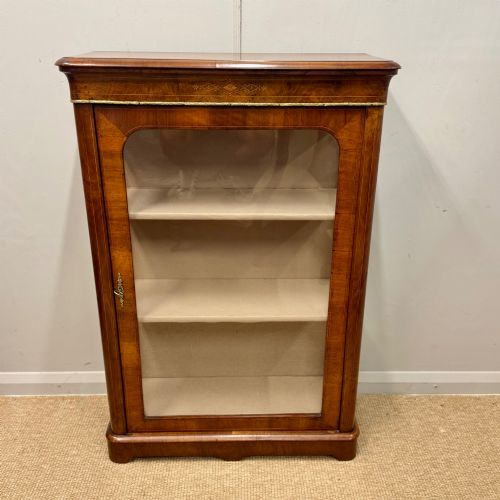
The integration of metalwork, such as ormolu mounts, cast brass handles, and specialised hinges, separates standard utility furniture from high-status display pieces. Cabinet construction integrity, encompassing tight joinery and well-fitted glass panes, underpins the lasting utility of each piece.
The Small Glass Cabinet Glossary
- Vitrine
- A glass-sided cabinet designed specifically for the display of fine porcelain and curiosities. These pieces often feature glazed doors on multiple sides to maximise interior illumination.
- Bijouterie table
- A shallow glazed display case raised on slender legs, traditionally used for small valuables, jewellery, and specimens. The hinged top lifts to grant access to the velvet or fabric-lined interior.
- Pier cabinet
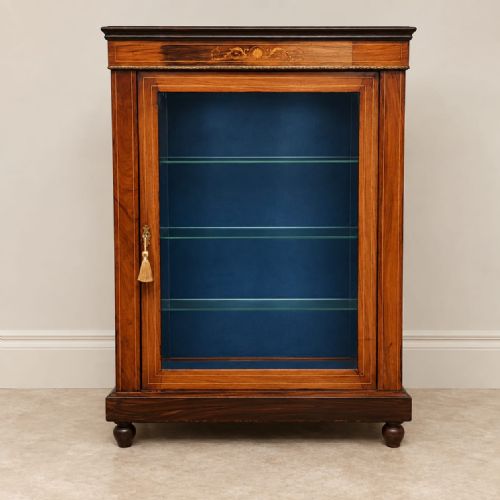
- A narrow display cabinet built to fit the wall space between windows. Victorian examples frequently utilise burr walnut and delicate inlay work.
- Ormolu
- Gilded bronze mounts applied to furniture for decorative enrichment. This technique gained prominence during the 19th century on revivalist display pieces.
- Gallery
- A raised ornamental border running along the top edge of a cabinet or bookcase. This feature prevents displayed items from sliding off the surface.
Small Glass Cabinet: Frequently Asked Questions
Where should I place a small glass cabinet?
These compact cabinets suit tight wall spaces, hallways, or living rooms where full-sized furniture overwhelms the floor plan. Placing them away from direct sunlight protects both the timber finish and the displayed contents.
Ensure the chosen location offers adequate ambient light so the glazed panels can properly illuminate the interior shelves and stored objects.
What is the difference between a vitrine and a bookcase?
A vitrine primarily functions as a display vessel with extensive glass panels on the front and sides for viewing collections. Bookcases prioritise wooden shelving for holding volumes, though many period examples incorporate glazed doors.
Some hybrid designs combine glazed upper bookcase sections with enclosed lower cupboards, offering dual storage and display capabilities.
How do I care for antique wood and glass?
Maintain the timber surfaces by dusting regularly with a dry cloth and applying appropriate wax polish sparingly to preserve the grain. Avoid chemical cleaners that might damage delicate veneers or fabric linings.
Clean the glass panes using a mild solution and a soft cloth, taking care not to let moisture seep into the wooden frames or metal mounts.
How do I identify an Edwardian cabinet?
Edwardian pieces, produced in the early 20th century, frequently draw inspiration from earlier Georgian or Sheraton styles while employing lighter proportions. They often feature inlaid stringing, satinwood highlights, and refined mahogany frames.
These cabinets reflect a shift toward brighter, less ornate domestic interiors compared to heavy Victorian furnishings.