
Antique French China Cabinet
An antique french china cabinet brings supreme elegance to a room, offering glazed display space for cherished ceramics and glassware.

What an antique french china cabinet is
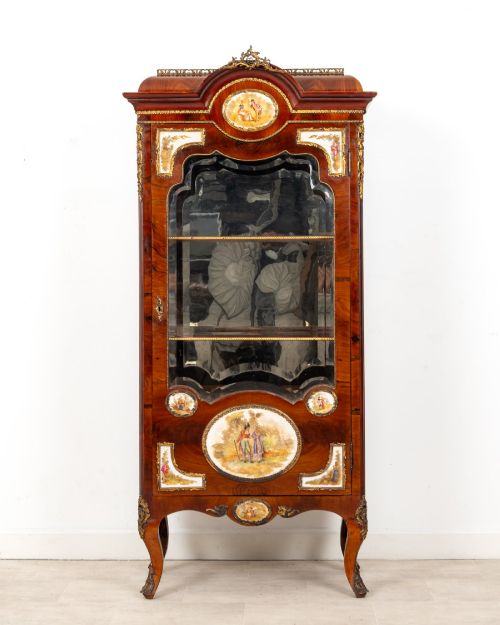
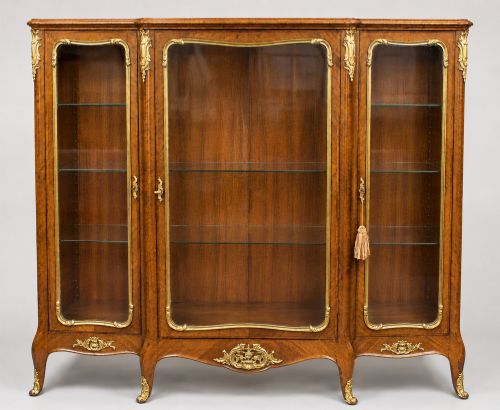
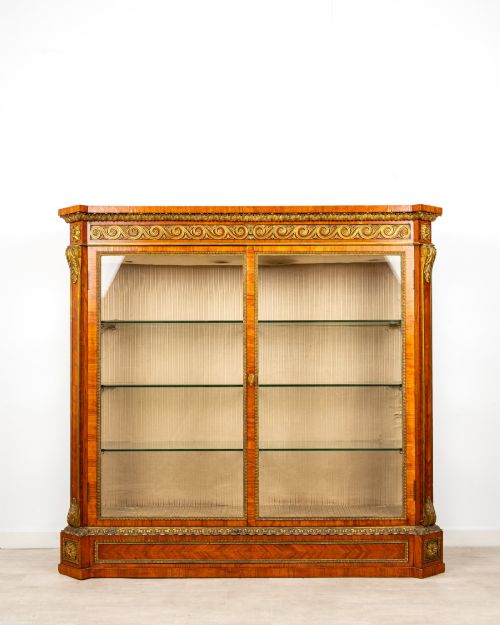
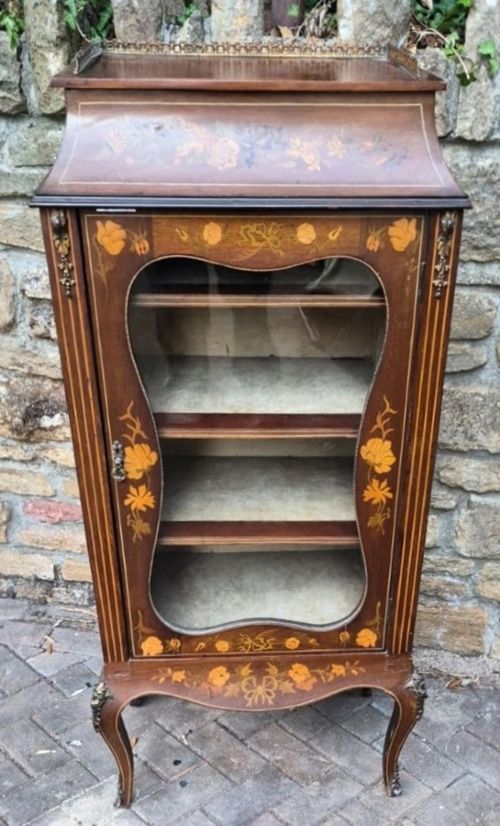
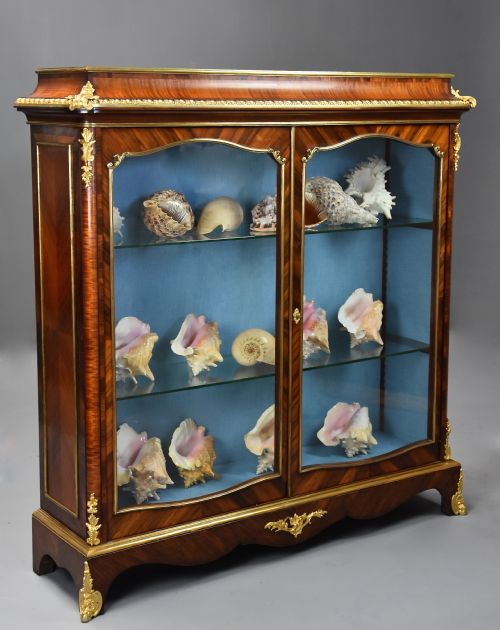
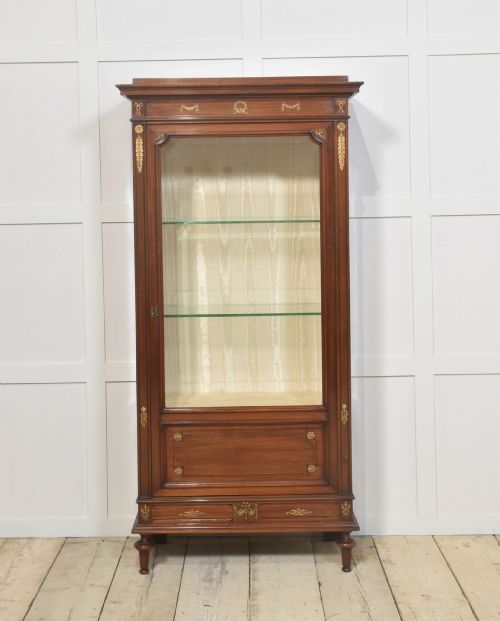
When searching for an antique french china cabinet, collectors encounter refined vitrines and display cabinets dating from the nineteenth century up to nineteen hundred. These pieces originate predominantly from French stylistic traditions, embracing Louis XV, Louis XVI, and Rococo Revival aesthetics.
The most common forms seen on this page are freestanding vitrines and display cabinets featuring glazed doors and panels. They serve primarily to exhibit decorative objects while protecting them from dust.
Cabinetmakers historically designed these furnishings to complement formal reception rooms, utilising rich timbers and decorative mounts. Their silhouettes range from petite walnut and kingwood bodies to large exhibition-quality pieces.
How they were made
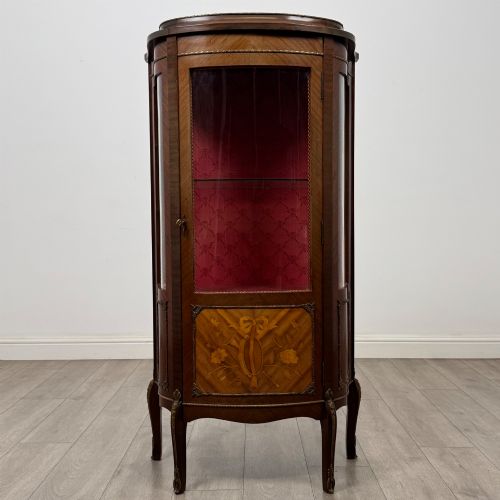
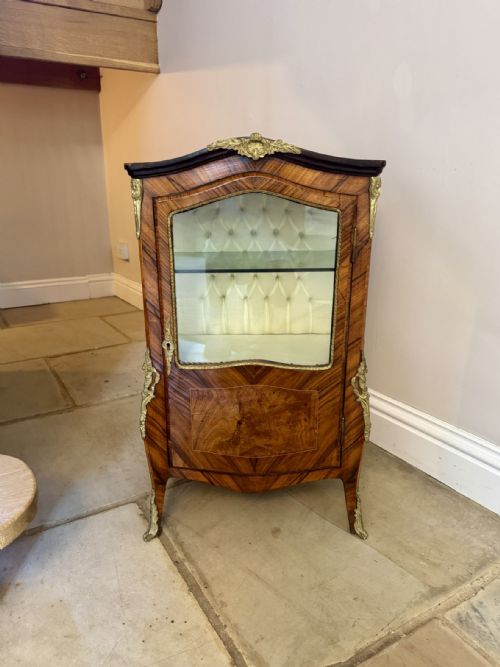
Cabinetmakers constructed the foundational carcasses using dense hardwoods such as mahogany, walnut, and kingwood. They often applied elaborate veneers to the exterior surfaces to create striking grain patterns.
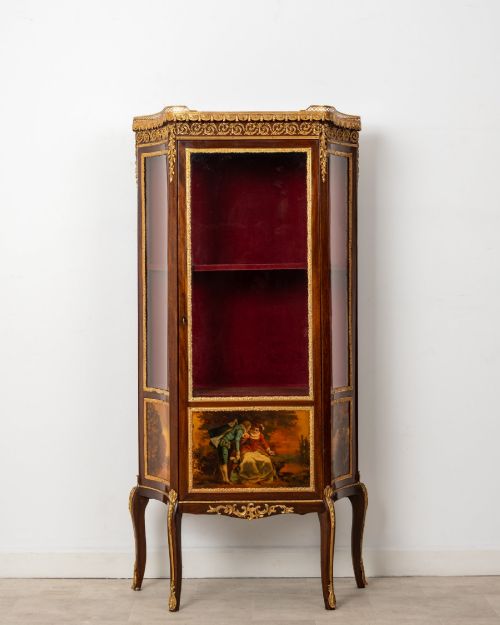
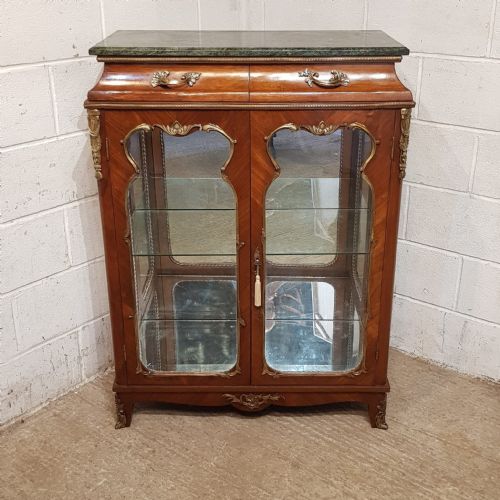
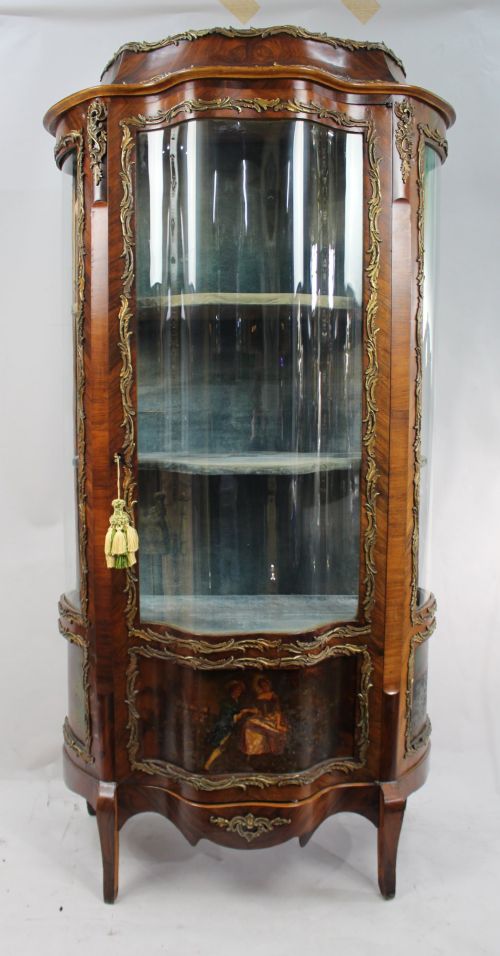
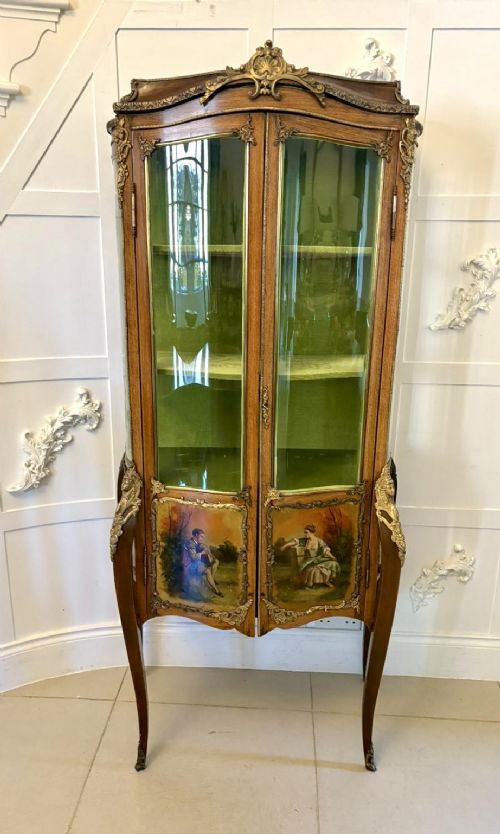
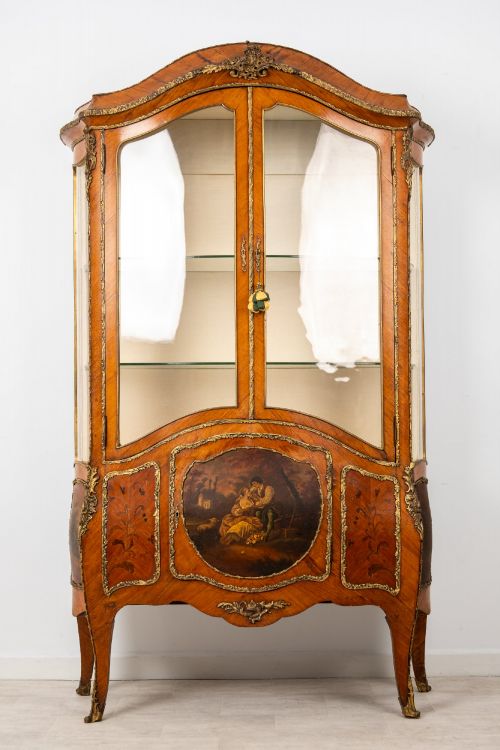
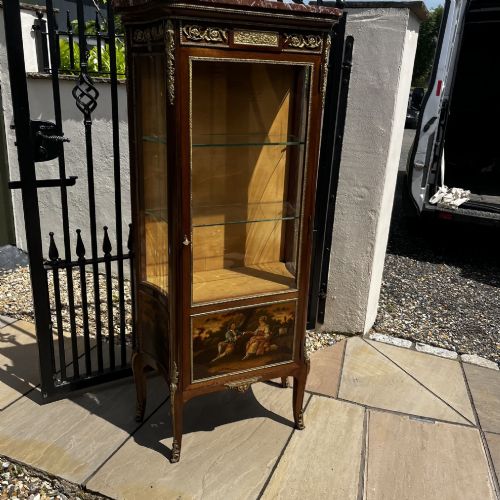
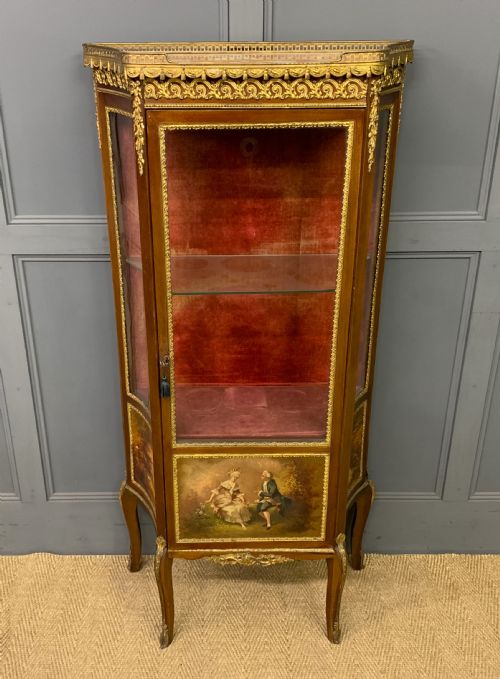
Gilded bronze or ormolu mounts were cast and chased to embellish corners, legs, and pediments. Glass panels were fitted into doors and sides to maximise visibility, sometimes complemented by fabric or velvet linings inside.
Selected examples incorporate Vernis Martin painted panels depicting pastoral scenes, demonstrating sophisticated surface decoration techniques. Marble tops also appear on certain cabinets, adding weight and a cool tactile surface.
Retail Price Guide 2026
Typical UK retail prices for french china cabinet, calculated from the Sellingantiques database of over a million retail prices indexed since 2003. This retail price guide relies exclusively on Sellingantiques data; no external sources or auction records are used, so the figures do not describe the wider market.
Listings feature eighteenth-century revival periods including Louis XVI and Rococo styles alongside nineteenth-century production.
What varies in quality
The hierarchy of these cabinets rests upon the precision of the cabinetmaking and the crispness of the bronze ormolu mounts. Finer pieces display meticulously hand-chased ormolu details and seamless veneer matching, whereas simpler versions rely on standard commercial casting and plainer timber selection.
Attribution plays a major role in distinction, as demonstrated by works bearing signatures from renowned makers like François Linke. The complexity of the silhouette, such as serpentine shaping or painted Vernis Martin panels, further elevates a piece above standard production furniture.
Francoise Linke
The Antique French China Cabinet Glossary
- Vitrine
- A glass-sided display cabinet designed specifically for showing porcelain, glassware, and small objets d'art.
- Ormolu
- Gilded bronze mounts applied to furniture for decorative enrichment. The technique involves mercury gilding on bronze bases in older pieces.
- Vernis Martin
- A form of simulated Japanese lacquer developed in France during the eighteenth century. Artisans used multiple layers of varnish to create translucent painted panels.
- Kingwood
- A dense, richly figured Brazilian timber prized for its contrasting dark and golden brown stripes. It saw frequent use in high-end French veneer work.
- Louis XVI Style
- A neoclassical aesthetic characterised by straight lines, symmetry, and classical motifs such as fluting and floral swags.
Frequently Asked Questions
How do I identify Louis XVI style features?
Louis XVI style pieces rely on straight architectural lines, symmetrical forms, and classical detailing. You will frequently spot fluted column legs and restrained geometric mounts rather than the exuberant curves of the preceding Rococo era.
This aesthetic reflects an eighteenth-century return to classical Greco-Roman proportion, which makers revived enthusiastically during the nineteenth century.
Where should I place a display cabinet at home?
Position your cabinet away from direct sunlight to protect interior fabrics and delicate porcelain glazes from fading. Placing it against a sturdy interior wall in a principal reception room ensures stability for the glass and frame.
Ensure there is adequate clearance for the doors to swing open without striking surrounding furniture.
How do I care for ormolu mounts on wood?
Dust the ormolu gently with a soft, dry microfibre cloth to prevent accumulation in the recesses of the casting. Avoid abrasive metal polishes, which can strip away the original fire gilding.
Maintain stable room humidity to protect the underlying timber and veneer from splitting or warping around the metal mounts.