
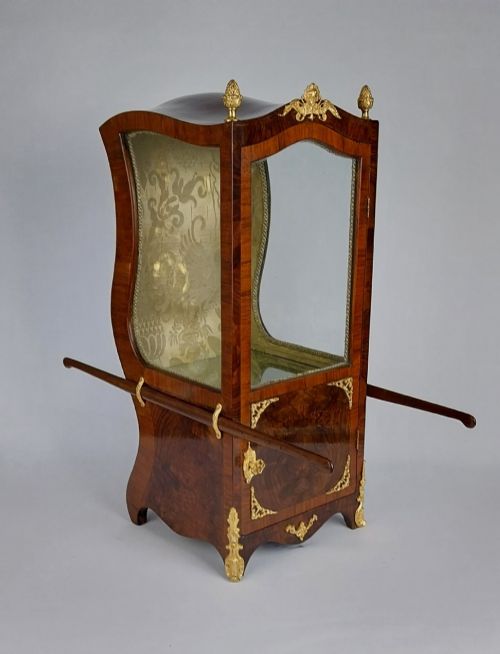


Kingwood Vitrine Cabinet
A kingwood vitrine cabinet brings French revival elegance and glazed display space into a room.
The kingwood vitrine cabinet
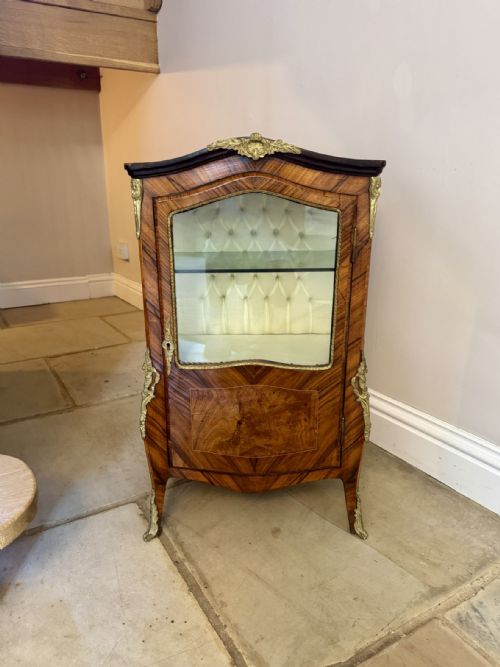
A kingwood vitrine cabinet is a French display piece designed to showcase porcelain, figures and small treasures behind glass panels. These cabinets originate predominantly from the nineteenth century, emerging from revival movements that looked back to Louis XV and Louis XVI styles.
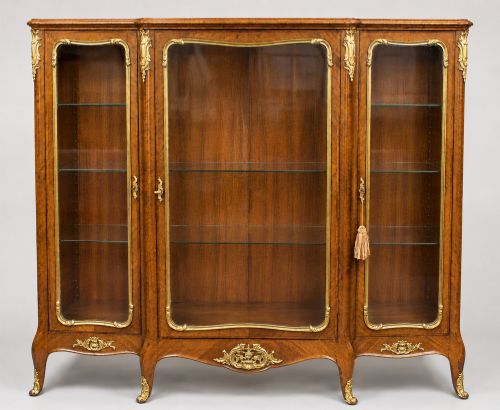
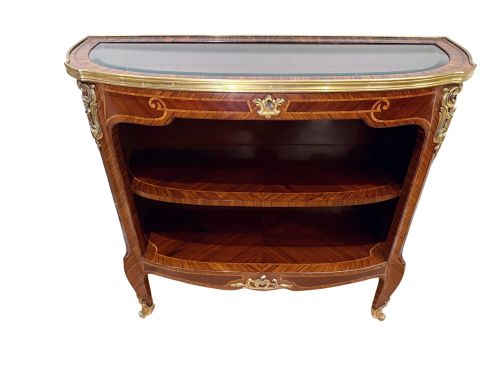
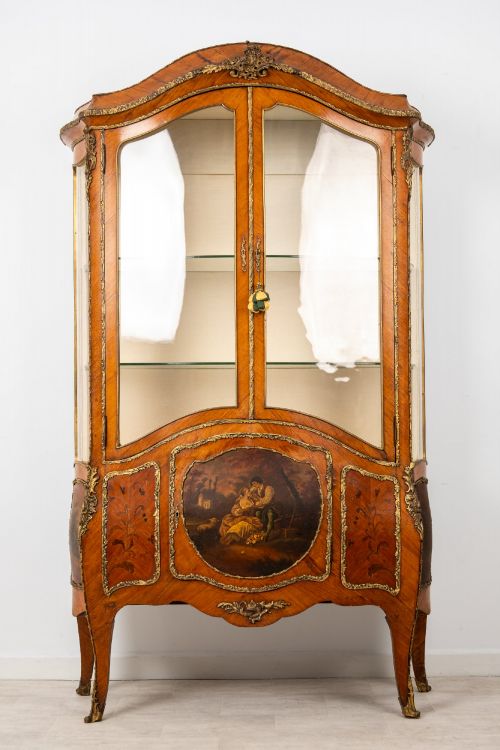
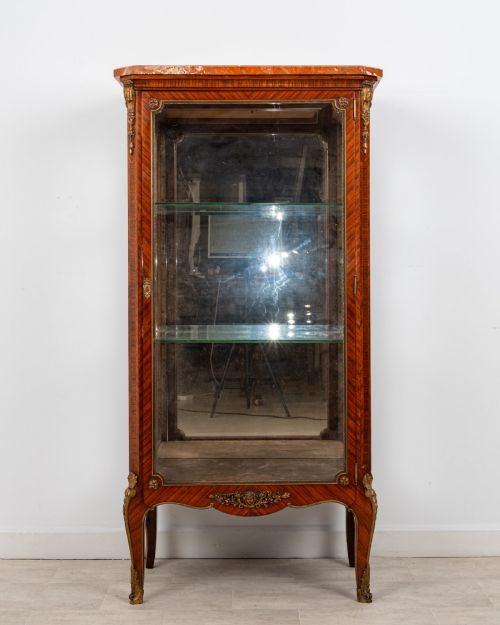
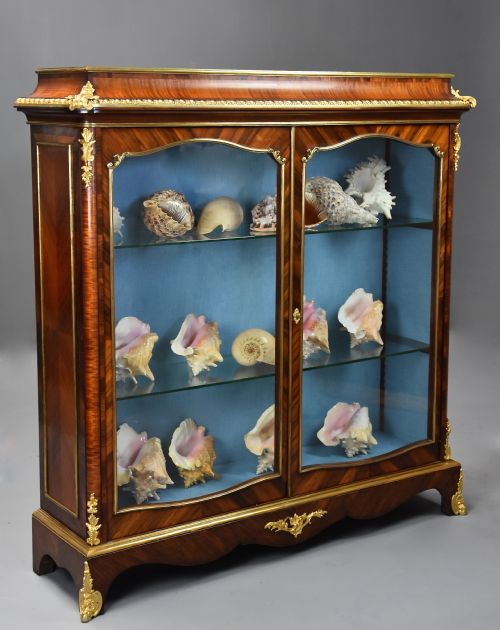
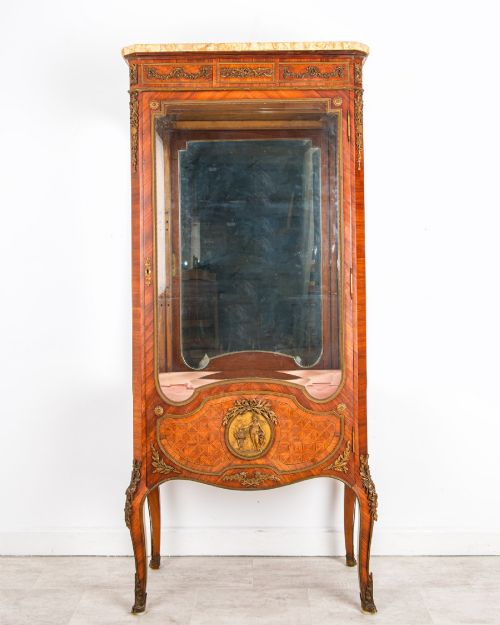
The versions most commonly met on this page take serpentine, bombe, cartouche or table top sedan forms. They stand either as full cabinets or as vitrines on stands, often combining glazed doors with curved glass sides.
Makers working in this tradition utilised rich timbers and classical mounts to create display furniture for affluent nineteenth century interiors.
Materials and construction
Makers constructed these cabinets using kingwood as the primary timber, sometimes complemented by walnut and detailed marquetry inlays. Structural frames supported curved or flat glass panels designed to give maximum visibility to the interior shelves.
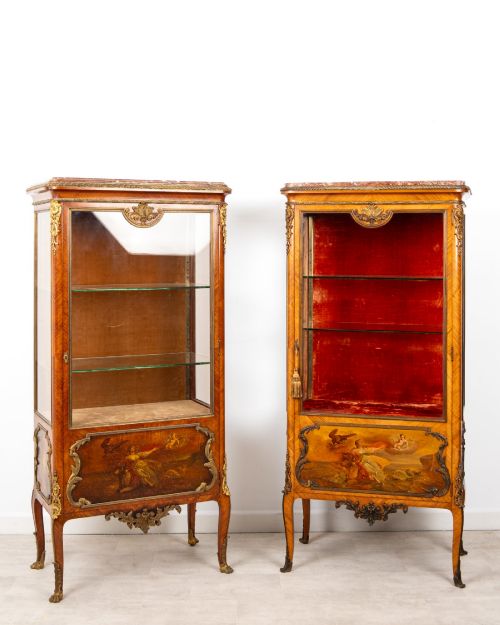
Cast ormolu mounts framed the glass doors, corners and feet, adding heavy gilt brass decoration that defined the Rococo and neoclassical revivals. Certain cabinets incorporated Vernis Martin painted lower panels or marble tops alongside silk damask interior linings and fabric backgrounds.
Retail Price Guide 2026
Typical UK retail prices for kingwood vitrine cabinet, calculated from the Sellingantiques database of over a million retail prices indexed since 2003. This retail price guide relies exclusively on Sellingantiques data; no external sources or auction records are used, so the figures do not describe the wider market.
Materials recur across the archive in specific combinations, pairing kingwood and ormolu with marble tops and Vernis Martin painted panels.
Qualities of execution
The distinction between standard production and top tier work rests on the crispness of the ormolu mounts and the precision of the kingwood grain. Finer examples display hand chased gilt bronze details that fit the timber contours perfectly rather than generic cast fittings.
Cabinets carrying signatures or attributions from established workshops demonstrate superior cabinetmaking in their serpentine joinery and internal linings. The complexity of the glass work, from bowed side panels to cartouche shapes, also separates basic display furniture from masterworks.
G. Durand·Linke·Maison Mottheau·Victor Raulin
The Kingwood Vitrine Cabinet Glossary
- Kingwood
- A dense Brazilian timber with violet and dark brown contrasting grain patterns used extensively in French cabinetmaking. It forms the distinctive patterned surfaces seen across these nineteenth century display pieces.
- Ormolu
- Gilt bronze mounts applied to furniture edges, feet and cornices for decorative effect. The metal is cast and then finished with gold leaf or mercury gilding.
- Bombe
- A swelling, outward curving furniture shape characteristic of Rococo revival design. This curved profile requires skilled woodworking to ensure doors and side panels fit flush.
- Serpentine
- A furniture contour that curves inward centrally and outward at the ends. It provides a fluid, undulating outline common in nineteenth century French display pieces.
Frequently Asked Questions
What is a kingwood vitrine cabinet used for?
These cabinets were designed to display porcelain, silver, miniatures and collectables behind glass while protecting them from dust.
Today they function in residential interiors to exhibit small decorative objects while adding nineteenth century French character to a room.
How do I identify Louis XV and Louis XVI styles?
Louis XV style cabinets feature asymmetrical curves, serpentine lines, bombe profiles and organic Rococo ormolu mounts. Louis XVI style pieces introduce straighter lines, classical symmetry, fluted columns and neoclassical gilt bronze details.
Both styles utilise kingwood veneer, but the overarching silhouette dictates the specific revival period.
What are Vernis Martin panels?
Vernis Martin refers to a decorative lacquer technique involving painted figural or landscape scenes applied to cabinet panels. These painted sections usually sit beneath the glass door in the lower portion of the vitrine.
They reflect eighteenth century French decorative arts revived by nineteenth century makers.
Are these cabinets purely French in origin?
The pieces recorded in the evidence are distinctly French in design, style and manufacture, dating primarily to the nineteenth century. Makers working in Paris produced these cabinets following traditional Rococo and neoclassical aesthetics.
English and other European makers adopted similar revival styles, but the examples here stem from French workshops.