




Brown Wooden Showcase
These brown wooden showcase pieces are glass-fronted cabinets and display cases built to hold and protect collections while keeping them entirely visible.
Brown Wooden Showcase
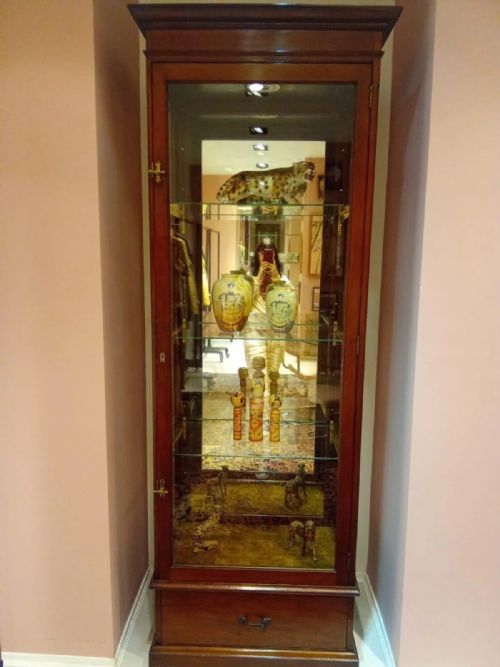
A brown wooden showcase takes many forms across this selection, ranging from small countertop display cases and table top cabinets to large standing display cabinets, vitrines, and corner cabinets. They serve to exhibit small treasures, taxidermy, or shop merchandise under glass while framing them in timber.
The pieces on this page span the Victorian, Edwardian, and Art Deco periods, alongside the nineteenth century and the early twentieth century. Buyers will frequently encounter mahogany and oak constructions, often styled with revival influences such as French Louis XV or Victorian Dutch.
Materials and construction methods
Makers built these showcases primarily using solid or veneered timber frames in mahogany, oak, cedar, and pine, fitted with clear glass panels to the doors and sides. Brass fittings such as hinges, handles, and locks provide both structural support and functional closure for the cabinet doors.
Internal linings frequently utilise felt or mirror backs to enhance the presentation of displayed items, whilst adjustable glass shelves allow the interior space to be reconfigured. Selected pieces incorporate inlaid details or painted sign-writing directly onto the wood or glass.
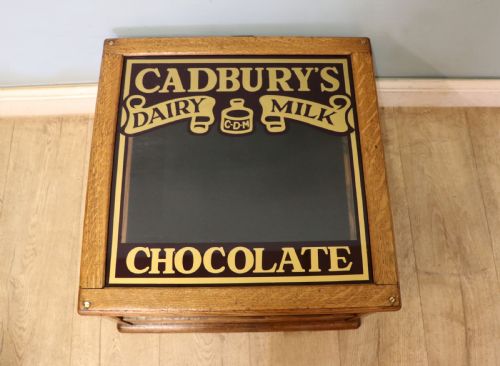
One oak countertop cabinet carries later sign-writing for Cadburys Chocolate, revealing a past life serving customers in a sweet shop.
Judging quality and craftsmanship
The distinction between standard utility showcases and finer examples lies in the selection of timber and the precision of the joinery. Cabinets that utilise well-figured mahogany or quarter-sawn oak with refined inlay work demonstrate a higher grade of manufacture than plain pine variants.
Hardware and glass integrity further separate the tiers of quality. Original brass hinges, locks that function smoothly, and clean, unblemished glass panes indicate a piece constructed with greater care and retained in superior condition.
The Brown Wooden Showcase Glossary
- Vitrine
- A glass-fronted cabinet or display case designed specifically for showing fine objects or porcelain. These pieces usually feature extensive glazing to maximise light penetration.
- Bijouterie table
- A glass-topped display table intended for smaller valuables, jewellery, and curiosities. They lift open to allow inspection from above.
- Demi lune
- A half-moon shape used to describe furniture with a semicircular front. These cabinets fit flat against a wall while projecting outward.
- Display dome
- A glass bell jar set upon a wooden base, historically used to protect fragile items such as taxidermy or clocks. The base anchors the glass cover securely.
- Collector cabinet
- A specialised piece of furniture containing multiple shallow drawers or shelves for sorting specimens or small artefacts. They prioritise internal storage organisation over broad visual display.
Brown Wooden Showcase: Frequently Asked Questions
What is a brown wooden showcase used for?
These cabinets are designed to exhibit and protect collections, ornaments, or retail goods behind glass. They keep dust away from delicate items while allowing full visibility from the outside.
Depending on the specific form, such as a countertop case or a tall vitrine, they sit on furniture tops or stand independently on the floor to frame treasured objects.
How do I date a wooden showcase?
Dating relies on observing the timber species, construction techniques, and stylistic clues present in the frame. Victorian and Edwardian pieces often display specific revival motifs, hand-cut dovetails, or period brass hardware.
Comparative analysis of the wood finish and the type of glass used also helps place the cabinet within its nineteenth or early twentieth-century manufacturing era.
Where should I place a display cabinet?
Position your cabinet away from direct sunlight to prevent the timber from fading and to protect sensitive items stored inside. Placing it in a room with stable humidity levels safeguards both the wooden structure and any internal linings.
Ensure there is adequate floor or tabletop space for doors to open fully without obstruction so you can access the shelves easily.
How do I care for antique wood and glass?
Clean the glass panels regularly with a mild glass cleaner applied to a cloth rather than sprayed directly, preventing moisture from seeping into the wooden frames. Dust the timber surfaces gently with a soft, dry cloth.
Avoid using silicone-based polishes on antique wood finishes, opting instead for traditional beeswax formulations to maintain the natural lustre of the grain.