
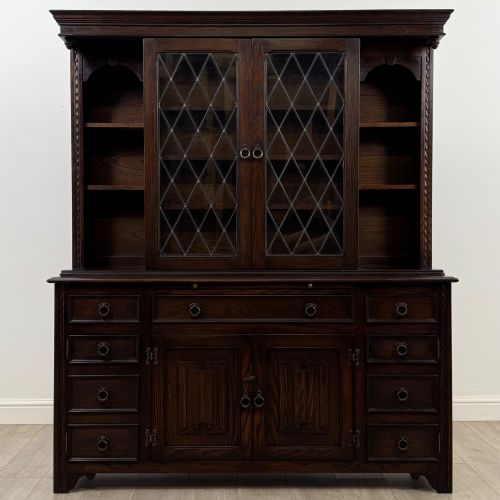
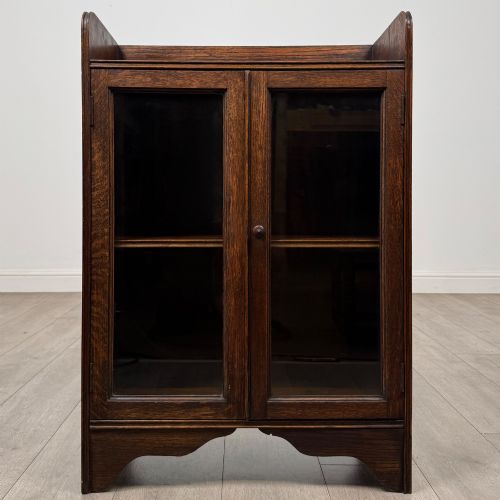
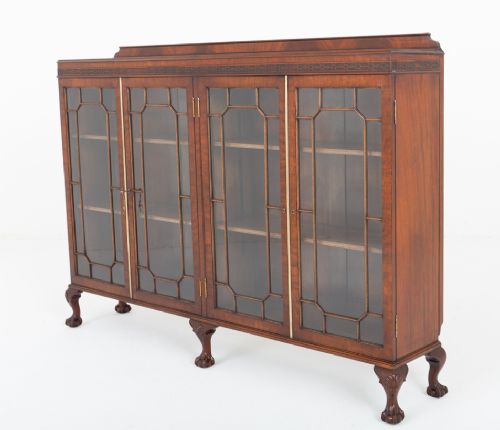
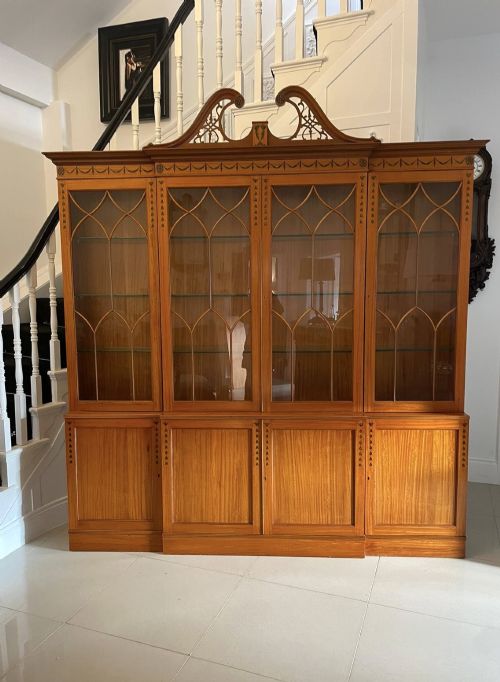

Antique Glass China Cabinet
An antique glass china cabinet organises your best porcelain behind clear panes, bringing Victorian and Edwardian craftsmanship directly into the modern reception room.

Identifying your antique glass china cabinet
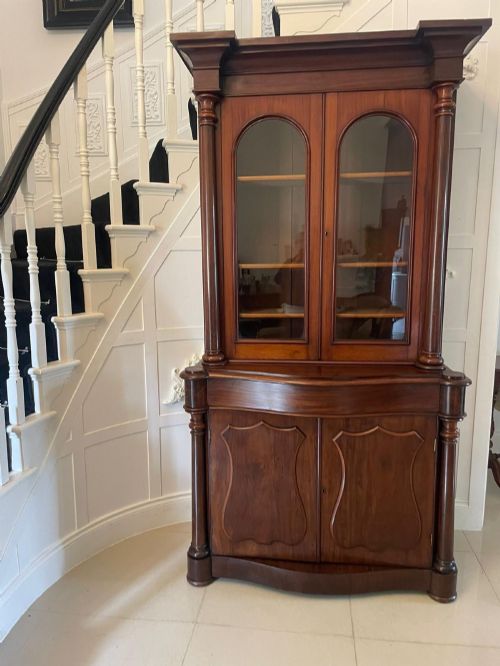
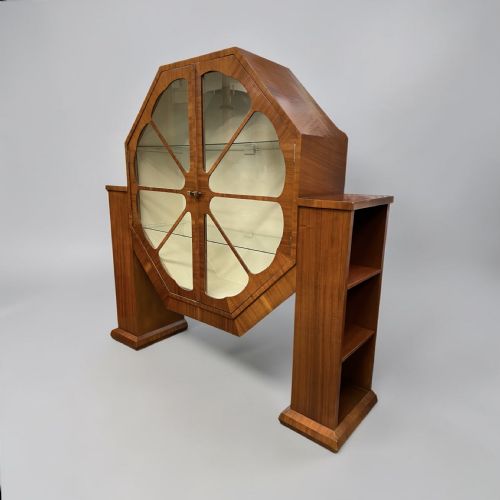
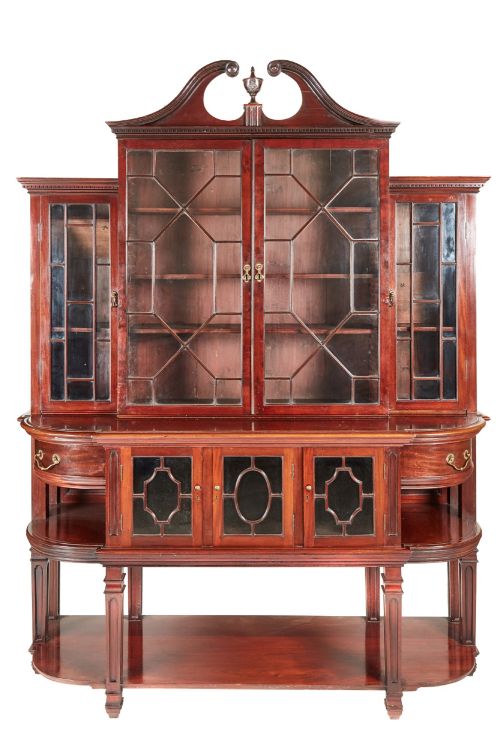
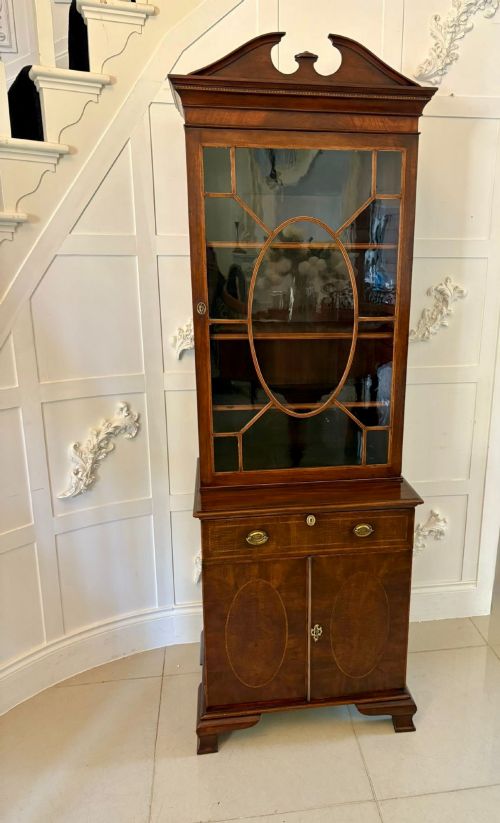
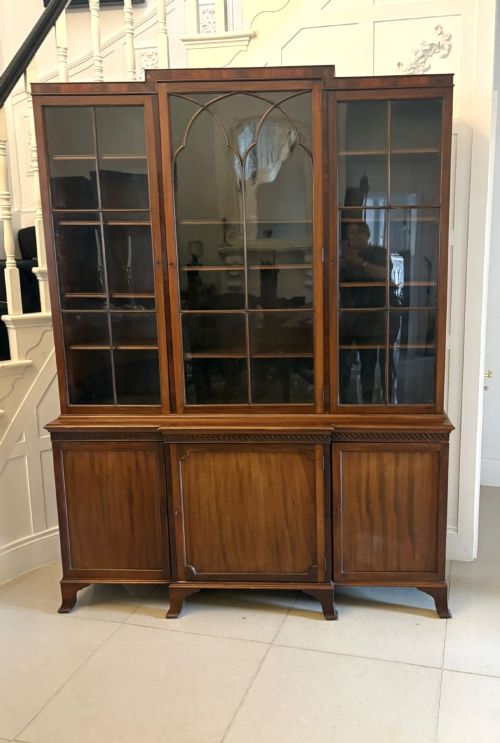
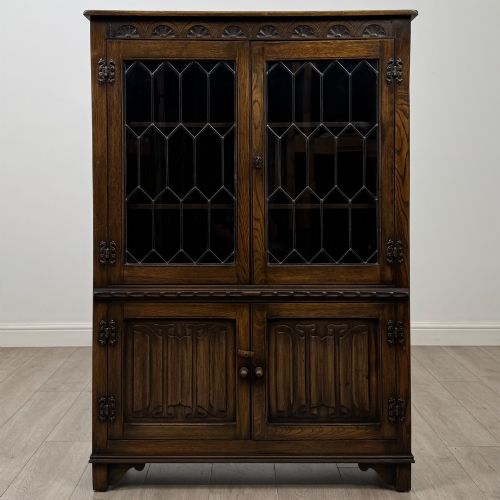
An antique glass china cabinet is primarily found in forms such as display cabinets, vitrines, and bookcase china cabinets dating from the nineteenth and early twentieth centuries. These pieces serve to exhibit decorative ceramics and glassware while protecting them from dust within living spaces.
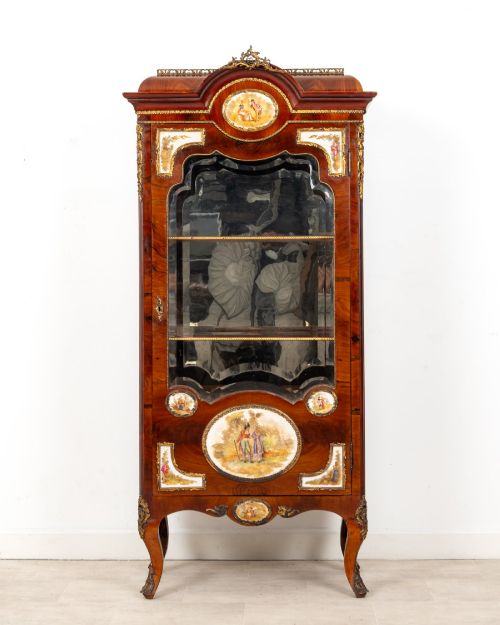
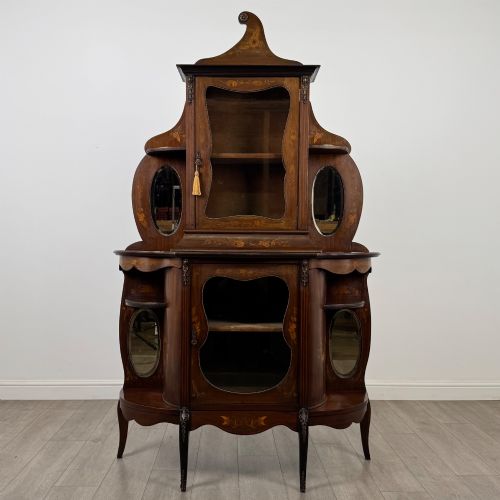
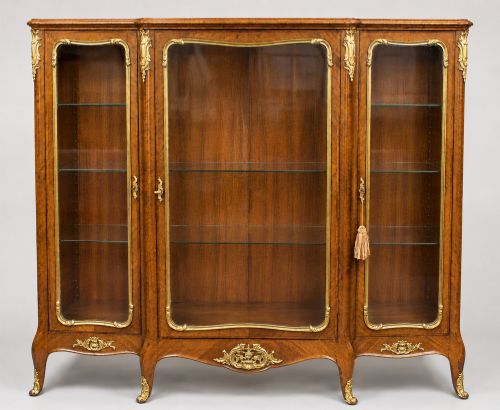
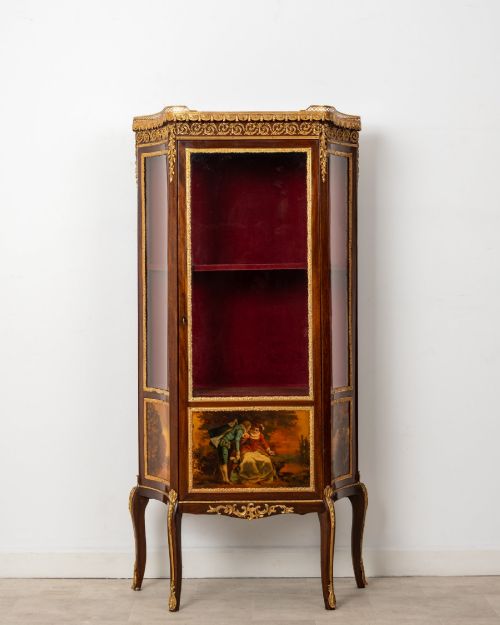
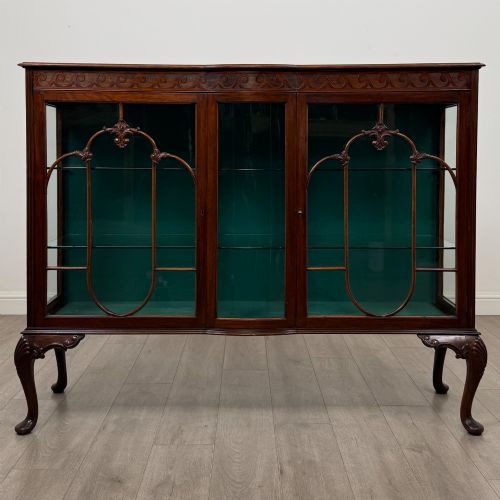
The pieces appearing on this page span several distinct stylistic revivals, including French Louis XV, Sheraton, and Arts and Crafts movements. You will encounter bow-fronted doors, serpentine shapes, and sedan styles alongside upright architectural carcases.
Origins vary between English workshops utilising native timbers and continental makers producing elaborate gilt bronze mounted vitrines. Each example relies on glazed panels to showcase the interior contents from multiple angles.
Materials and construction methods
Cabinet makers constructed these pieces using solid and veneered timbers including mahogany, kingwood, oak, and figured walnut. Satinwood inlay frequently adds contrasting detail to the primary wooden surfaces, creating geometric and floral patterns.
Glazing is central to the form, incorporating flat, curved, and leaded glass panes held within wooden framing or secured alongside metal mounts. Ormolu, gilt bronze, and marble elements appear on French revival examples to accent the structural lines.
Retail Price Guide 2026
Typical UK retail prices for glass china cabinet, calculated from the Sellingantiques database of over a million retail prices indexed since 2003. This retail price guide relies exclusively on Sellingantiques data; no external sources or auction records are used, so the figures do not describe the wider market.
Cabinet materials recorded across the inventory include mahogany, kingwood, ormolu, marble, and leaded glass.
Distinguishing quality across the range
Quality reveals itself in the selection of timbers and veneers, where highly figured walnut or finely matched satinwood inlay denotes superior workshops. The execution of curved and bent glass panes also separates standard production from finer display pieces.
Mounts and hardware demonstrate differing levels of artisanal skill, ranging from crisply chased ormolu to simpler cast metal details. Interior treatments, such as mirrored backs and fabric-lined shelving, contribute to the overall sophistication of the cabinet.
François Linke
The Antique Glass China Cabinet Glossary
- Vitrine
- A glass-sided cabinet designed specifically for displaying objects d'art and porcelain. These pieces often feature extensive glazing and decorative mounts.
- Ormolu
- Gilt bronze applied as a decorative mount on furniture. It provides metallic contrast against dark timbers like mahogany and kingwood.
- Satinwood
- A durable, yellowish timber utilised for veneers and inlay work. It brings a bright reflective quality to cabinet facades.
- Serpentine-front
- A furniture front curving inward centrally and outward at the ends. This undulating shape requires advanced woodworking skill.
- Bow front
- A convex curved cabinet front projecting outward. It softens the linear appearance of standard rectangular display cases.
Frequently Asked Questions
What is an antique glass china cabinet?
An antique glass china cabinet is a storage and display piece featuring glazed doors and panels designed to hold ceramic collections.
These items range from Edwardian oak bookcases to elaborate French vitrines mounted with gilt bronze.
How were antique cabinets used?
These cabinets served in dining rooms and drawing rooms to exhibit prized porcelain tea sets and glassware.
They kept delicate ceramics safe from dust while allowing guests to admire the household's decorative possessions.
How do I style with these cabinets?
Integrate a cabinet into a modern living space by filling the shelves with curated ceramics or books.
The glass panels and polished timber surfaces introduce texture and historical character to neutral interiors.
How do I identify Edwardian examples?
Edwardian cabinets often feature lighter woods, subtle inlay work, and straightforward architectural proportions dating around nineteen ten.
They contrast with the heavier carved mahogany and walnut typical of earlier Victorian production.