








Shop Counter Display Case
A shop counter display case brings the commercial craftsmanship of Victorian and Edwardian retail straight into domestic rooms.
Shop Counter Display Case
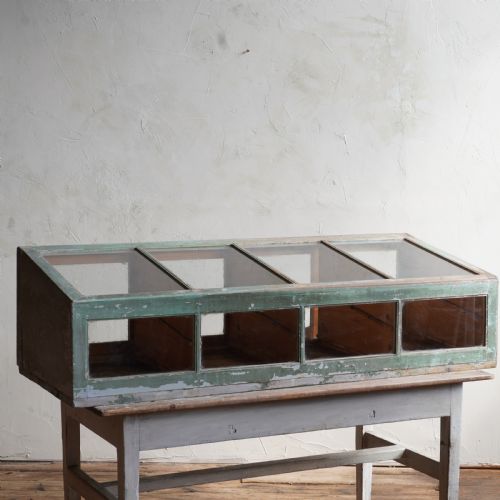
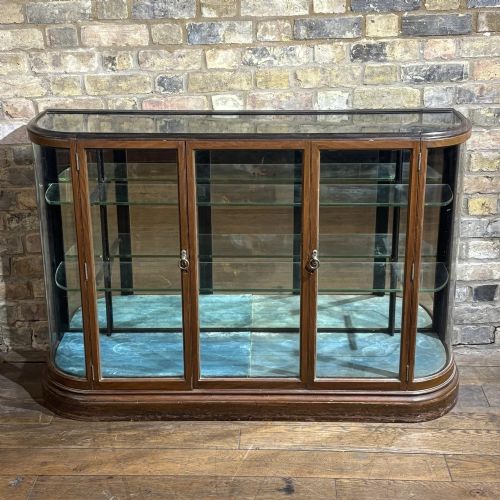
When searching for a shop counter display case, buyers encounter a range of forms designed originally for late nineteenth and early twentieth-century trade. The selection spans tabletop countertop models, tall freestanding units, and substantial serving counters intended to sit centrally within a retail interior.
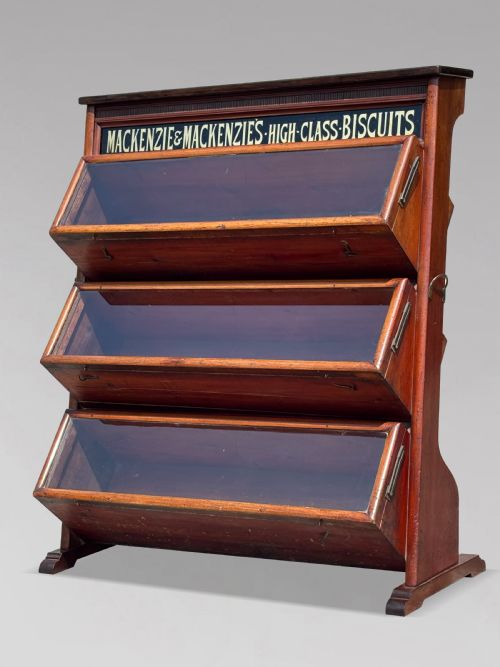
Most pieces date from the Victorian, Edwardian, and 1920s commercial eras, reflecting the expansion of high street shops, pharmacies, and confectioners. Shoppers most frequently meet mahogany and oak structures, alongside specialised advertising cabinets created for brands like Fry, Cadbury, and Rowntree.
Commercial utility dictates the layout, with glazed panels maximising visibility for goods ranging from haberdashery to confectionery. Buyers also find museum-style display cases in oak and specialised apothecary boxes designed to hold small, delicate stock.
Materials and Technique
Makers relied heavily on solid hardwoods like mahogany and oak to construct the main frames and bases of a shop counter display case. These timbers were selected for their structural strength and ability to support heavy panes of plate glass without warping under daily commercial use.
Joinery techniques combined traditional cabinet-making methods with robust housing to withstand continuous opening and closing in busy retail environments. Brass framing appears in later examples, while mirrored interiors and velvet linings were introduced to enhance the presentation of the goods inside.
Shop Counter Display Case Retail Price Guide 2026
Typical asking prices for shop counter display case among the pieces listed under this phrase on Sellingantiques today, from the lower quarter to the upper quarter. They describe what is for sale here now, not the wider market.
Some sweet shop cabinets still whisper faintly of historical chocolate and sewing cottons through surviving paper labels.
The Spectrum of Make
Quality in a shop counter display case rests on the integration of materials and the original commercial ambition of the piece. Standard utility counters designed for general mercantile trade contrast with purpose-built branded advertising cabinets commissioned by major confectioners and manufacturers.
Cabinet-making execution marks the distinction between workshop production and mass commercial supply. Finely moulded cornices, curved bow ends, inlaid woodwork, and specialised hardware such as original brass fittings separate standard utilitarian boxes from superior retail furnishings.
F. Sage & Co·John Stow Ltd·Saml. Elliott & Sons
The Shop Counter Display Case Glossary
- Countertop
- A cabinet designed specifically to sit upon an existing shop counter to display small goods to customers.
- Haberdashery cabinet
- A specialised storage and display unit originally utilised in drapery shops, typically featuring multiple shallow drawers or glass-fronted compartments.
- Bow end
- A display case featuring curved glass panels at one or both ends, allowing visibility from multiple angles.
- Mirror interior
- A silvered glass backing placed inside the display space to reflect light and multiply the visual presence of the contents.
- Bijouterie case
- A glass-topped table or counter case traditionally used by jewelers and merchants to display small luxury items.
Shop Counter Display Case: Frequently Asked Questions
What were shop counter display cases used for?
Merchants utilised these glazed units atop retail counters to protect small, valuable goods while keeping them clearly visible to passing customers.
Items such as sewing cottons, chocolates, medicines, and small artefacts sat inside to encourage impulse purchases during transactions.
How do I date a shop counter display case?
Dating relies on observing timber choices, construction methods, hardware styles, and any surviving commercial branding on the woodwork or glass.
Victorian pieces often display heavier mahogany construction, while 1920s examples introduce aluminum framing, ebonized finishes, and distinct Art Deco lettering.
How should I clean the glass and wood?
Maintenance requires gentle dusting of the timber and careful application of standard glass cleaner to the viewing panes without spraying directly onto old wood.
Preserving the original patina on mahogany and oak frames means avoiding harsh chemical polishes and abrasive cloths.
Are these cases suitable for modern homes?
Countertop and freestanding display units fit easily into contemporary interiors as functional storage for collections, ceramics, and personal curiosities.
The original commercial glazing protects displayed objects from dust while offering a clear view from all surrounding angles.