
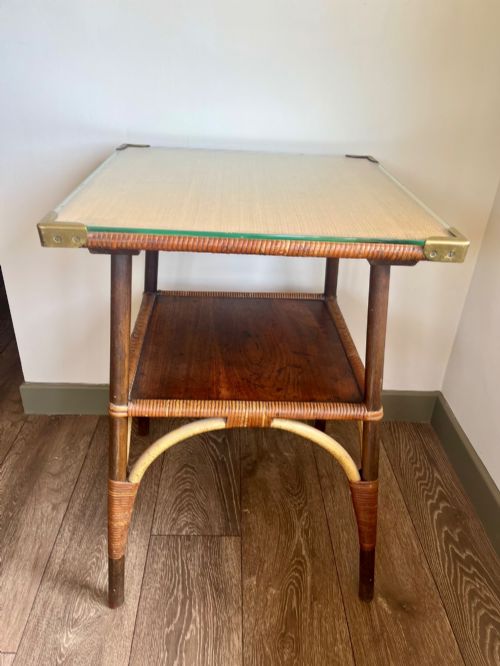
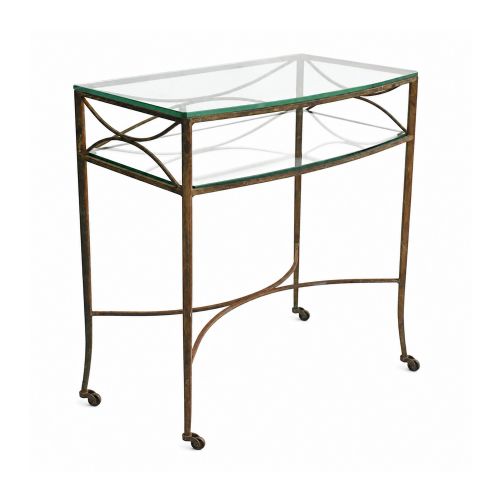
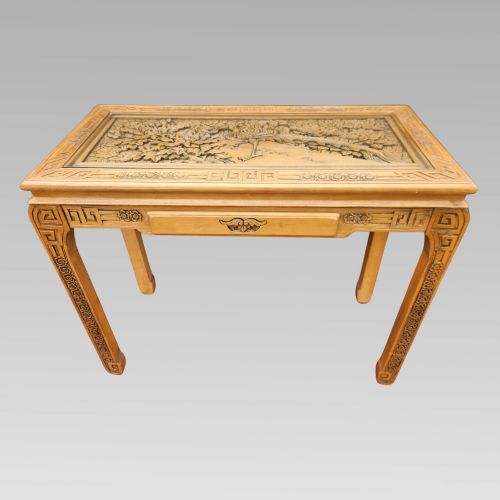


Glass Top Side Table
A glass top side table brings transparent surface polish and visible display space to a room, offering both practical utility and character.
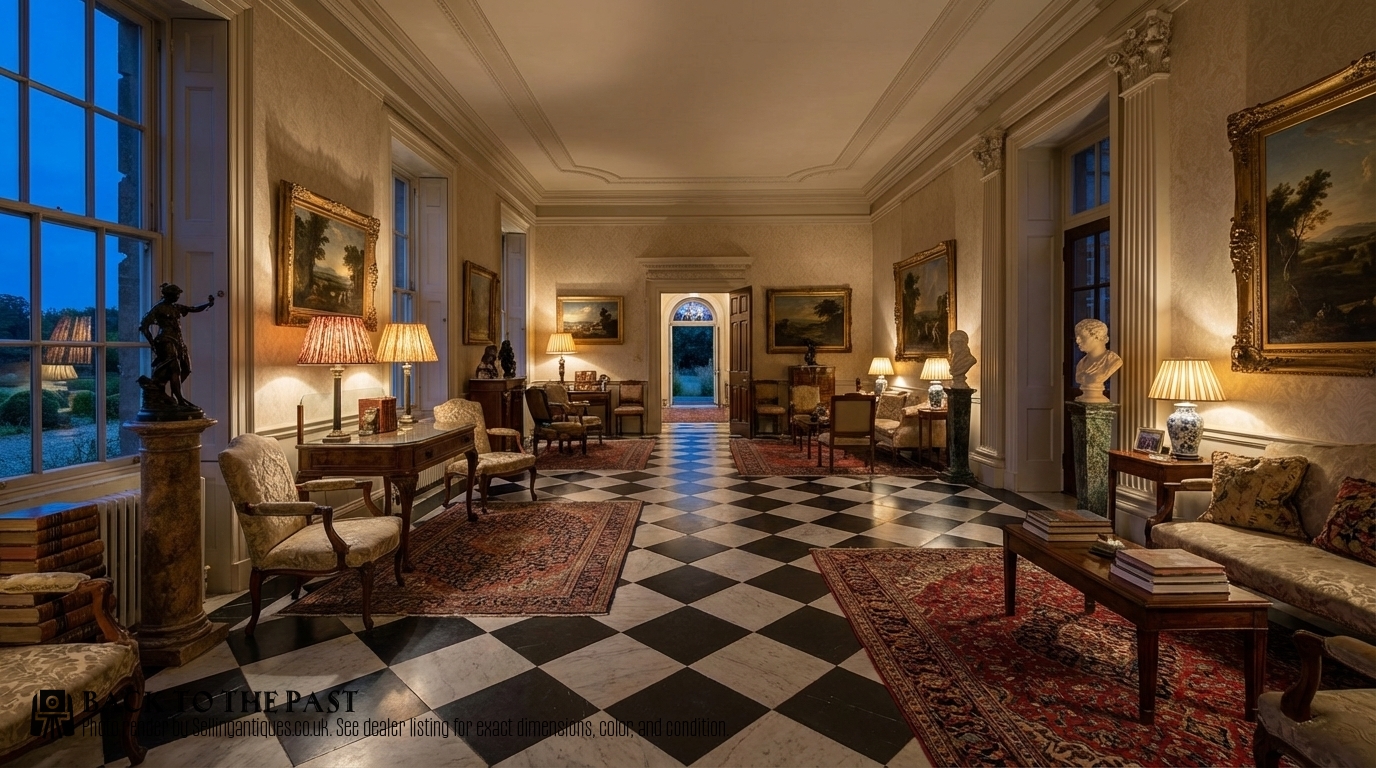
What these pieces are
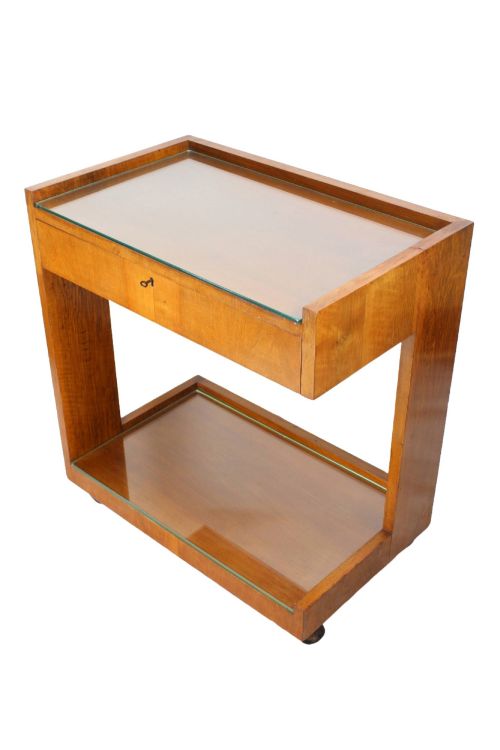
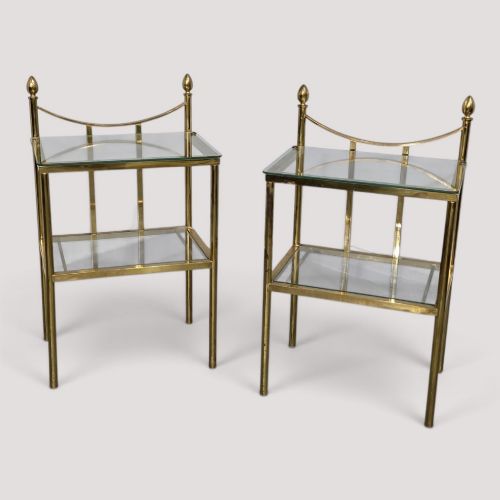
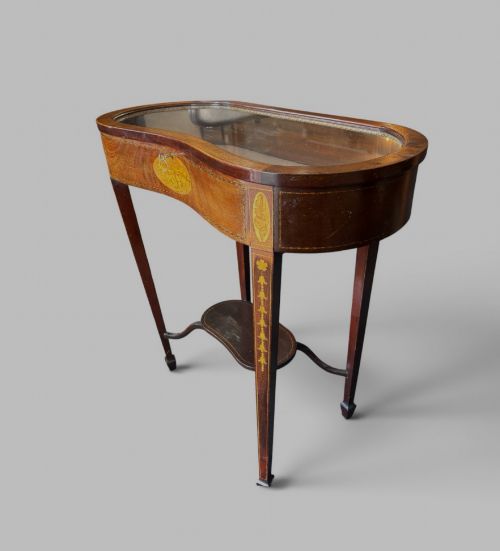
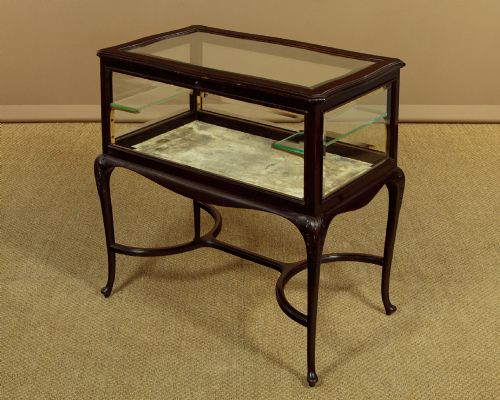
A glass top side table encompasses diverse forms such as bijouterie display tables, occasional tables, nests of tables, and bedside cabinets. These pieces serve multiple domestic purposes while providing a clear surface or an enclosed glass case for viewing contents.
The selections span several periods including Victorian, Edwardian, nineteen-hundred, nineteen-twenty, and nineteen-thirty. Styles range from Arts and Crafts and Art Deco to Queen Anne Revival and French Louis XV style.
Buyers most frequently encounter bijouterie display tables and occasional tables among these listings. Origins include English, French, and Italian workshops, reflecting varied European design traditions.
How they were made
Construction relies on traditional cabinet-making materials like mahogany, walnut, hardwood, brass, cane, rattan, fabric, and velvet. Wood frames provide the structural support while glass panels form surfaces or display compartments.
Techniques combine standard joinery for frames with specialised glazing methods to secure glass tops and sides. Some pieces incorporate vitrolite glass or wrought iron, reflecting industrial methods of the nineteen-thirties.
Retail Price Guide 2026
Typical UK retail prices for glass top side table, calculated from the Sellingantiques database of over a million retail prices indexed since 2003. This retail price guide relies exclusively on Sellingantiques data; no external sources or auction records are used, so the figures do not describe the wider market.
One French hardwood bijouterie table carries later sign-writing for Breitling watches, adding an unexpected commercial layer to its history.
What varies in quality
Quality differences lie in the selection of timber grains, such as burr walnut or figured mahogany, and the precision of the frame joinery. Superior examples maintain structural integrity alongside fine decorative carving or metalwork.
The clarity and original state of the glass panels, whether flat or bevelled, influence the overall character. Finer pieces demonstrate careful attention to internal velvet or fabric linings within display compartments.
Dryad Leicester·Harry and Lou Epstein
The Glass Top Side Table Glossary
- Bijouterie table
- A glass-topped display table specifically designed for showing small ornaments, jewellery, or collections. These cases often feature hinged glass lids and velvet-lined interiors.
- Vitrolite
- An opaque pigmented structural glass popular during the Art Deco period. It provides a durable and colourful surface for table tops.
- Occasional table
- A small, movable side table intended for flexible use around a room. They appear in various styles from the Edwardian era onwards.
- Nest of tables
- A set of graduated tables designed to stack neatly beneath one another. This form saves space while offering multiple surfaces when separated.
Frequently Asked Questions
How do I date an Art Deco glass table?
Art Deco glass tables from the nineteen-thirties often utilise materials like wrought iron or vitrolite glass alongside geometric forms. Makers such as Harry and Lou Epstein represent this period.
Earlier tables from the Edwardian or Victorian eras tend to feature carved wood frames like mahogany or walnut with traditional joinery rather than modernist industrial elements.
Are glass top tables sturdy enough for daily use?
Period glass top tables utilise thick plate glass or secure display case construction designed to support everyday objects like lamps or books. The structural strength depends primarily on the wooden or metal frame beneath.
Care should be taken with hinged display lids to avoid stressing the glass or hinges during opening and closing.
What distinguishes Edwardian tables from Victorian ones?
Victorian tables in these listings often feature heavy mahogany construction and darker finishes suited to nineteenth-century interiors. Edwardian pieces tend to show lighter proportions and incorporate revival styles.
Both periods frequently utilise glass panels for display cases, but Edwardian examples often align with the early twentieth-century shift toward refined occasional furniture.