


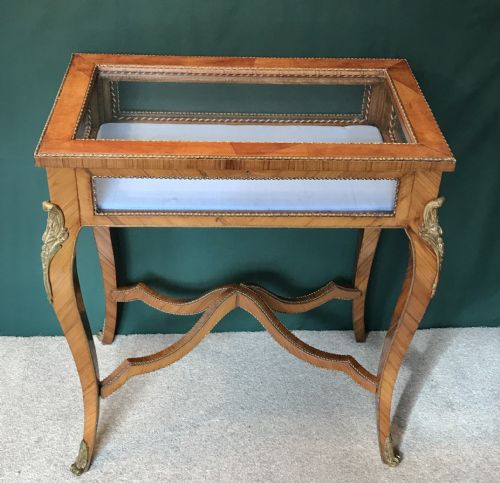


Kingwood Display Table
A kingwood display table brings French revival elegance into a room to showcase precious keepsakes under glass.
Kingwood Display Table
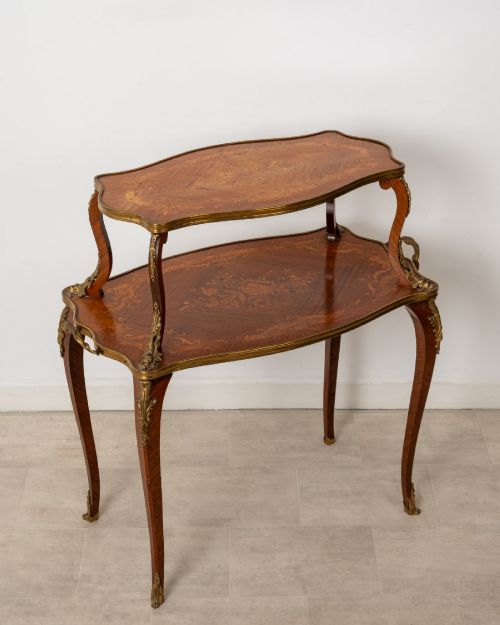
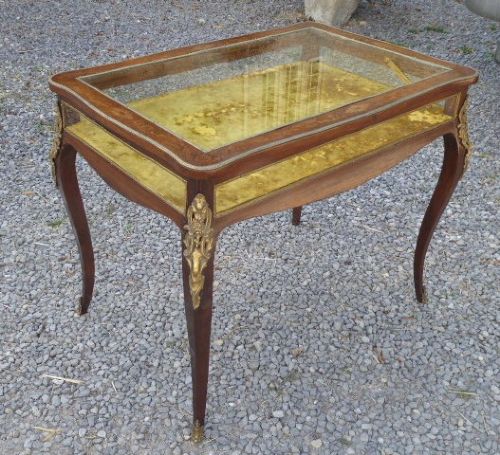
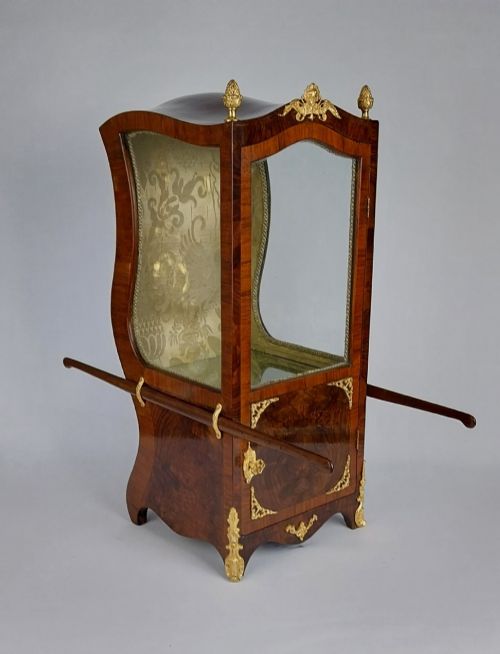
A kingwood display table combines the roles of a surface table and a glass cabinet designed to exhibit small treasures. These pieces span the nineteenth century and the early twentieth century, drawing heavily on French styles.
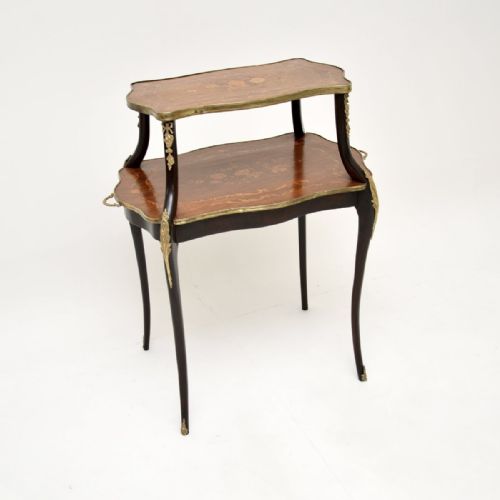
The selections here range from glazed bijouterie tables and tiered étagères to side cabinets and vitrines. Many adopt the curves of Louis XV revival design or the straighter geometry associated with Louis XVI revival work.
Makers constructed these tables for Parisian drawing rooms and formal reception spaces where guests could inspect medals, miniatures, and trinkets. Their primary function remains unchanged, offering a secure glass-enclosed surface for personal collections.
How they were made
Cabinetmakers laid rich kingwood veneers over a sturdy timber carcase, frequently arranging the grain into geometric parquetry or floral marquetry patterns. Craftsmen incorporated walnut, rosewood, satinwood, and mahogany to build up intricate surface designs.
Gilt-bronze and ormolu mounts frame the glass panels, edge the tabletops, and protect the slender cabriole legs. Brass detailing and fitted glass trays further elevate the construction of these glazed vitrines and tables.
Listings feature nineteenth-century and early twentieth-century pieces, spanning Victorian production up to nineteen-twenty.
What varies in quality
The crispness of the chased ormolu mounts separates standard production from exceptional examples. Finer tables display finely sculpted gilt-bronze foliage and scrollwork that fit seamlessly against the timber carcase.
The complexity of the marquetry and parquetry work dictates the tier of craftsmanship. Pieces featuring detailed floral inlays across multiple exotic woods demand greater skill from the cabinetmaker than plain veneered surfaces.
The Kingwood Display Table Glossary
- Kingwood
- A dense, heavily figured Brazilian timber prized for its rich violet-brown colouring and dark streaks. Cabinetmakers utilised it extensively for high-status French revival furniture throughout the nineteenth century.
- Bijouterie table
- A low display table featuring a glass-topped compartment specifically designed for holding jewellery and small ornaments. These pieces typically lift open or feature hinged glass lids.
- Ormolu
- Gilded bronze ornamentation applied to furniture mounts, feet, and borders. This decorative technique added metallic brilliance to nineteenth-century display cabinets and tables.
- Étagere
- An open tiered piece of furniture used for display or storage. Nineteenth-century examples often combine multiple kingwood shelves linked by slender brass or gilt-bronze supports.
- Marquetry
- The art of forming decorative patterns using thin veneers of various coloured woods. Craftsmen cut and fitted these pieces together to create floral or geometric table tops.
Kingwood Display Table: Frequently Asked Questions
What is a bijouterie table?
A bijouterie table is a low display piece featuring a glazed compartment designed for exhibiting small valuables. These tables keep delicate items safe from dust while allowing full visibility from above.
Cabinetmakers built them primarily for nineteenth-century drawing rooms where hosts displayed personal collections to guests. They function as both usable tables and secure miniature cabinets.
How do I clean kingwood furniture?
Maintenance requires gentle dusting with a soft, dry cloth to protect the delicate veneer and polished timber. Avoid chemical sprays or excess moisture which can damage both the wood and the underlying structure.
Keep these tables away from direct sunlight and heat sources to prevent the timber and veneers from drying out or splitting. Gentle wax application helps maintain the lustre of the kingwood surface.
Are these tables French in origin?
Most pieces follow French design canons, notably Louis XV and Louis XVI revival styles popular during the nineteenth century. Makers across Europe adopted these aesthetic templates to satisfy international demand for Parisian luxury.
Even when produced outside France, the workshops relied heavily on French forms, utilising kingwood veneers, cabriole legs, and ormolu mounts. The overall aesthetic remains firmly rooted in continental revivalism.
What can I display inside them?
The glass compartments suit small collectables such as pocket watches, vintage medals, porcelain figurines, and antique jewellery. The enclosed space protects fragile items from handling while keeping them visible.
Many owners use the top surface for everyday objects while reserving the glazed interior for delicate specimens. The tiered designs also accommodate small decorative items on open shelves.