

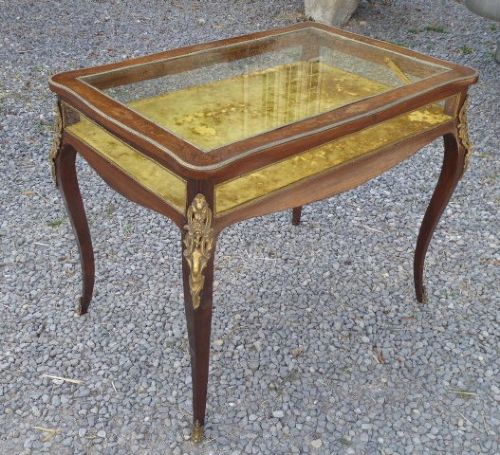


19th Century Bijouterie Table
A 19th century bijouterie table brings tabletop display cases into the sitting room for treasures and curiosities.
19th Century Bijouterie Table
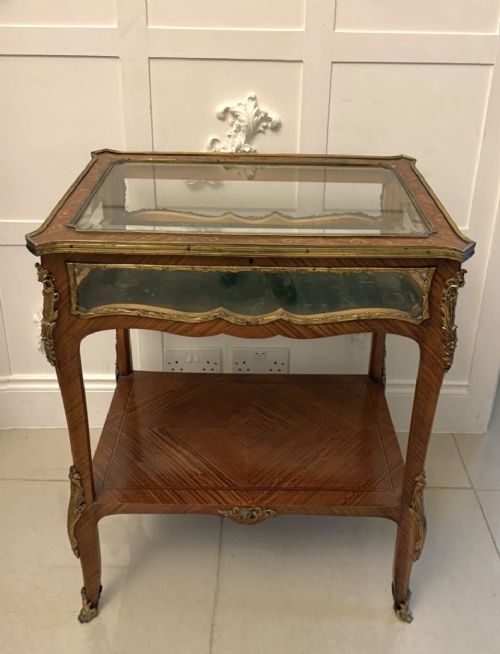
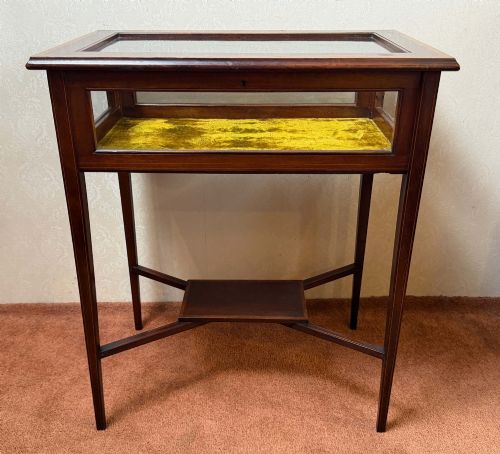
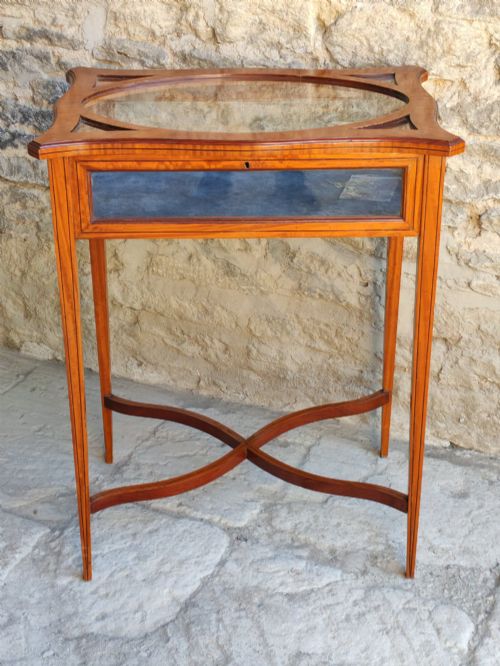
A 19th century bijouterie table is a glazed vitrine designed to show off small collectables, medals, and jewellery at eye or hand level. These pieces emerge in various forms, from simple rectangular mahogany boxes on slender legs to elaborate kidney-shaped or octagonal French revival vitrines.
The most common examples encountered here belong to the Victorian era and the later decades of the nineteenth century, often reflecting French Louis XV or Louis XVI revival tastes. They function as both furniture and personal museums, lifting small objects out of drawers and onto display.
Makers and workshops across Britain and France adapted the form into display cabinets, show cases, and freestanding tables with fitted interior shelves and glazed lids. Buyers select them to curate and protect delicate collections within a domestic interior.
How They Were Made
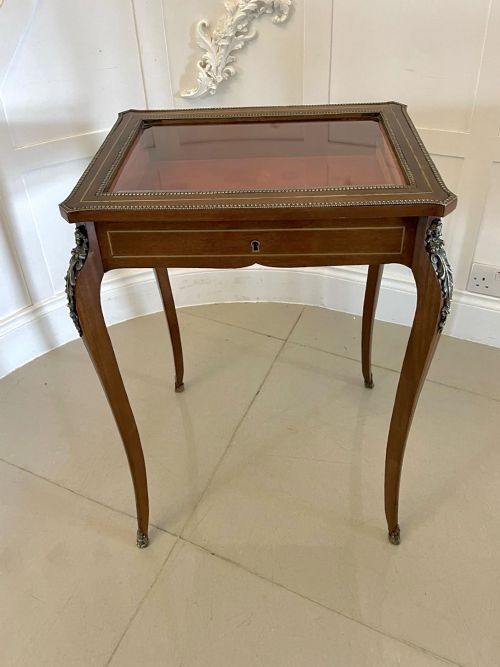
Cabinet makers built the carcase using timbers like mahogany, satinwood, kingwood, rosewood, and walnut, frequently applying marquetry inlay, brass strings, or painted decoration to the surfaces. Ormolu, gilt-bronze, and gilded mouldings serve as mounts framing the glass panels and highlighting the structural lines.
Interiors are typically lined with velvet or fabric to cushion the displayed items, while hinged glass lids or lift-off vitrine tops grant access to the contents. Structural support comes from slender cabriole legs or turned legs, sometimes linked by lower undertiers.
19th Century Bijouterie Table Retail Price Guide 2026
Typical asking prices for 19th century bijouterie table among the pieces listed under this phrase on Sellingantiques today, from the lower quarter to the upper quarter. They describe what is for sale here now, not the wider market.
Some tables include hidden drawers beneath the display well for storing the keys to the glass case.
What Varies in Quality
Quality rests in the crispness of the ormolu mounts, the precision of the marquetry and brass inlay, and the choice of timbers such as figured satinwood or kingwood. Finer examples display heavier cast gilt-bronze mounts and more complex serpentine or kidney-shaped woodwork.
The integration of the glazed vitrine lid with the main timber frame separates standard production from exceptional pieces by known makers. Interior touches, such as fitted velvet trays, multi-shelf substructures, and well-executed joinery on cabriole legs, elevate the standing of the piece.
Trollope & Sons
The 19th Century Bijouterie Table Glossary
- Bijouterie table
- A glazed display table designed specifically for small valuables, medals, and trinkets. It combines a glazed vitrine top with a table base.
- Ormolu
- Ground metallic bronze cast and finished with a gold wash, used extensively as decorative mounts on French and English furniture. It provides bright metallic contrast to dark timbers like mahogany and rosewood.
- Vitrine
- A glass-fronted or glass-topped cabinet or case intended for display. In these tables, the vitrine forms the upper section for viewing items from above.
- Marquetry
- Decorative veneer work arranged in pictorial or geometric patterns using various coloured woods. It decorates the top and sides of many finer display tables.
- Cabriole leg
- A furniture leg that curves out and then in, mimicking an animal's leg with a knee and foot. This shape is characteristic of Louis XV revival pieces.
19th Century Bijouterie Table: Frequently Asked Questions
How were bijouterie tables used?
These tables sat in Victorian drawing rooms to display personal collections of fans, miniature portraits, coins, and jewellery. Guests inspected the contents through the glass top while conversing.
They served as interactive furniture pieces that turned private collections into social discussion points during afternoon visits.
How do I date a 19th century bijouterie table?
Dating relies on timber selection, revival styles, and construction techniques found in the carcase and mounts. Mid-century examples often favour rosewood and walnut, while later decades see an increase in satinwood, bamboo, and ebonised finishes.
French revival pieces often draw on Louis XV and XVI motifs popular during the second half of the nineteenth century.
How do I care for the interior fabric?
Original velvet and fabric linings require gentle brush cleaning and protection from direct sunlight to prevent fading and fibre degradation. Avoid liquid cleaners on the surrounding wood and metal mounts while tending to the interior.
Keeping the display environment dry protects both the textile lining and the delicate items housed inside the glass case.