


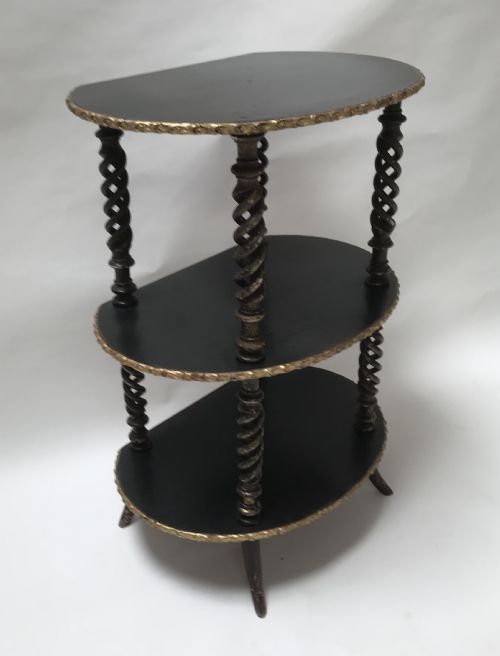


Napoleon III Display Table
These napoleon iii display table pieces bring French Second Empire elegance into your room, offering glass-topped surfaces to show off small treasures.
Napoleon III Display Table
When you search for a napoleon iii display table, you are looking at ornate French furniture designed to showcase precious objects and personal collections. These pieces emerge primarily from the Victorian era and the nineteenth century, reflecting the lavish interior tastes of the Second Empire.
The selections available here span diverse forms including bijouterie tables, etageres, whatnots, side tables, and jardiniere stands. Walnut, amboyna veneer, and ebonised wood form the structural bodies, often styled with French Louis XV revival influences and chateau aesthetics.
You will encounter glazed display cabinets and plant stands alongside traditional tables. These items serve both functional surface needs and ornamental roles within sophisticated drawing rooms.
How they were made
Cabinet makers utilised choice timbers such as walnut and amboyna veneer over solid carcases, incorporating intricate marquetry inlay into the wooden surfaces. Ebonised wood provided a dark, dramatic contrast for gilt bronze and ormolu mounts.
Gilt bronze and ormolu mounts were cast and chased before being applied to corners, legs, and borders to accentuate the structural lines. Brass inlay further enriched the wooden panels of etageres and side tables.
Glass top panels and cabinet doors were integrated to protect delicate items while offering clear viewing angles. Porcelain plaques were frequently mounted into cabinet frames and table tops as decorative focal points.
Object types recorded across the inventory include bijouterie tables, etageres, jardinieres, and table top credenzas.
What varies in quality
The refinement of the ormolu and gilt bronze mounts dictates much of the visual success of the piece. Finer examples display crisp chasing and deep gilding, whereas lesser items rely on simpler, flatter metalwork.
The selection of veneers creates a distinct tier in craftsmanship. Rich amboyna and detailed marquetry inlay require advanced joinery skills compared to plain painted or standard walnut surfaces.
Integration of materials such as porcelain plaques and brass inlay separates standard utility pieces from high-status display furniture. The precision of the glass fitting and internal framing also indicates the original workshop standard.
The Napoleon III Display Table Glossary
- Bijouterie table
- A glass-topped table specifically designed for displaying small valuables, jewellery, and curiosities. These tables often feature hinged lids or lift-off glass panels.
- Etagere
- A piece of furniture consisting of a set of open shelves for displaying small ornaments. They appear frequently in walnut and amboyna across nineteenth-century French interiors.
- Ormolu
- Gilded bronze applied to furniture mounts and decorative hardware. The technique involves a mercury amalgam process on historical pieces to achieve a rich gold finish.
- Marquetry
- Decorative woodwork where pieces of veneer are fitted into a ground to form geometric or floral designs. This technique decorates the surfaces of many finer etageres and tables.
Napoleon III Display Table: Frequently Asked Questions
What is a napoleon iii display table?
A napoleon iii display table is an ornate nineteenth-century French furniture piece featuring glass panels, ormolu mounts, and fine wood veneers designed to exhibit small decorative objects.
These tables reflect the decorative tastes of the Second Empire, blending utility with decorative display capabilities for drawing rooms and parlours.
How were these display tables used?
Original owners utilised these tables to showcase portrait miniatures, medals, shell collections, and other precious curiosities beneath protective glass covers.
They functioned as social focal points in reception rooms, inviting guests to inspect the collected treasures of the household.
What woods are common in these pieces?
Makers frequently employed walnut, amboyna veneer, and ebonised wood as primary timbers for these tables and etageres.
Contrasting woods and exotic veneers were selected to highlight the marquetry inlay and complement the metallic mounts.
How do I identify the period?
Nineteenth-century markers include specific construction methods, the presence of hand-chased ormolu, and characteristic French Louis XV revival styling.
Materials like amboyna veneer and brass stringing point directly to the Victorian Second Empire aesthetic found in these listings.