



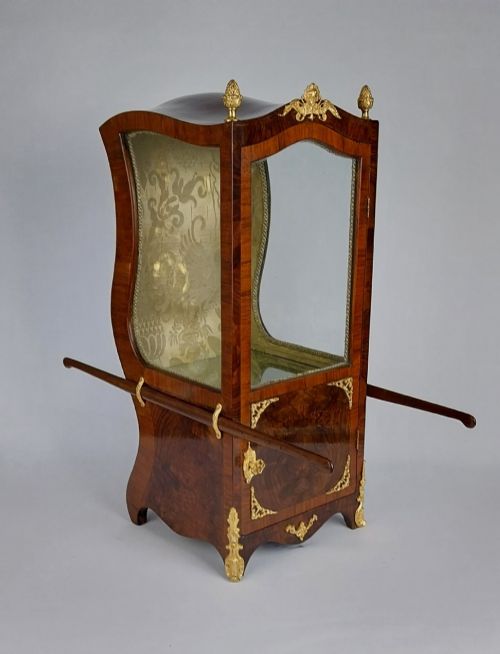


Walnut Display Table
A walnut display table brings together fine cabinet-making and glazed or open surfaces designed to showcase curated objects in any room.
Walnut Display Table
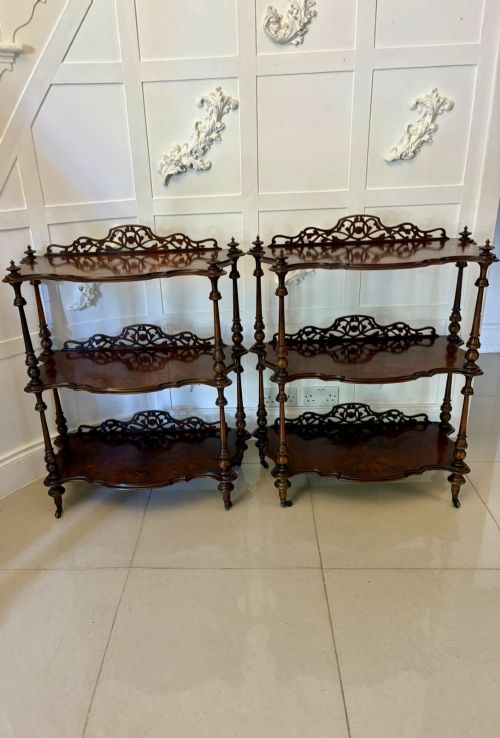
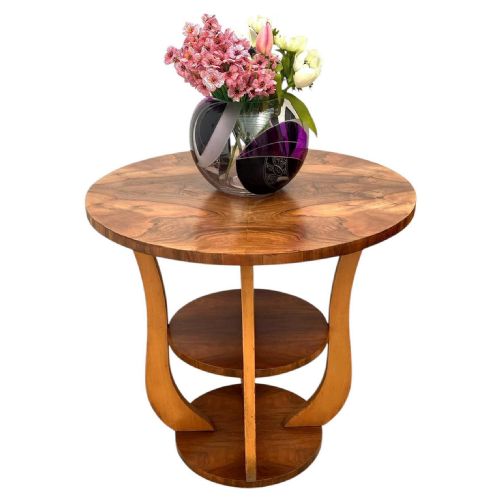
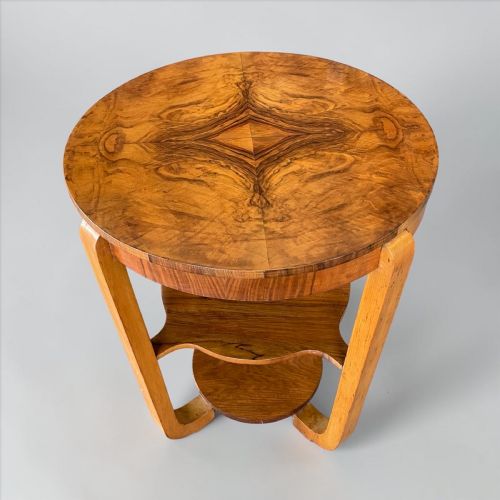
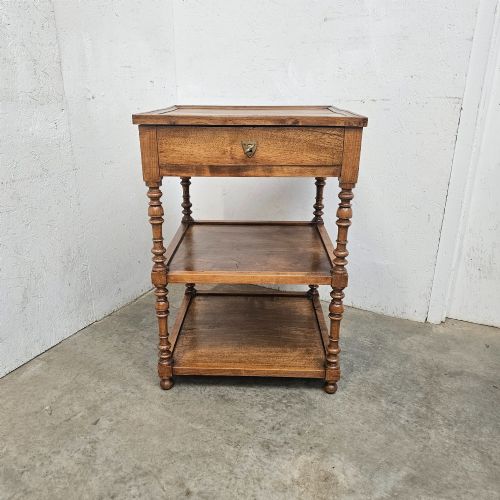
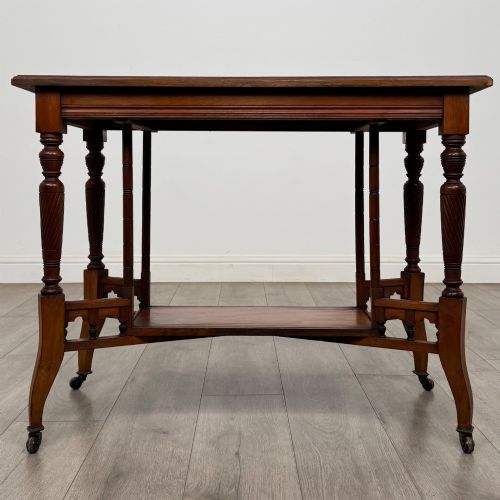
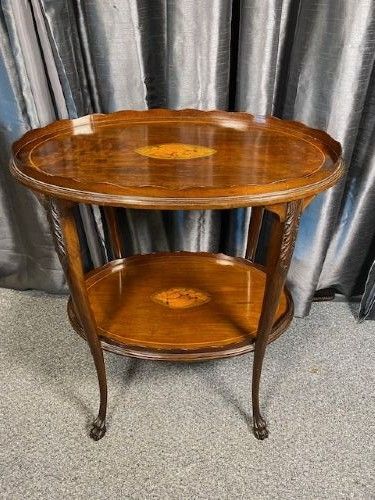
When searching for a walnut display table, you encounter a varied group of elevated surfaces created to hold and exhibit items, ranging from glazed bijouterie cabinets to open etageres and tiered occasional tables. These pieces originate across the nineteenth and twentieth centuries, spanning Victorian, Edwardian, and Art Deco periods with distinct regional influences from English and French workshops.
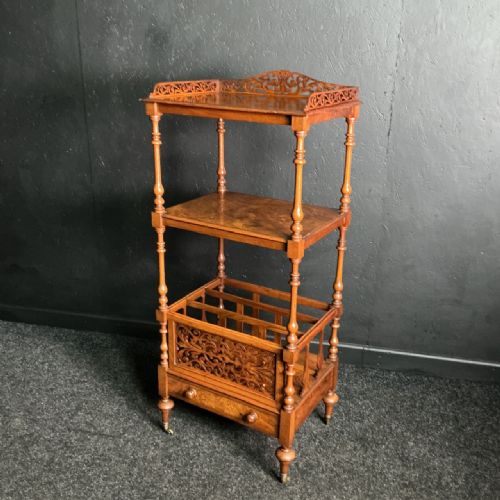
The most common forms on this page include multi-tiered whatnots, glass-topped bijouterie tables, and architectural display stands utilising walnut timber. They combine functional storage or surface display with decorative marquetry, inlay, and structural turning typical of their respective eras.
How they were made
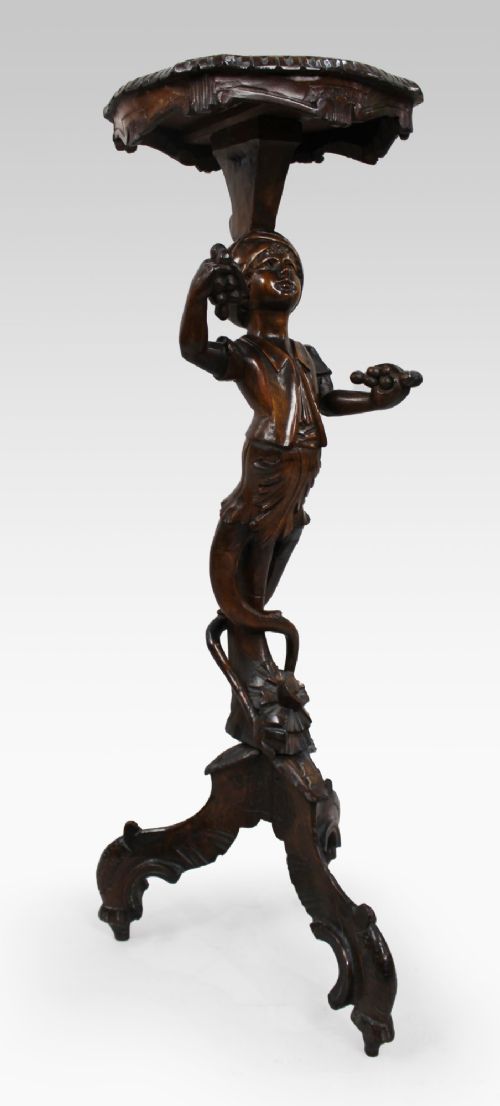
Cabinet-makers built these items using solid walnut and figured burr walnut veneers applied to secondary woods, often complemented by satin walnut or mahogany framing. Surfaces frequently display intricate marquetry, geometric inlay, and carved figural or floral detailing.
Structural embellishments rely on cast brass mounts, gilt ormolu, and glass panels fitted into hinged or glazed table tops and cabinet doors. Turned wooden legs, ebonised accents, and marble inserts complete the construction of the stands and etageres.
Tables double as miniature exhibition halls where even a humble tea service or collection of trinkets feels entirely grand.
What varies in quality
The standard of a walnut display table rests on the selection of the timber veneer, particularly the density and figuration of the burr walnut used on primary display surfaces. Higher-tier examples demonstrate superior matching of grain patterns across table tops and cabinet fronts, combined with crispness in hand-carved elements and marquetry.
Execution of metalwork fittings also distinguishes the grade of an object, with finely chased ormolu mounts and substantial brass hinges marking out exhibition-quality pieces. The complexity of the internal tiering and the integrity of original glazing contribute further to the distinction between standard production items and exceptional commissions.
Shoolbred
The Walnut Display Table Glossary
- Bijouterie table
- A glass-topped table or cabinet specifically designed to display small precious objects, jewellery, and trinkets beneath a glazed lid.
- Etagere
- A piece of furniture consisting of a set of open shelves for displaying small objects, popular in French and English interiors from the nineteenth century onwards.
- Whatnot
- A multi-tiered shelving unit used for displaying ornaments and books, frequently constructed with turned supports and decorative fretwork.
- Burr walnut
- A highly prized wood harvested from the abnormal growths on walnut trees, yielding complex, swirling grain patterns utilised for decorative veneer.
- Ormolu
- Gilded bronze or brass mounts applied to furniture for decorative effect, commonly seen on pieces in the French revival taste.
- Marquetry
- The art of applying pieces of veneer to a structure to form decorative patterns and pictorial designs.
Walnut Display Table: Frequently Asked Questions
What is a walnut display table used for?
These pieces serve primarily to exhibit decorative items, collections, or personal treasures while functioning as occasional or centre tables within a room.
Depending on the specific form, such as a glazed bijouterie table or an open etagere, they combine surface utility with dedicated display space behind glass or upon tiered shelving.
How do I date a walnut display table?
Dating relies on observing structural characteristics, decorative styles, and timber treatments that correspond to recorded periods like the Victorian, Edwardian, or Art Deco eras.
Details such as brass mounts, French Louis XV revival styling, or geometric marquetry inlay provide clear chronological markers for individual pieces.
How do I live with a display table?
Placing one of these tables in a drawing room or hallway allows you to utilise the glass tops or open tiers for curating small collections of objects and curios.
Care involves positioning the furniture away from direct sunlight to protect the walnut veneer and maintaining stable indoor humidity to preserve the wood and original glass.