




Glazed Curio Table
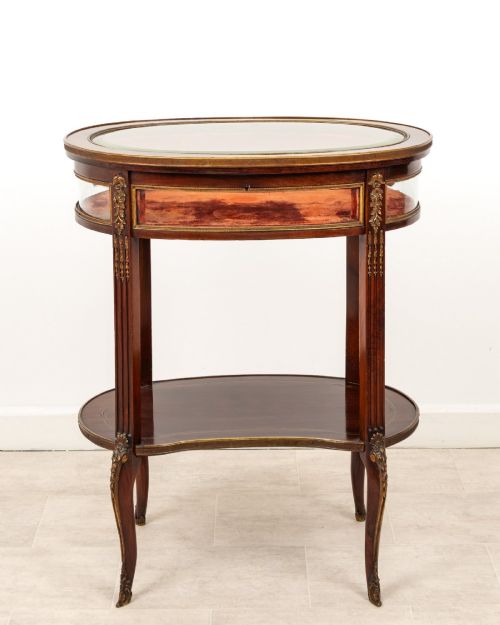
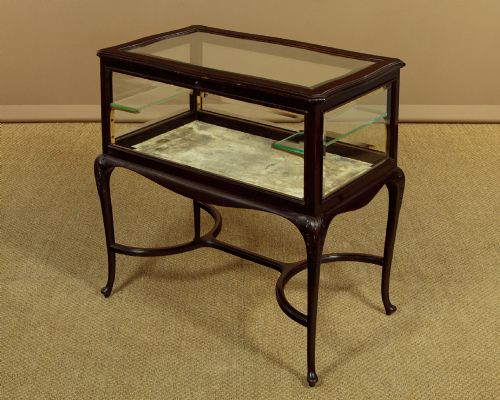
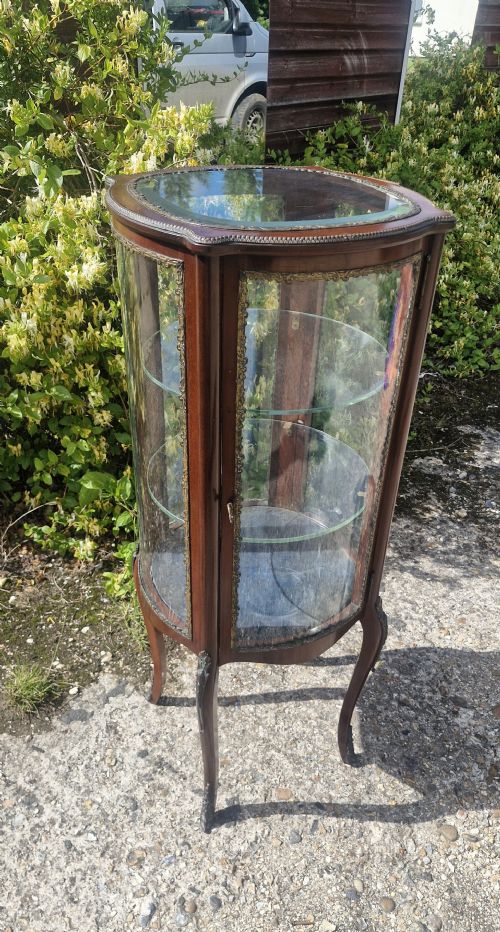
A glazed curio table is a display piece with a glass top, designed to hold small treasures and artefacts.
Glazed Curio Table
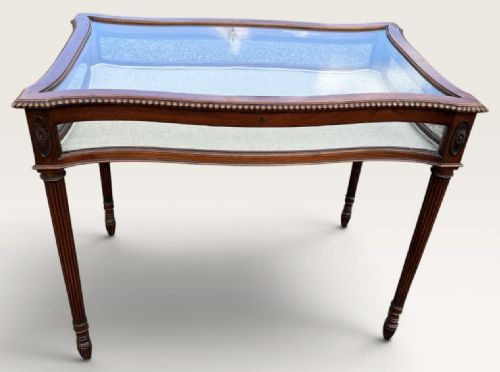
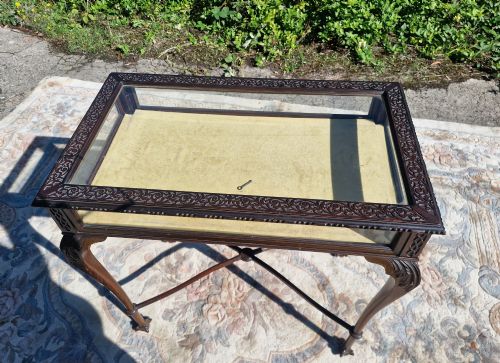
A glazed curio table combines the utility of a display cabinet with the height and form of a standard table, intended for exhibiting personal collections. Most examples seen on this page date from the Victorian, Edwardian, and later nineteenth or early twentieth centuries.
Materials and construction
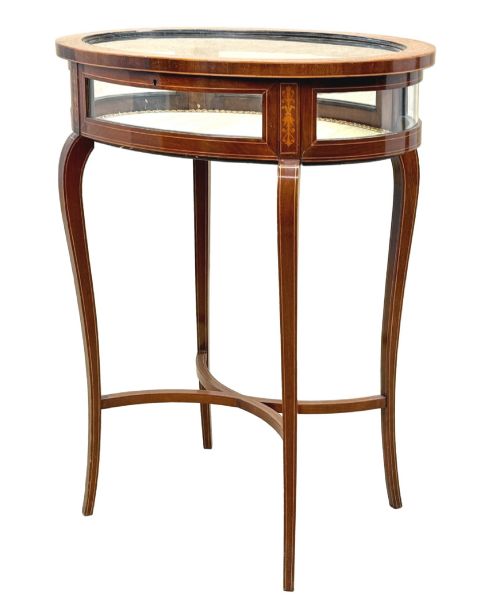
Makers built the structural frames largely from mahogany, satinwood, burr walnut, rosewood, and kingwood, frequently applying decorative stringing or marquetry inlay. Cabinets often incorporated brass hinges, lined interiors with fabric or velvet, and utilised glass panels to enclose the display space.
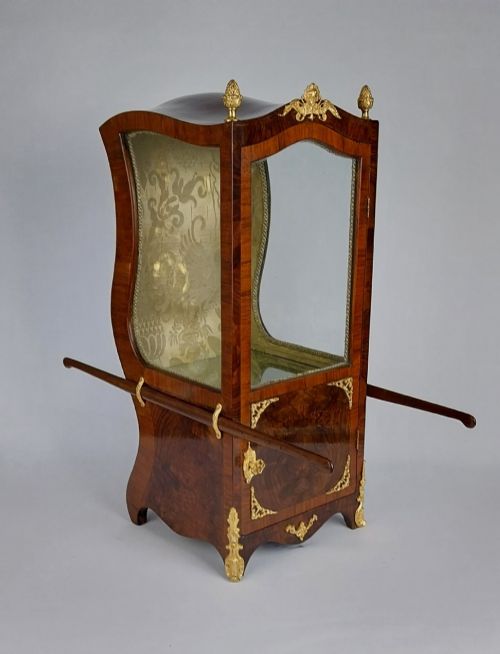
French and continental pieces frequently integrated cast or chased ormolu mounts and gilt metal details to accentuate the curves of Louis revival and Rococo styles. Joinery methods relied on period cabinet-making standards to support glazed lids and lift-off or hinged display compartments.
Listings span the Victorian and Edwardian eras, predominantly featuring mahogany and satinwood structures enhanced with glass and velvet.
Judging the range of quality
Differences in standard rest upon the selection of timber veneers, the precision of inlay work, and the weight and detail of cast metal mounts. Pieces featuring figured mahogany or satinwood with intricate marquetry demonstrate a higher tier of workshop execution than plain variants.
The sophistication of the internal lining, the clarity and thickness of the glass, and the smooth operation of hinged or glazed compartments distinguish superior examples. Stylistic flourishes, such as serpentine or kidney-shaped contours, require greater carpentry skill than basic rectangular boxes.
The Glazed Curio Table Glossary
- Bijouterie table
- A display table with a glass top and sides intended for small valuable ornaments and trinkets. These items typically feature a hinged or lifting glazed lid.
- Vitrine
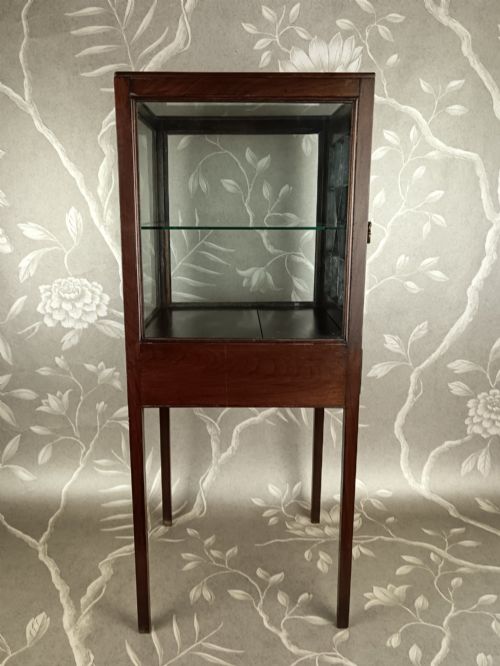
- A glass-fronted display cabinet used for porcelain, curiosities, and decorative objects. Versions on this page include both full table formats and smaller table top variants.
- Ormolu
- Gilded bronze mounts applied to furniture to accent corners, legs, and borders. This decorative technique appears frequently on French revival pieces from the nineteenth century.
- Marquetry
- Decorative veneer patterns formed by fitted pieces of different coloured woods. It defines the surface decoration of many Sheraton style and Edwardian examples.
- Kidney shaped
- A curved, kidney-like furniture profile popular in nineteenth and early twentieth-century writing and display tables. This organic shape requires specialised joinery.
Glazed Curio Table: Frequently Asked Questions
What goes inside a glazed curio table?
Owners traditionally place small collectables, medals, pocket watches, fans, and delicate curiosities beneath the glass top for safe viewing.
The lined interior protects these items from dust while allowing visitors to inspect details from above.
How do I date a glazed curio table?
Dating relies on identifying the prevailing style, timber choices, and hardware construction methods characteristic of Victorian, Edwardian, or later periods.
Details like brass hinges, hand-cut joinery, and specific revival motifs help narrow the decade of manufacture.
Are these tables sturdy enough for daily use?
Most examples are built to hold lightweight display items rather than heavy books or everyday objects.
The glazed lids and slender legs require gentle handling to preserve the antique joinery and glass panels.