




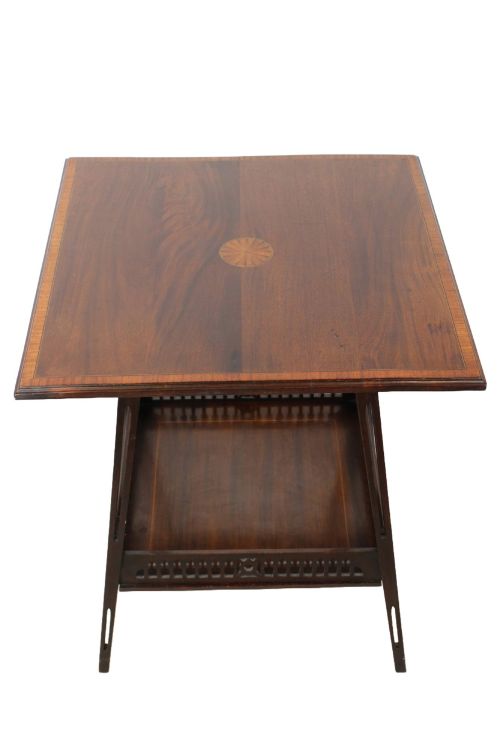
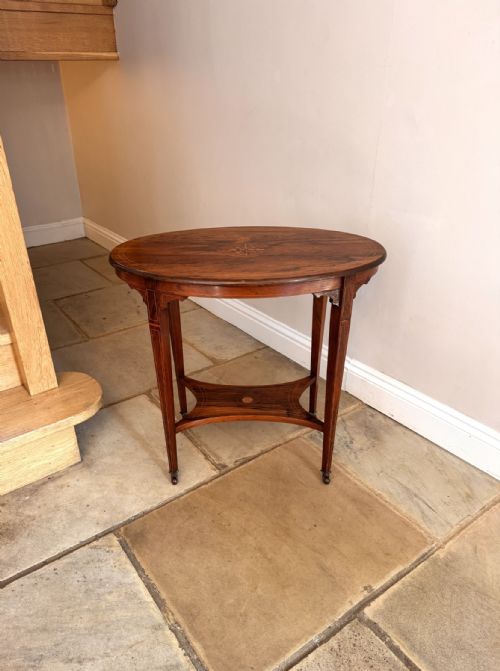
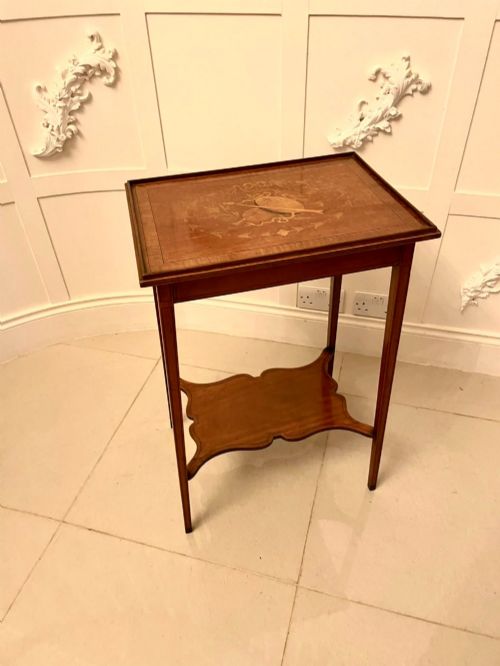
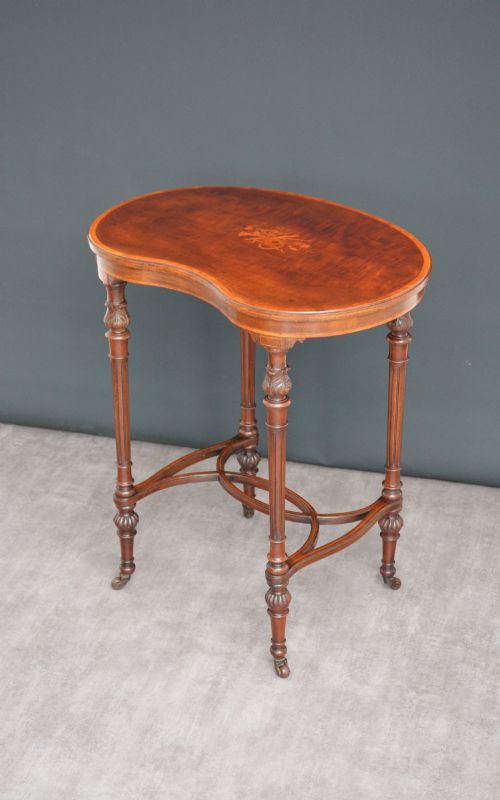
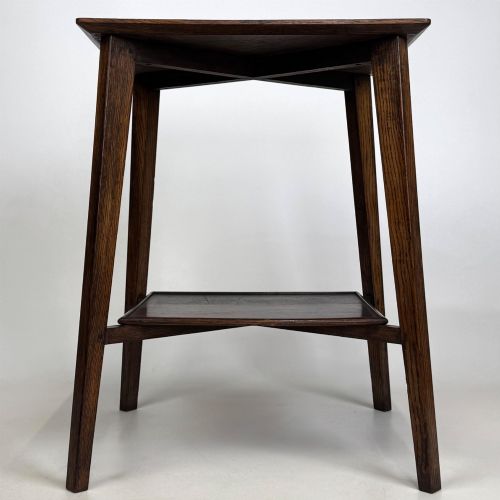
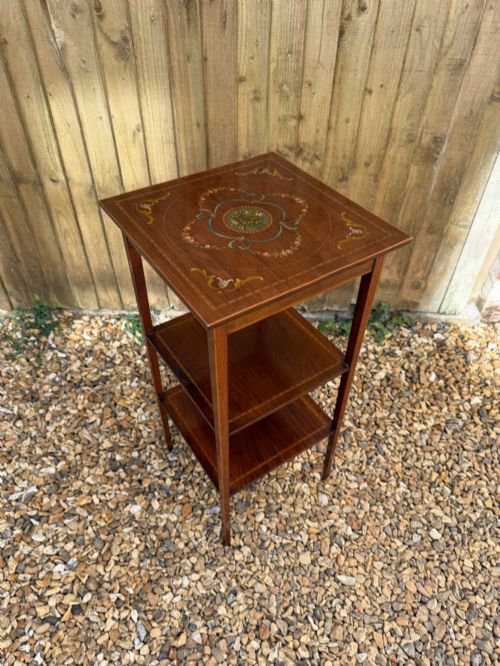
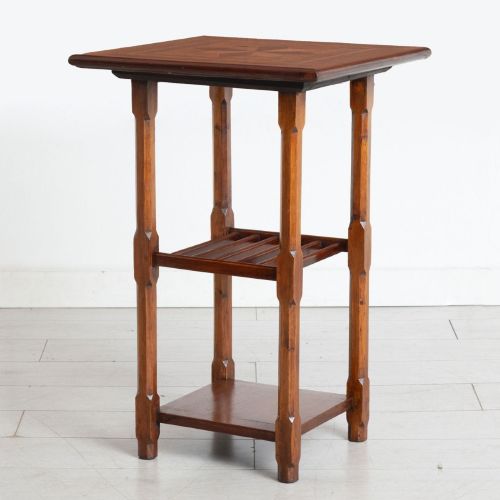
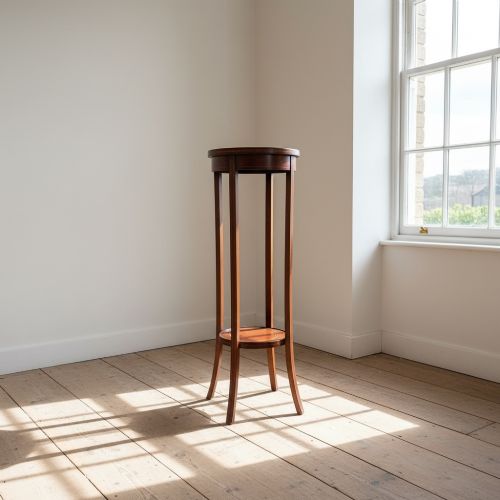
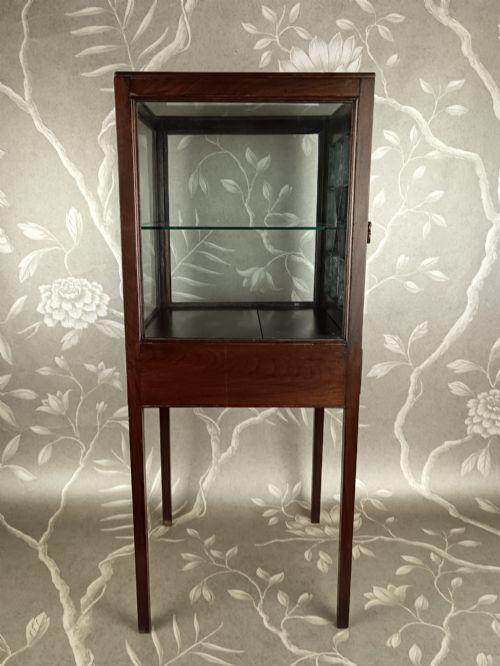
Brown Wood Display Table
A brown wood display table brings visible warmth and clear glass framing together to hold small treasures in any room.
Brown Wood Display Table
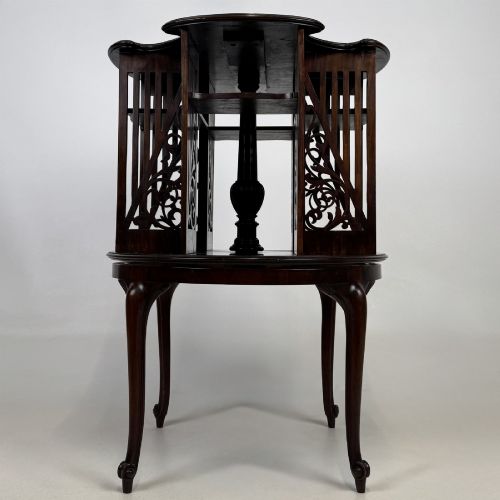
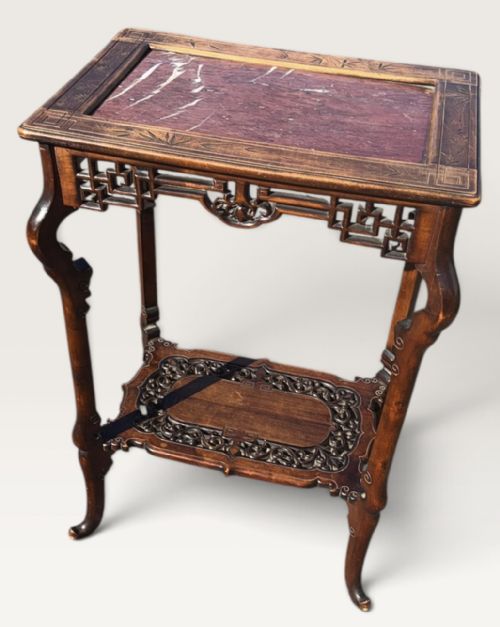
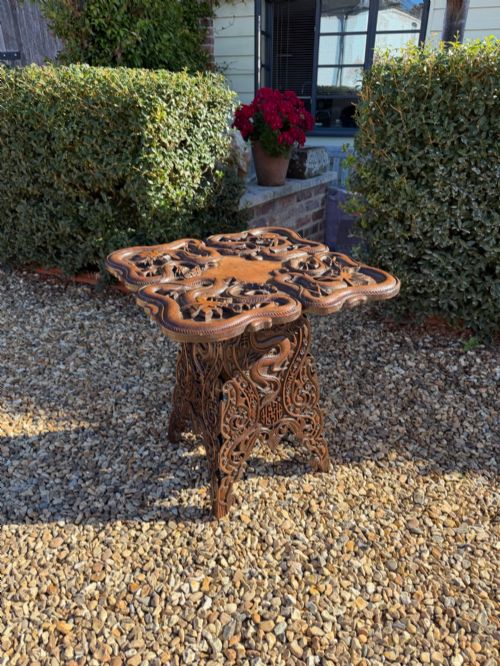
A brown wood display table serves as a functional surface for small objects, combining timber construction with glass panels or open shelving. Pieces meeting this description span the Victorian, Edwardian, and Georgian eras, taking the form of bijouterie tables, cabinets, etageres, and whatnots.
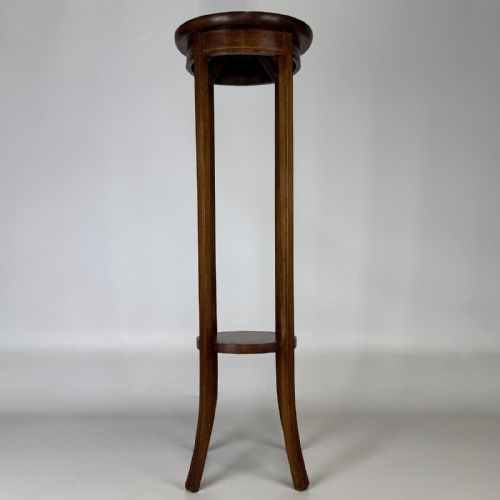
The version most commonly encountered on this page is the Edwardian or late nineteenth-century mahogany display piece, often inlaid with satinwood or boxwood. These tables range from oval bijouterie cases with glazed tops to multi-tiered occasional furniture designed to showcase ceramics and curiosities.
Distinctions in craftsmanship and design
The distinction between standard utility items and superior examples lies in the crispness of the inlay, the selection of figured wood veneers, and the refinement of the timber carving. Tables designated as exhibition quality display tighter proportions and more intricate marquetry work.
Structural balance and the quality of the glazing frames also separate grades of manufacture, as finer pieces utilise heavier brass hinges and carefully fitted glass panels. The integration of secondary woods and the precision of the joinery indicate the level of workshop attention invested in the piece.
Brown Wood Display Table Retail Price Guide 2026
Typical asking prices for brown wood display table among the pieces listed under this phrase on Sellingantiques today, from the lower quarter to the upper quarter. They describe what is for sale here now, not the wider market.
Several tables were built specifically to display tiny porcelain vases and curious trinkets where guests could peer down into them like miniature museums.
Trevor Page & Co·Liberty and Co
The Brown Wood Display Table Glossary
- Bijouterie table
- A specialist display table featuring a glazed compartment beneath the top surface for showing jewellery and small ornaments. These pieces typically stand on slender tapered legs.
- Etagere
- A set of open tiered shelves designed for displaying decorative objects and small porcelain items. The form developed in France and became popular in various Victorian and Edwardian revivals.
- Whatnot
- A freestanding piece of furniture consisting of multiple open shelves supported by upright pillars. It serves primarily to store and exhibit books, ornaments, or collections.
- Marquetry
- Decorative veneer work arranged in intricate patterns or pictorial designs across a timber surface. Craftsmen used contrasting woods such as satinwood and boxwood to create these motifs.
- Vitrine
- A glass-fronted cabinet or display case used to protect and exhibit objects of value. They appear in several period styles, often mounted with brass or gilt metal details.
Brown Wood Display Table: Frequently Asked Questions
What is a bijouterie table?
A bijouterie table is a specialised display piece designed with a glazed compartment under the tabletop. It provides a secure, dust-free enclosure for small collectables and precious items.
The glass top allows viewers to observe the contents from above while keeping them protected. These tables gained significant popularity during the Victorian and Edwardian periods.
How do I use an etagere?
An etagere functions primarily as an open display unit for small decorative objects, porcelain, or books. Its multiple tiers maximise vertical display space in smaller rooms.
Position the piece against a wall or use freestanding versions to divide a space gently. The open shelves keep your collection visible from multiple angles.
What timber was used most?
Mahogany remains the dominant timber across these listings, appearing in numerous shades from deep reddish-brown to lighter tones. Walnut and rosewood also feature prominently in Victorian variants.
Cabinetmakers paired these primary hardwoods with contrasting inlay materials like satinwood and boxwood. This combination created decorative borders and geometric patterns.
How do I date these tables?
Dating relies on observing structural forms, timber choices, and decorative motifs such as inlay styles. Georgian pieces display restrained classical proportions, whereas Edwardian examples often incorporate lighter wood framing and delicate stringing.
Hardware details and leg shapes also provide clear indicators of period manufacture. Comparing these elements against known design revivals helps narrow the decade of origin.