

French Style Marquetry Table
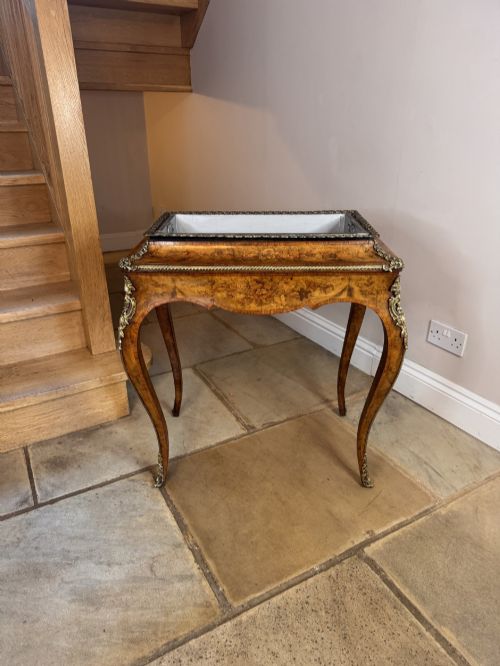
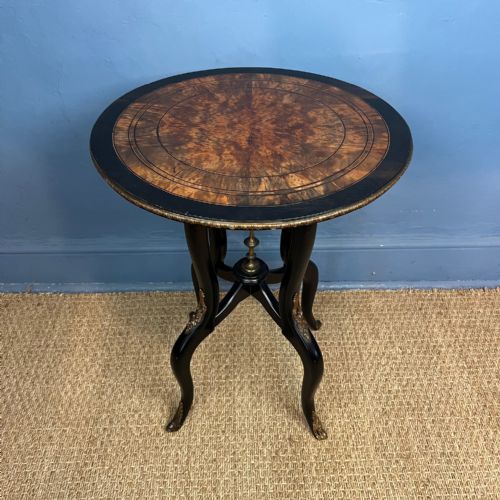
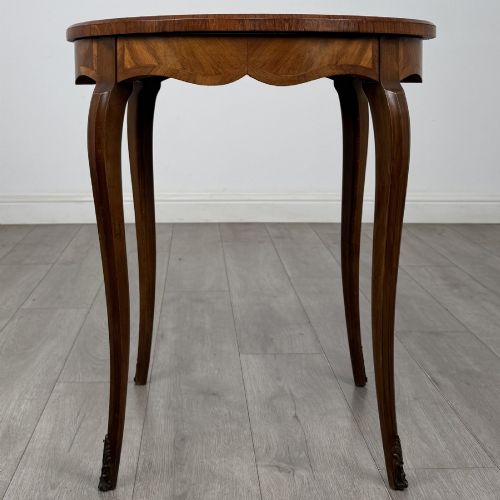
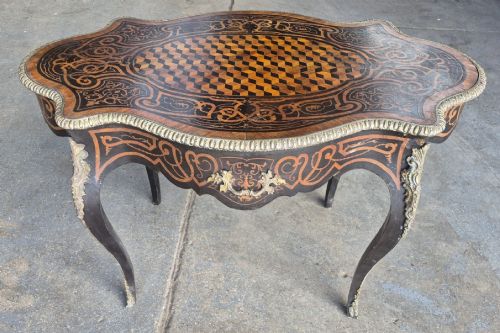
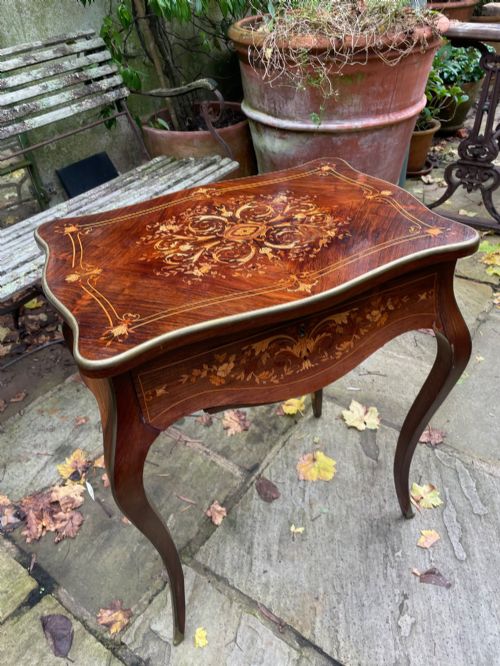
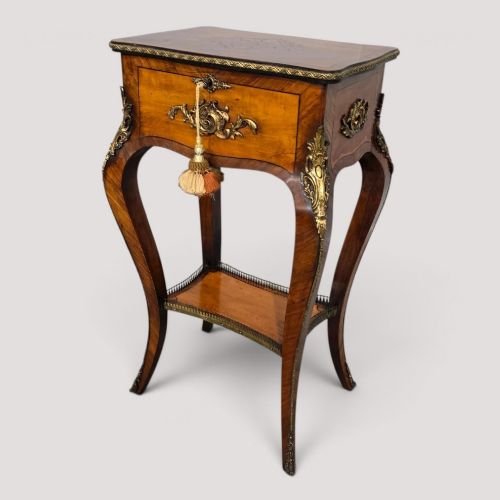
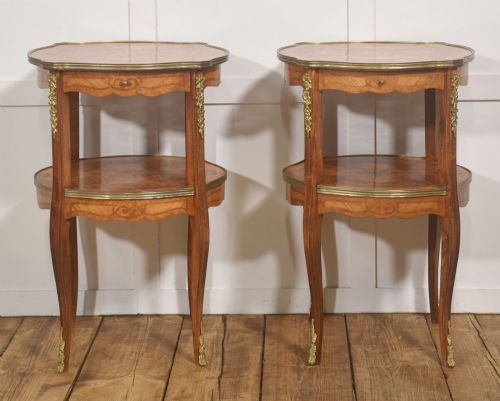
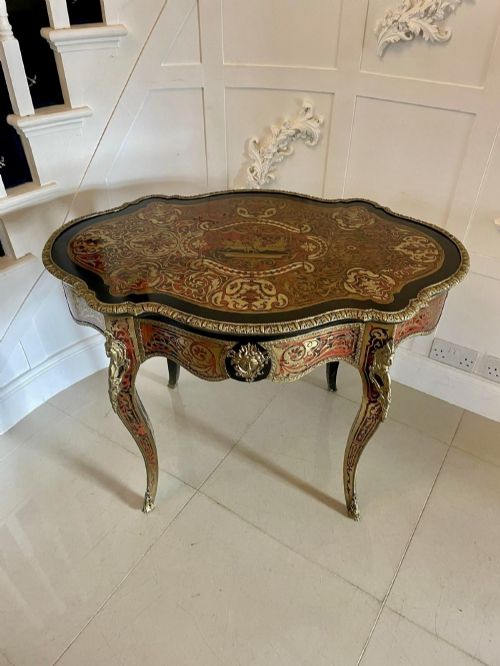
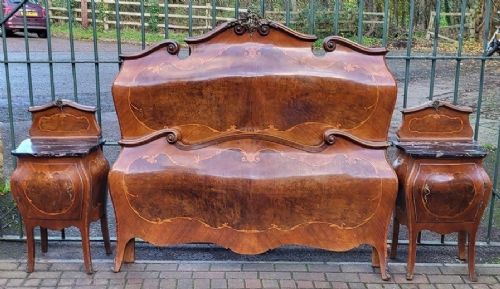
These french style marquetry table examples bring floral veneers and serpentine outlines into nineteenth and early twentieth century rooms.
French Style Marquetry Table
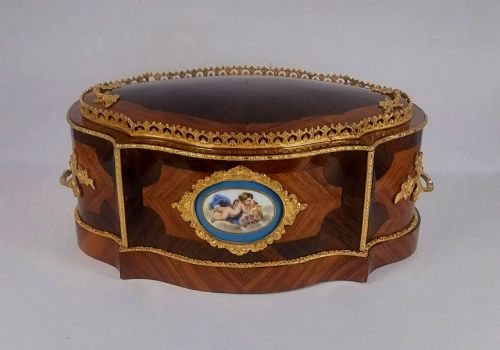
A french style marquetry table comprises freestanding centre pieces, writing desks, and smaller occasional designs produced across the nineteenth and early twentieth centuries. These forms reflect revival movements, predominantly drawing inspiration from Louis XV and Louis XVI aesthetics.
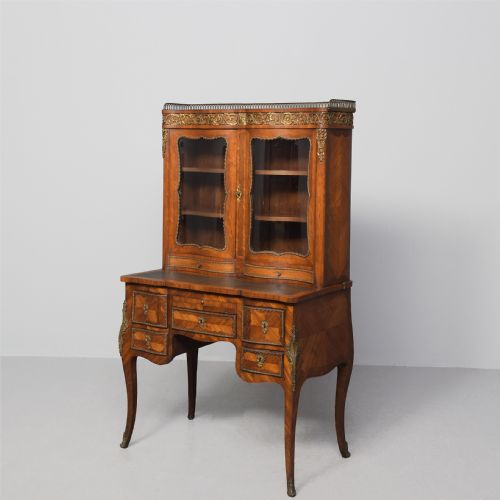
Buyers encounter numerous variations on this page, ranging from marble-topped lamp tables and writing desks to multi-tiered étagères and card tables. Walnut, kingwood, and rosewood serve as the primary foundational timbers for these inlaid surfaces.
How they were made
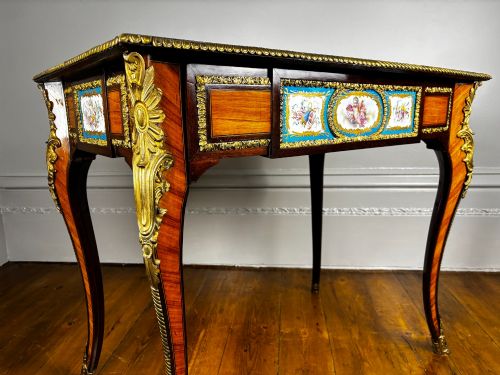
Craftsmen built these tables using foundational carcase timbers such as mahogany and walnut, applying decorative veneers of kingwood, rosewood, and satinwood to the exterior surfaces. Marquetry panels were meticulously hand-cut from contrasting wood species to form floral or geometric motifs.
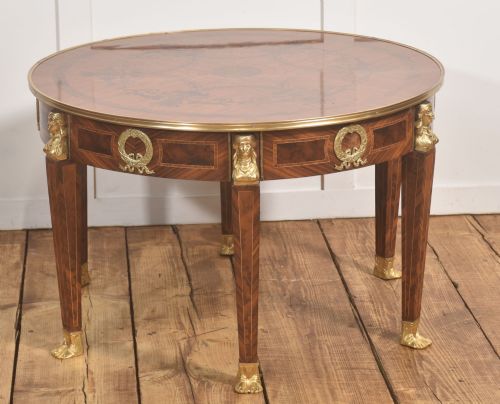
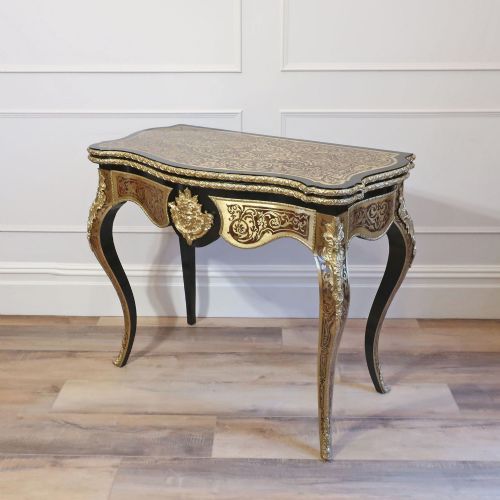
Gilt bronze and ormolu mounts were cast and chased to accentuate the curved outlines and corners of the furniture. Marble tops, frequently edged with brass galleries, were fitted to specific centre and bedside forms.
French Style Marquetry Table Retail Price Guide 2026
Typical asking prices for french style marquetry table among the pieces listed under this phrase on Sellingantiques today, from the lower quarter to the upper quarter. They describe what is for sale here now, not the wider market.
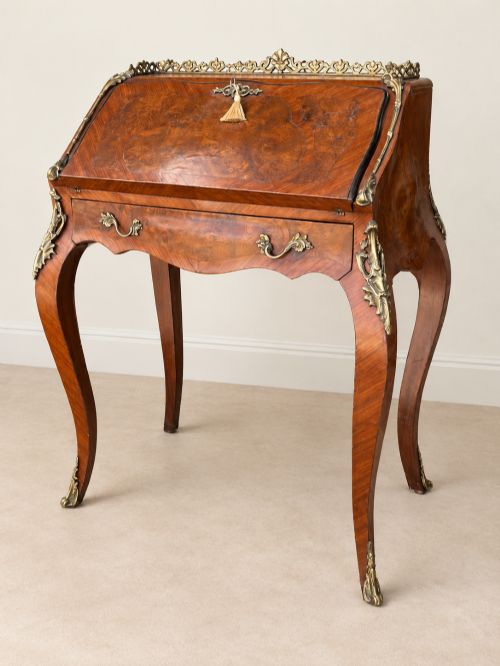
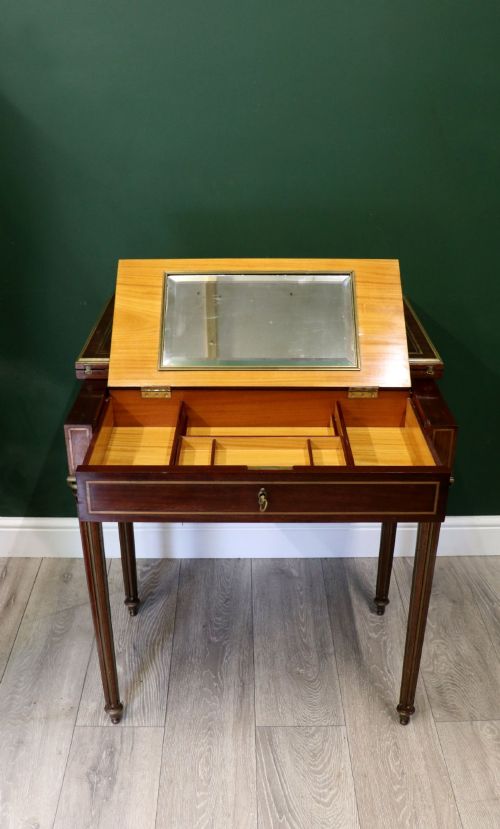
Several tables conceal mechanical writing slides or lifting trays designed to surprise guests after dinner.
What varies in quality
The sophistication of the veneer work dictates much of the distinction across these pieces, with intricate hand-cut marquetry displaying greater tonal variation and precision than simpler geometric parquetry. The weight and crispness of the cast ormolu mounts further separate standard production from superior cabinetwork.
Structural execution also determines grade, visible in the smoothness of writing mechanisms and the seamless integration of curved wooden joints. Maker attribution to notable workshops elevates specific examples significantly above anonymous workshop output.
François Linke·Durand·Tehan
The French Style Marquetry Table Glossary
- Marquetry
- Decorative veneer work arranged in pictorial or floral patterns across a surface. Different coloured wood species are cut and fitted together precisely before application.
- Ormolu
- Gilded bronze mounts applied to the edges, legs, and mounts of furniture. These decorative elements define the rococo and neoclassical revival silhouettes.
- Kingwood
- A dense, richly figured timber native to Brazil utilised extensively in nineteenth-century cabinetmaking. Its contrasting dark and golden brown grains suit detailed inlay.
- Bureau Plat
- A freestanding writing desk fitted with drawers along the frieze. These tables often feature leather-lined tops framed by gilt bronze mounts.
- Étagere
- An open tiered stand or shelving unit designed for display. These pieces utilise slender uprights to support multiple veneered surfaces.
French Style Marquetry Table: Frequently Asked Questions
How do I care for marquetry?
Keep these tables away from direct sunlight and steady heat sources to prevent the underlying veneers from drying and lifting.
Apply a microcrystalline wax sparingly to maintain the finish without building up heavy residues over the delicate inlay.
Were these tables used for writing?
Specific forms like the bureau plat were explicitly designed for correspondence and paperwork, often featuring leather writing surfaces.
Other designs such as occasional and centre tables served decorative purposes or held lamps and ornaments in reception rooms.
How do I distinguish Louis XV from Louis XVI?
Louis XV style pieces rely on asymmetrical curves, cabriole legs, and elaborate serpentine outlines derived from rococo aesthetics.
Louis XVI designs introduce straighter lines, tapered fluted legs, and symmetrical neoclassical geometry with subtle parquetry.
What woods appear most frequently?
Kingwood, walnut, and rosewood form the main body veneers across the majority of nineteenth-century examples.
Satinwood and mahogany also appear regularly, providing lighter contrasting tones for intricate floral marquetry panels.