

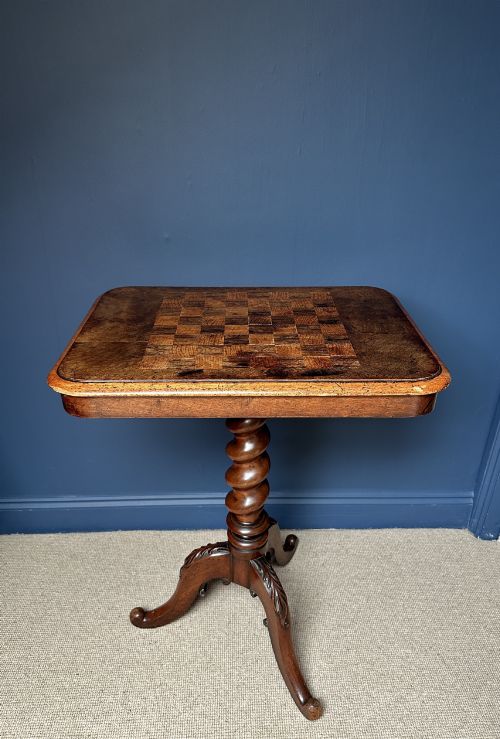
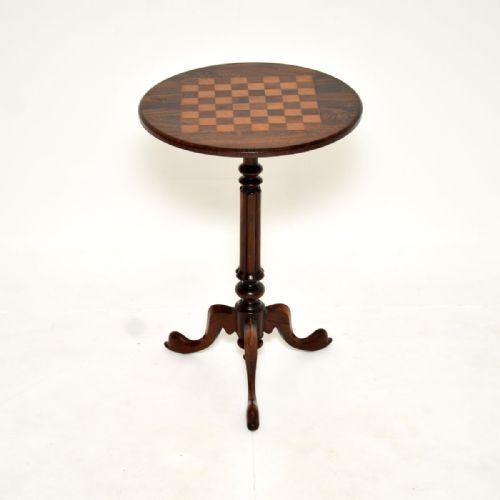
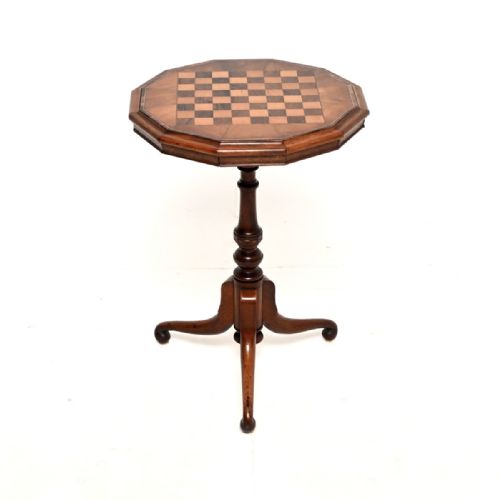


Victorian Inlaid Work Table
When you search for a victorian inlaid work table, you enter a world of refined timbers and meticulous marquetry designed for needlework and leisure.
Victorian Inlaid Work Table
A victorian inlaid work table serves multiple functions, combining a surface for writing or games with internal storage compartments for sewing and needlework.
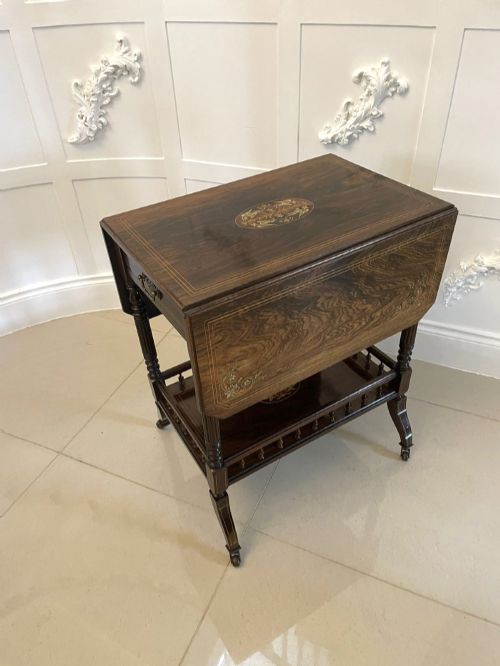
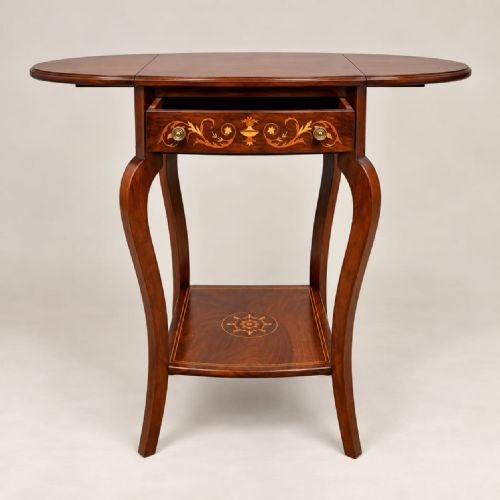
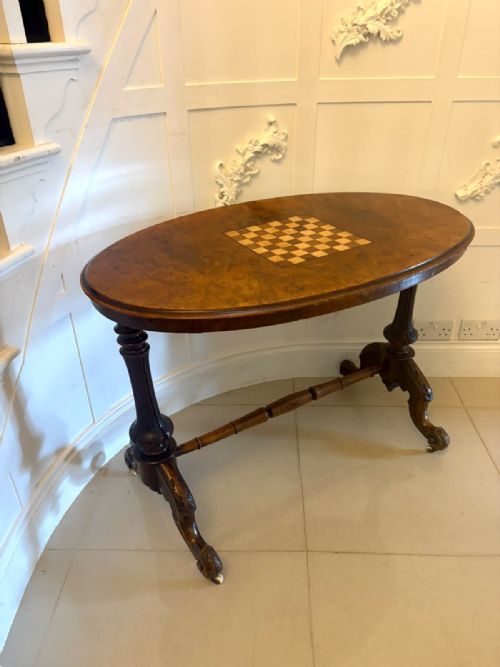
The pieces on this page appear predominantly in burr walnut, rosewood and mahogany, frequently incorporating chess boards and fitted interior boxes.
Originating largely from the nineteenth century, these tables range from trumpet-shaped sewing receptacles to oval side tables and games tables.
How They Were Made
Cabinet makers utilised dense native and exotic timbers such as walnut, rosewood and satinwood, applying highly figured burr veneers to primary surfaces.
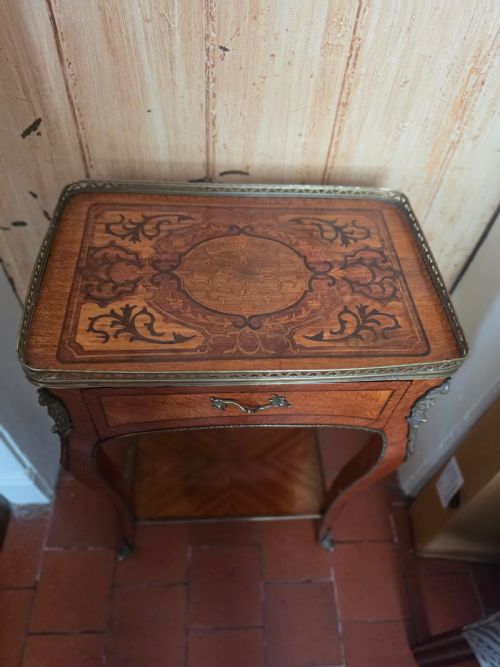
Decoration relies on precision wood inlay, boxwood stringing and floral marquetry, often paired with contrasting brass details or painted elements.
Victorian Inlaid Work Table Retail Price Guide 2026
Typical asking prices for victorian inlaid work table among the pieces listed under this phrase on Sellingantiques today, from the lower quarter to the upper quarter. They describe what is for sale here now, not the wider market.
Some tables double as secret gaming dens with hidden chess boards, proving Victorians took their leisure as seriously as their stitching.
What Varies in Quality
The standard of a victorian inlaid work table rests on the crispness of the marquetry and the choice of timber figure, particularly the richness of the burr walnut or rosewood grain.
Superior examples display sophisticated internal fittings, such as original velvet-lined compartments and intricate sewing boxes, alongside robust structural timber framing.
The Victorian Inlaid Work Table Glossary
- Marquetry
- Decorative patterns formed by inserting pieces of wood, veneer, or shell into a master wood structure. This technique creates elaborate floral or geometric table tops.
- Burr Walnut
- Wood cut from a walnut tree growth where the grain has swirled into intricate knots. It provides deeply figured, highly decorative surfaces for Victorian furniture.
- Tunbridge Ware
- Small wooden objects decorated with intricate mosaics made from thousands of tiny tinted wood blocks. It appears on specialised Victorian work tables and boxes.
- Trumpet Table
- A work table featuring an octagonal or flared pedestal body resembling a musical instrument. The base expands downward to house a fabric sewing bag.
Victorian Inlaid Work Table: Frequently Asked Questions
What is a work table?
A work table is a specialised nineteenth-century piece of furniture designed specifically for sewing, needlework and small crafts. They typically feature an internal compartment, tray or hanging bag for storing threads and fabrics.
Many versions also incorporate folding tops for writing or gaming, making them versatile items for a Victorian drawing room or parlour.
How do I identify a games table?
Games tables are identified by integrated chess, checkers or backgammon boards built directly into the timber surface. The tops often fold over or rotate to reveal a baize-lined playing area.
These combination pieces frequently double as needlework tables, offering hidden storage beneath the playing surface for game pieces and sewing equipment.
What woods were used?
Cabinet makers predominantly utilised walnut, burr walnut and rosewood for high-status Victorian pieces. These rich timbers provided dark, elegant backgrounds for contrasting lighter wood inlays.
Secondary woods like mahogany and satinwood also appear, whilst boxwood is frequently used for fine stringing lines and geometric borders.
Where should I place it?
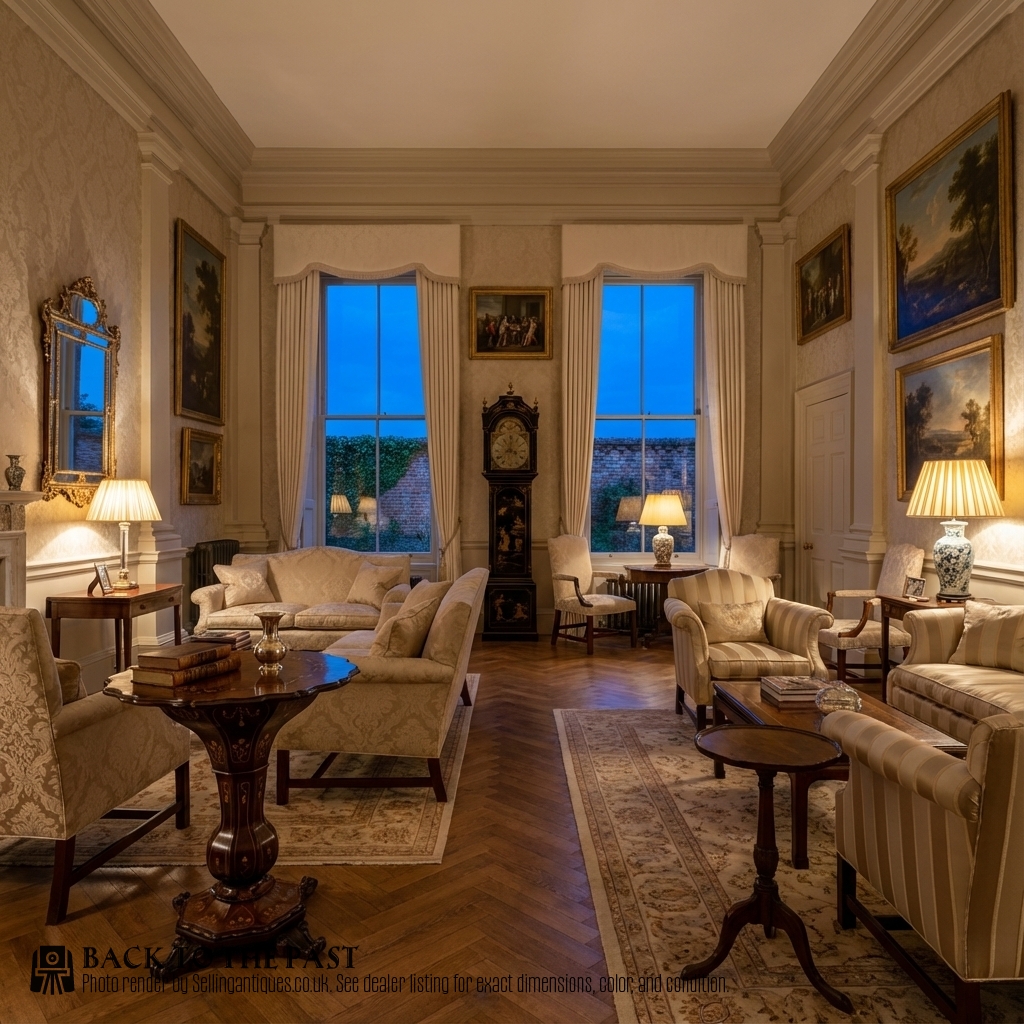
These compact tables fit well as occasional, side or lamp tables in a living room or study. Their decorated tops and finished backs allow them to sit freestanding in a room rather than strictly against a wall.
Their built-in storage makes them practical for holding small everyday items while adding nineteenth-century character to an interior scheme.