



Marquetry Glass Display Table
These marquetry glass display tables are exquisite pieces designed to showcase small treasures beneath glass tops.
Marquetry Glass Display Table
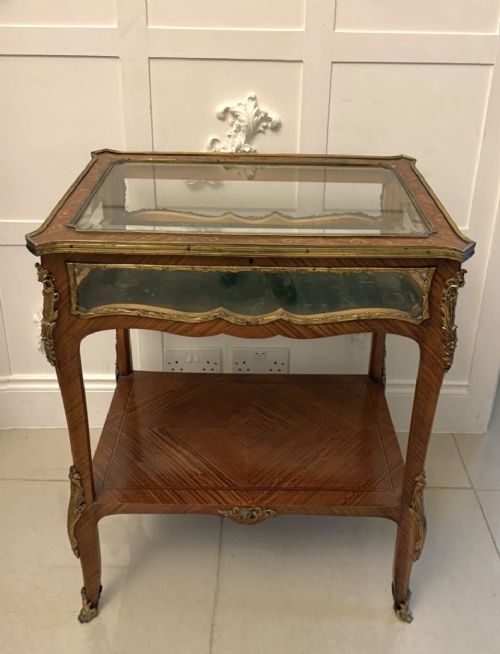
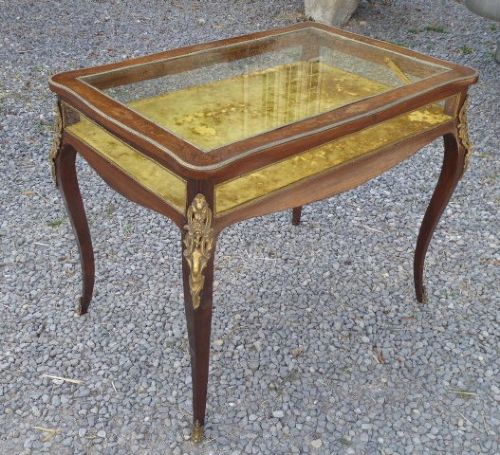
A marquetry glass display table combines timber marquetry with glazed compartments intended for exhibiting cherished items and curiosities. You will frequently encounter forms such as bijouterie tables, side tables, and etageres stemming from the nineteenth century and the Edwardian era. These furnishings served as social centerpieces in drawing rooms where hosts displayed collections of medals, miniatures, and jewellery to visiting guests.
The aesthetic leans heavily towards French revival styles, including Louis XV and Napoleon III influences, alongside straightforward Victorian and Edwardian interpretations. Octagonal and oval formats appear alongside rectangular shapes, giving buyers various geometric choices for interior placement. Most examples integrate glazed panels or trays supported by slender timber legs, frequently accented with metallic mounts.
Origin divides broadly between domestic British cabinet-making and continental French workshops producing elaborate inlaid pieces. Satinwood, kingwood, mahogany, and walnut provide the primary timber foundations for the intricate surface patterns. Buyers seeking these particular tables will find that nineteenth-century French and Edwardian British pieces dominate the available selection.
Materials and construction methods
Cabinet-makers constructed these tables using dense hardwoods like mahogany, walnut, kingwood, and satinwood as the structural base for detailed marquetry veneers. Artisans cut thin sections of contrasting timber to form floral or geometric pictorial motifs, which were then glued meticulously onto the carcase. Glass panels were integrated into hinged lids or removable trays, allowing light to enter the interior display well.
Metal enrichment played a significant role, with cast brass and ormolu mounts fitted to protect edges and accentuate curved contours. Frames often featured stringing and brass inlay work to define borders and draw attention to the grain of the underlying wood. Fabric linings inside the glazed compartments protected delicate items placed on view by the owner.
Marquetry Glass Display Table Retail Price Guide 2026
Typical asking prices for marquetry glass display table among the pieces listed under this phrase on Sellingantiques today, from the lower quarter to the upper quarter. They describe what is for sale here now, not the wider market.
Some tables include velvet-lined interior trays specifically designed to keep delicate pocket watches from sliding about during energetic Victorian conversations.
Factors influencing execution and finish
The intricacy and precision of the wood marquetry set higher-grade examples apart from simpler production. Superior pieces display tight joins in the veneer work and sophisticated shading within the botanical or scroll motifs, whereas lesser items rely on repetitive or sparse inlay. The quality of the timber selection itself, such as highly figured kingwood or satinwood, dictates the visual depth of the surface.
Structural refinement in the mounts and leg joinery indicates superior workshop standards. Heavy, finely chased ormolu or brass fittings reflect greater investment in the piece than thin, stamped metal trims. The clarity of the glass and the smoothness of the hinge mechanisms complete the distinction between standard domestic output and high-end cabinet-making.
The Marquetry Glass Display Table Glossary
- Marquetry
- Decorative veneer work created by fitting together small pieces of wood, shell, or ivory to form pictorial patterns on a furniture surface. This technique requires immense patience and precision from the artisan.
- Bijouterie table
- A specialised display table featuring a glass-topped compartment designed specifically for holding and exhibiting small valuables and trinkets. They gained immense popularity during the Victorian period.
- Ormolu
- Gilded bronze mounts and decorative elements applied to furniture frames to enhance their visual richness. The technique involves coating bronze with a gold amalgam.
- Etagere
- An open tiered piece of furniture used for displaying ornaments or small objects. In this context, versions often incorporate glass trays.
- Kingwood
- A dense, richly figured tropical timber prized by cabinet-makers for its distinctive dark violet-brown grain with lighter streaks. It was frequently utilised in fine French marquetry.
- Stringing
- Very narrow strips of contrasting wood or metal inlaid into flush channels on a furniture surface to create decorative borders. It outlines panels and emphasises structural lines.
Marquetry Glass Display Table: Frequently Asked Questions
What is a marquetry glass display table?
A marquetry glass display table is a specialised piece of antique furniture featuring a glazed compartment for showing small collections, decorated with inlaid wood veneers.
These tables were designed to keep delicate objects visible yet protected from dust in nineteenth and early twentieth-century drawing rooms.
How were these tables used originally?
Victorian and Edwardian owners used them to exhibit personal treasures such as pocket watches, coins, medals, and fine jewellery during social gatherings.
Guests would gather around the furniture to admire the collection displayed safely beneath the glass top.
How do I care for the wood surface?
Protect the marquetry and timber by placing the table away from direct sunlight and maintaining stable indoor humidity levels.
Apply high-quality paste wax sparingly to nourish the wood and buff gently with a soft cloth to maintain the finish.
How do I distinguish French and English styles?
French pieces often display more ornate ormolu mounts, serpentine curves, and exotic woods like kingwood following Louis XV revival tastes.
English Edwardian or Victorian examples tend to utilise mahogany and satinwood with slightly more restrained inlay and rectilinear forms.