




Edwardian Glazed Display Table
An edwardian glazed display table turns the simple act of showing a collection into a polished domestic focal point.
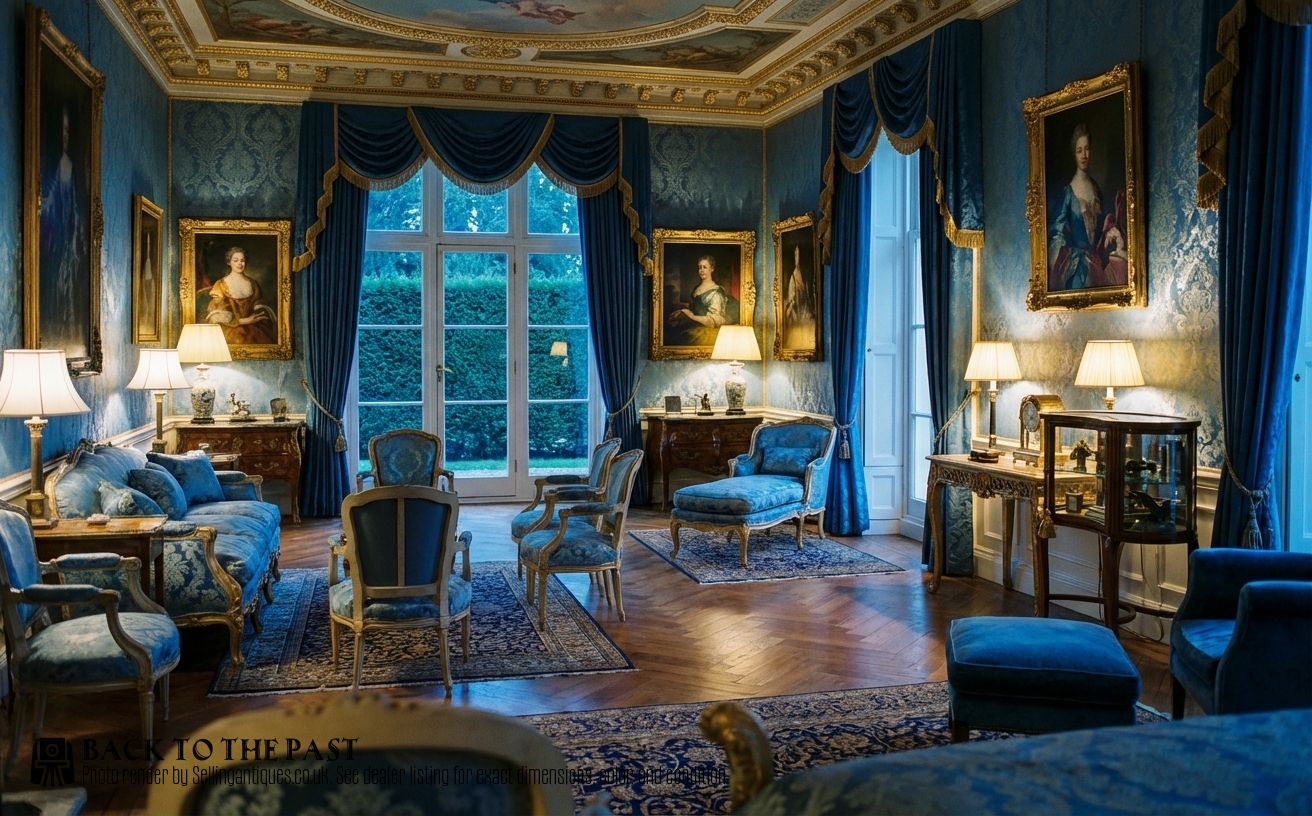
Edwardian Glazed Display Table
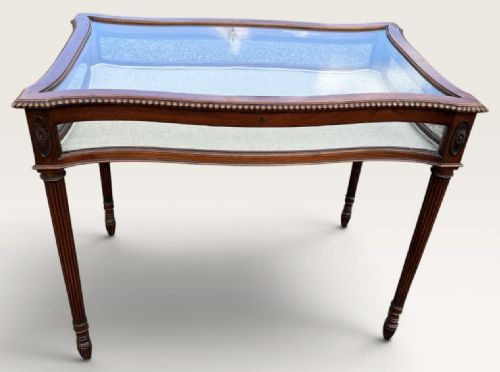
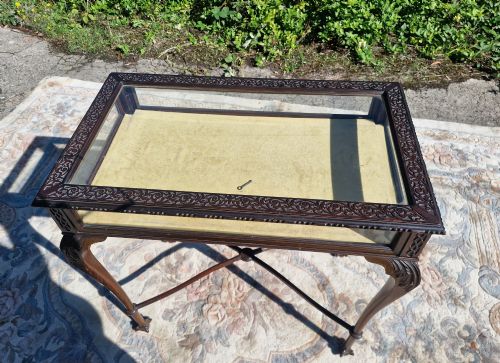
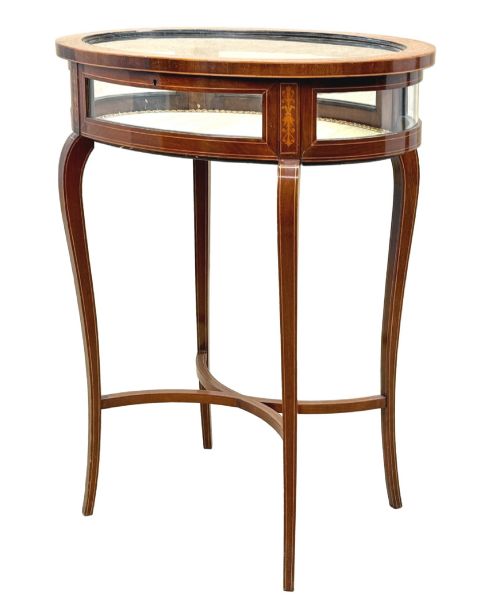
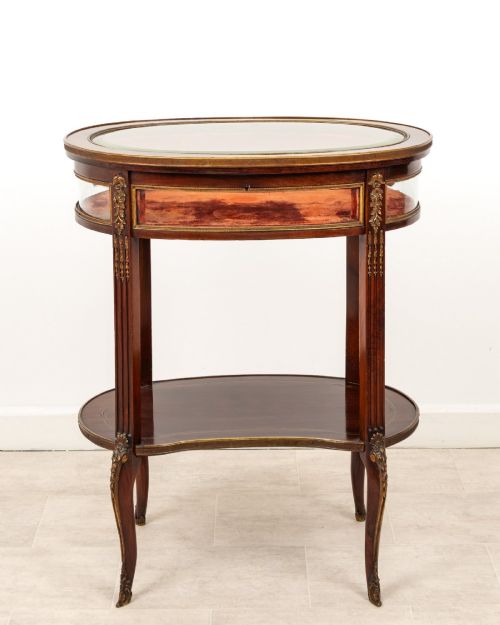
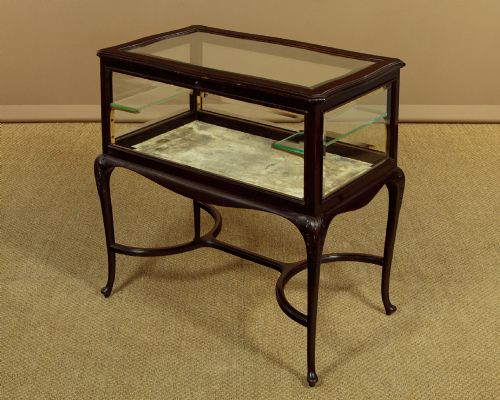
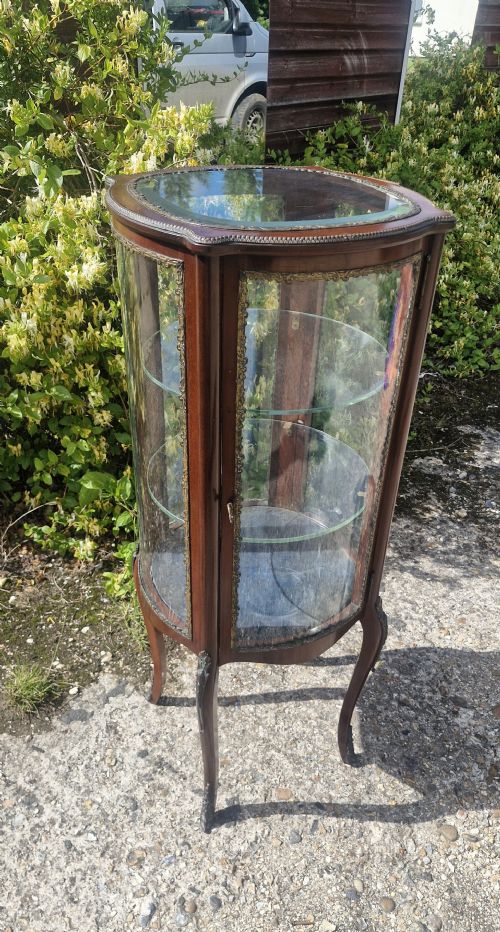
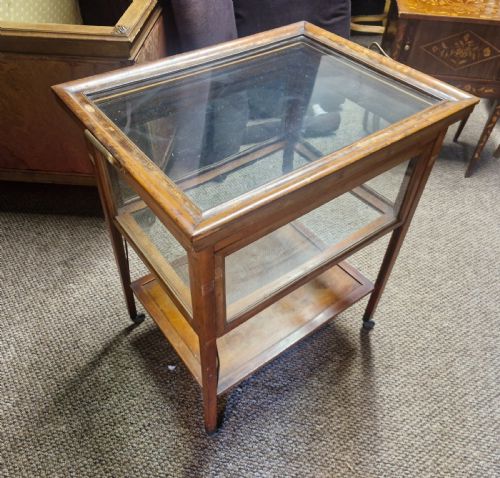
The edwardian glazed display table brings together domestic utility and the presentation of small treasures, most commonly appearing as mahogany bijouterie tables with glass lids.
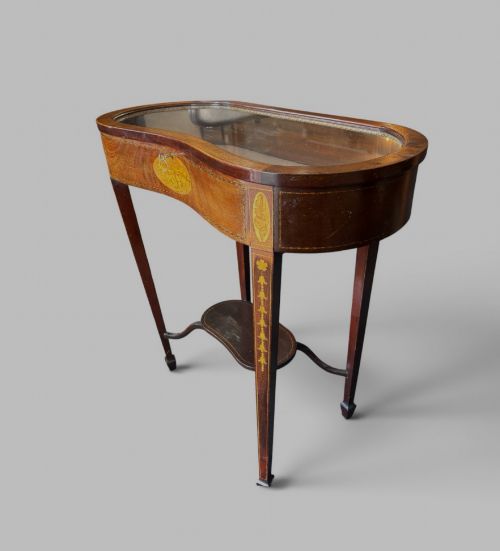
Makers of the period drew upon Sheraton revival and French louis xvi styles, shaping tables in serpentine, oval, or kidney contours.
Pieces from this era sit alongside late victorian and early twentieth century examples, spanning satinwood, walnut, and rosewood constructions.
Materials and Construction
Carpenters built the primary frames in solid mahogany or walnut, frequently applying fine satinwood stringing and marquetry inlay across the surfaces.
Glass panels fitted into hinged lids or display cases allow light to enter from above, supported by brass, ormolu, or gilt metal mounts.
Interiors are typically lined with velvet or fabric to cushion objects placed inside the glazed compartment.
One unexpected survivor even bears later sign writing for Breitling watches, adapting a domestic display table for trade.
Defining Quality
The distinction between ordinary and superior pieces rests on the precision of the cabinetwork, particularly in complex curved forms like kidney and serpentine shapes.
Finer examples display careful attention to timber selection, such as burr walnut or figured mahogany, alongside crisp cast brass or ormolu mounts rather than plain cast replacements.
The Edwardian Glazed Display Table Glossary
- Bijouterie table
- A glass topped table designed specifically for displaying small ornaments, jewellery, and curiosities. These pieces often feature a hinged glazed lid for easy access to the lined interior.
- Ormolu
- Gilt bronze mounts applied to furniture for decorative effect. The technique involves coating metal with a gold amalgam.
- Marquetry
- Decorative veneer applied to furniture in patterned wood designs. Craftsmen cut contrasting timbers to form pictorial or geometric motifs.
- Vitrine
- A glass cabinet or display case used for exhibiting fine objects. This term frequently overlaps with table top display cabinets.
- Satinwood
- A durable yellowish timber valued for its lustrous sheen. It appears frequently in inlaid stringing on mahogany surfaces.
Edwardian Glazed Display Table: Frequently Asked Questions
What is an edwardian glazed display table used for?
These tables served to exhibit personal collections, medals, and small decorative items in a drawing room or parlour. The glass top kept dust away while permitting guests to inspect the contents from above.
They functioned simultaneously as occasional tables and as personal vitrines for a household's most treasured small possessions.
How do I tell an Edwardian table from a Victorian one?
Edwardian pieces generally lean towards lighter proportions, drawing on Sheraton revival influences with delicate satinwood inlay and slender legs. Victorian examples often display heavier timber sections, deeper carving, and darker finishes.
Examining the secondary timbers inside the frame and the style of the brass mounts also helps clarify the period of manufacture.
What materials are typical for these display tables?
Mahogany forms the primary structure for the majority of examples, often enhanced by satinwood, rosewood, or walnut veneers. Glazed panels provide the top viewing surface, while interior trays are lined with velvet or fabric.
Brass, ormolu, or gilt metal mounts frequently accent the corners, legs, and hinges of the frame.
How do I care for the fabric lining inside?
The velvet or fabric lining benefits from gentle surface dusting with a soft brush to prevent dust accumulation. Keeping the table away from direct sunlight preserves the original colour of both the textile and the surrounding wood.
Avoid liquid cleaners near the fabric to protect the underlying wooden base from moisture damage.