
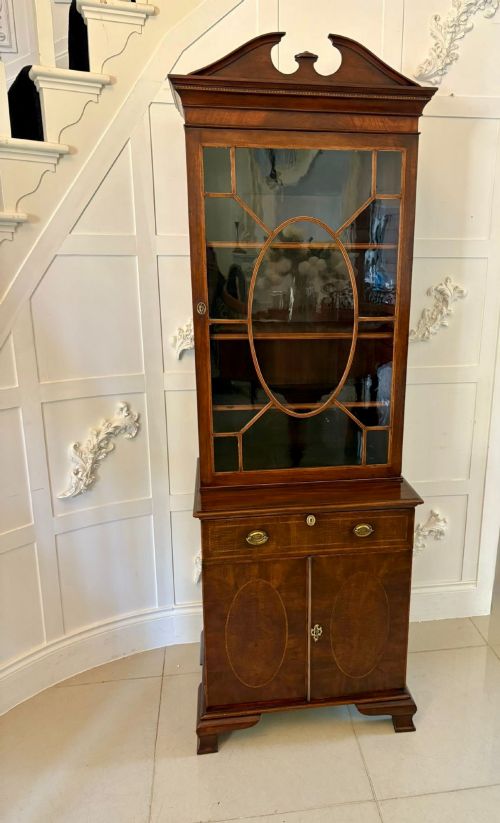
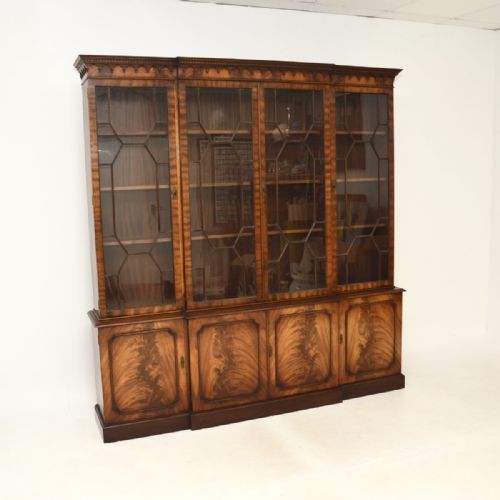
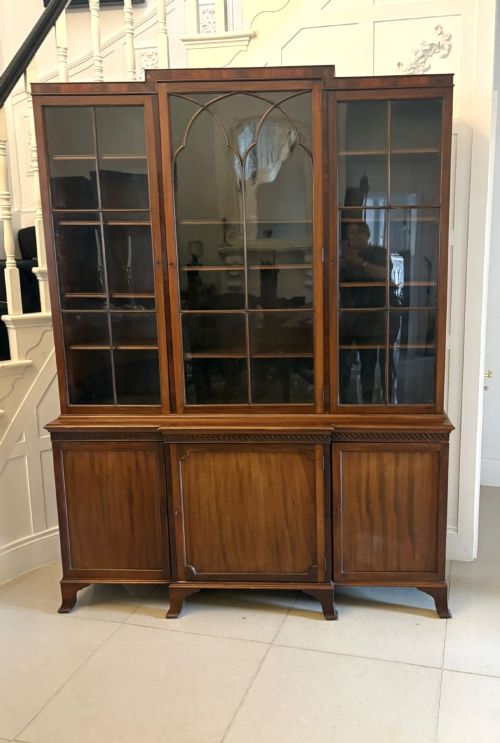
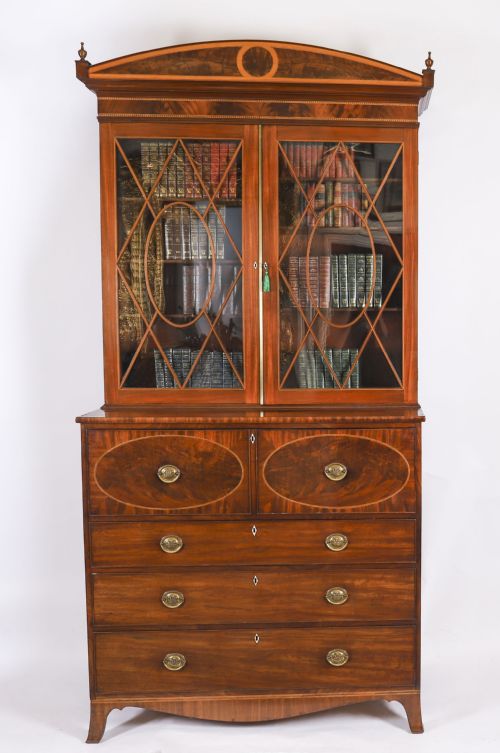
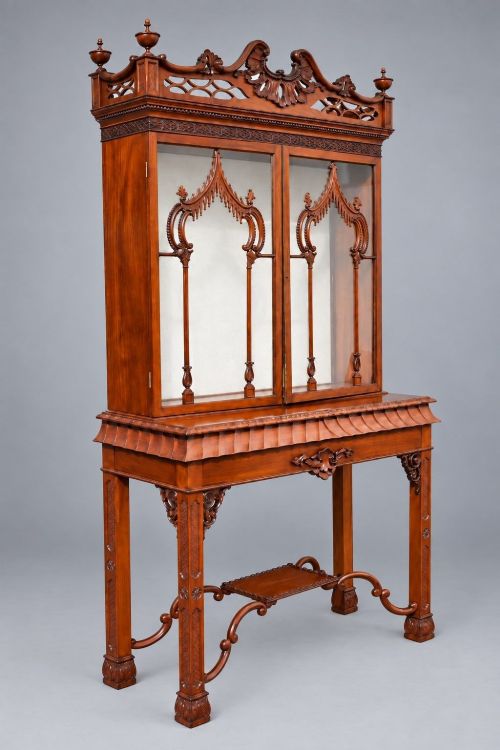


Glazed Mahogany Display Cabinet
A glazed mahogany display cabinet brings warmth and orderly visibility to collections, uniting figured timber with transparent panes.
Forms and periods
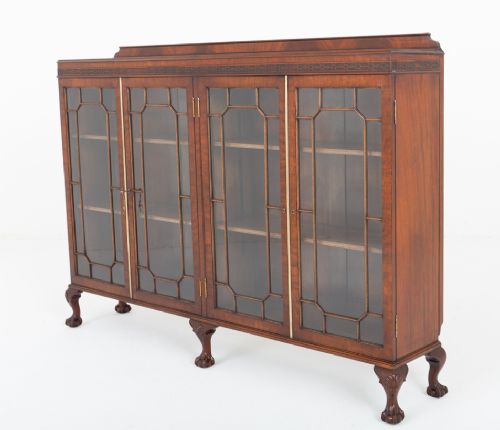
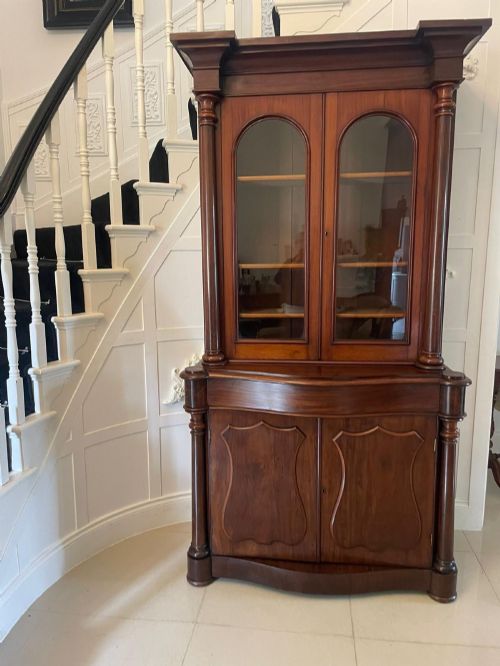
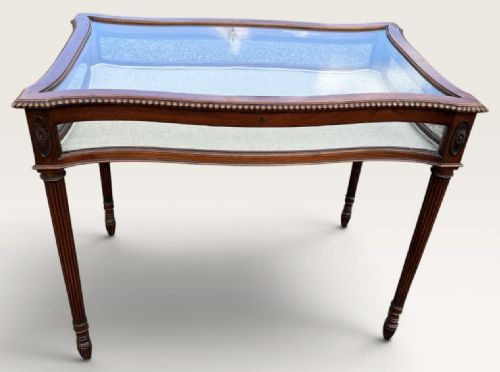
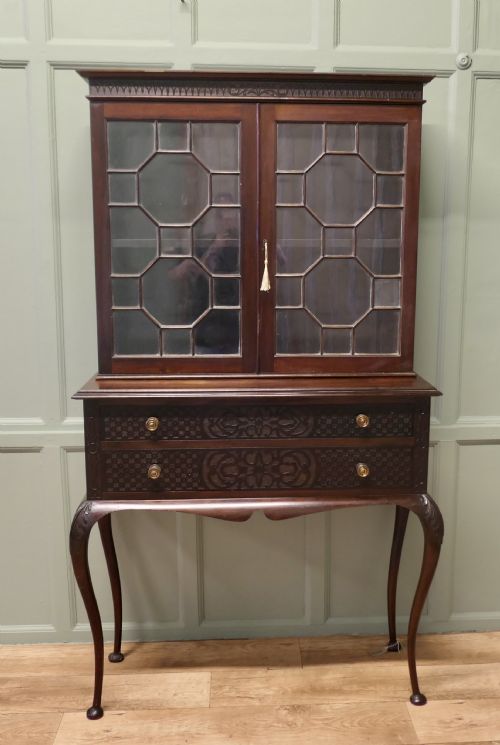
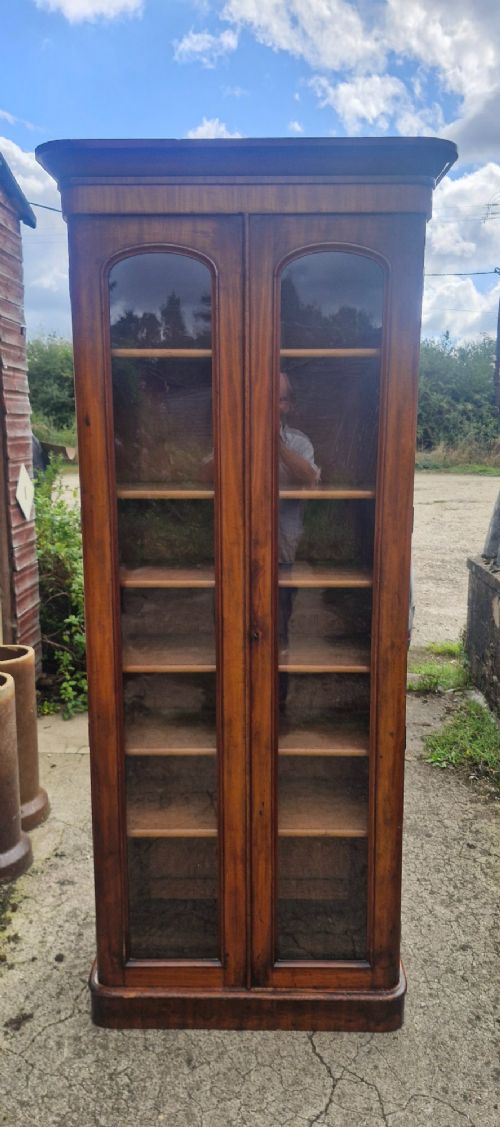
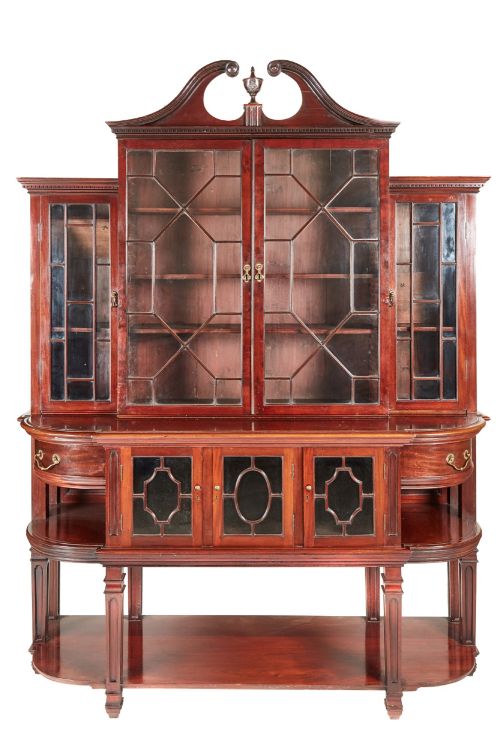
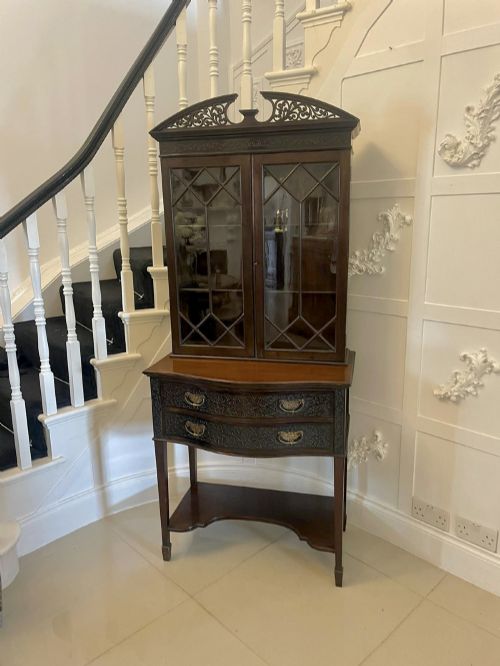
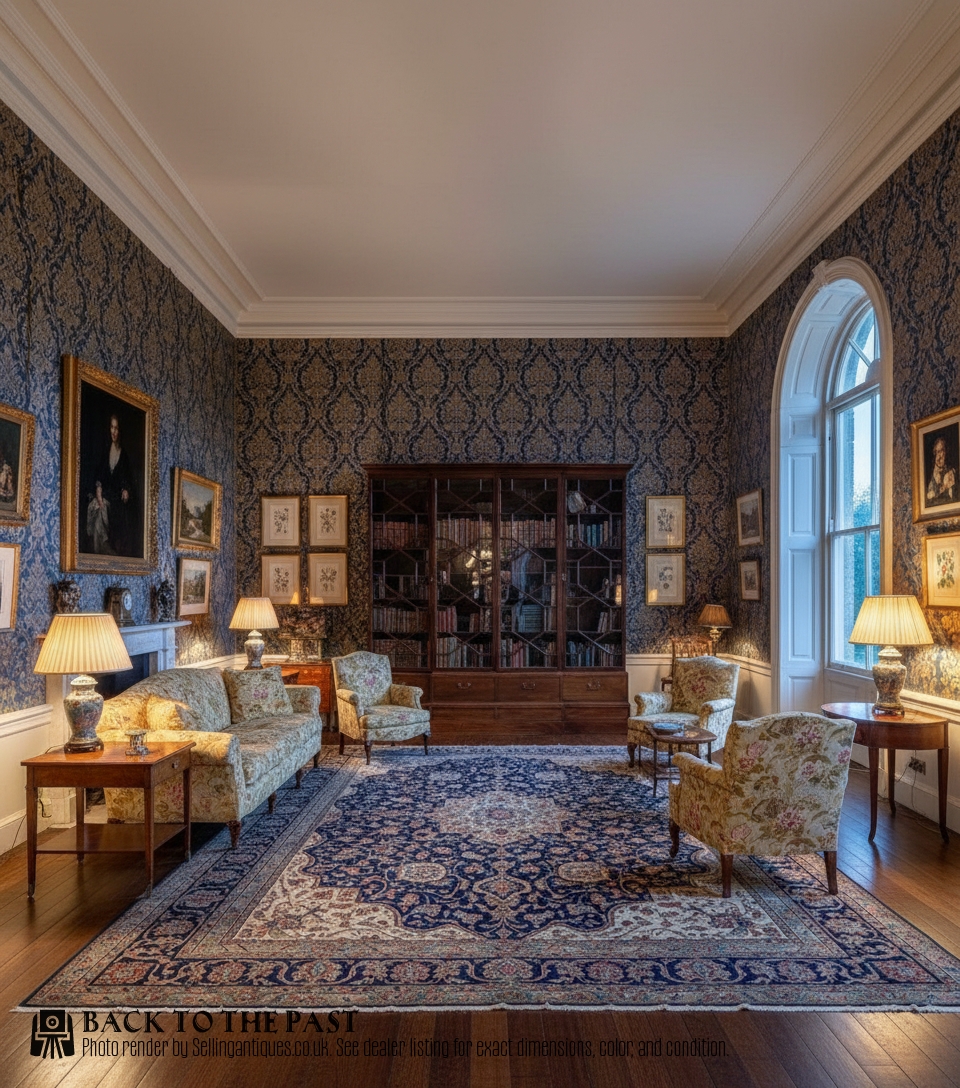
A glazed mahogany display cabinet combines timber framing with transparent glass to protect objects while keeping them visible. Buyers seeking a glazed mahogany display cabinet will encounter freestanding breakfront bookcases, corner units, and table-top bijouterie pieces.
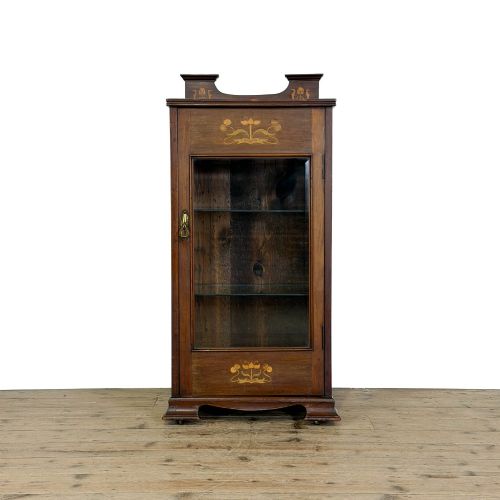
The evidence shows examples spanning from the eighteenth century through the Victorian era and Edwardian period to the nineteen-thirties. Edwardian and early twentieth-century iterations frequently incorporate satinwood inlay and Sheraton revival styling.
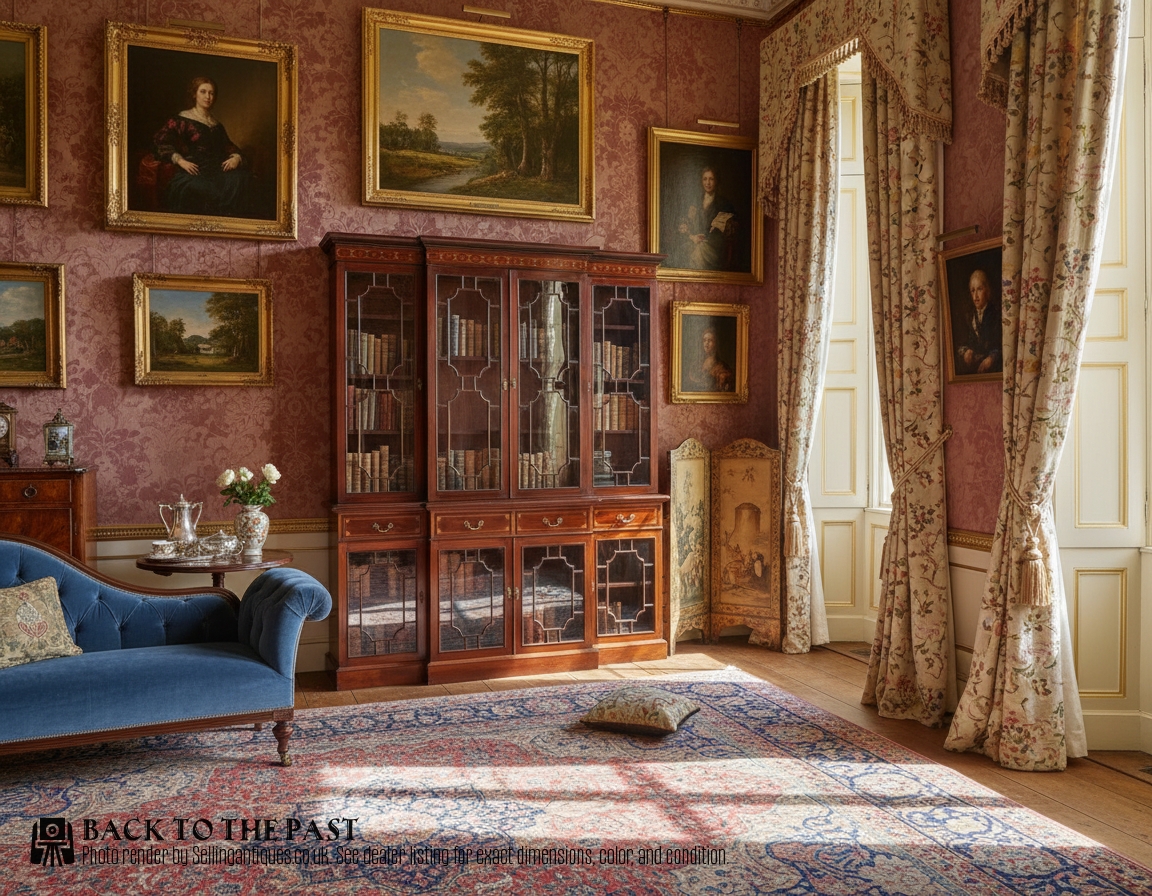
Tall library bookcases and wall-hanging shelves also appear alongside specialised display tables. These forms reflect centuries of domestic storage needs, shifting from eighteenth-century architectural proportions to lighter Edwardian parlor designs.
Standards of craftsmanship
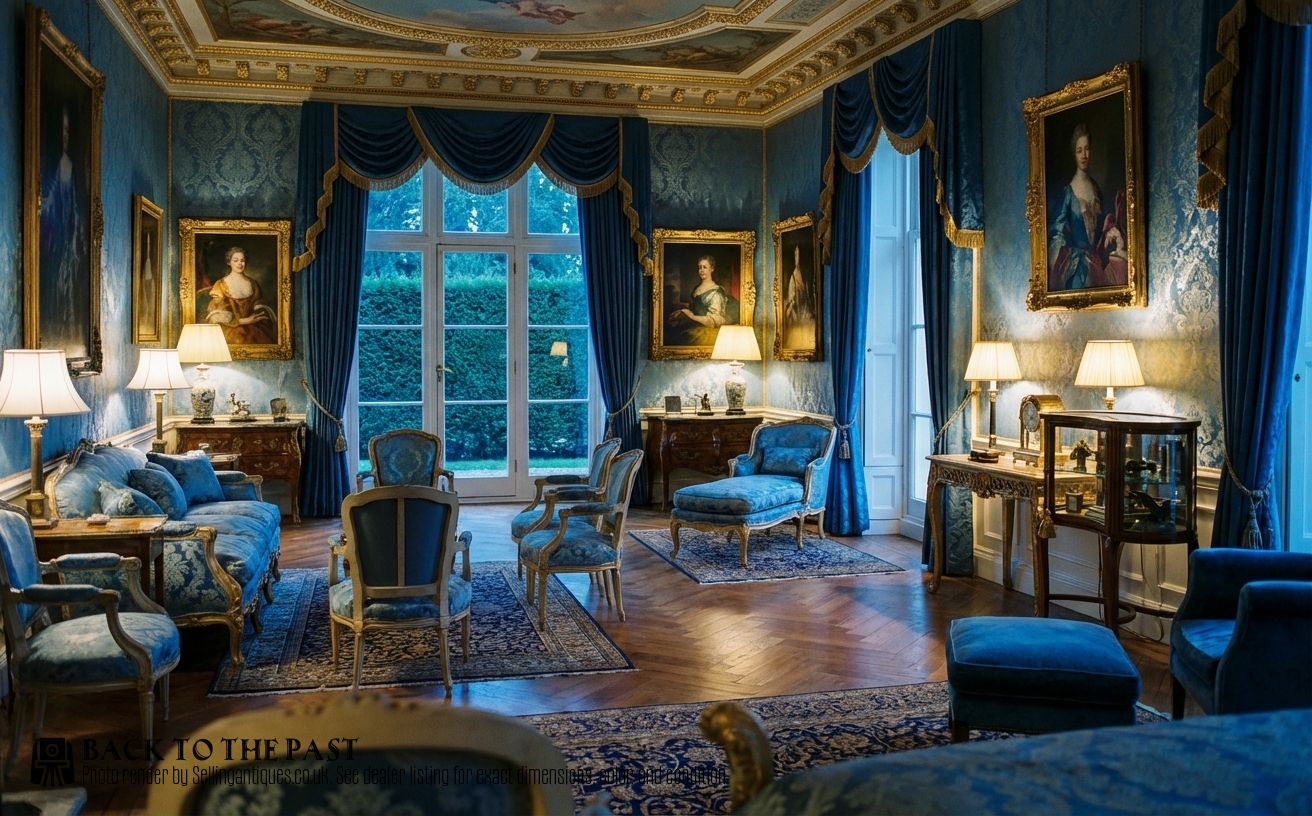
Quality rests in the selection of timber figures, such as flamed mahogany, and the crispness of the wood inlay. Hand-drawn glass panes and slender, well-proportioned astragal bars distinguish superior examples from simpler utilitarian containers.
Structural integrity reveals itself in the joinery of the cabinet carcase and the smooth operation of glazed doors. Refined Edwardian pieces show meticulous attention to satinwood stringing and balanced proportions.
Retail Price Guide 2026
Typical UK retail prices for glazed mahogany display cabinet, calculated from the Sellingantiques database of over a million retail prices indexed since 2003. This retail price guide relies exclusively on Sellingantiques data; no external sources or auction records are used, so the figures do not describe the wider market.
The listings span six distinct periods, ranging from the 18th century through Victorian and Edwardian eras up to 1930.
Lamb And Co
The Glazed Mahogany Display Cabinet Glossary
- Astragal
- Timber or metal mouldings that divide panes of glass within a window or cabinet door. These narrow bars create geometric grid patterns across the facade.
- Bijouterie
- Small decorative goods, jewellery, or trinkets intended for display. Bijouterie tables and cabinets feature glazed tops or sides specifically for these items.
- Breakfront
- A piece of furniture whose central section projects forward from the flanking wings. This architectural arrangement adds depth and visual interest to large bookcases.
- Vitrine
- A glass-sided cabinet designed for exhibiting porcelain, curiosities, or collections. The term derives from the French word for glass.
- Satinwood
- A durable, lustrous timber native to India and Ceylon with a yellow sheen. Cabinet makers utilised it for contrasting inlay and stringing on dark mahogany surfaces.
Frequently Asked Questions
What is an astragal glazed door?
An astragal glazed door uses narrow wooden bars to hold multiple individual panes of glass in place. This technique creates geometric patterns that lighten the visual weight of large timber frames.
Such doors are characteristic of Georgian and Sheraton revival pieces found in the records.
How do I identify Edwardian display cabinets?
Edwardian cabinets often feature delicate satinwood inlay, light mahogany frames, and Sheraton revival styling. They frequently incorporate inlaid motifs and slender tapered legs.
Makers of this period favored refined elegance over the heavy proportions of the preceding Victorian decades.
Were these cabinets used for books or china?
They served multiple domestic functions, acting as bookcases, china cabinets, and collectors' display cases. Adjustable shelving allowed owners to adapt the interior space for books or ceramics.
Records show designations ranging from library bookcases to specific china and collectors cabinets.
What is a bijouterie cabinet?
A bijouterie cabinet is a specialised low table or cabinet featuring glazed panels designed to exhibit small valuable items. These pieces allowed owners to view collections from above and through the sides.
They appear in Edwardian listings alongside standard vertical display units.