




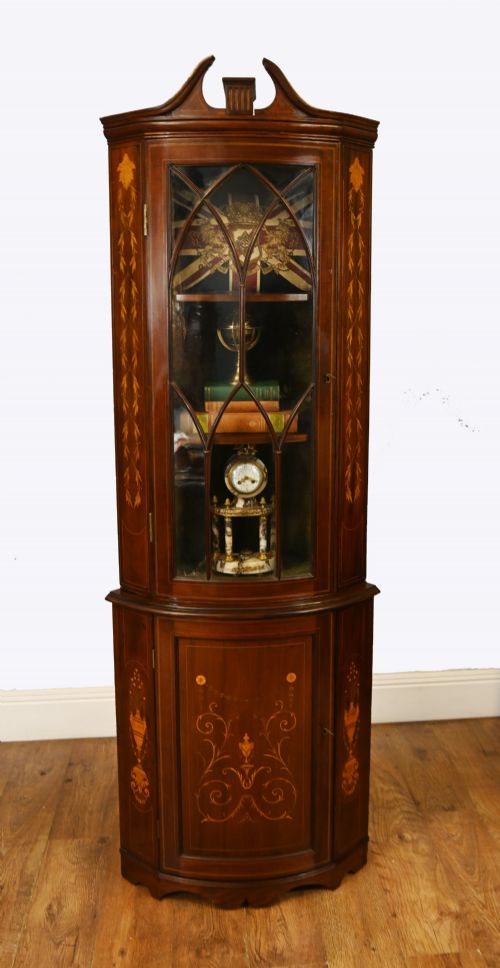


Mahogany Corner Bookcase
A mahogany corner bookcase turns awkward room angles into practical shelving for volumes and display.
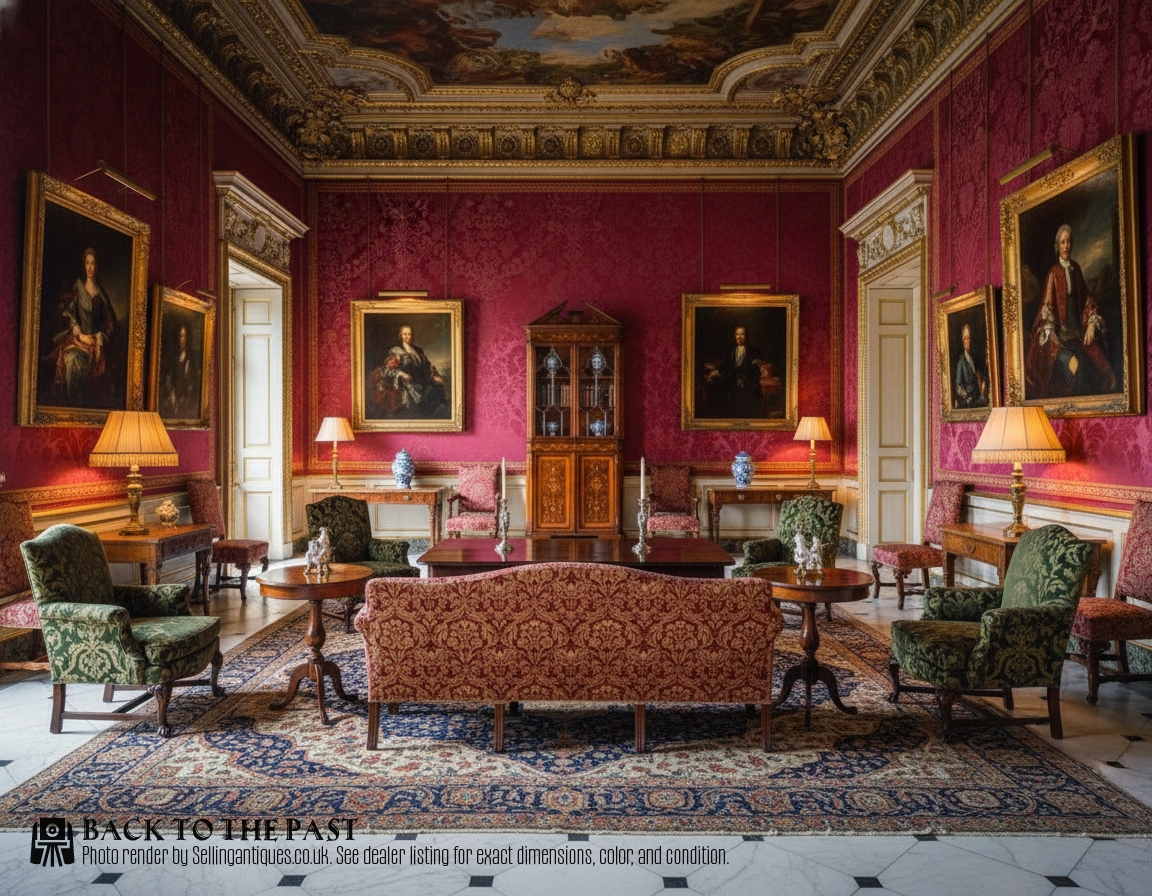
Mahogany Corner Bookcase
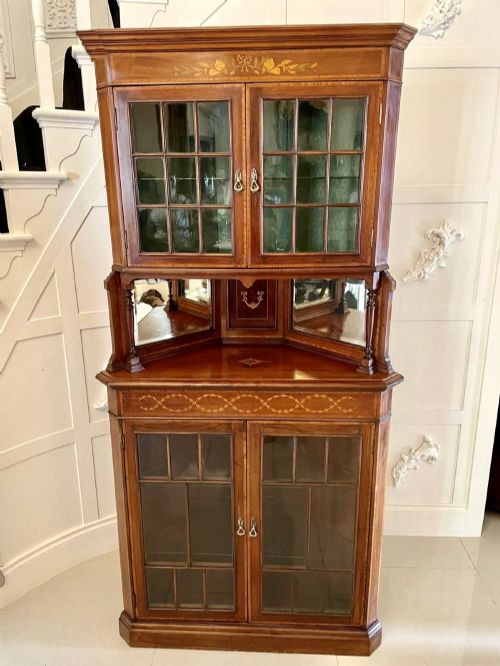
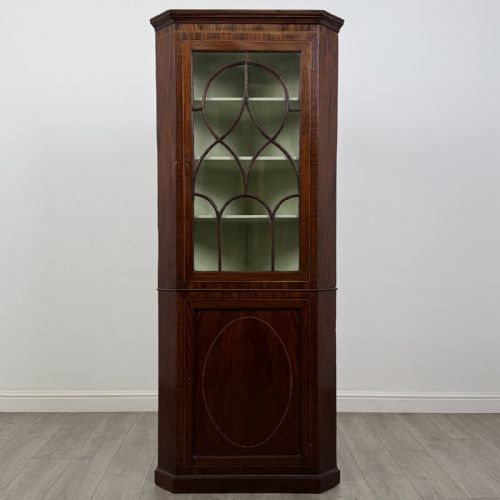
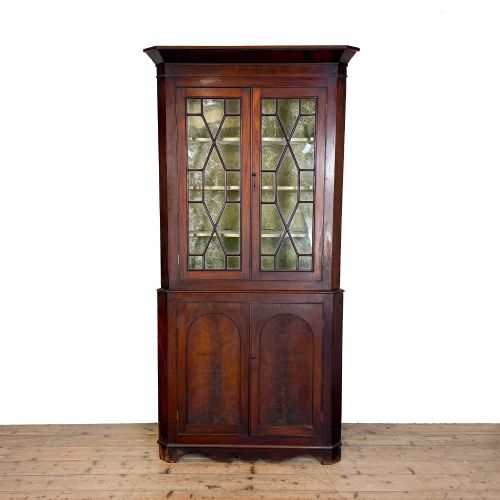
A mahogany corner bookcase is designed to fit flush into the junction of two walls, making use of space that standard rectangular furniture leaves empty. These pieces range from open-shelf units to tall double-height cupboards with glazed upper doors.
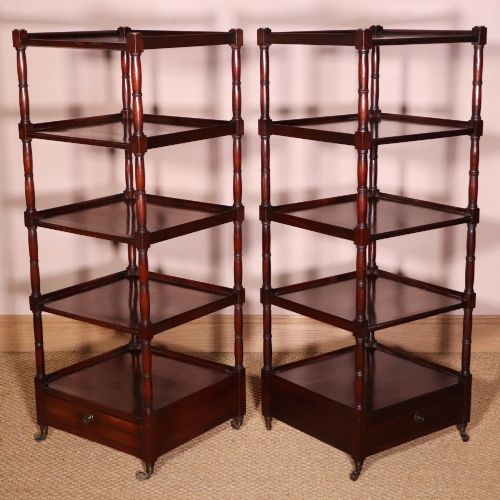
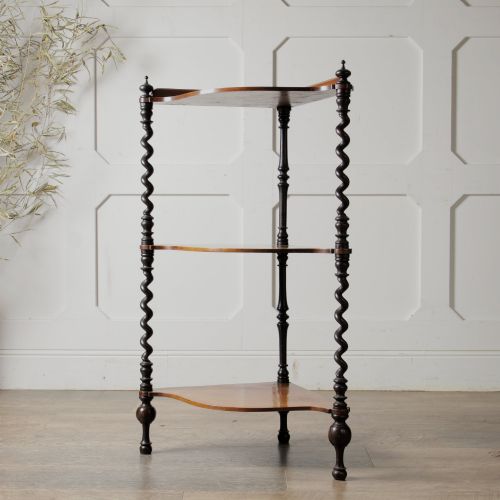
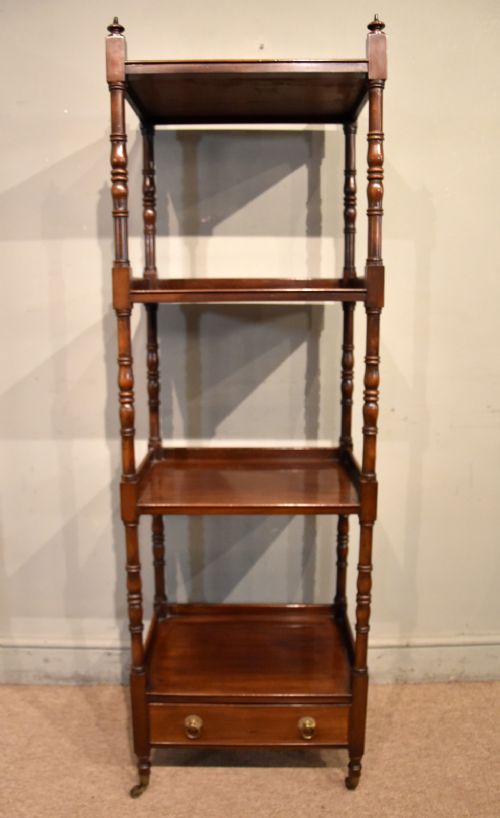
The versions most commonly met on this page span the Georgian, Victorian and Edwardian periods. They appear in forms that combine book storage with display cabinets, corner cupboards and tiered etageres.
Originating largely from British workshops, these cabinets adapt architectural proportions to domestic rooms. They provide storage for books while framing the corner with timber grain.
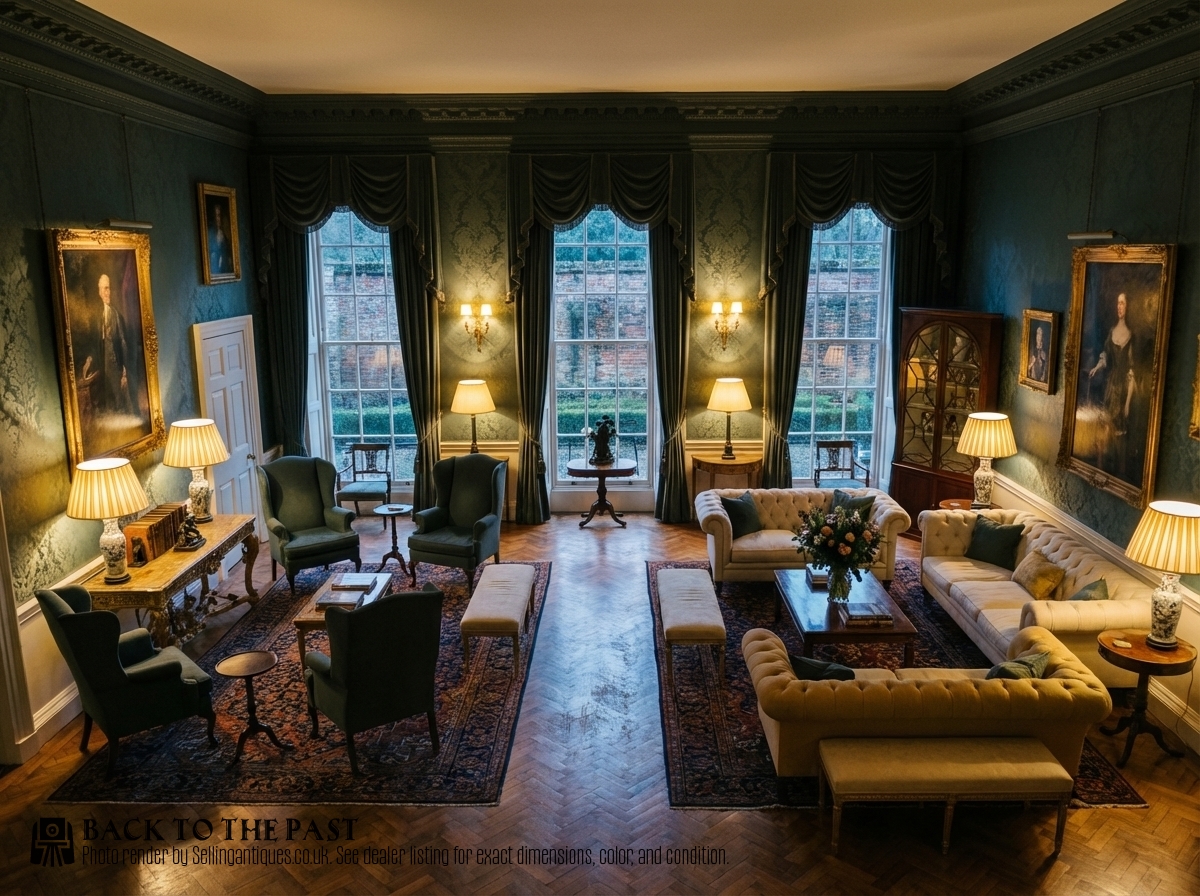
How they were made
Makers constructed these cabinets using solid mahogany and mahogany veneers applied to secondary timbers. Panels are fitted into frames to accommodate the natural movement of the wood over time.
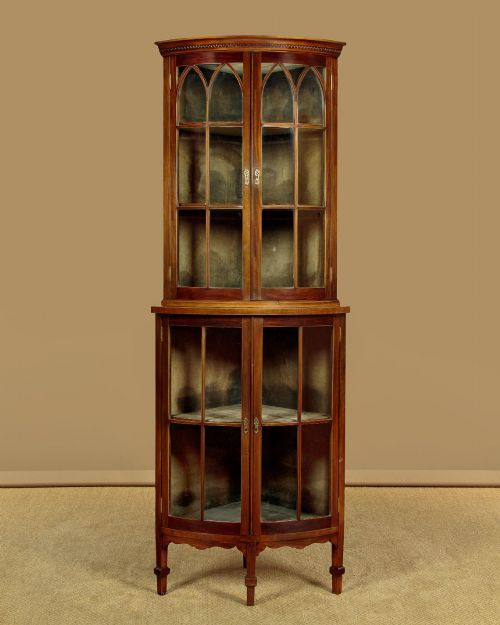
Surface decoration frequently includes satinwood inlay, marquetry motifs and contrasting stringing. Glazing bars divide glass panes into geometric patterns on display doors, while brass hardware secures the closures.
Mahogany Corner Bookcase Retail Price Guide 2026
Typical asking prices for mahogany corner bookcase among the pieces listed under this phrase on Sellingantiques today, from the lower quarter to the upper quarter. They describe what is for sale here now, not the wider market.
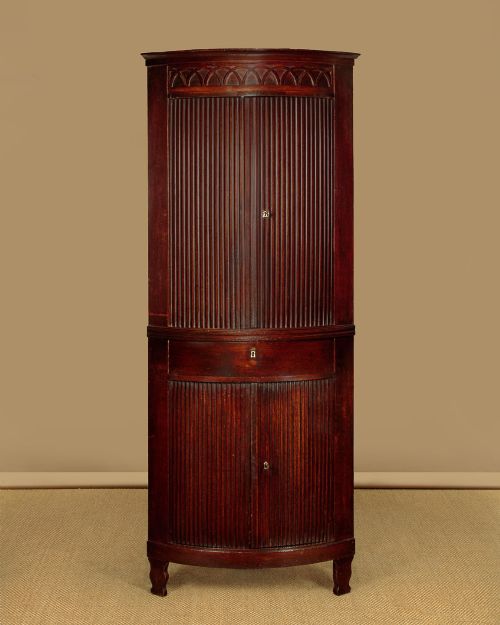
Some corner bookcases cleverly hide their contents behind curved bow fronts designed to fool the eye.
What varies in quality
Quality rests in the selection of the timber and the precision of the cabinetwork. Grain matching across doors and panels separates standard pieces from more ambitious commissions.
The crispness of inlay work and the delicacy of glazing bars indicate the skill of the maker. Fine execution in the mouldings and structural joints determines how well the piece survives centuries of use.
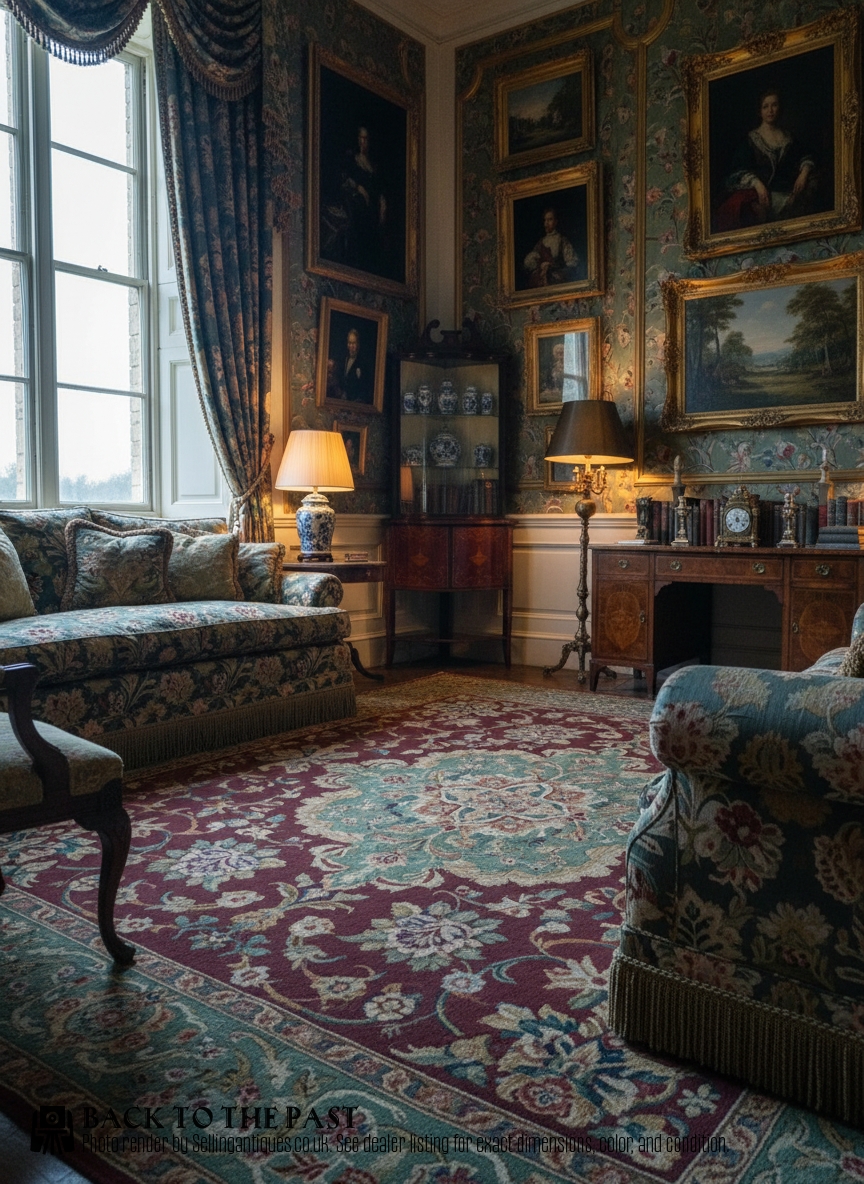
Goodhall, Lamb and Heighway·Edwards And Roberts
The Mahogany Corner Bookcase Glossary
- Mahogany
- A durable tropical hardwood prized for its rich reddish-brown colour and stable grain. It forms the primary structural and decorative material for these cabinets.
- Satinwood Inlay
- Contrasting light timber inserted into recesses in the mahogany surface. This technique creates geometric borders and floral motifs.
- Glazed Cabinet
- A piece featuring glass-paned doors that protect books while keeping them visible. These doors often utilise timber or brass astragals.
- Double Height
- A tall piece constructed in two stacked sections, providing upper display space above a lower cupboard. This format maximises storage capacity in high-ceilinged rooms.
- Etagere
- An open shelving unit designed for the display of ornaments and books. These tier structures sit in corners or freestanding positions.
Mahogany Corner Bookcase: Frequently Asked Questions
How do I place a corner bookcase?
Position the unit where two walls meet at a right angle, ensuring the back frames fit flush against the plaster. Check that floor levels allow the doors to swing freely without catching.
Keep the timber away from direct heat sources and strong sunlight to protect the polish and prevent the mahogany from drying out.
Can these hold heavy books?
Most period shelves support standard octavo volumes and general reading collections safely. Fixed shelving provides structural rigidity in older pieces.
Heavier folios belong on the lower cupboard shelves where the base bears the weight directly.
How do I date an Edwardian piece?
Edwardian examples often feature satinwood inlay, lighter proportions and Sheraton Revival influences. The interior timber choices and backboards offer further clues to the manufacturing era.
Machine-sawn components and specific brass screw types distinguish these 1900s items from earlier Georgian predecessors.
What is a double height cabinet?
A double height cabinet consists of a tall upper display section mounted onto a deeper lower cupboard base. This construction creates a commanding vertical presence in a room.
The two sections separate for transport, allowing easier movement through doorways and stairwells.