

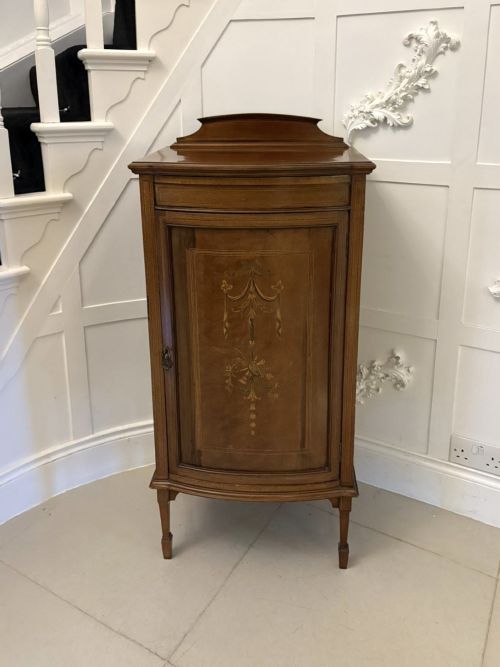
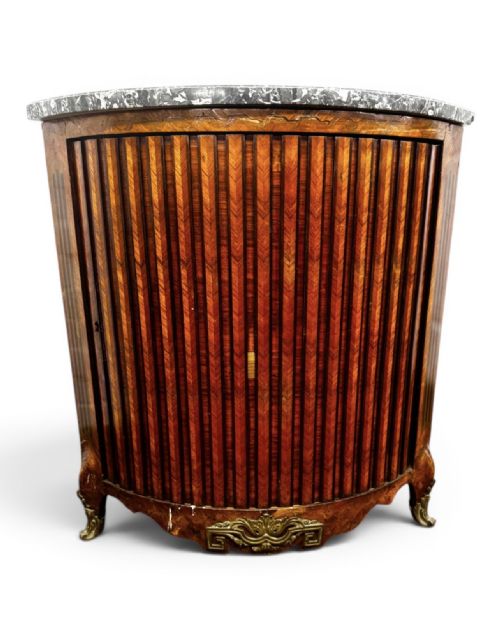
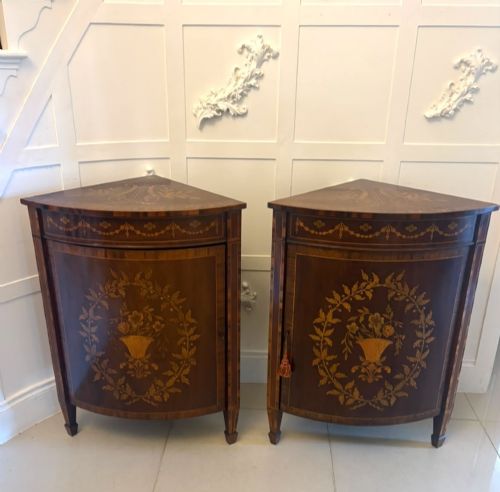
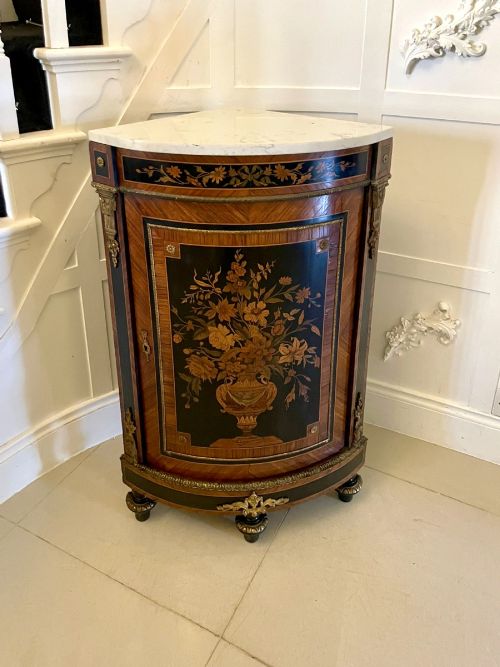


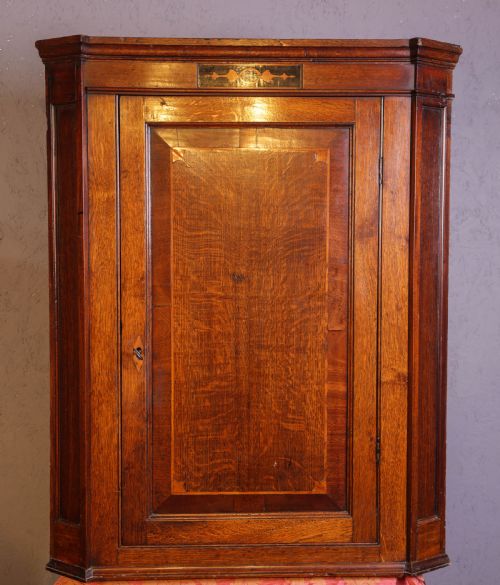
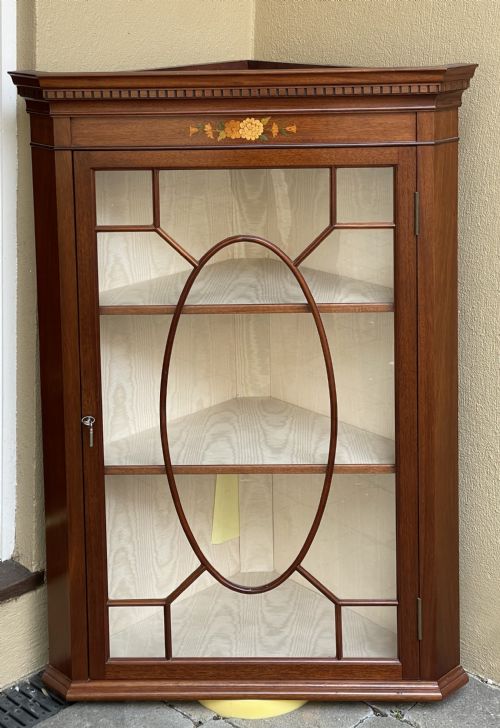
Marquetry Corner Cupboard
A marquetry corner cupboard transforms awkward angles into focal points through intricate wood inlay and architectural presence.

Marquetry Corner Cupboard
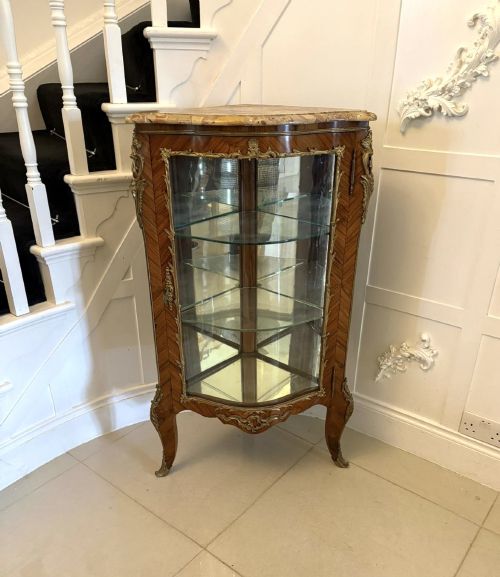
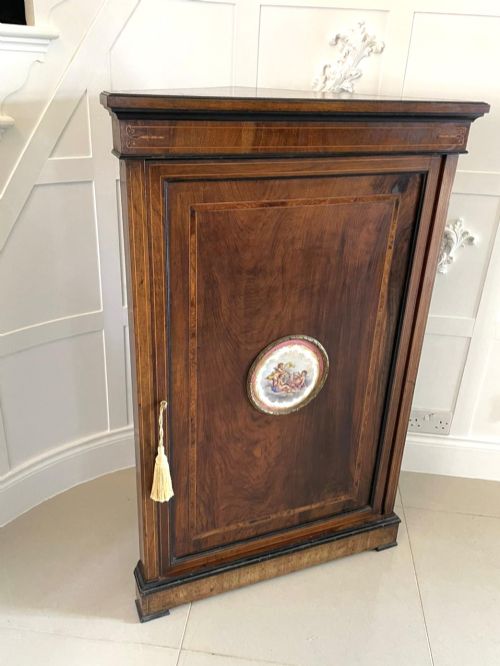
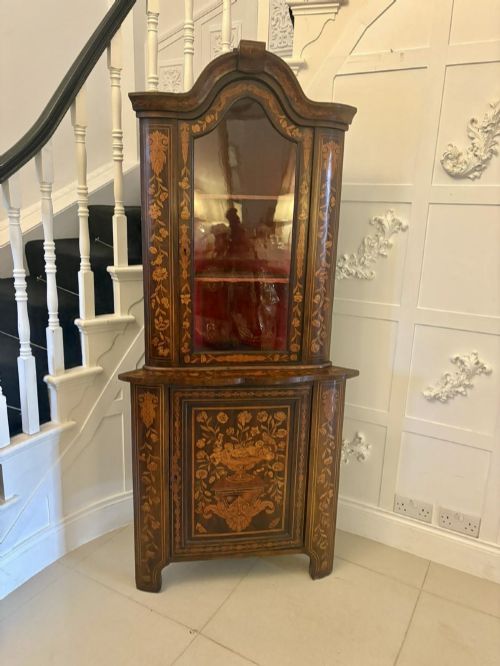
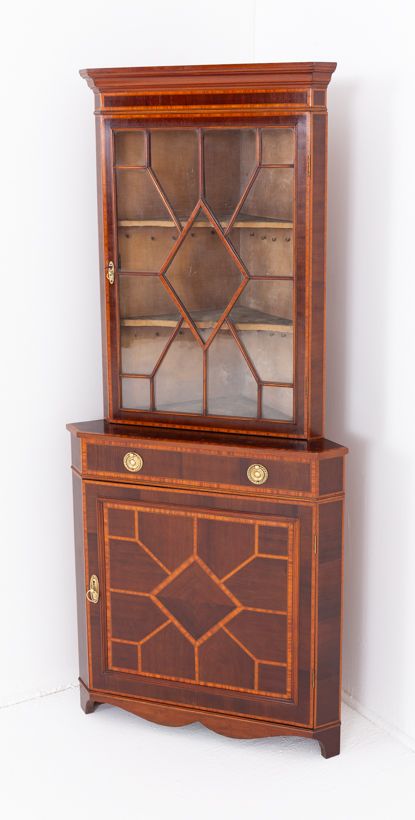
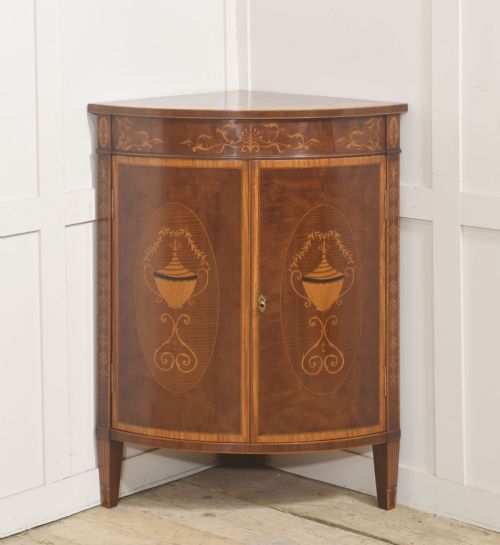
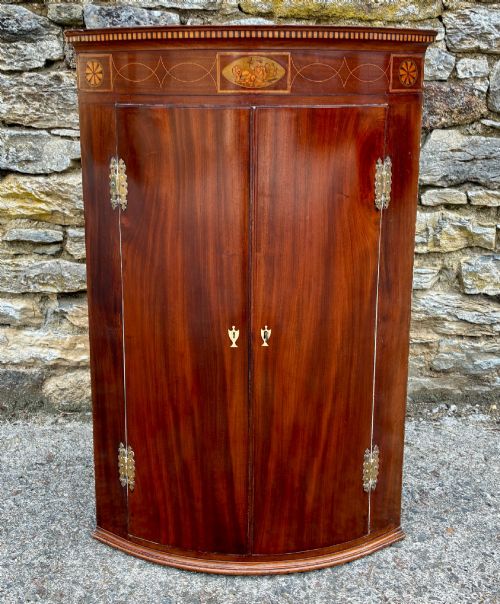
A marquetry corner cupboard is a specialised storage piece designed to fit neatly into room junctions while displaying decorative wood patterns on its exterior. Buyers searching for a marquetry corner cupboard encounter forms ranging from compact wall-mounted cabinets to grand floor-standing double-height display units.
The pieces appearing on this page span several centuries and stylistic revivals, with Edwardian and Victorian interpretations appearing alongside Georgian and 18th century originals. Mahogany, walnut, and rosewood serve as the primary foundational timbers for these fitted designs.
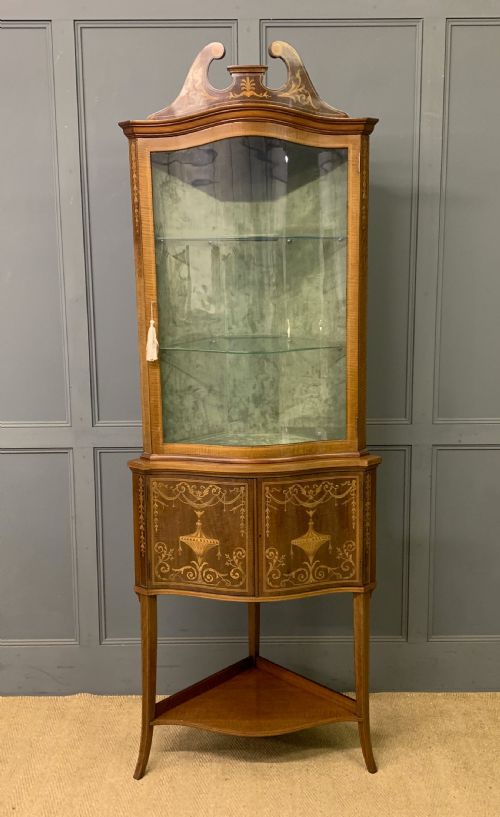
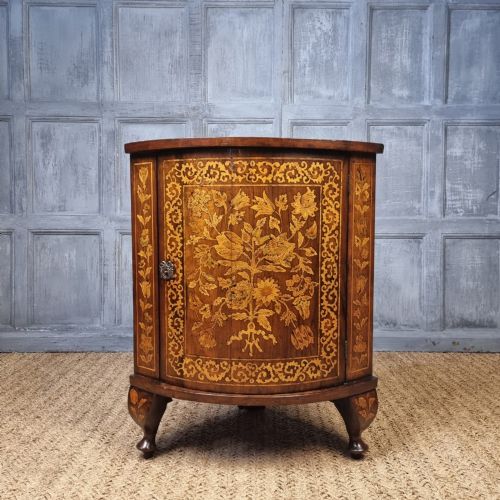
Continental examples, particularly Dutch Baroque and French styles incorporating kingwood and tulipwood, sit alongside British Sheraton Revival and Georgian models. These pieces function variously as enclosed cupboards, glazed display cabinets, and open-topped side units.
How they were made
Cabinet makers constructed these pieces using dense cabinet timbers such as mahogany, oak, and walnut as structural carcases. Surfaces received decorative veneers and contrasting inlays of satinwood and various exotic woods to create pictorial or geometric marquetry motifs.
Glazed doors utilised wooden framing, frequently incorporating astragal glazing bars to hold individual glass panes. Metal elements like brass hardware, ormolu mounts, and marble tops completed the construction of the finest French and English variants.
Marquetry Corner Cupboard Retail Price Guide 2026
Typical asking prices for marquetry corner cupboard among the pieces listed under this phrase on Sellingantiques today, from the lower quarter to the upper quarter. They describe what is for sale here now, not the wider market.
Some corner cupboards feature secret internal compartments designed to hide valuables away from casual guests.
What varies in quality
The execution of the marquetry and inlay work dictates the distinction between standard and superior pieces, separating simple geometric lines from elaborate floral or architectural pictorial scenes. Precision in timber selection, such as figured mahogany, matched walnut, or exotic kingwood, elevates the visual depth of the cabinet.
Structural complexity also defines the tier of a piece, moving from basic single-door hanging units up to serpentine-fronted double-height standing cabinets. Integration of complementary materials, including cast ormolu mounts and inset marble slabs, signals higher workshop ambition.

Edwards And Roberts
The Marquetry Corner Cupboard Glossary
- Marquetry
- Decorative wood inlay work forming pictorial or geometric patterns across furniture surfaces. It involves cutting contrasting veneer pieces to fit flush within a prepared background.
- Astragal
- A small moulding profile often used in a grid pattern on cabinet doors to hold multiple glass panes. These bars divide the glazing into smaller lights.
- Serpentine
- A gently undulating furniture front line that curves outward in the centre and inward toward the edges. This shape requires advanced woodworking skill to execute correctly.
- Encoignure
- A French term for a corner cabinet or cupboard. These pieces were designed specifically to utilise dead space at the junction of two walls.
- Ormolu
- Gilt bronze mounts applied as decorative ornaments to furniture. This technique was popular in French and revival cabinet making.
Marquetry Corner Cupboard: Frequently Asked Questions
Where should I place a corner cupboard?
These cabinets suit awkward room junctions, empty wall angles, and transitional spaces between doorways. Floor-standing versions anchor dining rooms and reception areas, while hanging models function well above sideboards or desks.
Their triangular footprint allows them to occupy minimal floor space while providing substantial internal storage or display capacity.
How do I distinguish between Georgian and revival pieces?
Original 18th-century pieces display construction methods, timber ageing, and hand-cut joinery characteristic of the period. Revival pieces from the Victorian and Edwardian eras often utilise machine-sawn elements and distinct late-19th-century interpretations of Sheraton or Dutch styles.
Examining the internal secondary timbers and backboards helps clarify the manufacturing date.
What is the difference between hanging and standing models?
Hanging models mount directly to walls to save floor space, often featuring single doors and smaller proportions. Standing models rest on the floor, frequently split into double-height configurations with separate upper display sections and lower cupboards.
Selection depends on the weight of the timber and the required storage capacity.
How do I care for marquetry surfaces?
Marquetry requires stable environmental conditions away from direct sunlight and dramatic humidity shifts to prevent veneer lifting. Regular dusting with a soft, dry cloth preserves the polished finish without moisture damage.
Applying specialised furniture wax periodically nourishes the diverse timber veneers used in the inlay.