


Inlaid Rosewood Vitrine
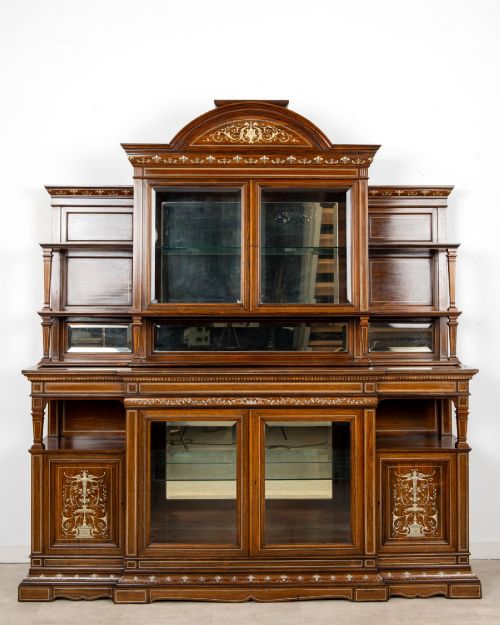
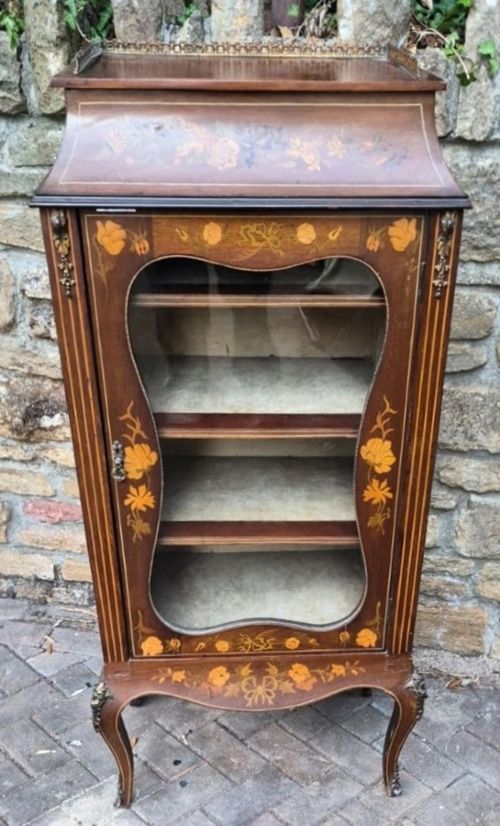
An inlaid rosewood vitrine brings polished warmth and refined display space to a room, showcasing treasured collections behind fine glass panels.
Inlaid Rosewood Vitrine
An inlaid rosewood vitrine is a glazed display cabinet built to showcase precious objects, ranging from freestanding display cabinets to corner units and low bijouterie tables. These pieces take various forms, including upright pier cabinets, serpentine corner cupboards, and circular tables fitted with glass lids.
The pieces appearing on this page span the nineteenth century and the Edwardian era, with distinct manufacturing influences stretching from Victorian Sheraton Revival and Louis XV styles to Aesthetic Movement and Late Qing Dynasty designs. Buyers most frequently encounter nineteenth century and Edwardian interpretations constructed with detailed marquetry and fine timber.
Makers and workshops including Collinson & Lock, Edwards & Roberts, and Liberty's contribute to the variety found within these categories. Cabinets vary from tall upright display furniture to compact corner solutions designed to utilise interior spaces effectively.
How they were made
Rosewood forms the primary structural timber for these cabinets, often enhanced with satinwood, mahogany, and kingwood for contrasting marquetry panels. Delicate floral and geometric inlay patterns define the surfaces, requiring skilled craftsmanship to cut and fit diverse woods into the dark grain.
Inlaid Rosewood Vitrine Retail Price Guide 2026
Typical asking prices for inlaid rosewood vitrine among the pieces listed under this phrase on Sellingantiques today, from the lower quarter to the upper quarter. They describe what is for sale here now, not the wider market.
Some tables include hidden compartments beneath the display well to store love letters away from prying eyes.
What varies in quality
The refinement of the marquetry and the precision of the timber matching separate standard production from exceptional cabinet work. Sharper contrast in the inlaid details and cleaner execution of scrollwork or floral motifs signal superior workshop output.
Hardware choices and structural execution also define the grade of the piece, particularly the quality of the cast brass mounts and the clarity of the glass panels. Pieces bearing attribution or direct marks from notable makers generally reflect higher standards of construction.
Collinson & Lock·Edwards & Roberts
The Inlaid Rosewood Vitrine Glossary
- Vitrine
- A glass-fronted cabinet or display case designed specifically for showing small ornaments, porcelain, or curiosities. These pieces often feature glass on the sides as well as the doors to maximise visibility.
- Marquetry
- Decorative woodwork where small pieces of contrasting veneer are applied to a structure to form intricate patterns or pictures. This technique often employs satinwood and rosewood.
- Bijouterie table
- A glass-topped display table intended for holding jewellery, medals, or small collectables. They stand on slender legs and allow items to be viewed from above.
- Pier cabinet
- A narrow cabinet designed to fit against the wall space between windows. These upright pieces typically feature a single glazed door and rosewood construction.
- Sheraton Revival
- A late nineteenth-century design style inspired by late eighteenth-century neoclassical furniture. Pieces in this style utilise balanced proportions, fine stringing, and marquetry.
Inlaid Rosewood Vitrine: Frequently Asked Questions
What is a vitrine?
A vitrine is a glazed display cabinet designed to protect and exhibit delicate collectables, porcelain, and small artefacts. The glass panels on the front and sides allow light to reach the items from multiple angles.
These cabinets serve as both functional storage and decorative centrepieces within a room. They evolved through various periods, adopting styles from French court designs to English revival aesthetics.
How do I care for rosewood furniture?
Rosewood requires stable environmental conditions away from direct sunlight and sudden temperature shifts to prevent the timber from drying out. Gentle dusting with a dry, soft cloth maintains the polished surface without damaging the grain.
Avoid placing these cabinets near active heat sources or damp areas. Professional maintenance should be limited to appropriate wood waxes when the finish requires nourishment.
Where should I place a corner cabinet?
Corner cabinets fit directly into room angles, making efficient use of space that often remains empty. They suit smaller reception rooms or studies where wall space for larger freestanding furniture is limited.
Positioning them away from heavy foot traffic ensures the glazed doors and delicate inlay remain protected. Good ambient lighting near the corner helps illuminate the interior shelves.
What is the difference between a pier cabinet and a vitrine?
A pier cabinet is traditionally a tall, narrow piece built to stand against the solid wall space between architectural openings or windows. A vitrine is a broader term for any glass-fronted display case, which can be freestanding, tabletop, or corner-fitted.
While pier cabinets often feature a single vertical door, vitrines frequently incorporate side glass panels for a panoramic view of the contents.