

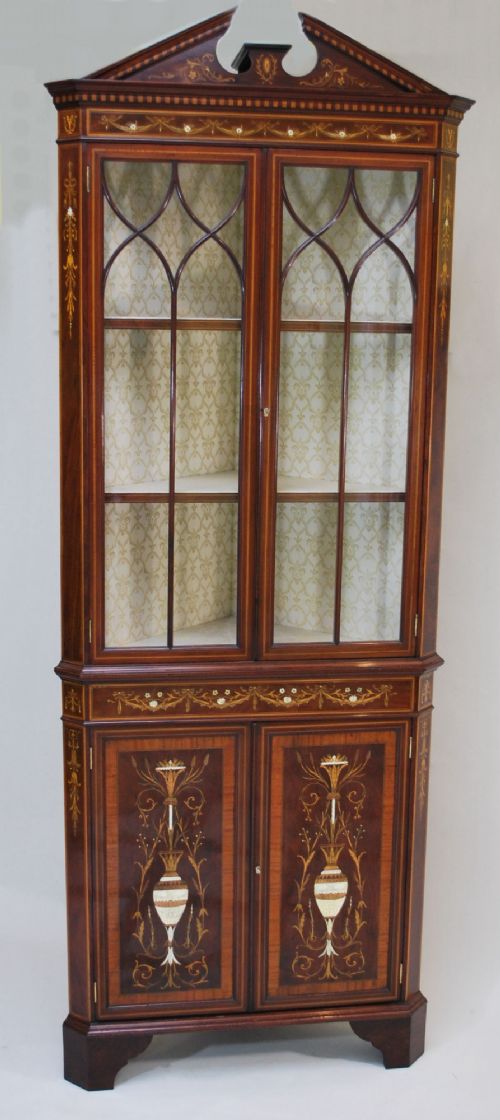
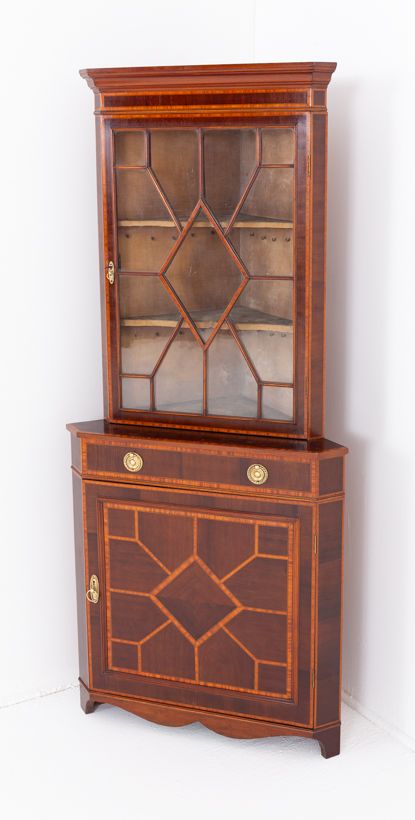
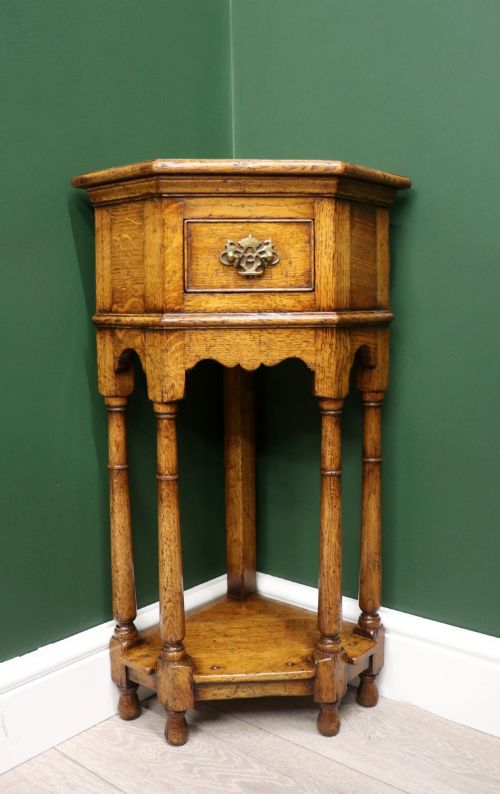
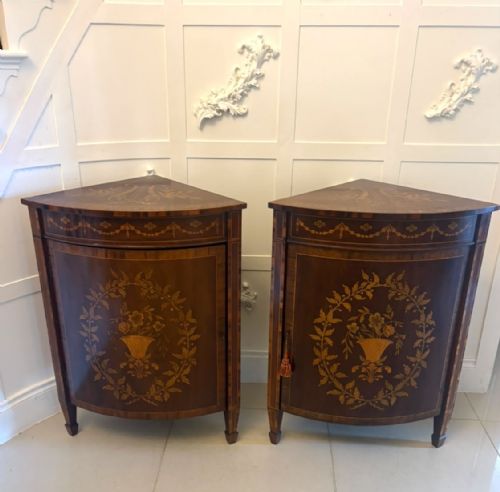
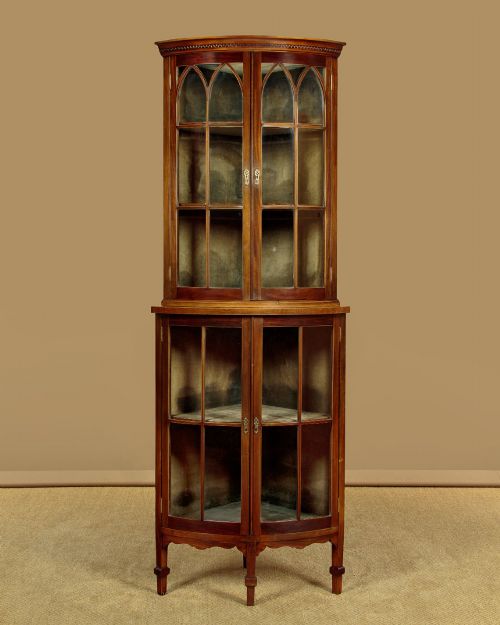


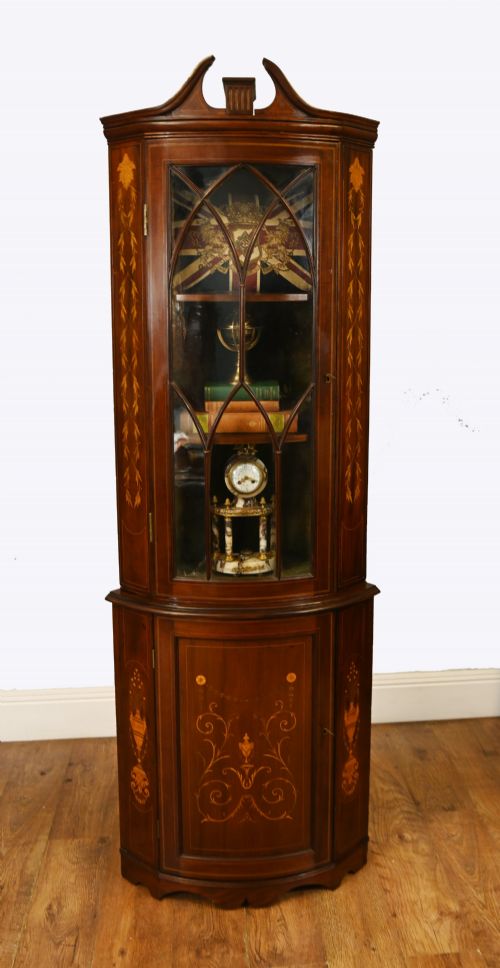


Edwardian Corner Display Cabinet
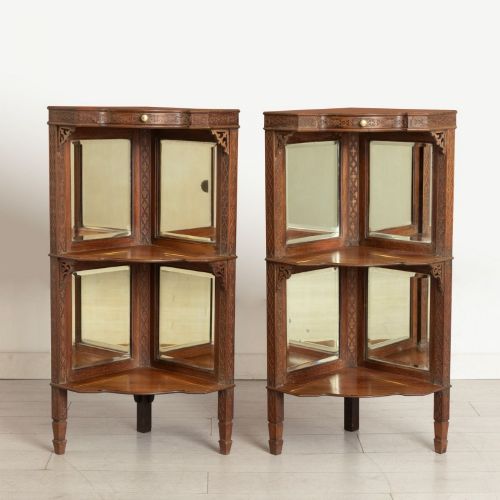
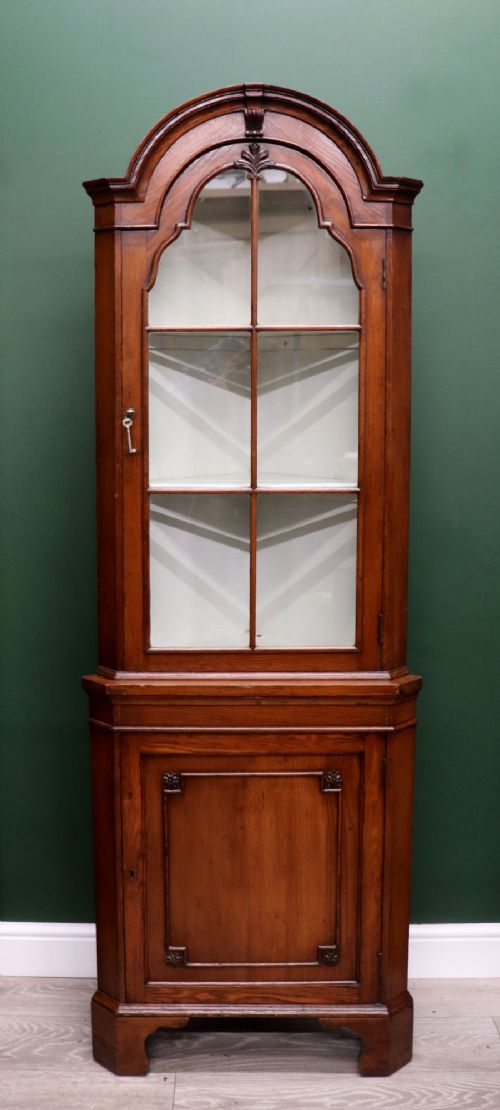
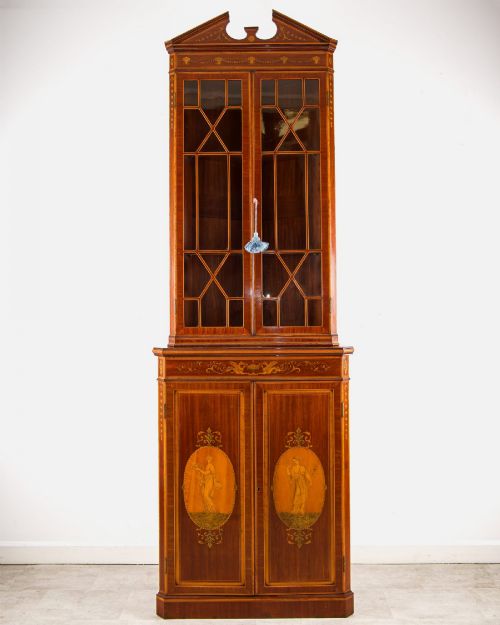
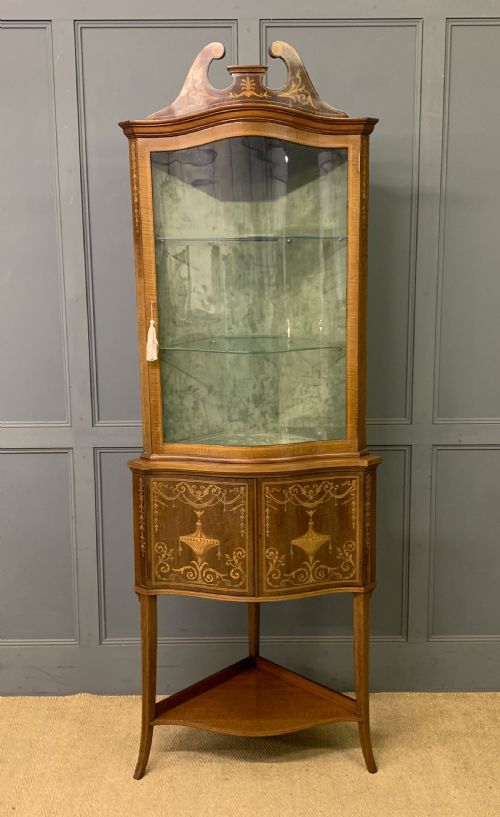
These edwardian corner display cabinet examples bring elegance to unused room angles with glazed doors and fitted shelving.

Edwardian Corner Display Cabinet
An edwardian corner display cabinet utilises awkward room angles efficiently while offering elevated display space for ceramics and decorative objects. The majority of pieces encountered on this page date from around nineteen hundred and belong firmly to the Edwardian period or the closing decade of the nineteenth century.
Most surviving examples take the form of wall-mounted or standing corner cupboards fitted with glass panelling to protect the interior contents. These furnishings range from compact single-door cabinets to taller standing double-height variations incorporating enclosed lower cupboards.

Construction and Materials
Cabinet makers constructed these pieces primarily using solid mahogany and rosewood carcasses, frequently applying contrasting satinwood inlay and marquetry details. Brass hardware serves as functional and decorative accents on hinges, escutcheons, and keyplates.
Glazing provides the primary window into the interior, whilst mirrored backs appear in specific variations to reflect light through the displayed objects. Cabinet makers shaped some carcasses with bow fronts, requiring precise woodworking techniques to curve the glass and wooden framework.
Retail Price Guide 2026
Typical UK retail prices for edwardian corner display cabinet, calculated from the Sellingantiques database of over a million retail prices indexed since 2003. This retail price guide relies exclusively on Sellingantiques data; no external sources or auction records are used, so the figures do not describe the wider market.
Mahogany remains the dominant timber across these listings, accompanied by rosewood, brass fittings, and satinwood inlay.
Evaluating Quality
The sophistication of the timber selection and the precision of the satinwood inlay separate standard examples from finer commissions. Cabinets featuring complex marquetry patterns, bow fronts, or standing double-height configurations represent higher standards of period craftsmanship.
The clarity and thickness of the original glass panels, alongside the retention of matching brass hardware and functional locks, indicate better preservation. Superior pieces maintain tight joinery in the complex angles required for corner placement without structural sagging.
The Edwardian Corner Display Cabinet Glossary
- Marquetry
- Decorative veneer patterns assembled from various woods to form pictorial or geometric designs. This technique decorates the exterior surfaces of many Edwardian cabinets.
- Bow Front
- A convex, curved front profile that projects outward in a smooth arc. This shape appears on select cabinets to soften the hard angles of a room corner.
- Bijouterie
- A glass-topped or glazed compartment designed specifically for displaying small valuable items or jewellery. Certain specialised Edwardian cabinets incorporate this style of display.
- Escutcheon
- A flat plate of brass surrounding a keyhole to protect the surrounding wood. These metal fittings add a subtle decorative detail to cabinet doors.
Frequently Asked Questions
How do I clean the glass?
Use a gentle glass cleaner applied to a soft cloth rather than spraying directly onto the surface. This prevents moisture from seeping into the surrounding mahogany or satinwood inlay.
Take care around old brass hardware and aged wood finishes to avoid chemical damage during routine maintenance.
Are these cabinets secure for valuable items?
Most pieces feature original working locks and keys suitable for basic enclosure of display items. However, period locking mechanisms should not be relied upon as modern security.
Consider them primarily for dust protection and aesthetic presentation rather than high-security storage.
How do I fit one into a room?
Measure the precise wall depth and corner angle before placement to ensure the cabinet sits flush against both walls. Standing versions require level flooring to prevent door misalignment.
Position the cabinet away from direct sunlight to protect rosewood and mahogany finishes from fading over time.
Can these be wall mounted?
Smaller variations are built for wall hanging using internal brackets or rear fixing points. Ensure your wall construction can support the combined weight of the timber and glass.
Standing versions rest on the floor but may benefit from discreet wall tethering for stability in busy rooms.