

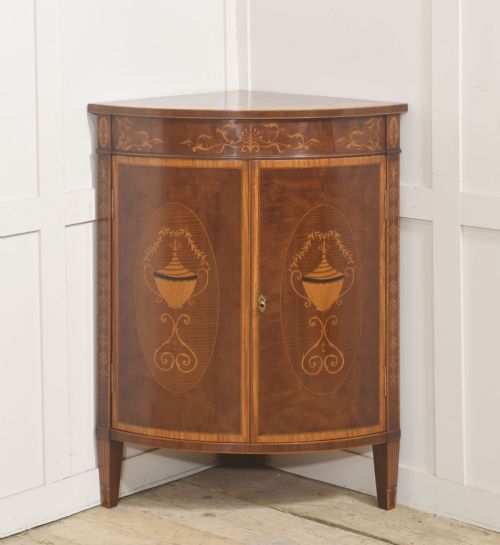
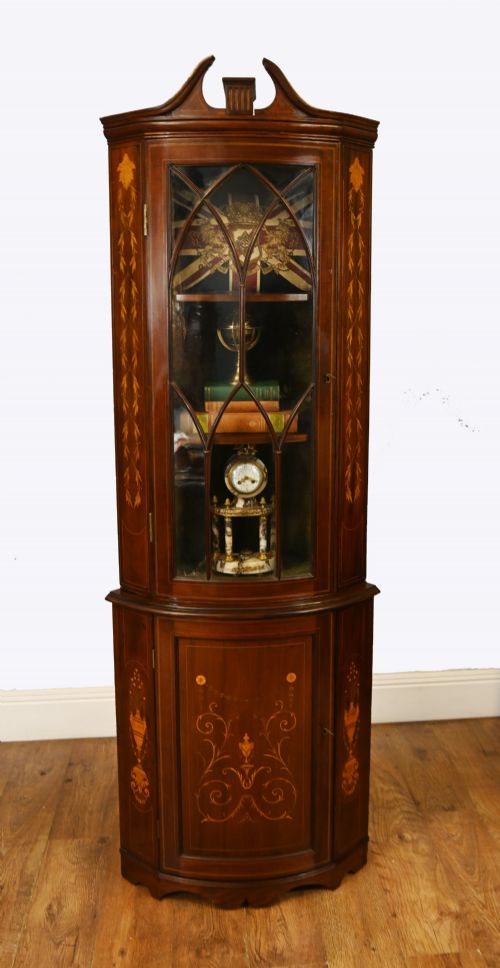

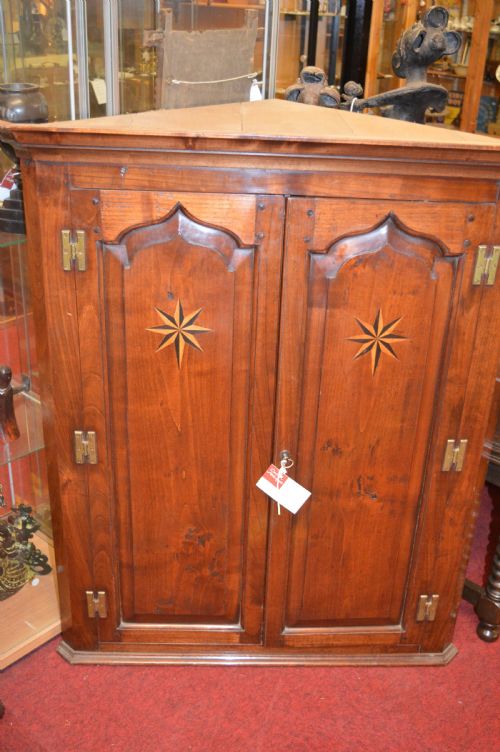


Sheraton Revival Corner Cabinet
These sheraton revival corner cabinet pieces offer neoclassical elegance for your room, combining period form with refined inlay work.
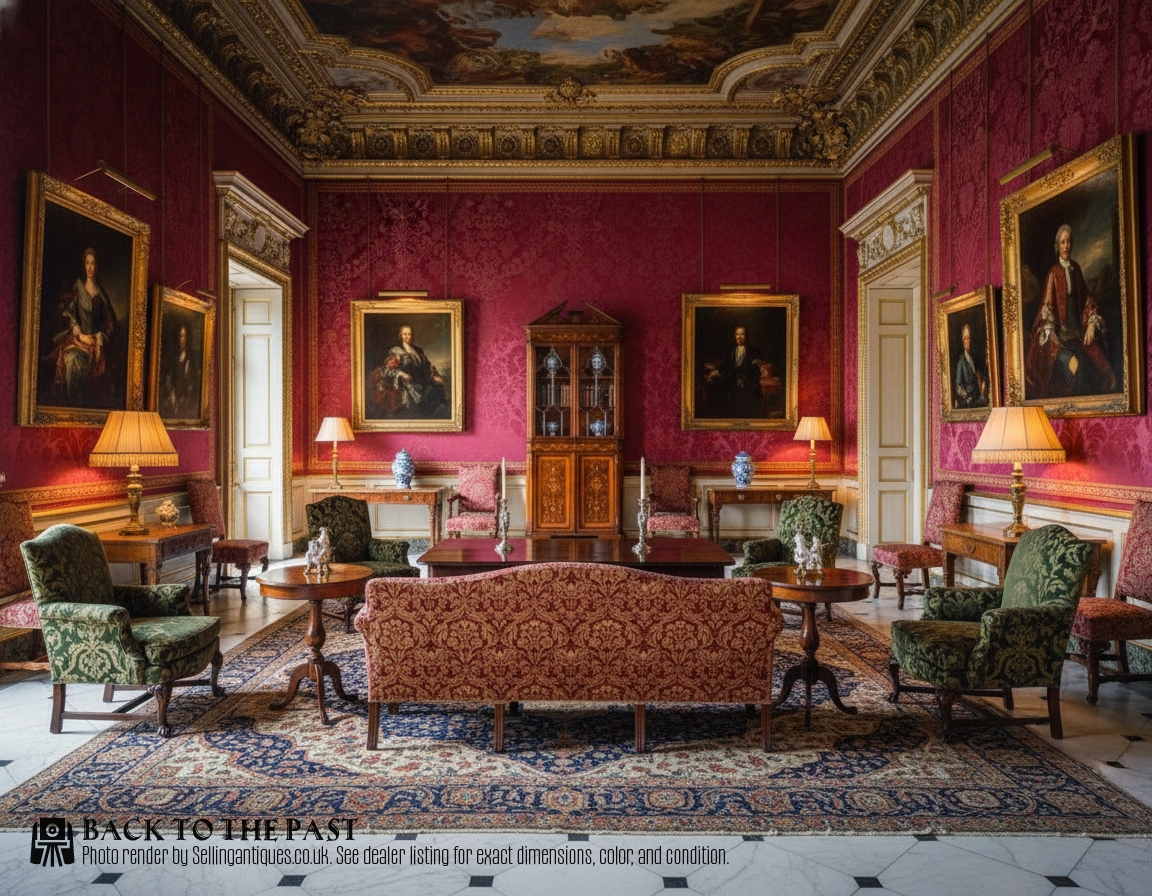
Sheraton Revival Corner Cabinet
A sheraton revival corner cabinet brings sophisticated neoclassical design to domestic interiors, shaped to fit neatly into room angles. These pieces primarily date from the Edwardian era and the late nineteenth century, spanning periods such as nineteen hundred and eighteen ninety.
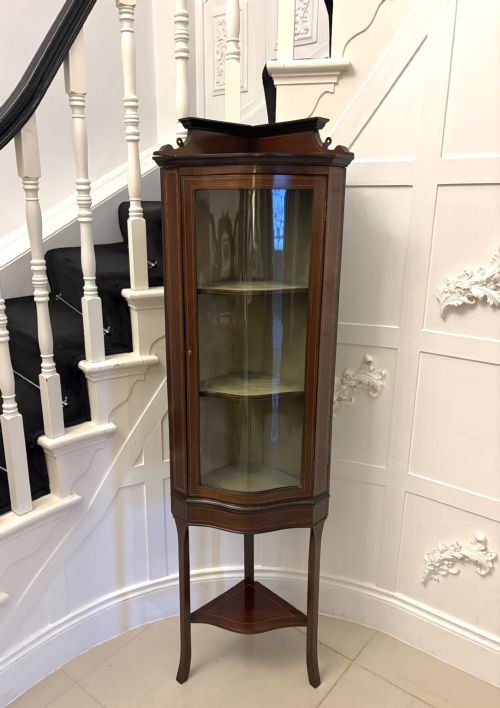
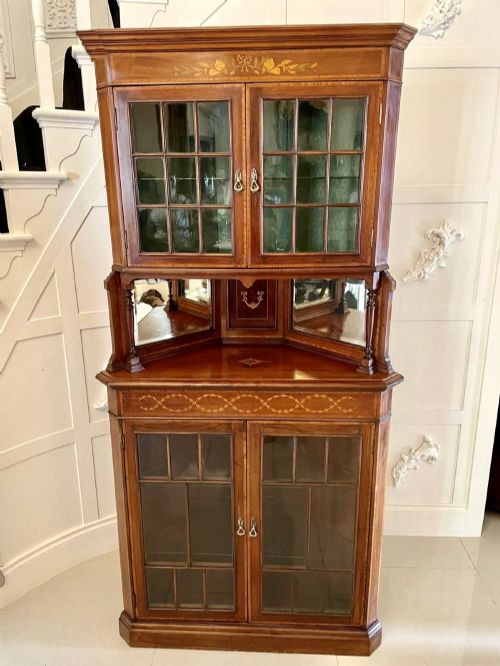
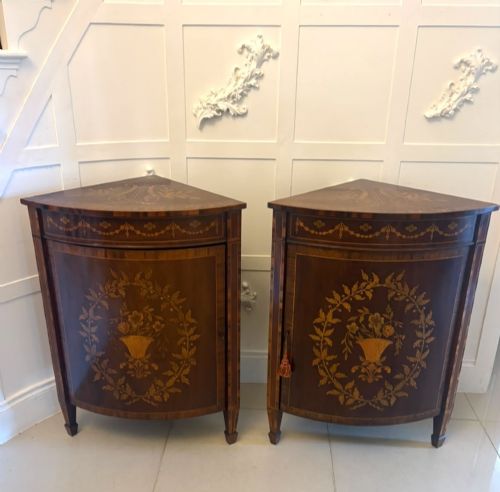
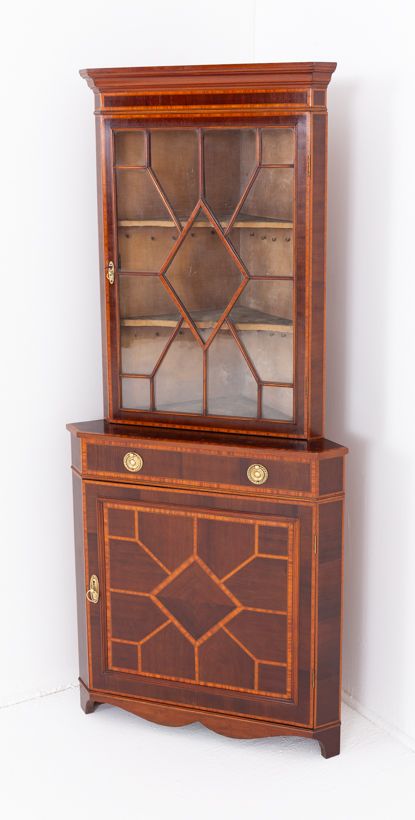
You will encounter various formats on this page, including standing cupboards, display cabinets with glass doors, and bow front freestanding corner cupboards. Many examples feature substantial height, standing either directly on the floor or raised on dedicated stands.
The aesthetic draws heavily on eighteenth-century classicism while utilising the woods and construction methods typical of late Victorian and Edwardian cabinet makers.

How they were made
Makers constructed these cabinets using dense timbers such as mahogany and rosewood as the primary structural bodies. These foundations received decorative contrasting details through satinwood and boxwood inlay.
Surface decoration often incorporates detailed marquetry work alongside painted satinwood panels. Glazed doors feature timber framing, while brass hardware secures doors and internal fittings.
Sheraton Revival Corner Cabinet Retail Price Guide 2026
Typical asking prices for sheraton revival corner cabinet among the pieces listed under this phrase on Sellingantiques today, from the lower quarter to the upper quarter. They describe what is for sale here now, not the wider market.
Some cabinets include curved glass that turns room corners into miniature stages for your prized trinkets.
What varies in quality
The standard of a sheraton revival corner cabinet depends greatly on the precision of its marquetry and stringing. Finer examples display meticulous hand-cut boxwood and satinwood inlay that remains flush and crisp against the darker mahogany or rosewood ground.
Material selection dictates the overarching visual depth, with richly figured rosewood and well-chosen mahogany distinguishing superior construction. The inclusion of painted panels or bow front glass demands advanced joinery skill compared to flat-fronted alternatives.

The Sheraton Revival Corner Cabinet Glossary
- Bow front
- A convex curved cabinet facade that projects outward towards the centre. This curved form requires specialist joinery to shape the timber and fit the corresponding glass.
- Inlay
- The technique of inserting contrasting pieces of wood into recesses of a base timber to form decorative patterns. Boxwood and satinwood are frequently used for this purpose.
- Marquetry
- Elaborate veneer patterns applied to furniture surfaces to create pictorial or geometric designs. It differs from simple inlay by covering the entire surface with assembled veneer segments.
- Satinwood
- A lustrous, yellow-toned timber prized for decorative banding and contrasting details. It provides a bright visual accent against darker woods like mahogany.
Sheraton Revival Corner Cabinet: Frequently Asked Questions
What is a sheraton revival corner cabinet?
A sheraton revival corner cabinet is a piece of furniture made during the late nineteenth or early twentieth century that imitates eighteenth-century neoclassical designs. These units are specifically shaped with a flat back to fit snugly into room corners.
They utilise woods like mahogany and rosewood, frequently decorated with satinwood inlay or painted panels. These cabinets serve both decorative display and enclosed storage functions.
How do I date a corner cabinet?
Dating relies on examining timber types, construction techniques, and stylistic markers recorded in the piece. Pieces originating from the Edwardian period often combine lighter woods with refined stringing.
Late Victorian examples typically feature denser rosewood or mahogany bodies with classical marquetry. Hardware and glass characteristics further assist in identifying the manufacturing era.
Where should I place a corner cabinet?
These cabinets are designed to occupy unused room angles efficiently without obstructing pathways. Placing them in dining rooms or living spaces allows them to anchor an empty corner.
Standing versions require adequate floor space, while display variants benefit from positioned lighting to illuminate interior contents through glass doors.
How are bow front cabinets different?
Bow front cabinets feature a rounded, convex facade that alters both the internal storage geometry and the exterior visual presence. This curved shaping requires advanced woodworking skill to execute properly.
Such cabinets often command greater visual attention in a room compared to flat-fronted equivalents.