


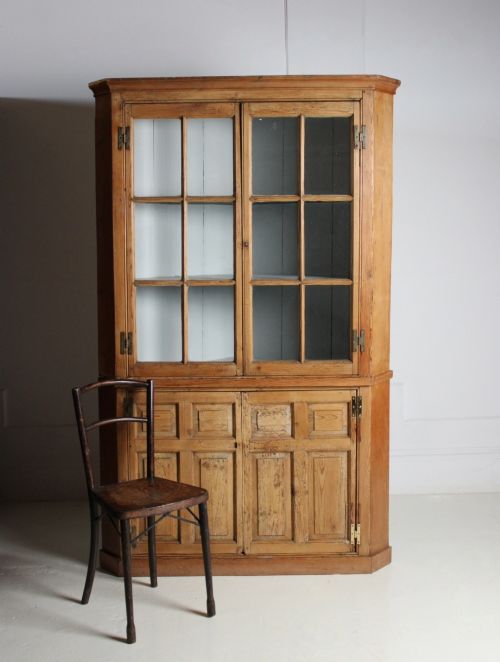
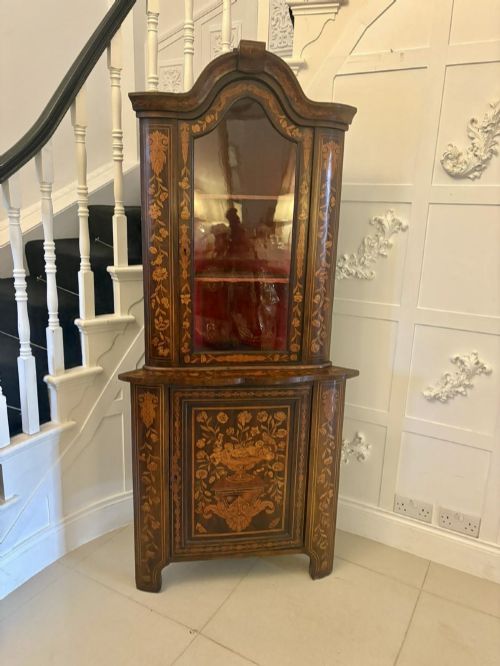
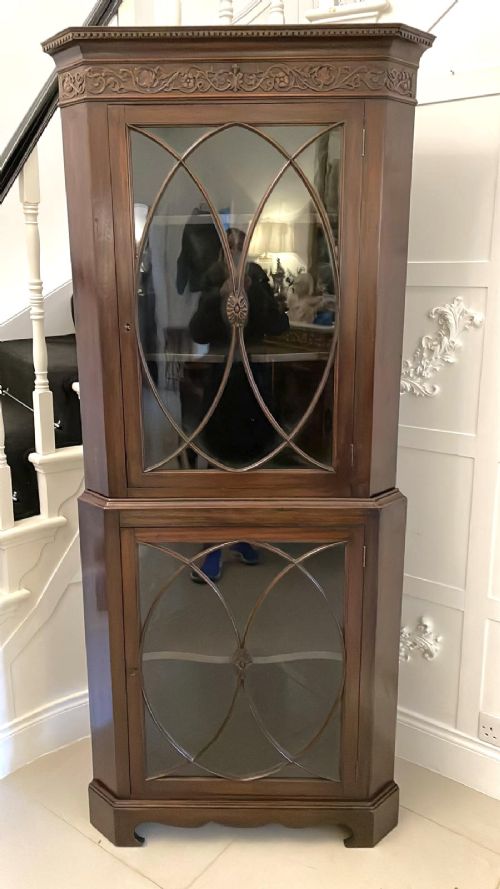
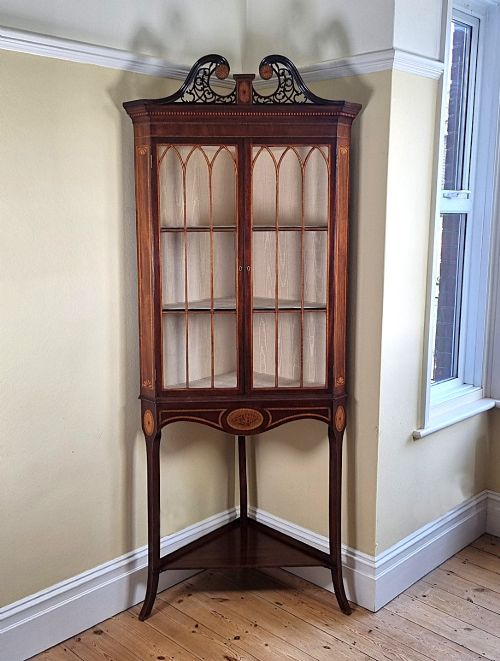
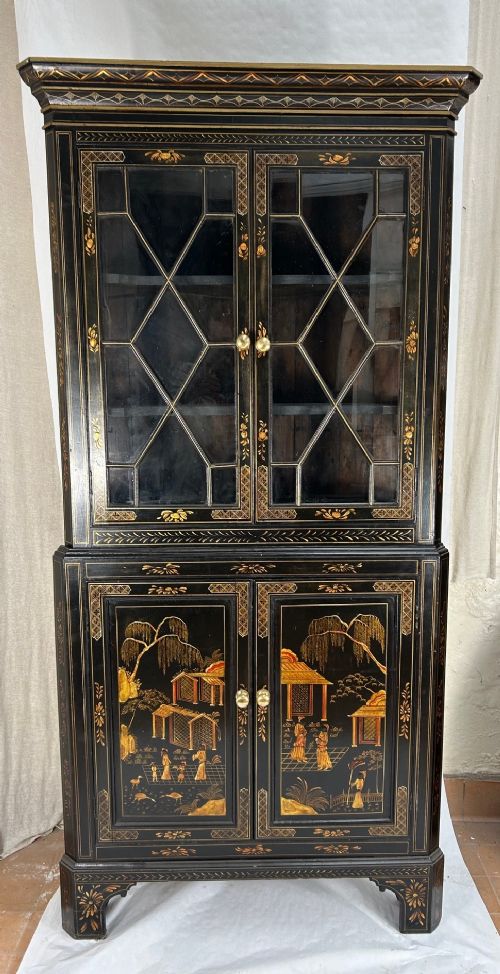
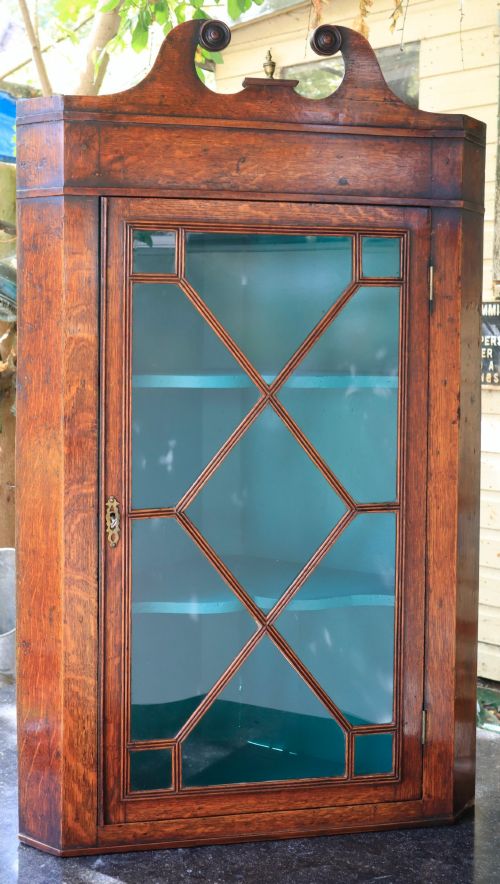
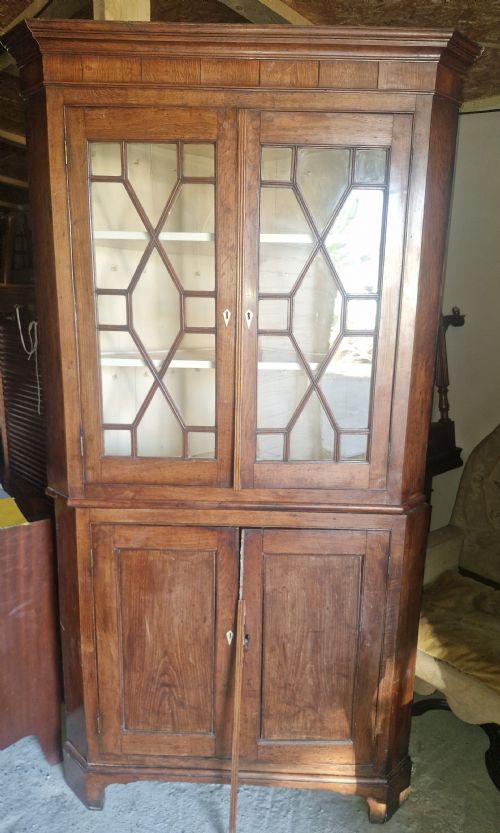
Glazed Corner Display Cabinet
A glazed corner display cabinet solves the problem of difficult room angles while framing prized collections behind glass.

Glazed Corner Display Cabinet
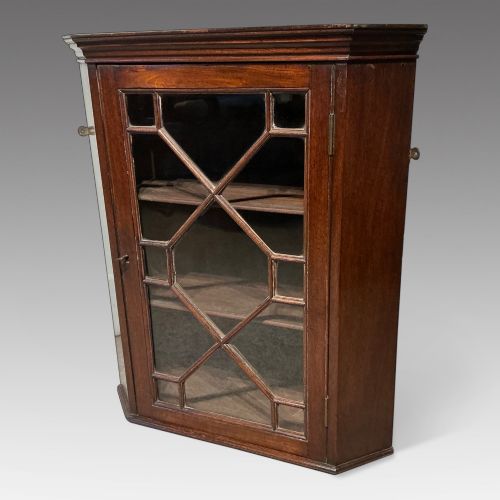
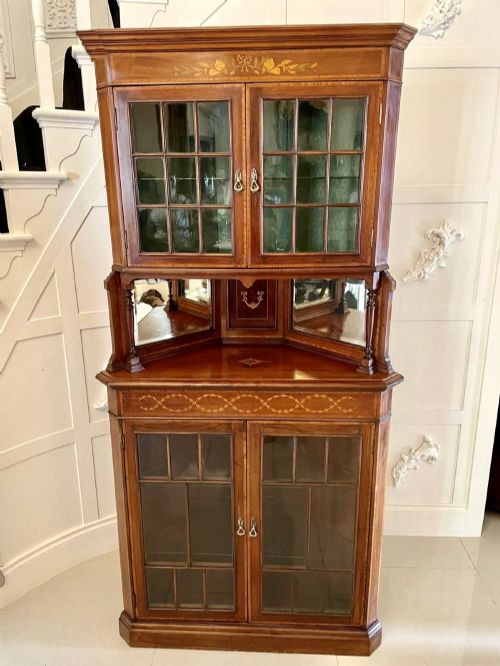
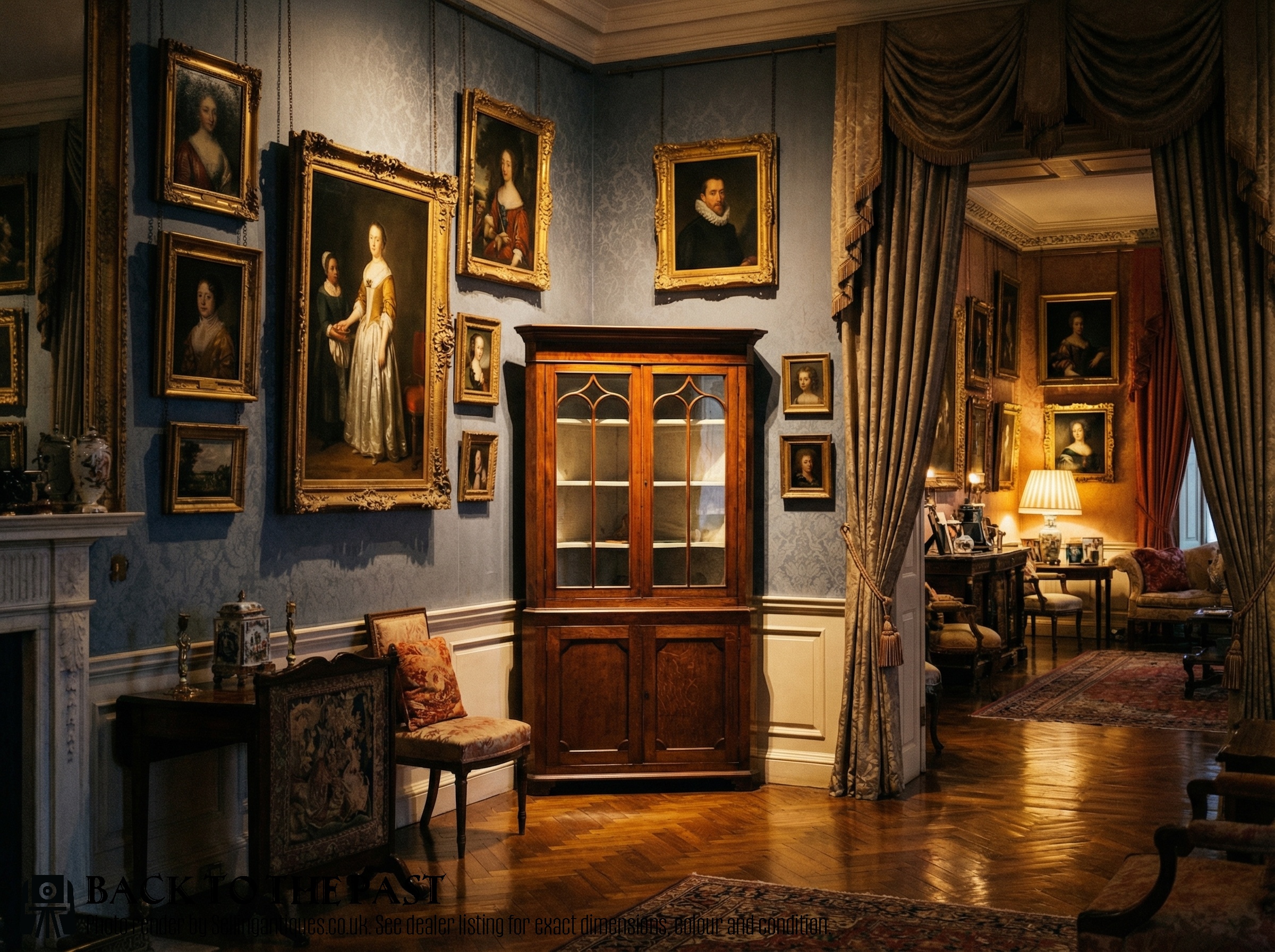
A glazed corner display cabinet makes intelligent use of unused wall junctions, turning dead space into a showcase. When exploring this selection, buyers frequently encounter mahogany and oak forms spanning the Georgian, Victorian, and Edwardian periods.
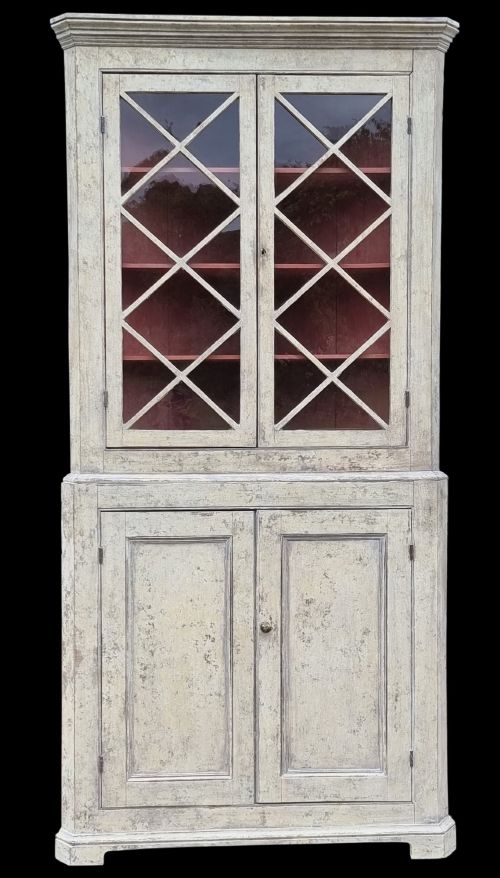
Pieces range from wall-hanging single doors to substantial two-part floor-standing cupboards. The evidence shows domestic joinery originating in England, Wales, and continental Europe, often executed in regional timbers.
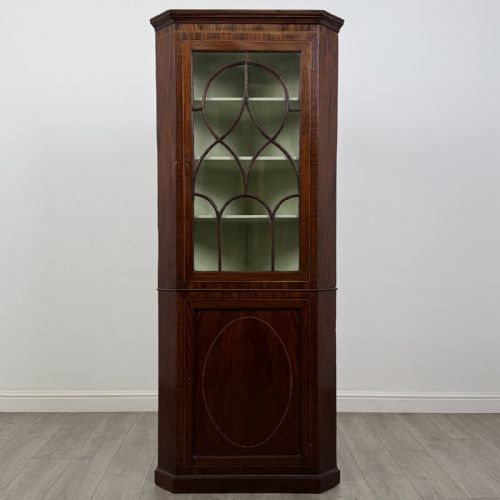
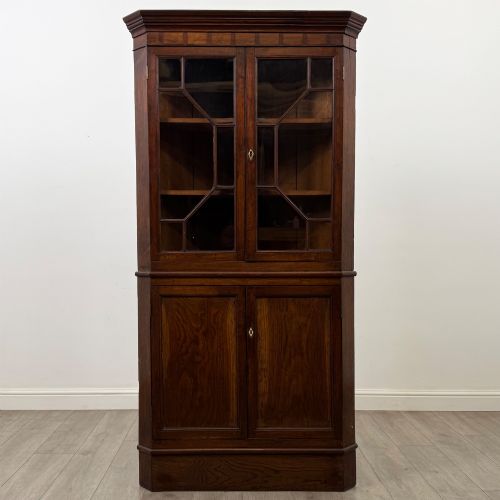
The layout typically involves glazed upper doors with wooden astragal bars, sometimes sitting above a lower wooden cupboard base. These vessels served generations for storing china, glassware, and decorative objects out of harm's way.
Materials and Construction
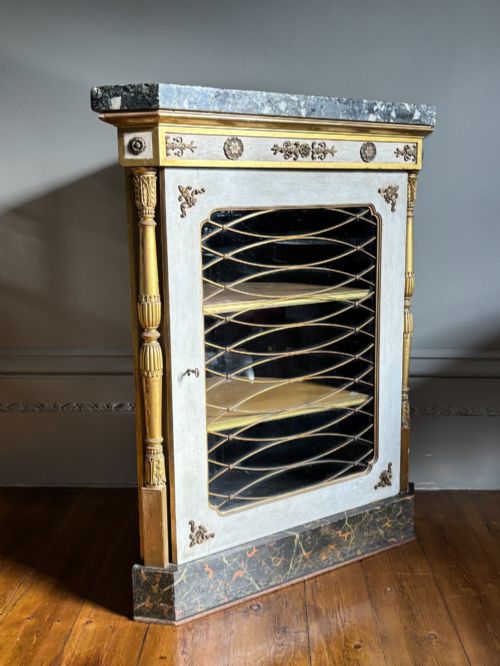
Cabinet makers built these carcasses predominantly using mahogany, oak, and pine, frequently applying satinwood or marquetry inlay to enrich the surface grain. Glass panes were secured individually within wooden glazing bars, supported by brass hinges and locks.
Standing examples often divided into two structural parts for transport, while wall-hung versions utilised sturdy internal brackets to bear the weight of glass and timber. Backboards were typically constructed from deal or pine, fitted flush to seal the interior.
Glazed Corner Display Cabinet Retail Price Guide 2026
Typical asking prices for glazed corner display cabinet among the pieces listed under this phrase on Sellingantiques today, from the lower quarter to the upper quarter. They describe what is for sale here now, not the wider market.
Several pine examples preserve original painted interiors, offering a flash of vibrant colour behind antique glass panes.
Craftsmanship and Proportion
The refinement of the astragal glazing bars marks the distinction between standard utility work and superior cabinet making. Slim, hand-planed wooden glazing bars create lighter frames than heavy, thick mouldings.
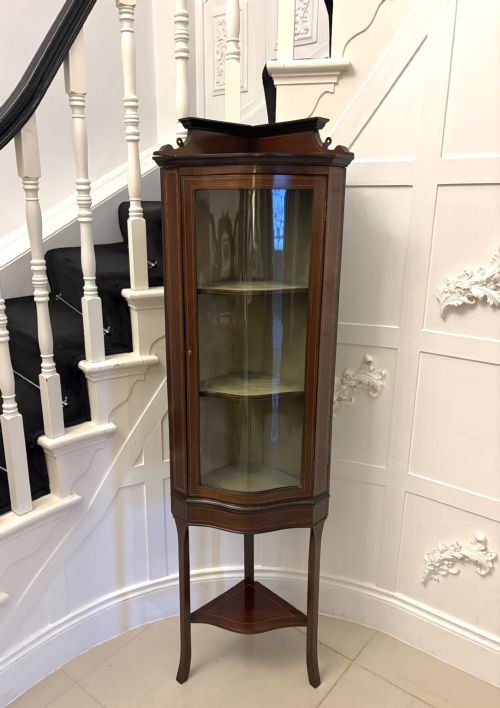
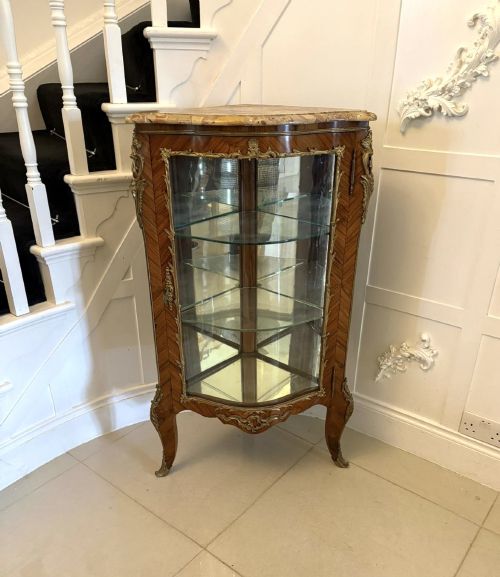
Proportion and timber selection dictate the visual balance of the piece, particularly where curved bow-front glass or intricate marquetry inlay meets the wall angles cleanly.
Maurice Adams
The Glazed Corner Display Cabinet Glossary
- Astragal glazing
- Wooden bars dividing glass panes within a door. These narrow mouldings form geometric grids across the display area.
- Bow front
- A convex curved cabinet facade. This curved shape softens room angles and provides panoramic viewing through the glass.
- Two-part form
- A cabinet built in upper and lower sections. This construction aids transportation and positioning in domestic interiors.
- Marquetry
- Inlaid wood veneers forming decorative patterns. Craftsmen utilised contrasting timbers like satinwood to create pictorial motifs.
Glazed Corner Display Cabinet: Frequently Asked Questions
How do I hang a wall cabinet safely?
Wall-hanging versions require secure fixing into solid masonry or direct wall studs using heavy-duty brackets. The combined weight of solid timber and glass demands robust load-bearing support.
Check the internal backboards and hanging points before mounting to ensure the structure can safely bear the loaded shelves.
Can these cabinets stand on uneven floors?
Older properties frequently feature sloping floors that affect tall, floor-standing furniture. Two-part models allow minor adjustments when aligning the upper and lower sections.
Utilising discreet packing beneath the base plinth helps level the cabinet so the glazed doors close evenly against the frame.
How do I care for the interior fabric?
Some period interiors feature fabric-lined backing boards to highlight displayed ceramics and glassware. Gentle surface dusting with a soft attachment preserves textiles without disturbing old fibres.
Avoid chemical cleaning sprays near original painted or fabric surfaces to prevent staining the historic backing materials.
Are the glass panes original?
Early glass often displays subtle surface waviness, tiny air bubbles, and slight thickness variations from historic manufacturing methods. Examining the panes under angled light reveals these distinct characteristics.
Original glass adds authenticity to Georgian and Victorian pieces, though replacements sometimes occurred during centuries of domestic use.