





Antique Corner Vitrine
An antique corner vitrine turns dead wall space into a brilliant stage for porcelain and glass.
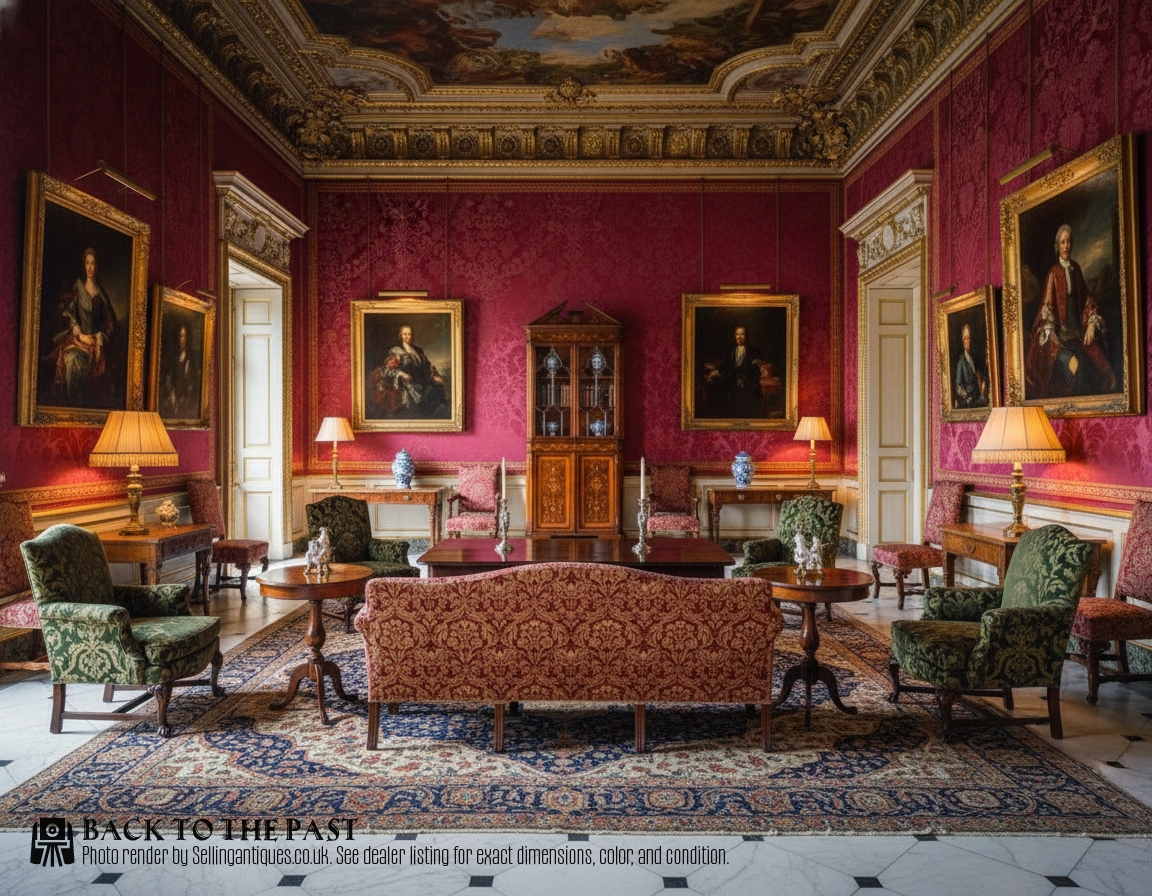
Antique Corner Vitrine
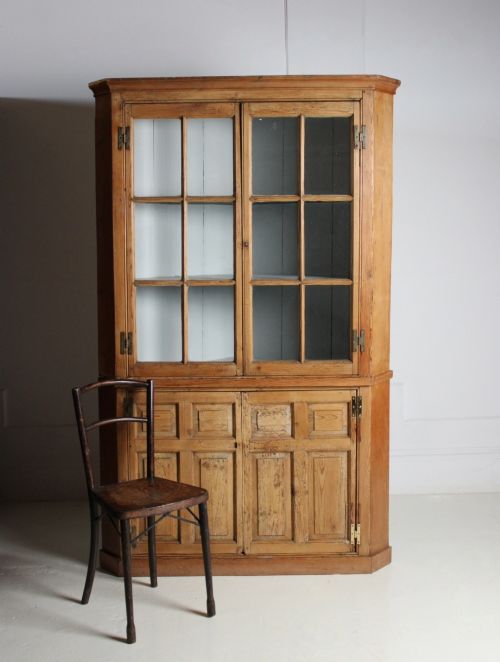
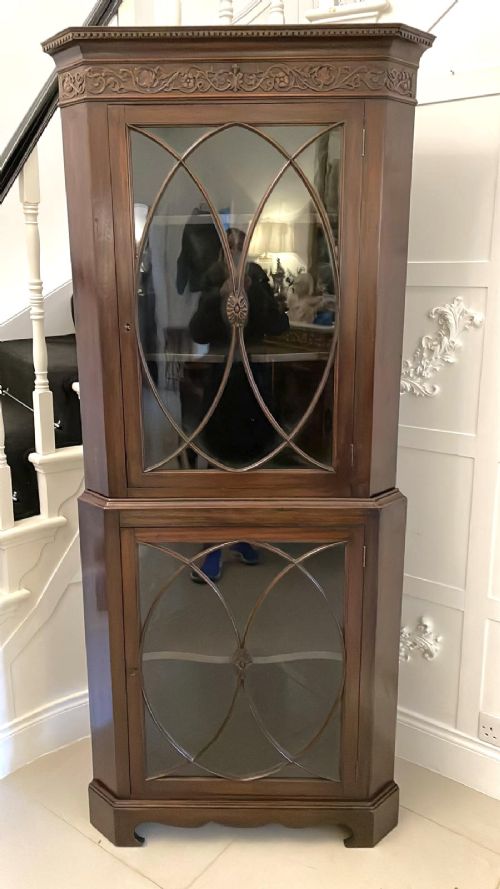
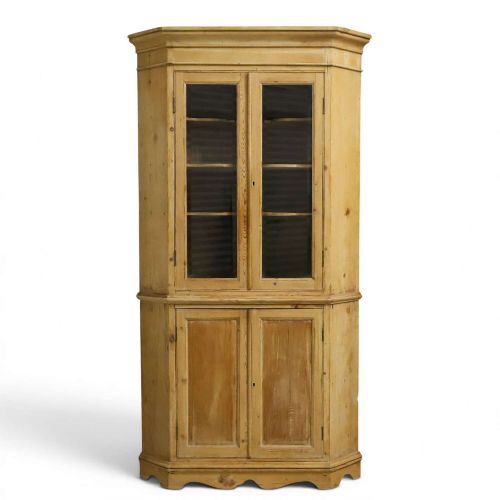
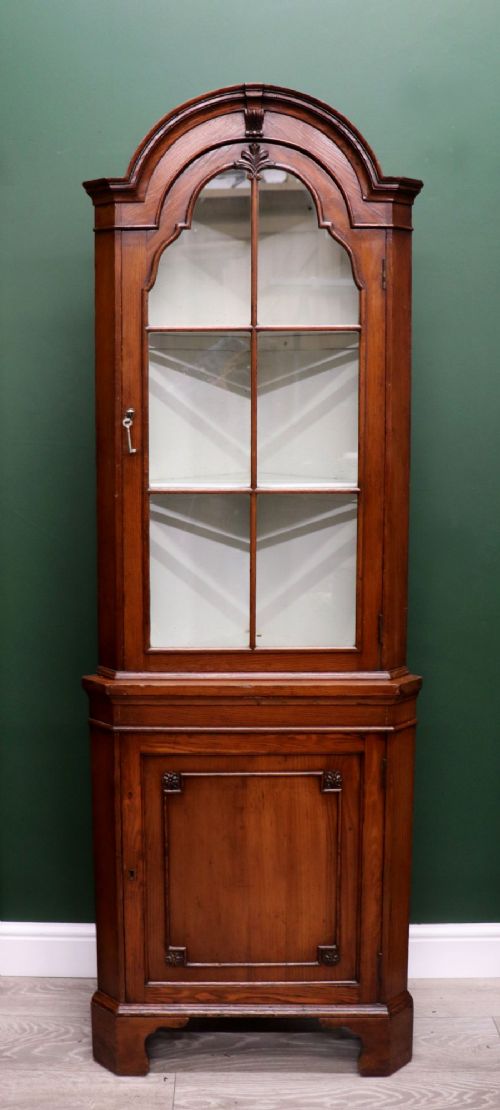
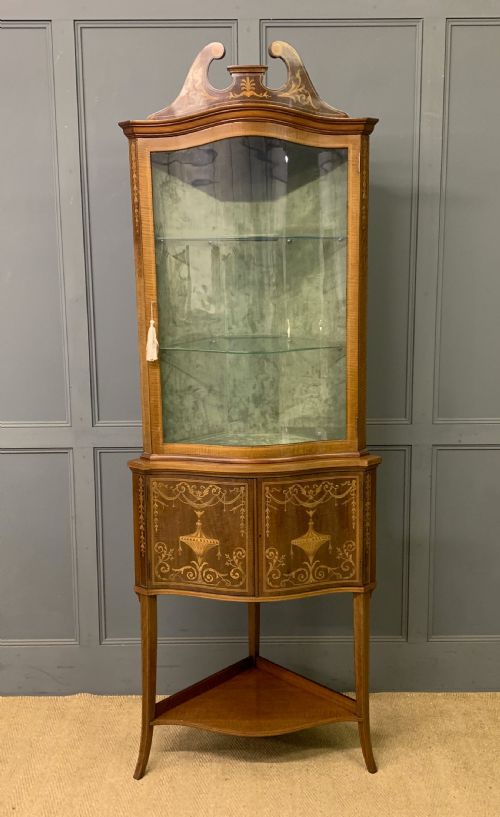
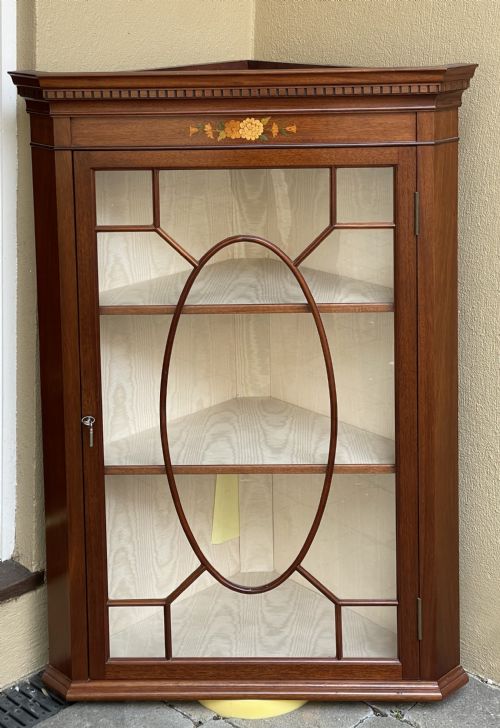
An antique corner vitrine is a specialised display cabinet designed to fit neatly into the ninety-degree junction of a room. These pieces provide vertical storage while occupying minimal floor space, making them practical for smaller rooms as well as grand drawing rooms. The selection ranges from compact wall-hanging cupboards to substantial two-part floor-standing furniture.
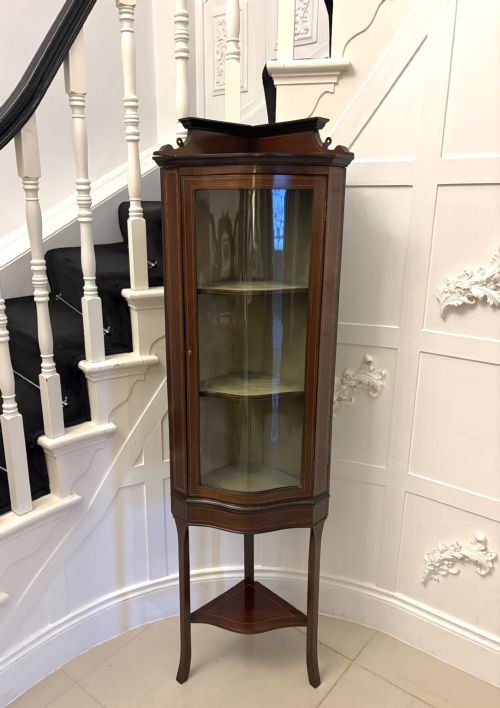
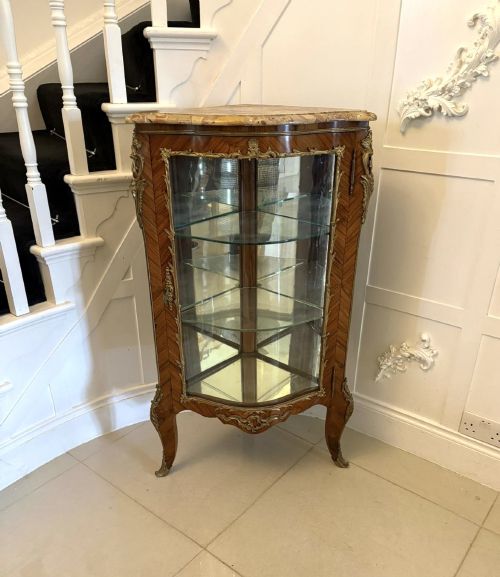
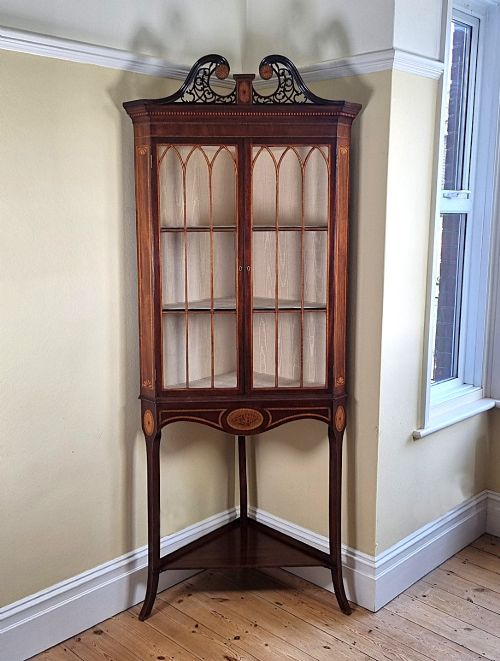
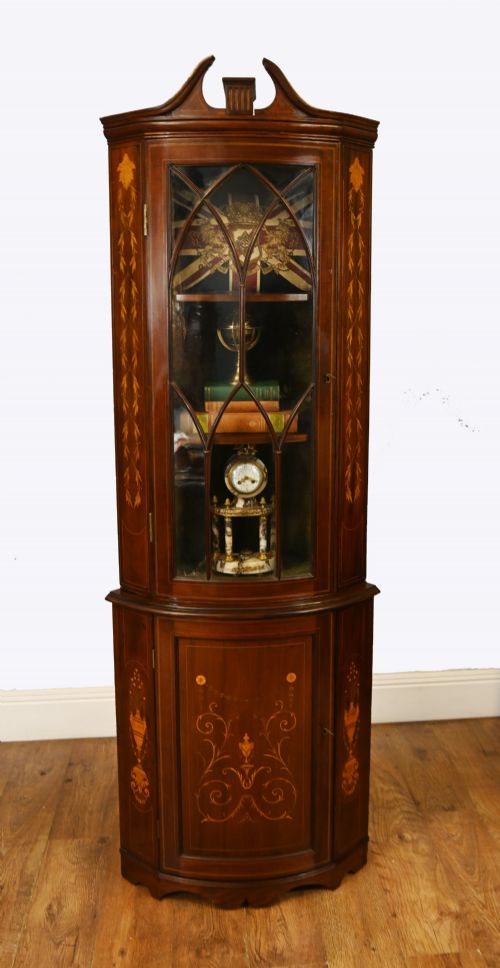
The most common versions encountered here date from the Edwardian period and the late nineteenth century, predominantly constructed in mahogany with inlaid details. Alongside these English staples, one finds continental pieces, including Dutch marquetry examples and French cabinets featuring serpentine fronts and ormolu mounts. Forms vary from simple glazed doors to bow-fronted glasses and elaborate stands.
Makers and regional styles span several decades, incorporating Georgian proportions, Victorian tastes, and later Art Deco interpretations. The overarching purpose remains the preservation and exhibition of precious objects behind glass. Buyers select these cabinets to introduce architectural interest and disciplined storage into domestic interiors.
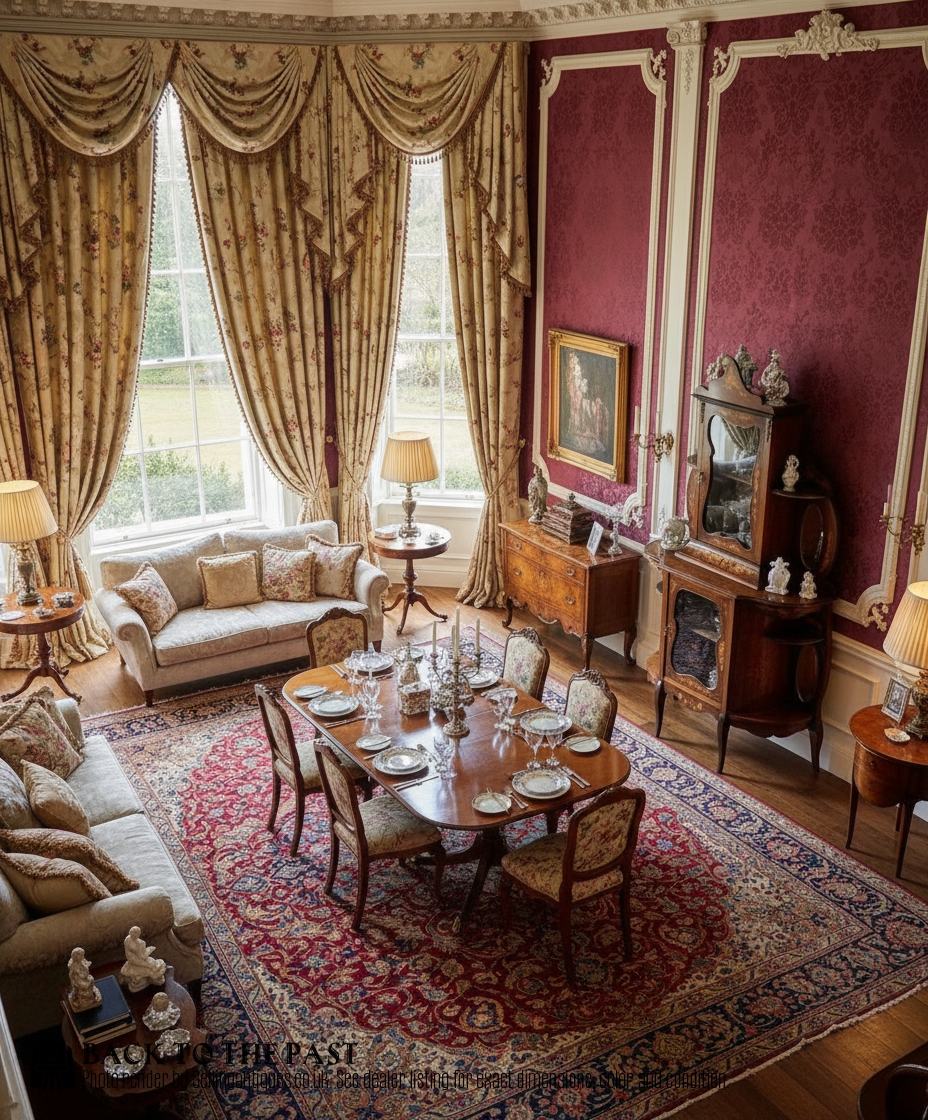
Materials and construction
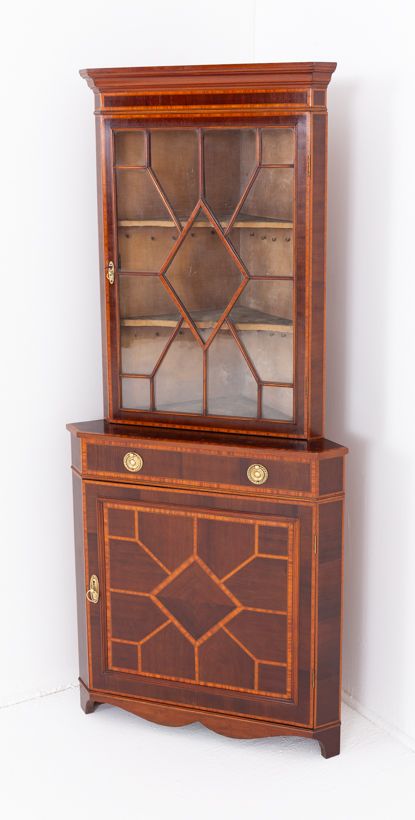
Cabinet makers relied heavily on timber frames of mahogany, walnut, and pine, often applying finer veneers of satinwood or rosewood to the exterior surfaces. Inlaid marquetry decoration using contrasting woods creates geometric or floral motifs across the door panels and friezes. Brass hinges, locks, and handles secure the doors, while gilt bronze ormolu mounts adorn more opulent continental models.
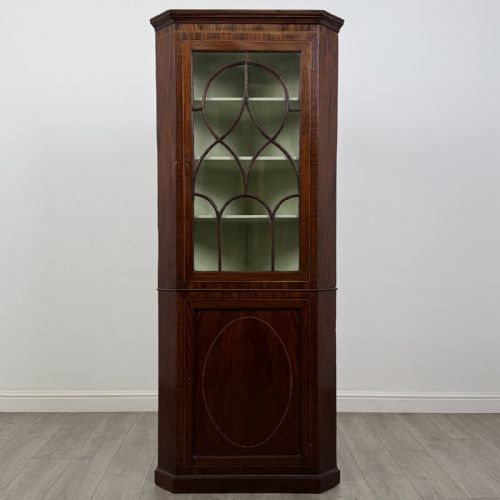
Glazing techniques define the visual character of an antique corner vitrine, utilising individual panes held together by wooden glazing bars such as astragal mouldings. Larger display cases incorporate curved or bowed glass panes that require specialist glass-blowing and fitting skills. Interior shelving typically consists of timber or glass supported by adjustable brackets.
Antique Corner Vitrine Retail Price Guide 2026
Typical asking prices for corner vitrine among the pieces listed under this phrase on Sellingantiques today, from the lower quarter to the upper quarter. They describe what is for sale here now, not the wider market.
The documented periods span from the eighteenth century through the Victorian and Edwardian eras up to the Art Deco movement of the 1930s.
Factors of quality
The refinement of the timber selection and the precision of the marquetry inlay immediately distinguish superior examples from simpler utilitarian cupboards. Master cabinet makers achieved seamless joints and crisp carving, whereas lesser pieces rely on painted substitutes or heavy, uninspired mouldings. The presence of original hand-blown glass panes adds considerable merit to a piece.
Proportion and architectural balance dictate the overall success of the design. Cabinets that retain their original brassware, working locks, and fitted interior shelves command greater respect among collectors. The integration of decorative metal mounts, such as cast ormolu or ebonised details, reflects the ambition of the original workshop.

Edwards And Roberts·John Stow Ltd·Maurice Adams·Sage And Co
The Antique Corner Vitrine Glossary
- Astragal glazing
- A method of dividing glass windows into smaller panes using narrow wooden mouldings. These delicate bars create geometric patterns across the cabinet door.
- Ormolu
- Gilded bronze mounts applied to furniture for decorative effect. This technique was favoured by French cabinet makers during the nineteenth century.
- Marquetry
- The art of applying pieces of veneer to a structure to form decorative patterns. Craftsmen utilised contrasting timbers like satinwood and walnut to achieve pictorial depth.
- Serpentine front
- A furniture front characterised by a concave central section flanked by two convex curves. This undulating shape demands advanced woodworking skill.
- Bow front
- A convex, outward-curving front profile commonly found on eighteenth and nineteenth-century display cabinets. It allows for increased interior volume and catches ambient light.
Antique Corner Vitrine: Frequently Asked Questions
Where should I place a corner vitrine?
These cabinets suit awkward angles and empty room corners that standard rectangular furniture cannot occupy gracefully. They draw the eye upward and utilise vertical space efficiently without blocking walkways.
Position the cabinet away from direct sunlight to protect displayed contents and vulnerable wooden veneers from fading over time.
How do I identify an Edwardian vitrine?
Edwardian pieces frequently combine lightweight mahogany frames with delicate satinwood inlay and Sheraton Revival motifs. The glazing bars tend to be slender and refined compared to heavier Victorian counterparts.
Look for light construction, tapered legs, and subtle classical stringing rather than deep, dark carvings.
Are these cabinets secure for valuable items?
Most pieces feature working brass locks and keys designed to keep doors closed securely during everyday use. The glass panels provide a physical barrier against dust and casual handling.
Treat the antique mechanisms with care and avoid forcing original locks if they feel stiff.
Can shelves be adjusted inside?
Interior shelf arrangements depend entirely on the specific construction of each individual cupboard. Some older models feature fixed wooden shelving, while others use adjustable wooden notches or modern support pins.
Review the specific interior layout before purchasing if you plan to display objects of varying heights.