


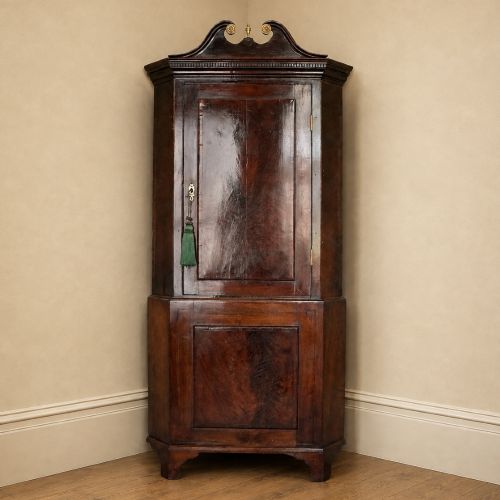
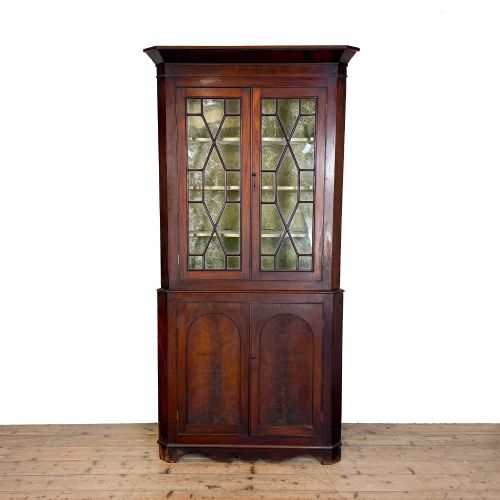
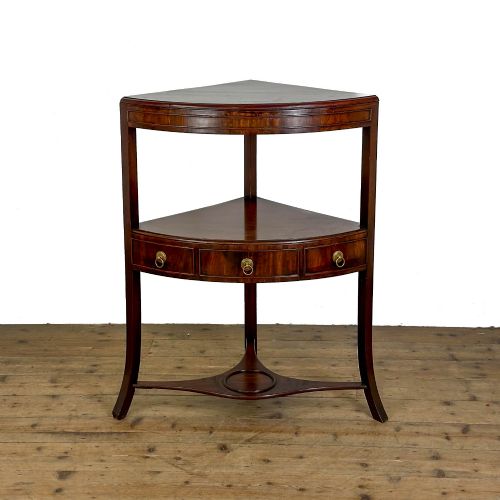
Mahogany Corner Display Cabinet
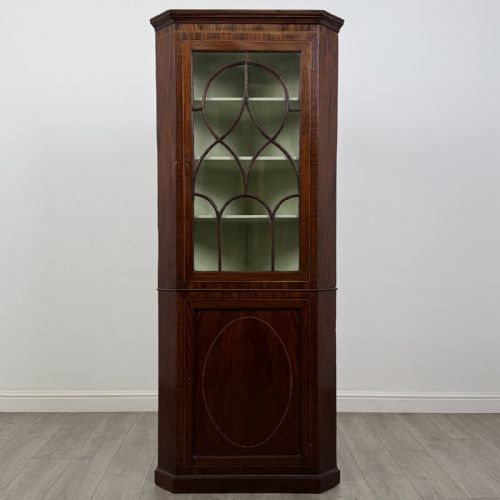
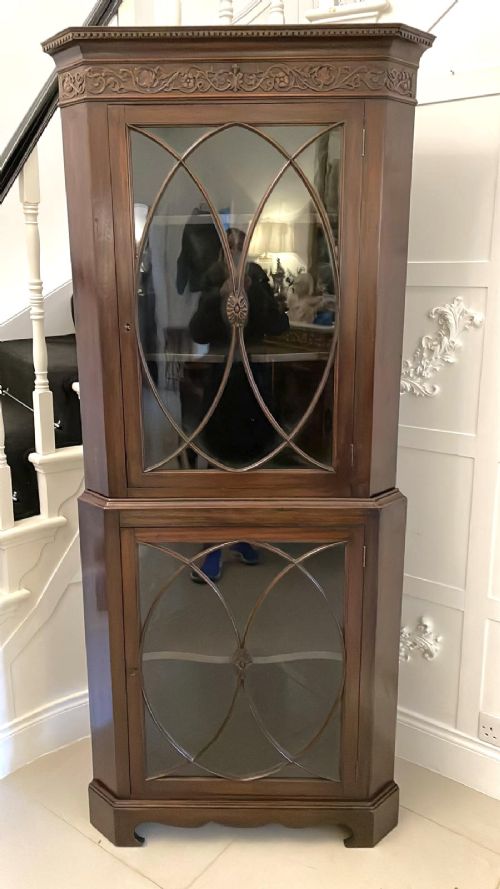
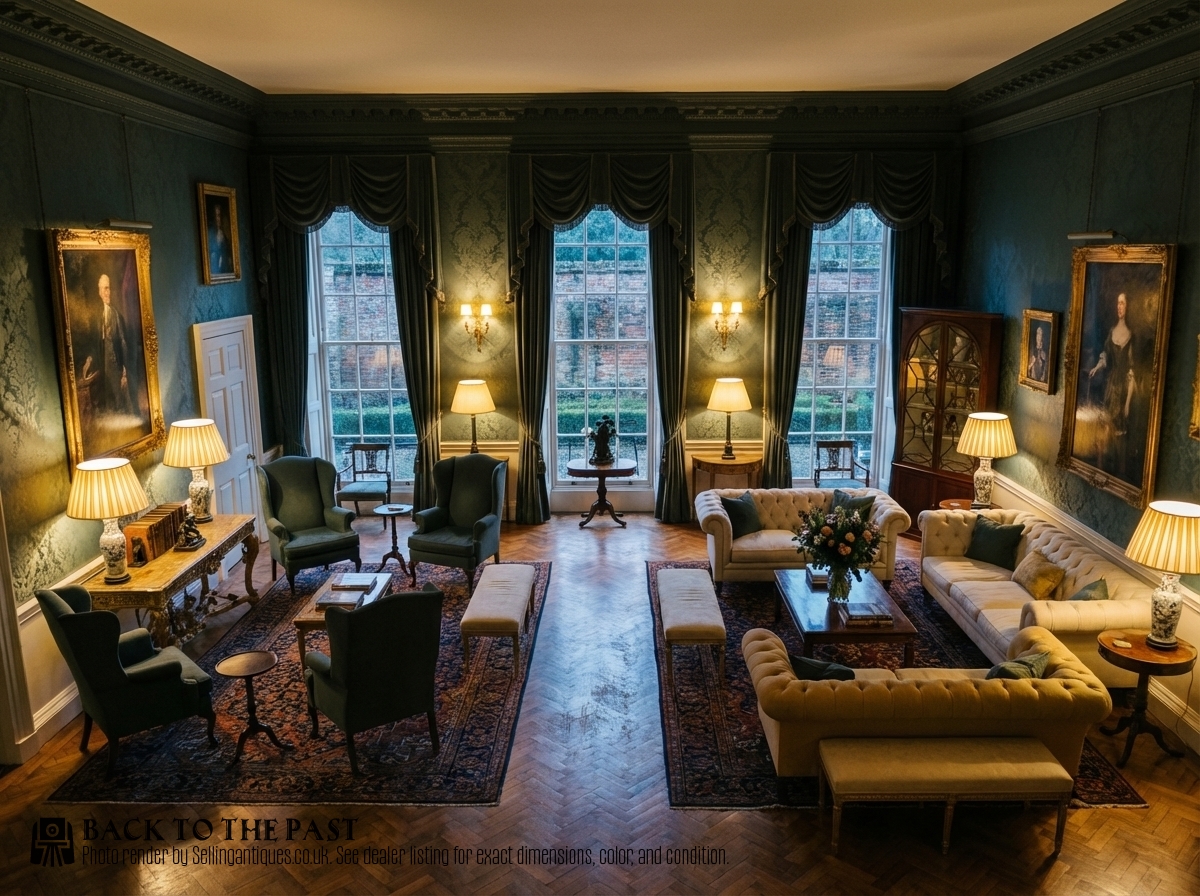
A mahogany corner display cabinet tucks into an unused room angle while showing off porcelain or glassware behind glass doors.
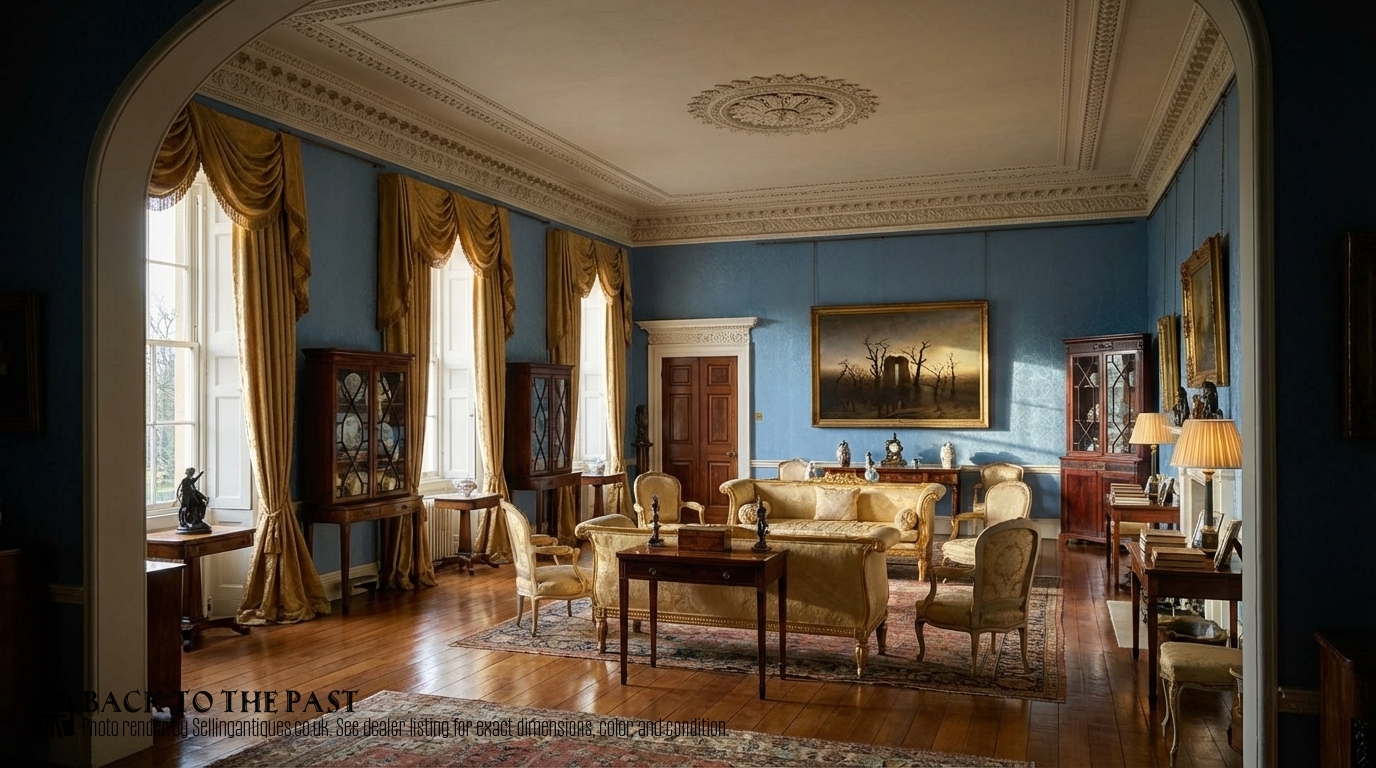
Mahogany Corner Display Cabinet
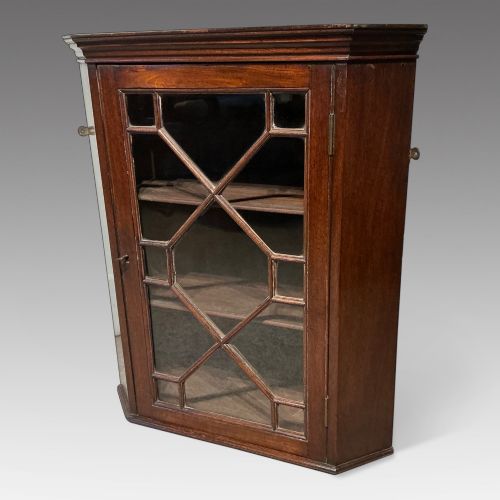
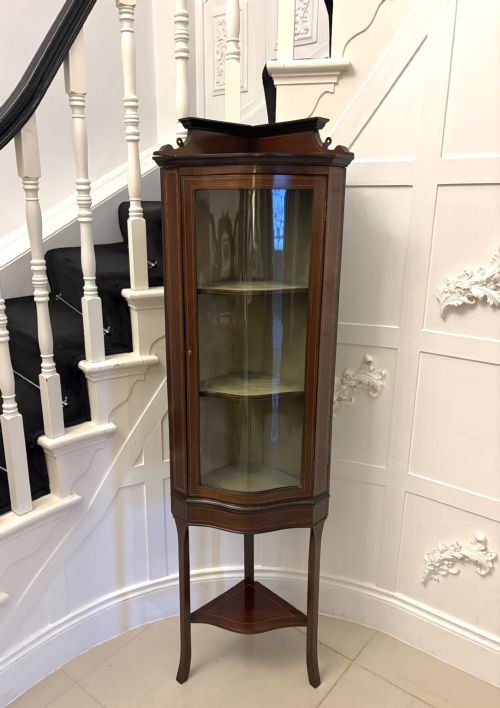
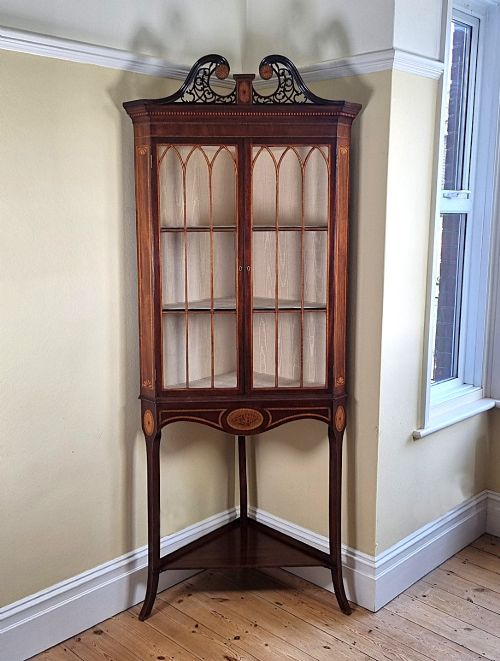
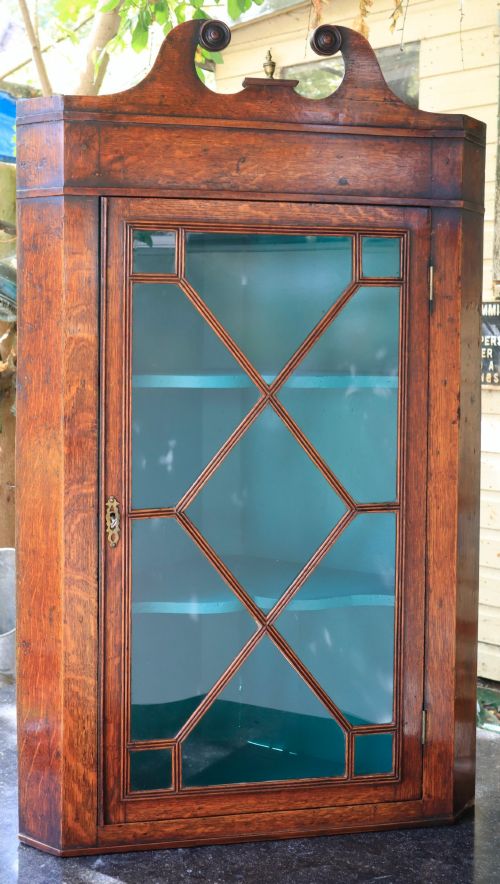
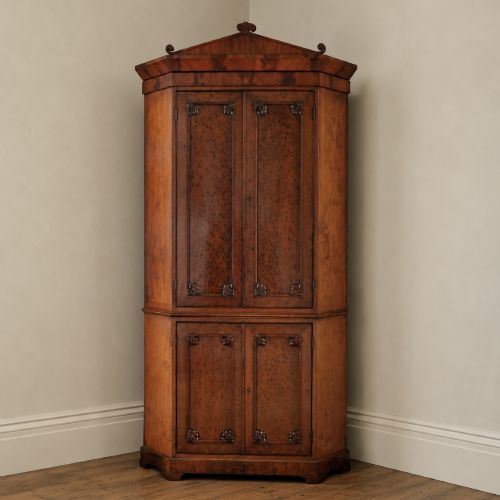
A mahogany corner display cabinet utilises awkward angles to display ceramics and glass within domestic interiors. These architectural items originate primarily from the Georgian period through to the Edwardian era, taking the form of hanging wall units or tall floor-standing cupboards.
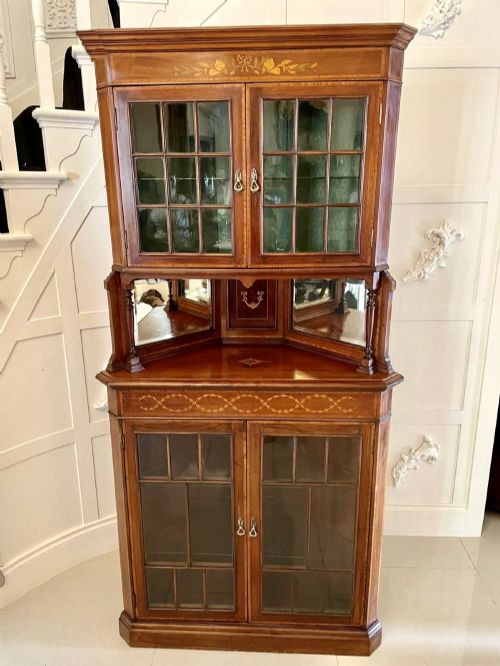
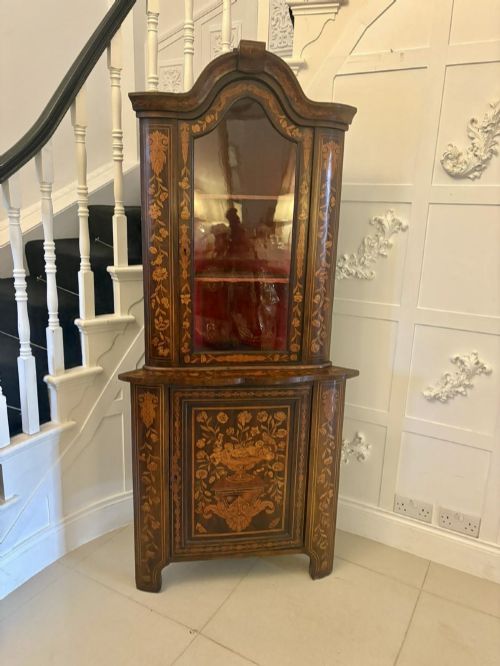
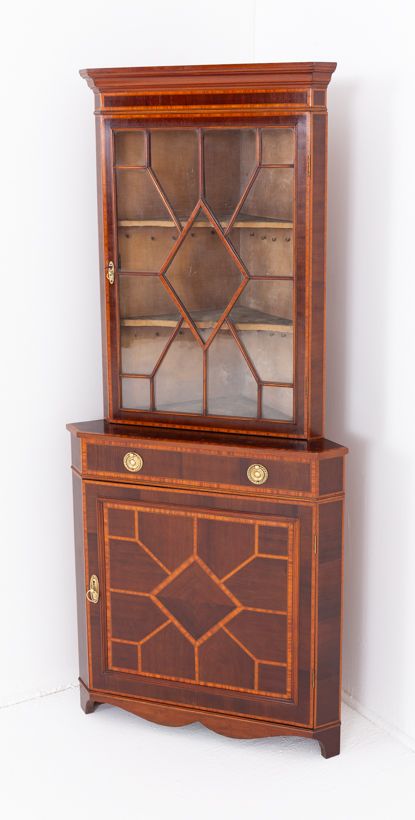
The versions most commonly met on this page date from the Edwardian period, frequently exhibiting inlaid satinwood details and astragal glazing bars. Earlier Georgian examples present deeper Cuban timber tones and architectural pediments, while Victorian iterations incorporate rich marquetry and painted decorations.
Materials and Construction Techniques
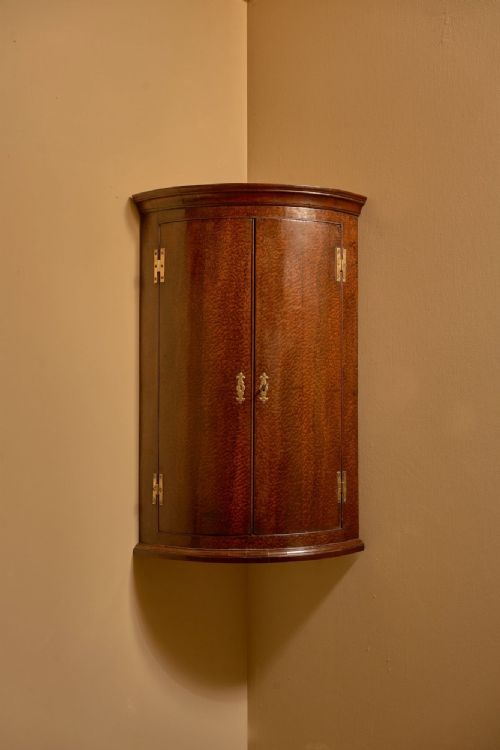
Cabinet makers utilised solid mahogany and wood veneer over secondary timbers, occasionally selecting plum pudding mahogany for distinct grain patterns. Glass panels are held within framed doors, supported by brass hinges, locks and key escutcheons.
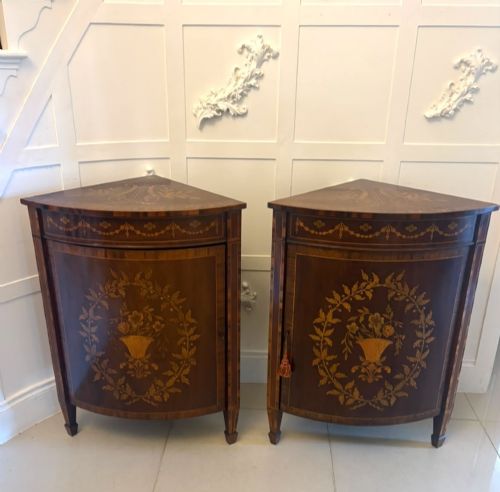
Decorative surfaces frequently incorporate satinwood inlay and Dutch marquetry motifs. Interior shelves are shaped to fit the triangular footprint, sometimes lined with fabric to cushion displayed objects.
Mahogany Corner Display Cabinet Retail Price Guide 2026
Typical asking prices for mahogany corner display cabinet among the pieces listed under this phrase on Sellingantiques today, from the lower quarter to the upper quarter. They describe what is for sale here now, not the wider market.
Some tall cupboards retain their original tiny brass keys, allowing collectors to lock away their prized ceramics.
Distinctions in Execution and Age
The hierarchy of quality rests upon timber selection, cabinet proportions and the fineness of inlay work. Superior examples display dense, figured mahogany grains and crisp, hand-cut astragal glazing bars that segment the glass door panels.
Makers such as Edwards and Roberts produced high-end pieces where the marquetry integration and internal shelving demonstrate superior workshop competence. Lesser items rely on simpler architectural mouldings and standard veneering without individual decorative flair.
Edwards and Roberts·John Stow Ltd
The Mahogany Corner Display Cabinet Glossary
- Astragal glazing
- A method of framing window or door glass using narrow wooden bars. These intersect to form geometric grid patterns across the cabinet door.
- Marquetry
- The art of applying decorative veneer pieces onto a structure to form pictorial designs. Workshops utilised contrasting woods like satinwood to create floral motifs.
- Bow front
- A convex curved cabinet facade that projects outward. This shape softens the angular geometry typical of corner furniture.
- Pediment
- The triangular or arched decorative crown situated above the top cornice. Georgian pieces often apply a broken arch design to this upper zone.
Mahogany Corner Display Cabinet: Frequently Asked Questions
How do I secure a wall corner cabinet?
Wall-hanging corner cupboards require sturdy fixings screwed directly into structural wall studs or masonry plugs. The weight of timber and glass demands secure anchor points near the top cornice.
Professional installation prevents the cabinet from leaning forward under its own load when the heavy door swings open.
Are these cabinets difficult to place in rooms?
The triangular footprint allows these items to occupy ninety-degree room intersections that typically remain empty. Floor-standing versions sit flush against adjacent walls, while hanging variants float above floor level.
Measuring the diagonal depth ensures the projecting front frame clears nearby doorframes or windowsills.
How do I date an antique corner cabinet?
Dating relies upon architectural proportions, wood species, and glazing bar thickness. Georgian iterations show heavier cornices and hand-pulled glass panes, whereas Edwardian examples feature lighter satinwood inlay.
Secondary woods visible inside the carcass and the style of brass hardware provide further chronological indicators.
How do I clean mahogany cabinet timber?
Maintenance involves dusting with a soft, dry cloth and occasionally applying traditional beeswax to nourish the dry wood grain. Avoid modern silicone sprays that build up and attract airborne dirt.
Glass panels require mild window cleaner applied to a cloth rather than sprayed directly near vulnerable wood joints.