
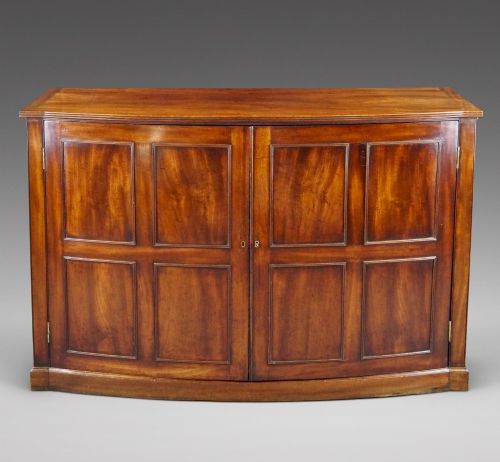
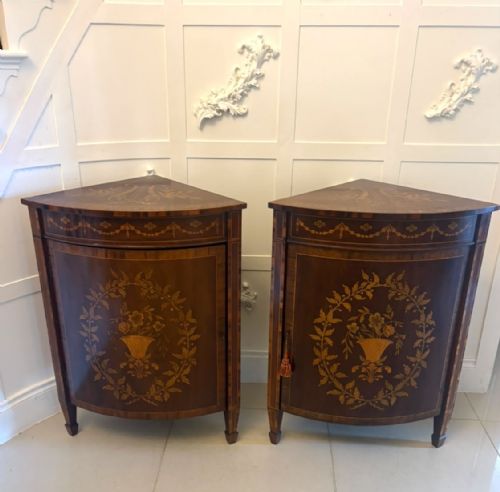
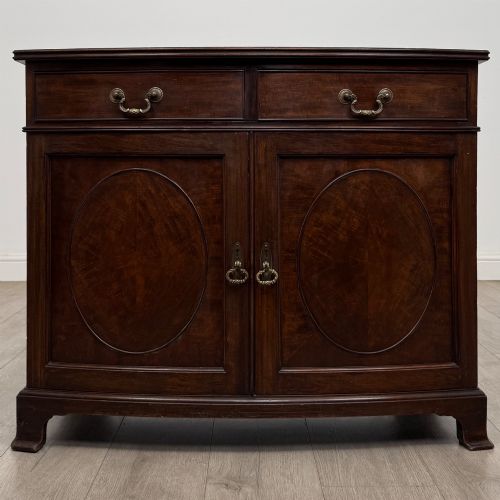
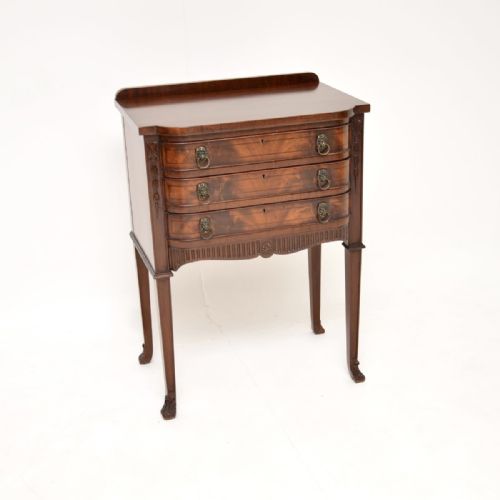
Mahogany Bowfront Cupboard
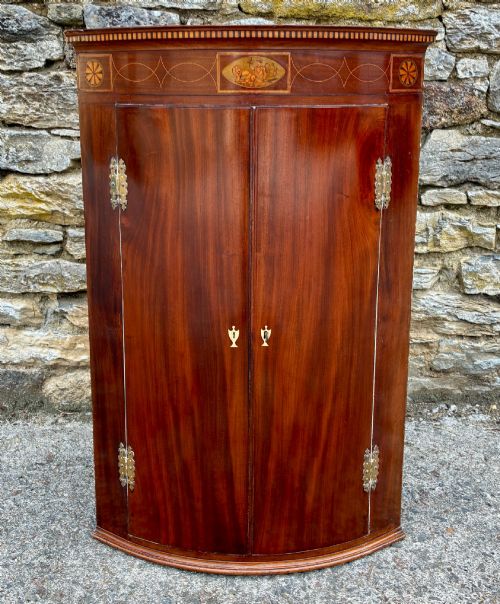
A mahogany bowfront cupboard brings curved warmth and practical storage to an interior, built in styles from the Georgian period to the Edwardian era.
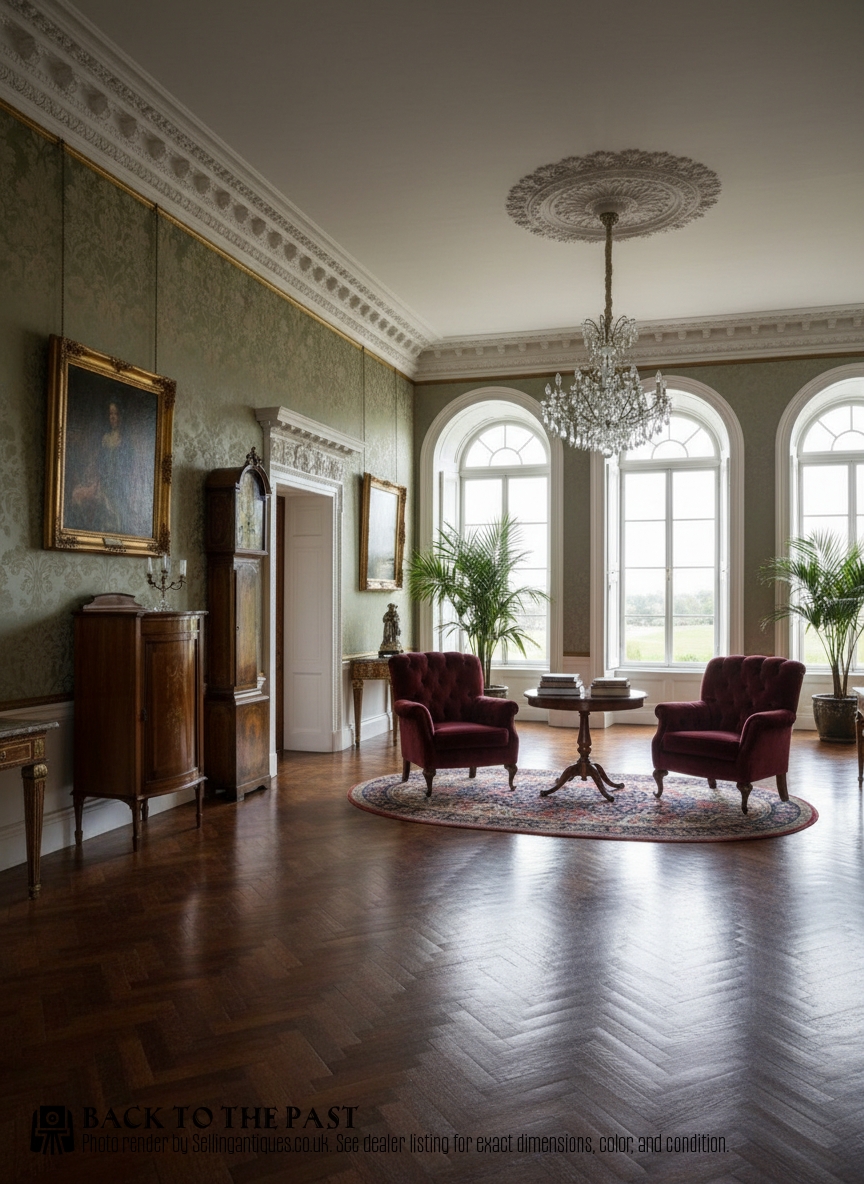
Mahogany Bowfront Cupboard
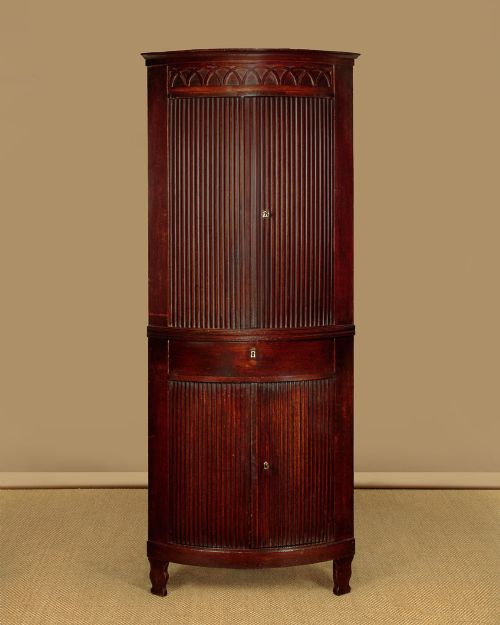
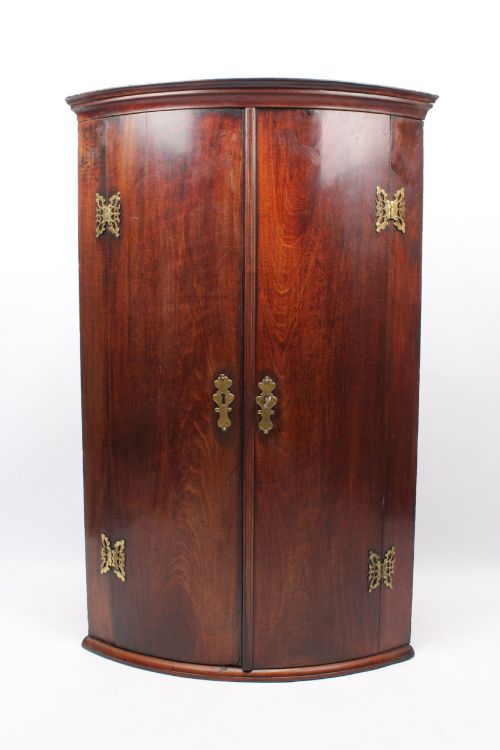
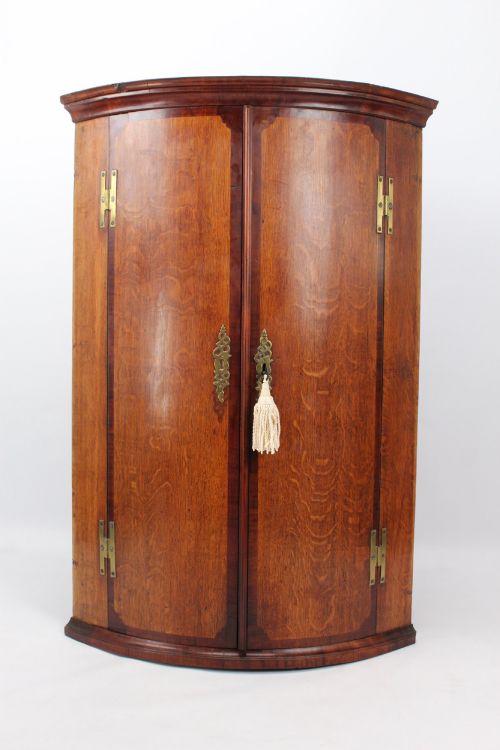
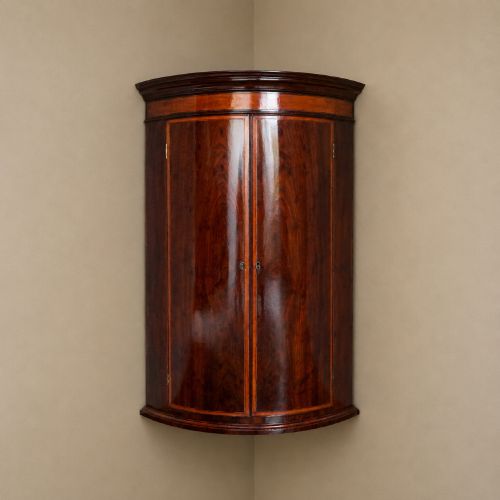
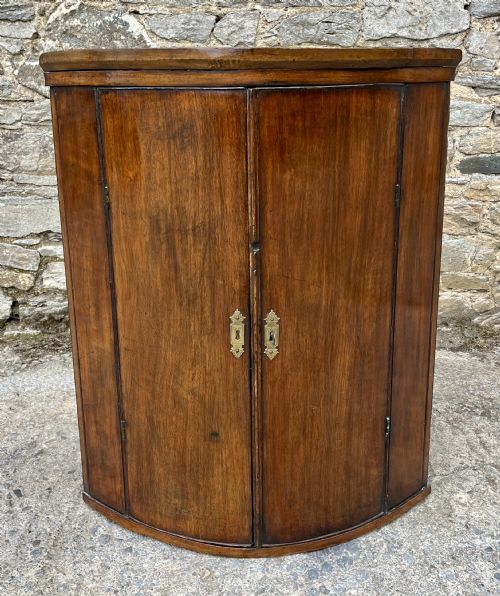
A mahogany bowfront cupboard spans several centuries of design, appearing most frequently as Georgian corner cabinets, hanging wall cupboards, and smaller bedside pieces. These storage cabinets serve to fit neatly into domestic spaces while offering concealed shelving behind curved doors.
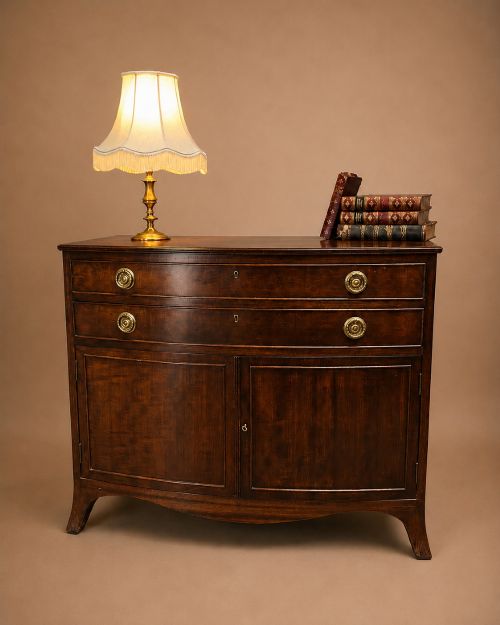
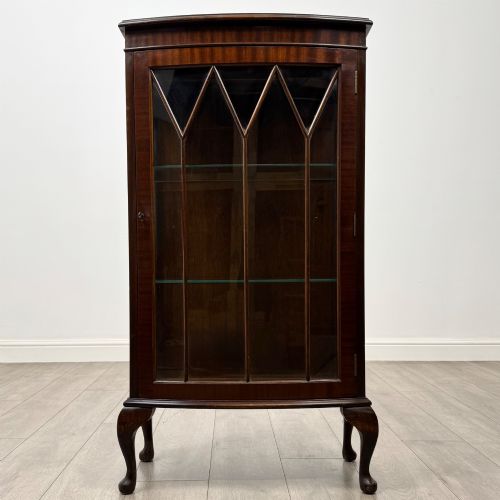
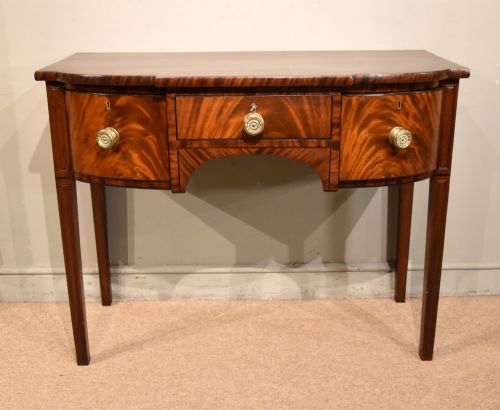
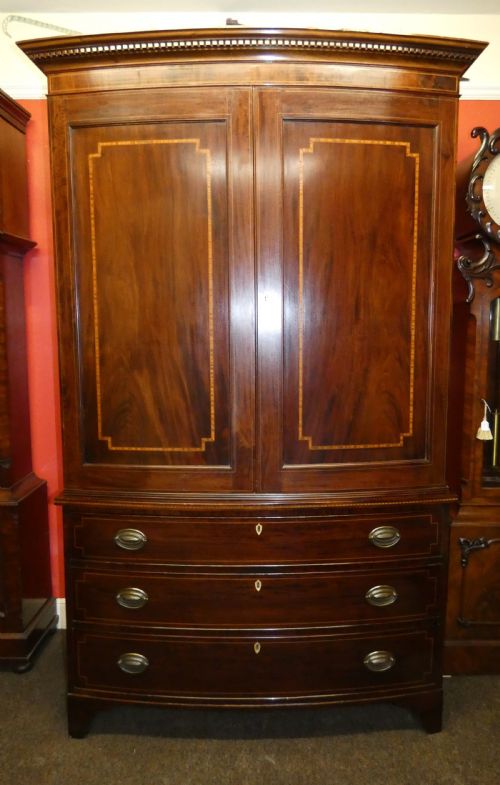
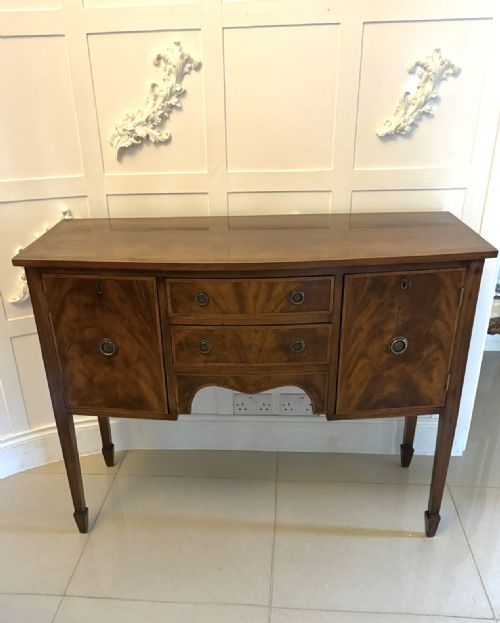
The form ranges from tall standing corner cupboards and dwarf linen presses to compact side cabinets and display cabinets from the 1900 to 1930 eras. Each variation utilises the distinctive rounded front profile to soften room angles and showcase rich timber grain.
Materials and Construction
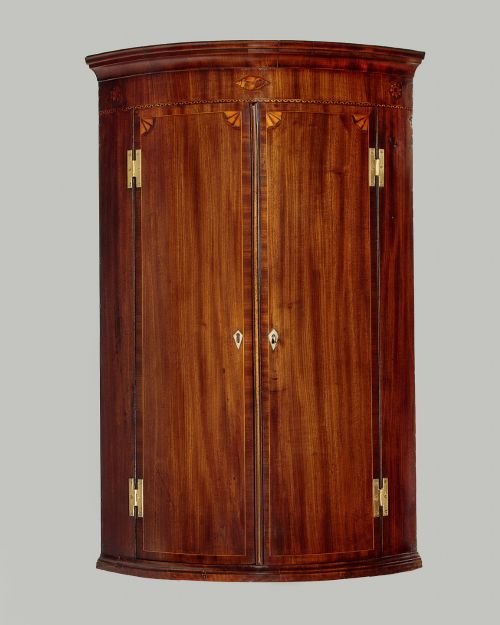
Cabinet makers constructed these pieces primarily using solid mahogany and flame mahogany veneer, often accented with satinwood and boxwood inlay along the borders and cornices. Structural elements occasionally incorporate oak alongside the primary timber.
Makers shaped the characteristic curved front using steam bending or segmented framing, and mounted doors on brass hinges. Glazed panels appear on display variations, while standing models rest on bases or later stands.
Retail Price Guide 2026
Typical UK retail prices for mahogany bowfront cupboard, calculated from the Sellingantiques database of over a million retail prices indexed since 2003. This retail price guide relies exclusively on Sellingantiques data; no external sources or auction records are used, so the figures do not describe the wider market.
Several barrel front corner cupboards hide their curves behind clever geometry, designed to make awkward room corners look entirely intentional.
Defining Quality
The distinction between standard and superior pieces rests on the choice of timber and the precision of the cabinet work. Finely figured flame mahogany veneer and delicate stringing elevate a side cabinet or corner cupboard above plain alternatives.
Proportion and the handling of the curved bowfront define the architectural success of each piece. Original brass hardware, crisp boxwood inlay, and a well-preserved surface patina indicate higher craftsmanship.
The Mahogany Bowfront Cupboard Glossary
- Bowfront
- A convex curved front profile that projects outward, softening sharp corners on cabinets and chests. This shape requires advanced woodworking skill to form accurately.
- Stringing
- Thin inlaid lines of contrasting wood, such as boxwood or satinwood, used to outline panels and drawers. It provides a crisp border to the darker mahogany background.
- Linen press
- A tall storage cupboard originally designed for flat textiles and garments, featuring internal sliding trays behind doors. Dwarf versions sit lower to the ground.
- Patina
- The deep surface sheen and mellow tone developed by mahogany over centuries of handling and polishing. It serves as an indicator of age and careful maintenance.
Frequently Asked Questions
What is a bowfront corner cupboard?
A bowfront corner cupboard is a specialised storage piece designed to fit snugly into the angle of a room. Its curved front projects outward into the space, offering concealed shelving behind timber doors.
These cabinets appear in hanging wall formats and tall standing designs. They make effective use of neglected room angles while adding decorative woodwork to an interior.
How do I date a mahogany cupboard?
Dating involves examining the construction methods, timber selection, and hardware style. Georgian pieces from the eighteenth century typically display hand-cut joinery and solid timber carcases.
Later Edwardian and early twentieth-century examples often incorporate machine-cut elements, lighter mahogany veneers, and distinct inlay patterns. Comparing the hinges and internal timber helps confirm the era of manufacture.
Where should I place a corner cabinet?
These cabinets work best in the junction of two walls where standard rectangular furniture cannot fit. They anchor dead space in dining rooms, hallways, and living areas.
Wall-hung versions mount securely at eye level, while standing models anchor to the floor. Their curved fronts draw the eye smoothly around room corners.
How do I care for mahogany furniture?
Maintain mahogany by dusting regularly with a soft, dry cloth and avoiding placement near direct heat sources or strong sunlight. Excessive warmth causes timber and veneer to dry out and split.
Occasional application of appropriate wax polish helps nourish the surface and preserve the natural patina. Avoid silicone-based sprays which can damage older finishes over time.