

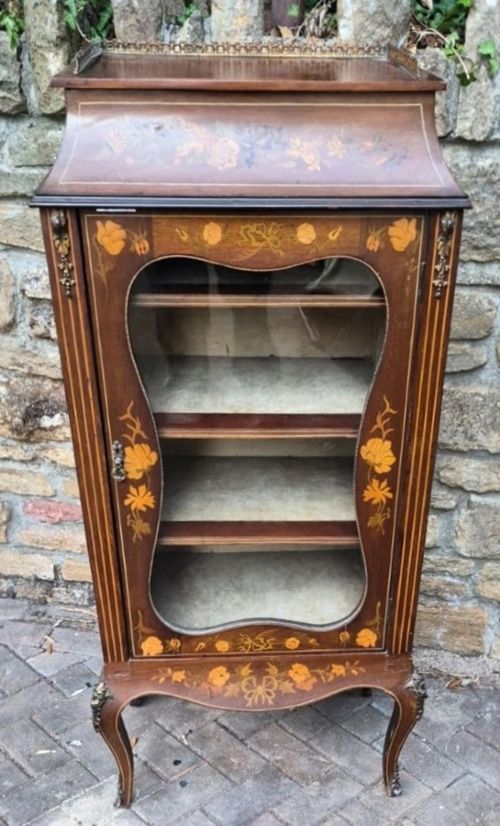


Rosewood Vitrine Cabinet
A rosewood vitrine cabinet brings rich grain and glazed display space to a room, offering a refined stage for treasured collections.
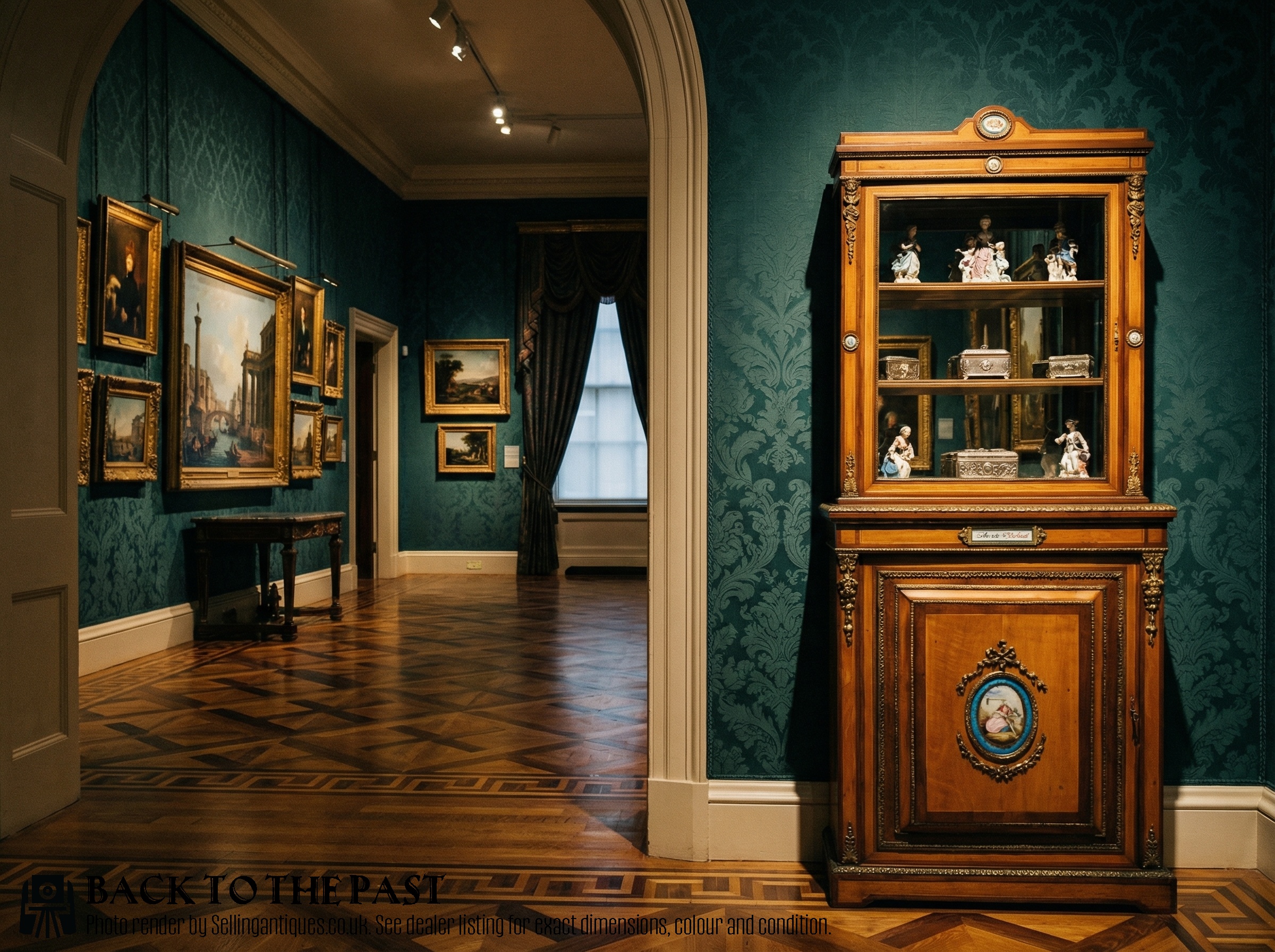
What these pieces are
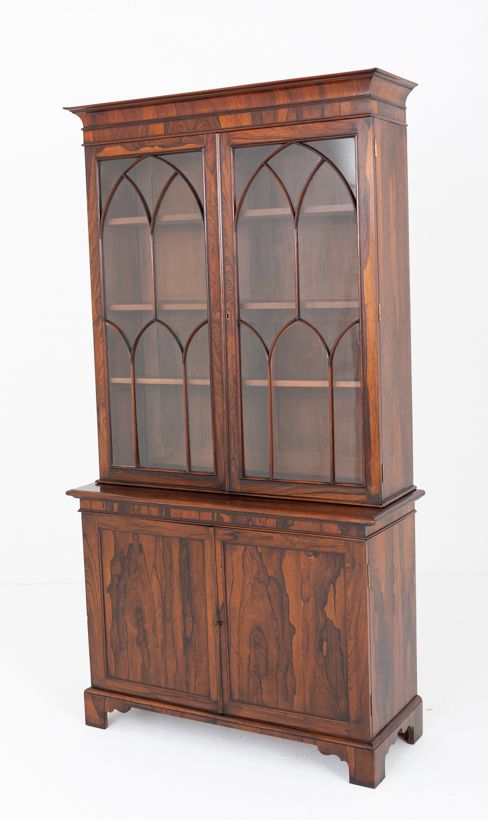
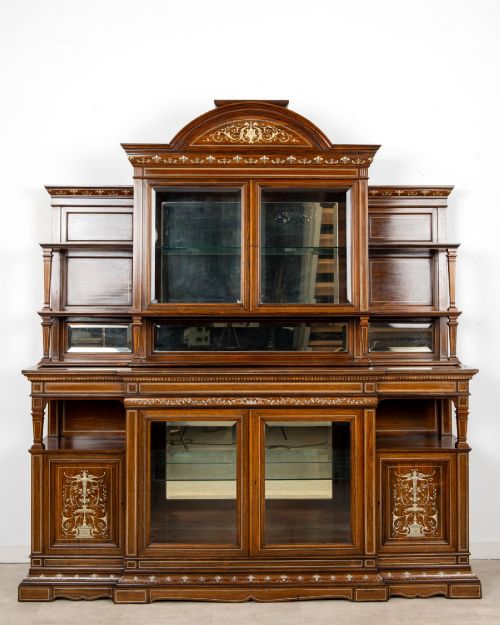
A rosewood vitrine cabinet combines timber framing with extensive glass panels, serving primarily as a display cabinet or bookcase for precious objects. The pieces found here span the nineteenth century and the Edwardian era, taking the form of freestanding display cabinets, corner units, and tall bookcases.
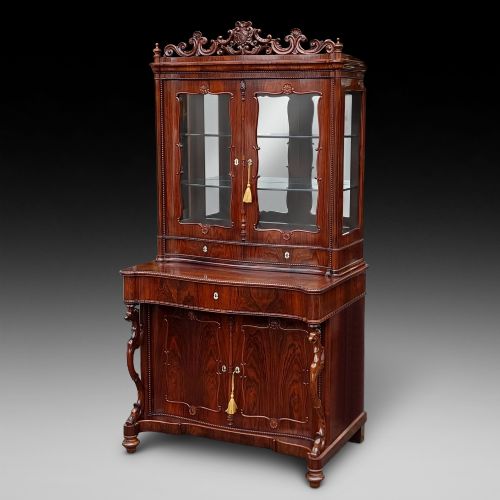
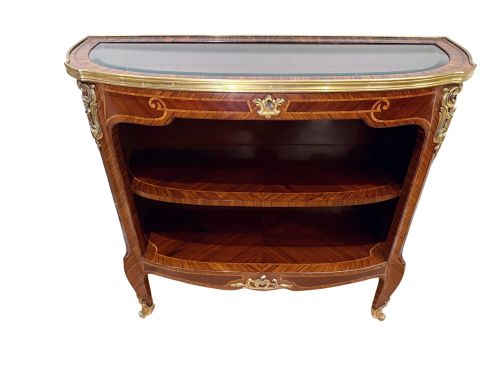
Continental and French examples frequently display revival influences, including Louis XVI Revival and French Rococo Revival styles. British makers also contributed Edwardian interpretations featuring delicate marquetry and inlay work alongside the darker tropical timbers.
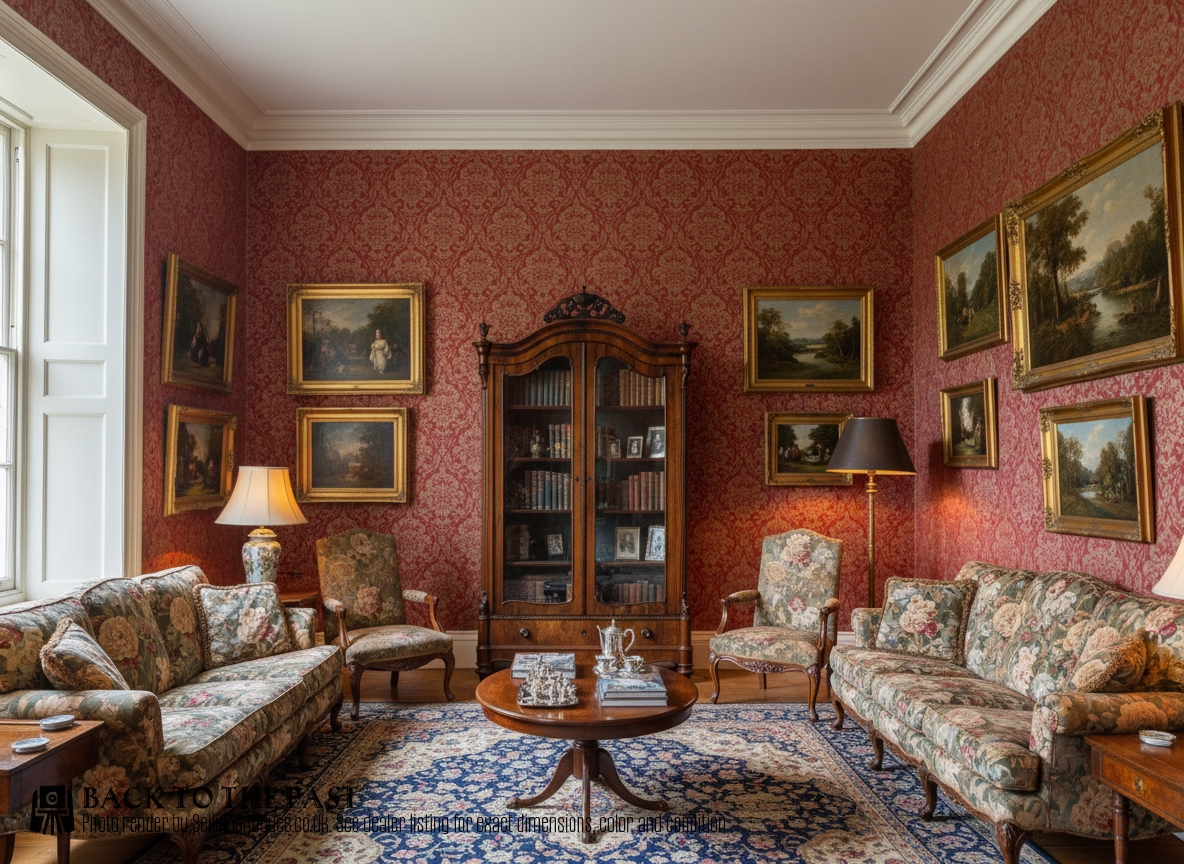
How they were made
Carpenters constructed these cabinets using dense rosewood as the primary timber, often enhanced by contrasting veneers of satinwood and boxwood for decorative marquetry inlay. Structural elements and decorative highlights also incorporated mahogany, while cast or chased ormolu and polished brass provided mounts and hardware.
Glazing forms the central functional element of each piece, requiring specialist joinery to frame large glass door panels securely. Carved giltwood details appear on select French examples, accentuating the sculptural lines of the cabinet frames.
Retail Price Guide 2026
Typical UK retail prices for rosewood vitrine cabinet, calculated from the Sellingantiques database of over a million retail prices indexed since 2003. This retail price guide relies exclusively on Sellingantiques data; no external sources or auction records are used, so the figures do not describe the wider market.
Listings feature rosewood, satinwood, and mahogany cabinets decorated with brass and ormolu mounts across the nineteenth century and Edwardian era.
What varies in quality
The standard of a rosewood vitrine cabinet rests on the precision of its marquetry and the richness of its timber selection. Finer examples exhibit complex inlay work using multiple contrasting woods, alongside crisper mounts in ormolu or brass rather than simpler cast metal.
Attribution plays a role in distinction, with pieces bearing the stamp or mark of established makers such as Edwards & Roberts or François Linke standing apart from anonymous workshop production.
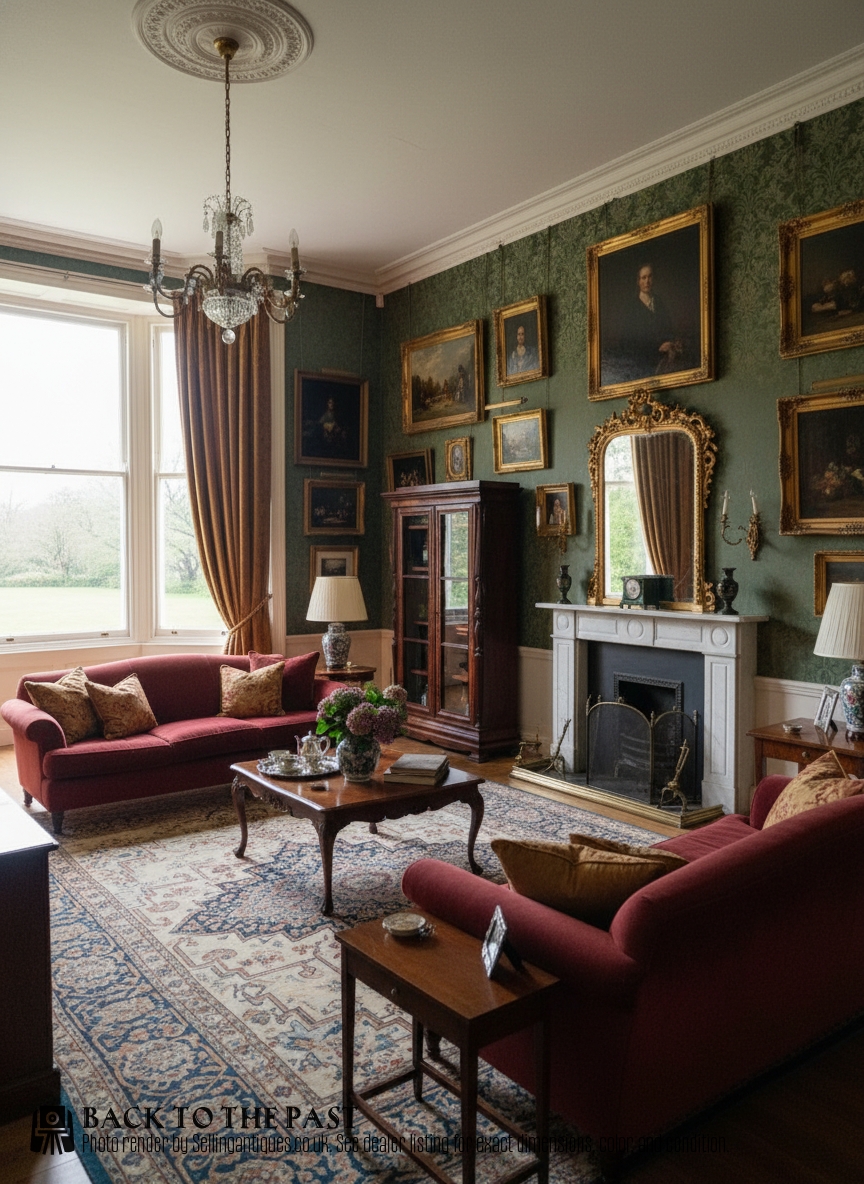
Edwards & Roberts·François Linke·Thomas Justice & Sons
The Rosewood Vitrine Cabinet Glossary
- Vitrine
- A glass-fronted cabinet designed specifically for the display of porcelain, curiosities, and small decorative objects. These pieces rely on extensive glazing to let light reach the contents from multiple angles.
- Marquetry
- The art of applying decorative veneer pieces in wood to create intricate patterns and pictures on a furniture surface. Craftsmen utilise contrasting tones of satinwood, boxwood, and rosewood to achieve pictorial depth.
- Ormolu
- Gilded bronze mounts applied to the exterior of fine furniture for decorative effect. This technique was widely favoured by nineteenth-century cabinet makers working in French revival styles.
- Satinwood
- A lustrous, yellowish timber often used for contrasting stringing and inlay work against darker woods like rosewood. Its natural sheen catches the light effectively within cabinet panels.
Frequently Asked Questions
Where were these cabinets made?
The pieces originate from British and continental workshops, with many notable examples coming from French makers.
Design influences range from Edwardian British domestic styles to ornate French Rococo and Louis XVI revivals.
How do I style a vitrine in a room?
A vitrine works well as a focal point in a drawing room or dining space, offering vertical display height.
Interior lighting can be introduced carefully to illuminate glassware or ceramics stored behind the glass panels.
How do I distinguish Edwardian from Victorian cabinets?
Edwardian cabinets often feature lighter inlay work, such as boxwood and satinwood stringing, on a refined rosewood ground.
Victorian and earlier nineteenth-century pieces tend to display heavier proportions, bolder ormolu mounts, or more exuberant carved giltwood details.