


Curiosity Display Table
A curiosity display table brings your most treasured small possessions out into the room, protected beneath glass.
Curiosity Display Table
A curiosity display table is a specialist piece designed to exhibit small treasures beneath a glazed top. You are looking at a selection spanning the Victorian, Edwardian, and nineteenth-century periods, with Edwardian examples appearing most frequently.
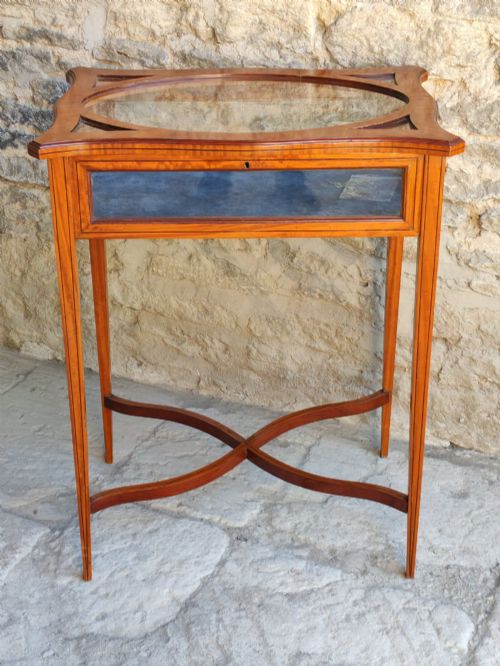
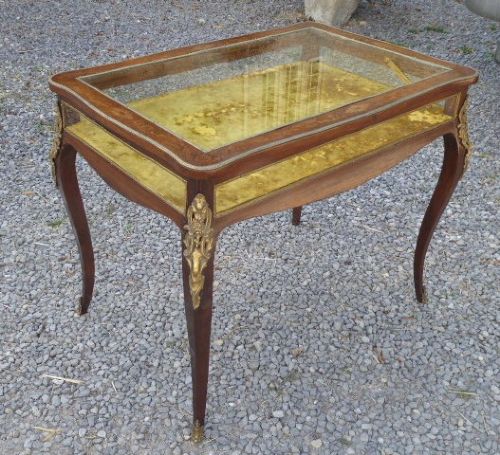
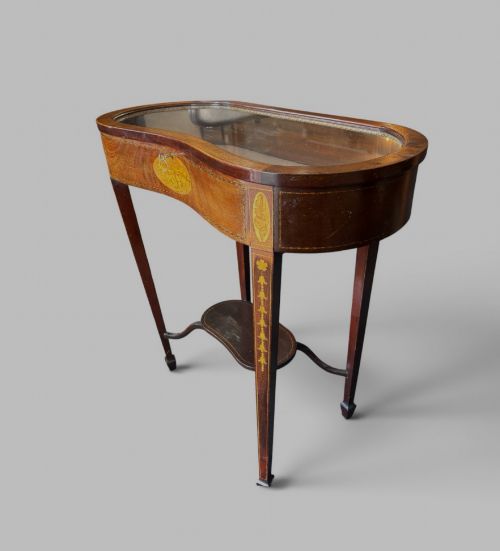
The objects take several distinct shapes on this page, including kidney-shaped, octagonal, serpentine, and large rectangular forms. These pieces function primarily as display surfaces, offering fitted glass compartments to showcase collections of bijouterie.
Makers drew on a range of aesthetic revivals to ornament these tables, incorporating French Louis XV revival lines, Victorian Chinoiserie, and Rococo revival flourishes. The resulting forms balance the utility of a standard side table with the visibility of a miniature museum case.
Materials and Construction
Cabinetmakers utilised timber frames of mahogany, satinwood, kingwood, and bamboo to build the primary structures. Marquetry and delicate boxwood stringing frequently ornament the exterior surfaces, adding visual depth to the timber.
Glazing forms the central functional element, creating a protective cabinet top mounted on a table frame. Interiors are typically lined with fabrics such as velvet, providing a soft resting place for displayed items alongside brass mounts and hinges.
Table forms on this page include kidney shapes, octagonal frames, and serpentine silhouettes fitted with glass display compartments.
Measures of Quality
Quality reveals itself in the precision of the timber work, particularly where boxwood inlay meets satinwood or mahogany grounds. The complexity of the table outline, such as a serpentine or kidney profile, demands greater skill from the cabinetmaker than a straight-sided box.
Finer examples integrate marquetry panels and carefully fitted glass lids that operate smoothly on their original brass hardware. The choice of underlying wood also distinguishes the tier of a piece, with figured kingwood and detailed lacquer work representing more elaborate workshop production.
The Curiosity Display Table Glossary
- Bijouterie table
- A glass-topped table specifically designed for displaying small valuable trinkets and curiosities. This term is frequently used interchangeably with display table in nineteenth and early twentieth-century pieces.
- Marquetry
- The art and craft of applying pieces of veneer to a structure to form decorative patterns and pictures. Makers on this page employ this technique on satinwood and kingwood surfaces.
- Kingwood
- A dense, richly figured timber native to Brazil, prized by cabinetmakers for fine veneer work. It appears on mid-nineteenth-century examples alongside intricate marquetry.
- Serpentine
- A curved shape that alternately concaves and convexes across the front or edge of a piece of furniture. This contour appears on select display tables to soften the rectangular geometry.
Curiosity Display Table: Frequently Asked Questions
What is a curiosity display table used for?
These tables were designed to exhibit small personal collections, medals, seals, and trinkets within a protected glass enclosure. They allowed hosts to share their cabinet of curiosities with guests in a drawing room setting.
Today, they serve the exact same purpose in a domestic interior, functioning as both a decorative occasional table and a secure showcase for treasured possessions.
How do I date a display table?
Dating relies on identifying the prevailing timber choices, inlay styles, and overall silhouette recorded in the piece. Victorian examples often feature heavier mahogany and elaborate revival motifs, while Edwardian pieces frequently showcase lighter satinwood and simpler inlaid borders.
Construction methods and secondary woods inside the frame also provide clues to the era of manufacture, distinguishing nineteenth-century work from later Edwardian production.
Are these tables sturdy enough for daily use?
While structurally sound as occasional furniture, display tables are primarily built to hold lightweight curiosities rather than heavy daily loads. The glazed top requires careful treatment to avoid scratching or cracking the glass pane.
Placing the table away from high-traffic household areas helps protect the delicate inlay and fabric linings from unnecessary wear.
What styles are available for these tables?
The selection encompasses several distinct decorative traditions, including French Louis XV revival, Rococo revival, and Victorian Chinoiserie. Each style dictates the curvature of the legs, the type of ornamentation, and the overall silhouette.
Simpler Edwardian models focus on clean mahogany frames with subtle boxwood stringing, whereas mid-nineteenth-century pieces lean towards bolder marquetry and exotic woods.