
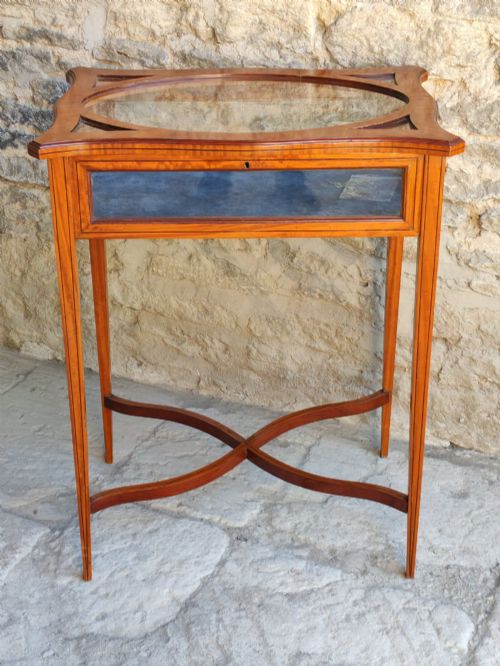


Glazed Table for Jewellery
A glazed table for jewellery offers a glass-topped stage for rings and trinkets, combining the function of a vitrine with the intimacy of a low display surface.
Glazed Table for Jewellery
A glazed table for jewellery, often called a bijouterie table or display cabinet, provides a glass-enclosed surface to showcase small valuables. These pieces appear most frequently in Edwardian and Victorian forms, spanning the nineteenth and twentieth centuries.
The inventory on this page shows a dominance of mahogany and satinwood structures, alongside kingwood and walnut, shaped into serpentine, oval, kidney, and octagonal formats. French revival influences, particularly Louis XV and Louis XVI styles, sit alongside plainer English Edwardian interpretations.
Makers and workshops constructed these display tables specifically for drawing rooms and boudoirs to hold precious personal effects. The forms range from standing display tables with slender legs to compact table cabinets designed for placement on existing furniture.
Materials and construction
Cabinet makers utilised dense hardwoods like mahogany, satinwood, and kingwood as the structural chassis for these glazed tables. Veneers and marquetry inlay added decorative surface pattern, particularly across Edwardian and Sheraton revival examples.
Ormolu mounts, brass frames, and gilt metal details enclose the glass tops and vitrine sides, securing the transparent panels in place. Interiors are routinely lined with velvet or fabric to protect delicate ornaments and jewellery from scratching against the wood.
Glass panes fit into hinged or glazed lids that lift or slide to grant access to the lined interior tray below. Structural joinery relies on traditional cabinet-making techniques to support the combined weight of timber frames and heavy glass panels.
Listings for a glazed table for jewellery span the Edwardian and Victorian eras, alongside select examples from the 1920s and 1930s.
What separates the finest examples
The crispness of hand-carved mahogany details and the precision of satinwood stringing separate standard production pieces from superior works. Cabinet makers who invested time in nuanced serpentine and kidney curves achieved a more fluid silhouette than those producing rigid geometric boxes.
The weight and chasing of ormolu and brass mounts distinguish finer examples, as cast bronze hardware carries sharper relief and deeper definition. Interiors finished in thick, high-grade velvet rather than thin cotton fabric demonstrate a higher original specification.
Proportion and leg stability govern the structural integrity of these tall display surfaces. Pieces that retain their original glass and uncompromised timber joints command greater admiration from collectors.
François Linke
The Glazed Table for Jewellery Glossary
- Bijouterie table
- A specialised display table featuring a glazed top and sides designed specifically for showing small ornaments and jewellery. They stand on legs at a comfortable viewing height for a standing or seated observer.
- Ormolu
- Gilt bronze mounted onto furniture for decorative effect. This technique gained widespread favour in French revival pieces of the nineteenth century.
- Marquetry
- The art of applying pieces of veneer to a structure to form decorative patterns. Craftsmen utilised contrasting timbers like satinwood and mahogany to achieve this effect.
- Vitrine
- A glass-panelled cabinet used for displaying objects of vertu. In the context of these tables, the vitrine forms the upper display section.
- Serpentine
- A furniture contour shaped in a double curve, bending inward in the middle and outward at the ends. This undulating line appears frequently on better quality nineteenth-century table tops.
Glazed Table for Jewellery: Frequently Asked Questions
How do I tell Edwardian pieces from Victorian ones?
Victorian examples tend to display heavier proportions, darker carved mahogany, and robust ormolu mounts influenced by French revival tastes. Edwardian pieces often favour lighter satinwood, delicate string inlay, and more restrained neoclassical lines.
Examining the secondary timbers inside the frame and the style of the brass hinges also helps confirm the manufacturing era.
Are the fabric linings usually original?
Velvet and fabric linings inside these display cases experienced considerable wear from the movement of metal jewellery placed upon them. Most surviving examples feature replacement linings installed during modern restoration.
Buyers should inspect the interior tray to determine whether the fabric matches the perceived age of the outer timber frame.
How do I care for a wood and glass display table?
Keep the timber clean using a soft, dry cloth and avoid chemical polishes that build up residue on veneers and marquetry. Glass panels require gentle cleaning with standard window solution applied to a cloth rather than sprayed directly near wood or gilt mounts.
Positioning the table away from direct sunlight prevents the interior fabric lining and delicate wood veneers from fading.