


19th Century Vitrine Table
A 19th century vitrine table brings glazed elegance into a room, designed to display small treasures beneath glass.
19th Century Vitrine Table
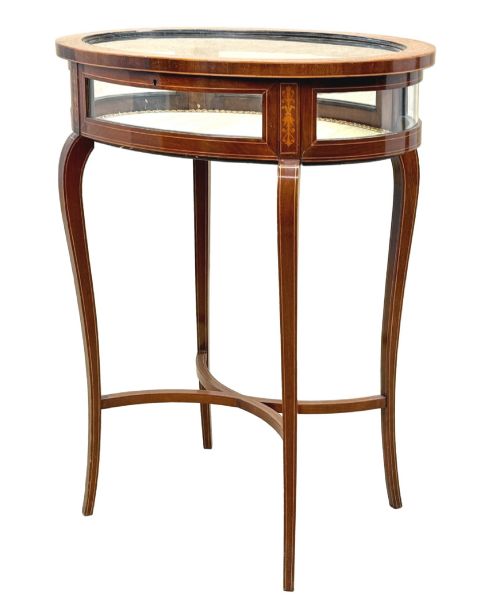
A 19th century vitrine table combines the utility of a display cabinet with the height and form of a table, often referred to as a bijouterie table. These pieces emerge predominantly in Victorian and Edwardian periods, frequently drawing inspiration from Louis XV and Louis XVI revival styles.
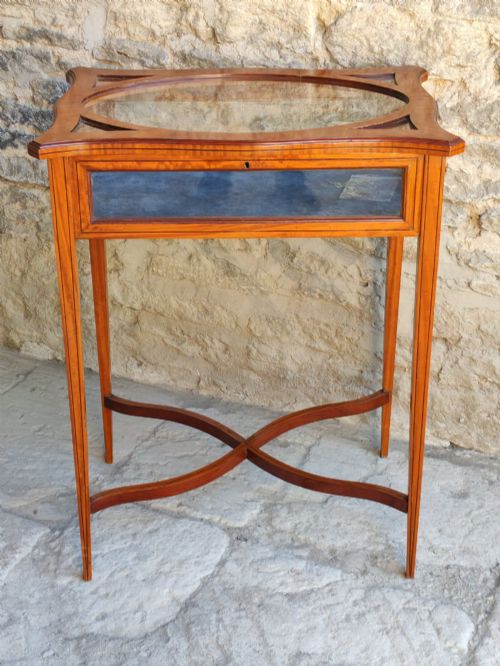
The standard form met on this page is a glazed cabinet top raised on slender legs, designed specifically for holding medals, miniatures, and small ornaments. Oval and rectangular shapes dominate, alongside occasional octagonal examples from the late Victorian decades.
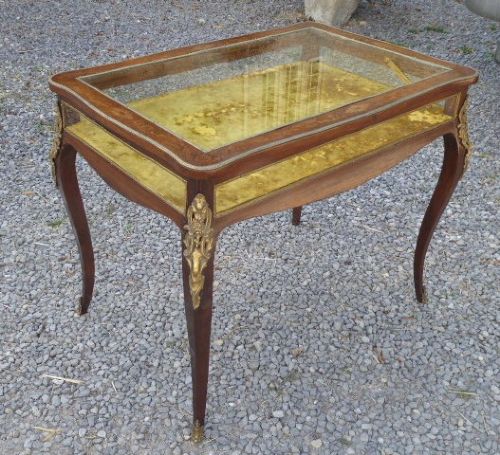
Makers across France and Britain constructed these display pieces using rich timbers such as mahogany, kingwood, and satinwood, often enhanced by gilt-bronze mounts. They serve as intimate tabletop showcases rather than heavy storage furniture.
How they were made
The construction relies on timber frameworks of mahogany, satinwood, kingwood, rosewood, or ebony, shaped into oval, rectangular, or octagonal display boxes. Glass panels form the lid and sides to permit light into the interior chamber.
Ormolu, gilt-bronze, and brass mounts accent the exterior edges, legs, and hinges, defining the French revival aesthetic. Interior surfaces frequently feature velvet or fabric linings to cushion delicate objects placed within the glazed well.
Listings feature mahogany, kingwood, rosewood, and satinwood, combined with glass, ormolu, brass, and velvet across Victorian and Edwardian periods.
What varies in quality
The distinction between standard and superior pieces rests on the choice of timbers, the crispness of the ormolu or brass mounts, and the intricacy of any marquetry work. Finely cast gilt-bronze details and carefully matched veneers elevate an ordinary display table into an exceptional piece.
Proportion and execution of the legs and glazed framing dictate overall refinement. Pieces that maintain balanced lines and tight joinery reflect superior cabinet-making traditions of the nineteenth century.
The 19th Century Vitrine Table Glossary
- Vitrine
- A glass-fronted cabinet or table designed for displaying fine objects and curiosities. This forms the central category of glazed display furniture.
- Bijouterie table
- A shallow glass-topped table used specifically for showing small valuable items such as jewellery and medals. These items are synonymous with the tabletop vitrine.
- Ormolu
- Gilt-bronze mounts applied to furniture to provide decorative metallic enrichment. It is heavily associated with French revival pieces of the period.
- Marquetry
- Decorative veneer work inlaid into the timber surface to form complex patterns and pictures. It appears on select kingwood and mahogany display pieces.
- Kingwood
- A dense, richly grained exotic timber utilised in high-end cabinet making during the nineteenth century. It provides a distinct striped figure to surfaces.
19th Century Vitrine Table: Frequently Asked Questions
What is a vitrine table used for?
A vitrine table functions as both a display surface and a secure cabinet for small collectibles, medals, and precious items. The glass top allows viewers to observe items from above while keeping them protected from dust.
Historically, these tables occupied drawing rooms and parlours where hosts could share personal collections and curiosities with guests.
How do I date a 19th century vitrine table?
Dating relies on identifying the prevailing styles, such as Victorian, Edwardian, or French Louis revival influences. Timber choices and mount types also provide chronological markers across the decades.
Examining the construction methods and interior fabric choices helps narrow the decade of manufacture between eighteen-sixty and nineteen-hundred.
Are these tables French or English?
Many examples originate from French workshops, heavily featuring ormolu mounts and Louis XV or XVI revival styling. English cabinet makers also produced similar display tables in mahogany and satinwood.
Both traditions utilised glazed compartments, though French pieces frequently emphasise gilt-bronze ornamentation and exotic veneers.
What is the difference between a vitrine and a bijouterie table?
The terms are often used interchangeably to describe glazed display furniture from the nineteenth century. Strictly speaking, a bijouterie table emphasises a shallow tabletop well for small items.
A vitrine can describe taller freestanding cabinets as well as glass-topped tables designed for exhibition.
How do I care for the interior lining?
The interior fabric or velvet lining requires gentle maintenance using a soft brush to remove dust without damaging the fibres. Direct sunlight should be avoided to prevent fading of the textile and the underlying timber.
Keeping the glass clean with appropriate cleaners ensures the contents remain clearly visible within the display well.