




Satinwood Vitrine Table
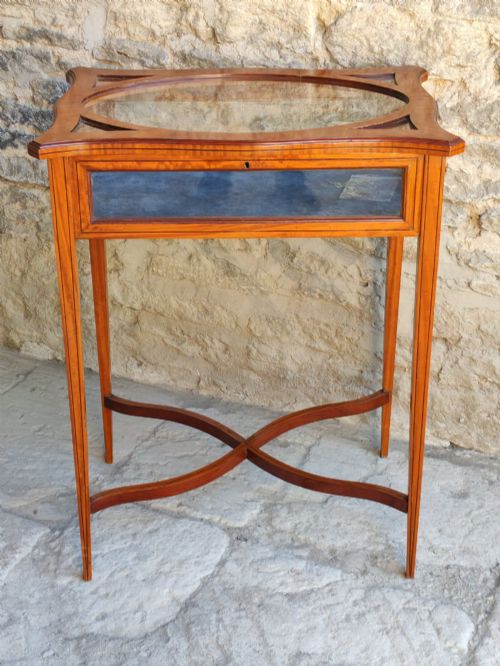
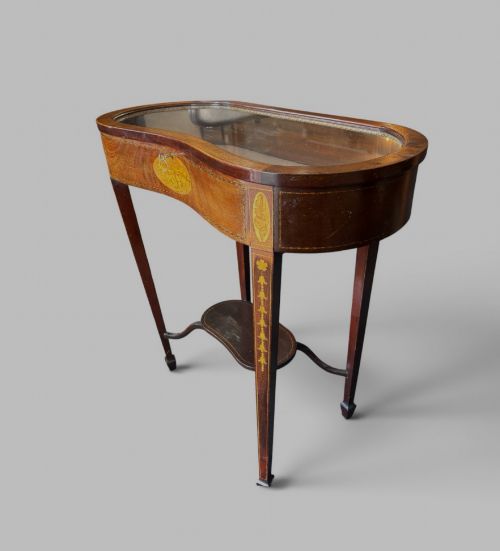
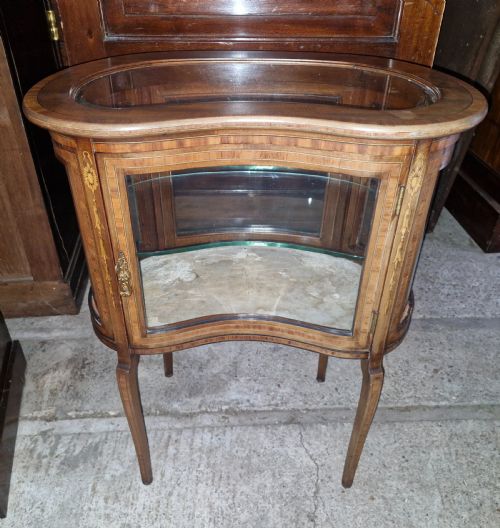
These satinwood vitrine table pieces combine glazed display tops with fine timbers, offering a sophisticated surface to exhibit small treasures.
Satinwood Vitrine Table
A satinwood vitrine table serves primarily as a display surface for small collectables, jewellery, and curiosities beneath a glazed top. These items appear across Victorian, Edwardian, and late nineteenth-century periods.
Makers utilised rich timbers, notably satinwood and mahogany, often enhanced with contrasting marquetry or stringing. The pieces bridge the gap between functional furniture and personal vitrines.
How they were made
Cabinet makers constructed these pieces using solid and veneered timbers, predominantly satinwood and mahogany, combined with glass panels for the display compartments. Internal sections frequently incorporate velvet or standard fabric linings to cushion displayed items.
Decoration relied on precision satinwood inlay, marquetry, and brass mounts. The structural integrity depended on tightly joined frames capable of supporting glazed hinged or lift-off lids.
Many Edwardian owners lined their display compartments with velvet to ensure small rings did not rattle when guests walked past.
What varies in quality
Quality rests upon the crispness of the inlay work, the figuring of the satinwood timber, and the harmony of the proportions. Finer examples display meticulous marquetry and smooth hinge mechanisms for the glazed compartments.
The choice of secondary woods and the subtlety of the Sheraton Revival influence also mark the distinction between standard production and superior craftsmanship.
Edwards and Roberts
The Satinwood Vitrine Table Glossary
- Vitrine
- A glass-fronted cabinet or table designed for displaying fine objects. These glazed enclosures protect delicate curiosities from dust.
- Bijouterie table
- A specialised table featuring a glass top and shallow compartment for jewels and small valuables. They gained immense popularity during the Victorian and Edwardian eras.
- Satinwood
- A lustrous, yellow-toned timber prized for fine cabinet making. Its reflective grain takes a high polish.
- Sheraton Revival
- A late nineteenth-century design movement inspired by the furniture of George Sheraton. It is characterised by classical restraint, delicate inlay, and polished mahogany or satinwood.
Satinwood Vitrine Table: Frequently Asked Questions
What is a satinwood vitrine table used for?
These tables served primarily to display precious small objects, coins, and jewellery beneath a protective glass lid.
Today, they function similarly in a home, offering a sophisticated surface to showcase personal collections.
How do I date a vitrine table?
Dating relies on identifying stylistic markers, timber choices, and construction techniques typical of Victorian or Edwardian periods.
Sheraton Revival pieces often point toward the late nineteenth or early twentieth centuries.
Are these tables sturdy enough for daily use?
While structurally sound, they were built as display furniture rather than heavy utility tables. The glazed tops require careful treatment.
Placing them away from heavy traffic areas helps preserve the delicate inlay and glass components.