
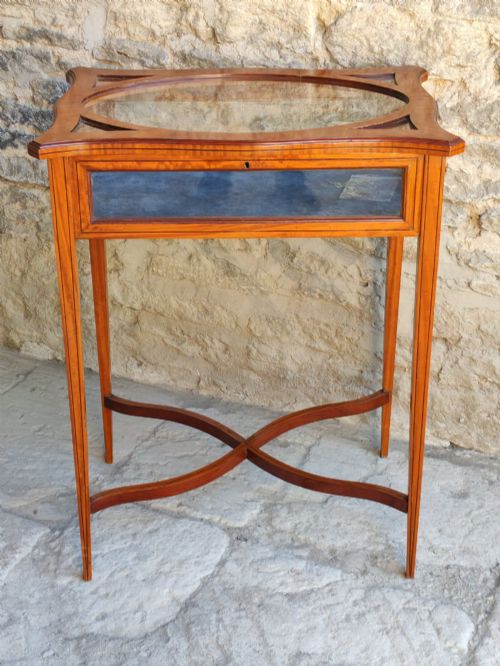
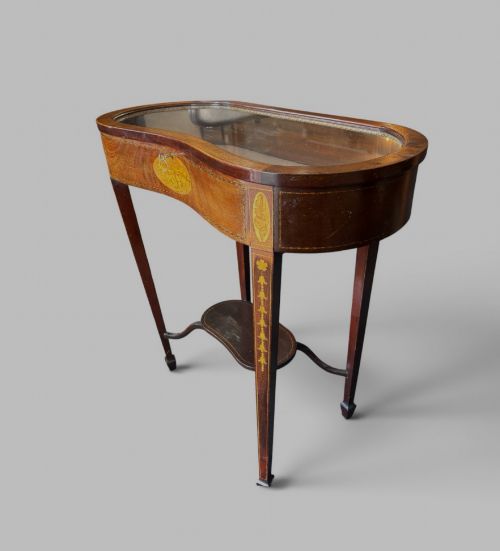


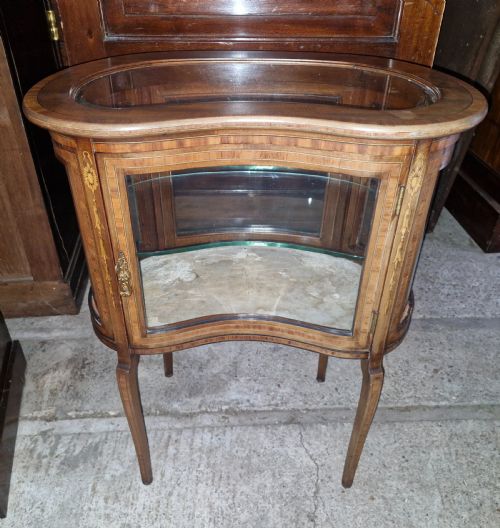


Satinwood Bijouterie Table
Satinwood bijouterie table pieces bring a bright, glazed elegance to a room for displaying small treasures.
Satinwood Bijouterie Table
A satinwood bijouterie table combines a glazed display compartment with delicate timber work designed specifically to show off small personal possessions, medals, and ornaments. The examples you encounter on this page span the Victorian and Edwardian periods, stretching back to around 1880.
The most common formats you will meet are rectangular, octagonal, and kidney shaped display tables, alongside upright cabinets. They appear primarily in satinwood and mahogany, frequently enhanced with inlaid details.
Makers and workshops of the late nineteenth and early twentieth centuries produced these pieces to suit refined drawing rooms and boudoirs. Their primary function was to protect delicate collectors' items under glass while keeping them visible from every angle.
How they were made
Craftsmen built these tables using a sturdy carcass of mahogany or walnut, overlaid or banded with figured satinwood veneers. Artisans then added contrasting stringing and marquetry inlay to accentuate the geometric or curved profiles.
Glazing formed the vital top and side panels, held within hinged frames that allowed easy access to the lined interior. Interiors were traditionally fitted with fabric or velvet pads to cushion the displayed objects.
Brass hinges, locks, and delicate castors completed the construction, ensuring the glazed lids opened smoothly and the tables could be repositioned around a parlour with ease.
Common forms recorded across the archive include kidney shapes, octagonal tables, and upright display cabinets.
What varies in quality
The sophistication of the timber selection and the precision of the inlay set individual pieces apart. Finer examples feature meticulously matched satinwood veneers and complex marquetry, whereas simpler pieces rely on basic stringing.
Structural harmony also dictates the hierarchy, seen in the fluency of kidney and octagonal curves compared to rigid boxy forms. The crispness of the brass mounts and the quality of the interior velvet lining reflect the original maker's investment in materials.
Edwards & Roberts·Sopwith & Co
The Satinwood Bijouterie Table Glossary
- Bijouterie table
- A glazed display table designed to showcase small valuable items, jewellery, and curiosities.
- Satinwood
- A lustrous, hard timber native to Ceylon and India, prized for its golden yellow colour and reflective grain.
- Marquetry
- Decorative veneer work forming pictures or intricate patterns by fitting together pieces of various woods.
- Kidney shaped
- A curved, asymmetrical furniture form resembling a kidney bean, popular in Edwardian writing and display tables.
- Vitrine
- A glass-fronted cabinet or display case used for exhibiting fine objects and porcelain.
Satinwood Bijouterie Table: Frequently Asked Questions
What is a satinwood bijouterie table used for?
These tables were designed to exhibit delicate personal possessions, medals, coins, and small ornaments beneath a protective glass top. They allowed collectors to curate and view their smaller treasures without handling them constantly.
Placed typically in drawing rooms or boudoirs, they functioned both as elegant furniture and as personal display cases for visiting guests to admire.
How do I date a satinwood bijouterie table?
Dating relies on identifying stylistic markers from the Victorian and Edwardian eras, spanning roughly from 1880 to 1910. Victorian examples often show heavier proportions and richer marquetry, while Edwardian pieces frequently adopt lighter satinwood framing and kidney shapes.
Examining the construction methods, secondary timbers like mahogany underneath, and the style of brass hardware helps narrow down the decade of manufacture.
Are these tables sturdy enough for daily use?
While built with strong timber carcasses and quality joinery, these are decorative display pieces rather than heavy-use furniture. The slender legs and glazed hinged tops require a gentle touch and careful placement away from heavy traffic.
They comfortably support the weight of small curiosities and collections inside, provided they are kept in stable room environments away from direct sunlight and moisture.
What interior lining should these tables have?
Original interiors are typically lined with fabric, velvet, or padded materials designed to cushion delicate items placed on display. Over time, these linings often show fading or wear from exposure to light and objects.
When evaluating a piece, look for linings that complement the golden tones of the satinwood exterior and match the period aesthetic of the cabinet.