

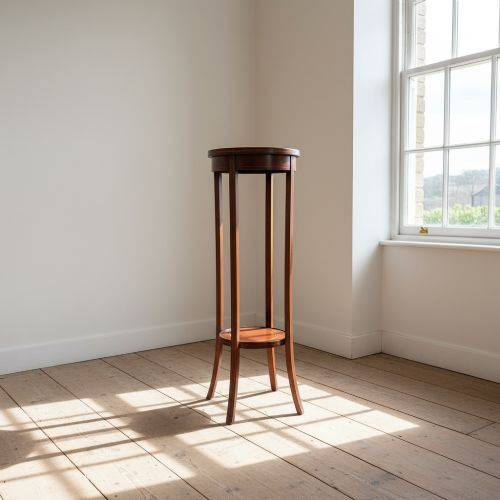
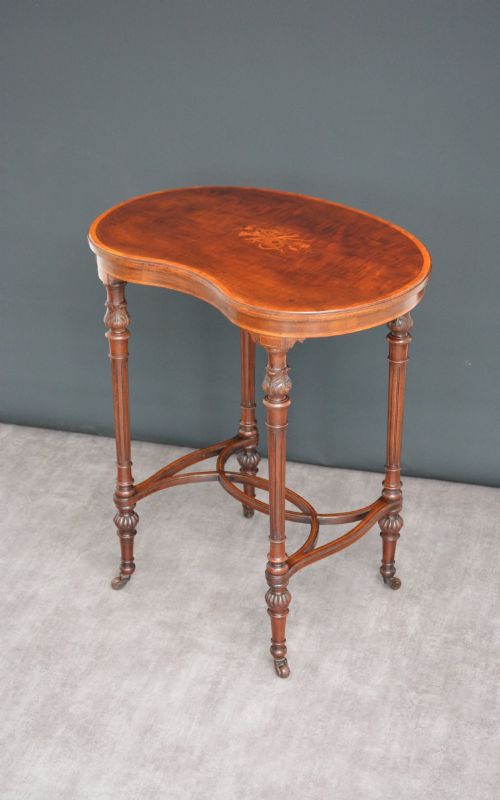
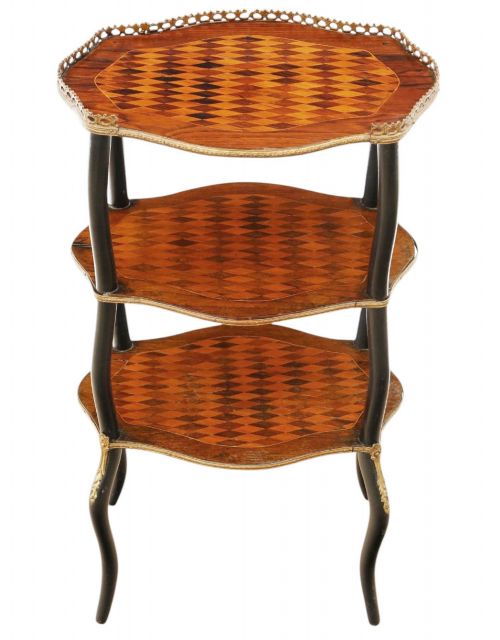
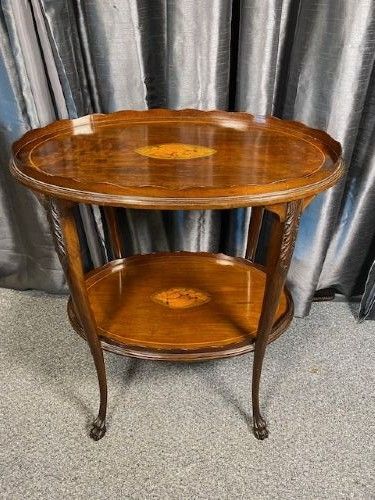
Edwardian Inlaid Display Table
An edwardian inlaid display table brings together fine cabinetmaking and glass to showcase treasured objects in domestic interiors.
Edwardian Inlaid Display Table
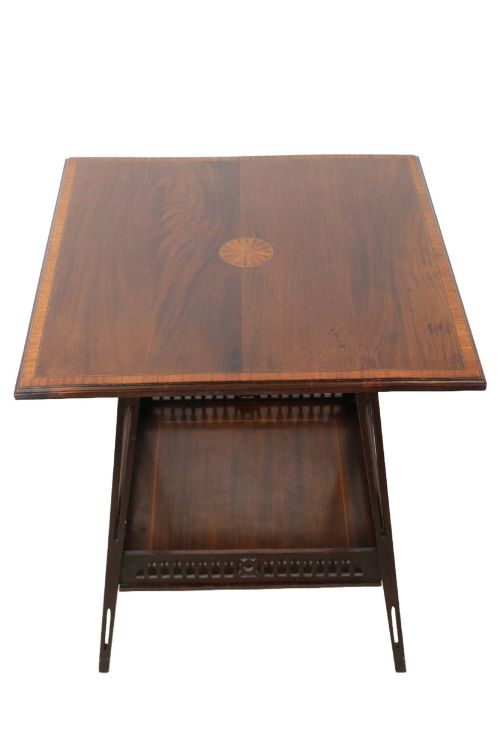
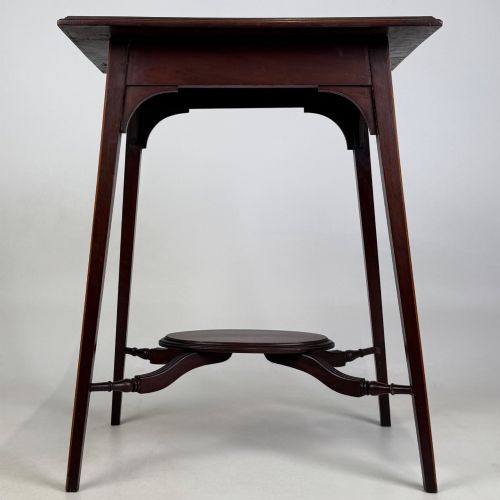
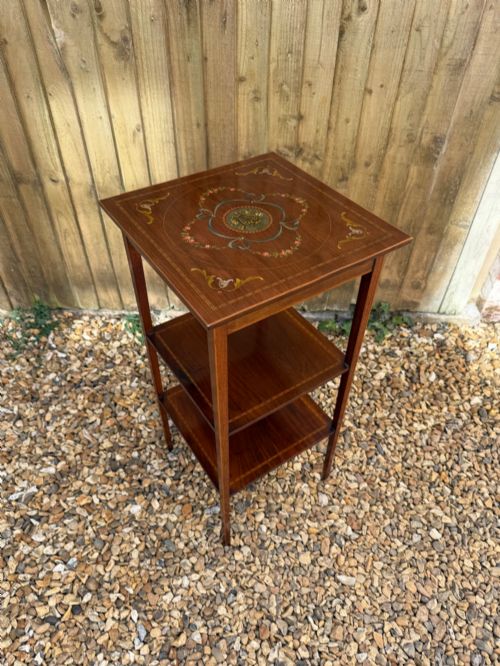
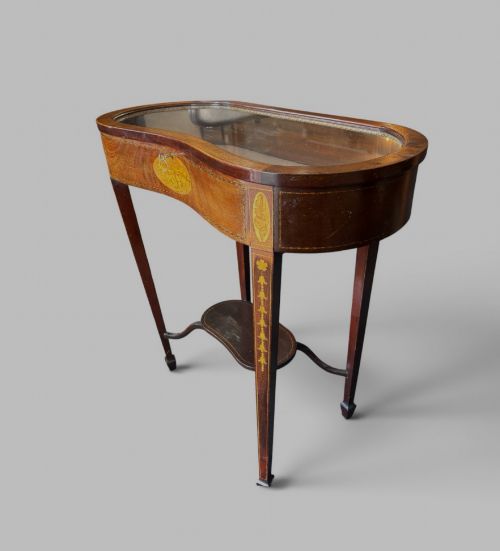
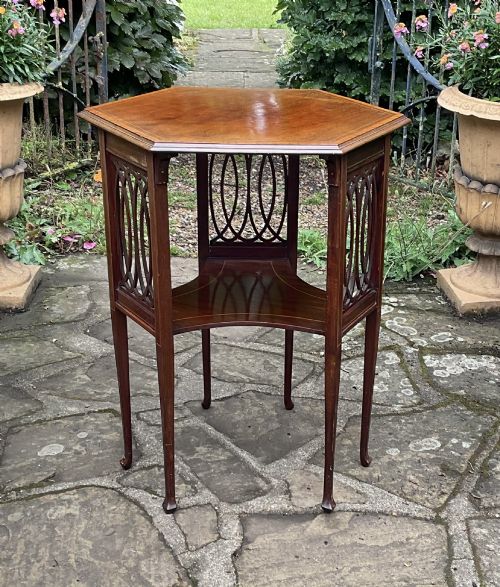
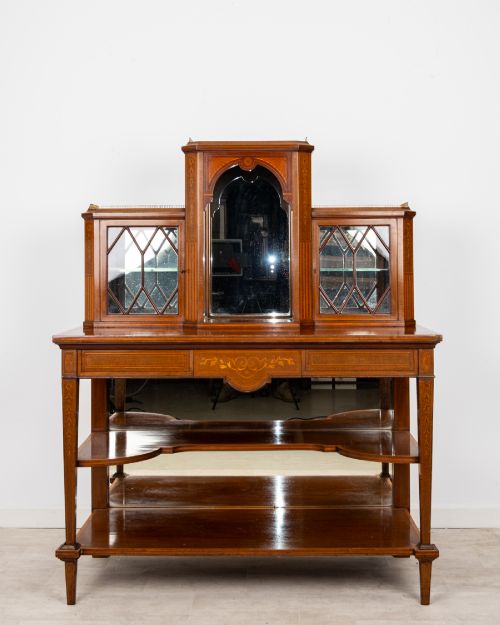
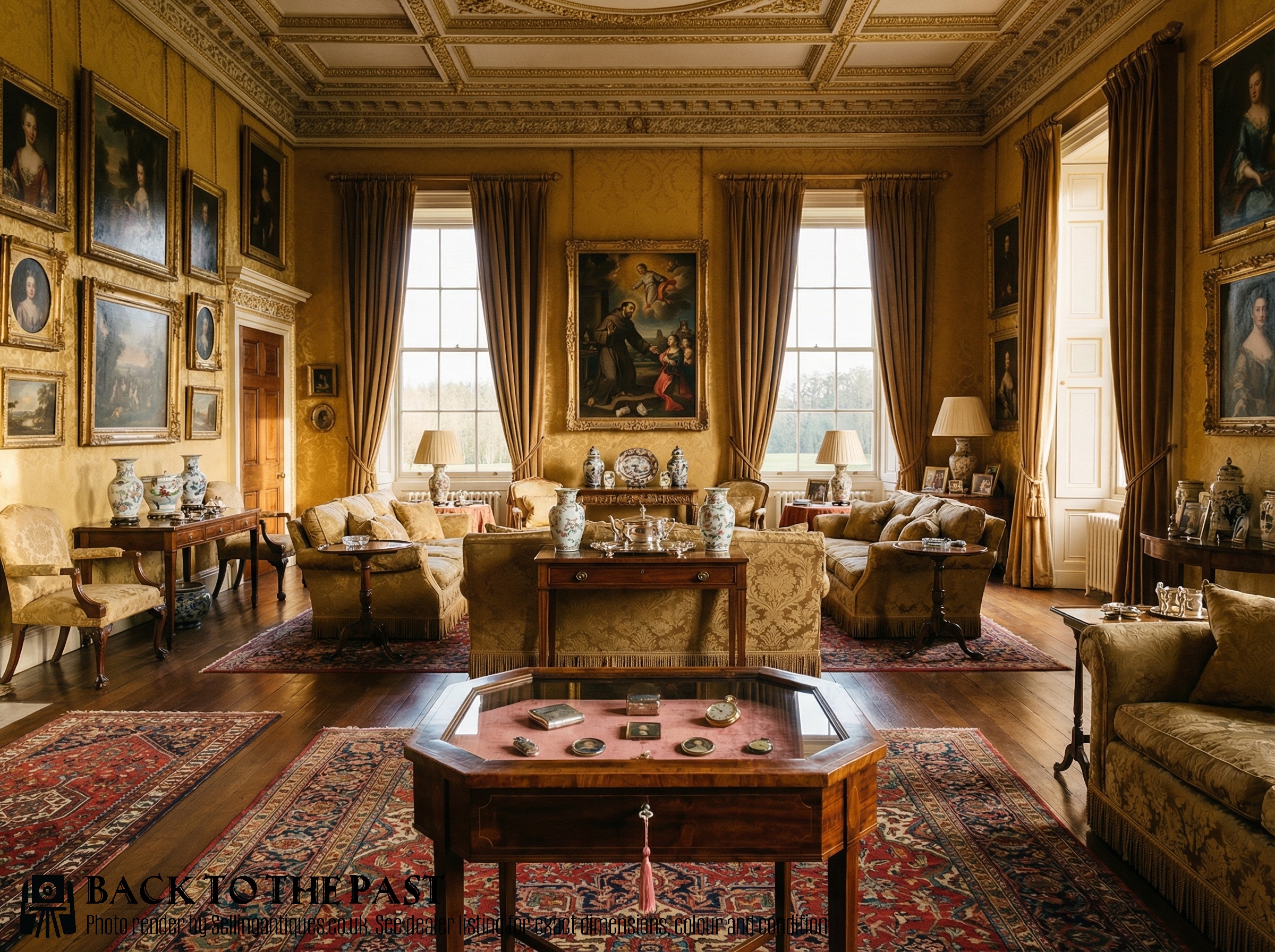
An edwardian inlaid display table sits firmly within the output of the Edwardian period and the late nineteenth century, combining the practical surface of an occasional table with a glazed compartment for valuables.
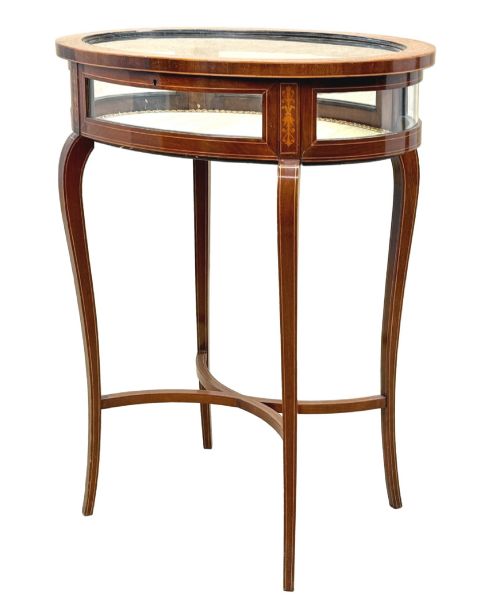
The most common form on this page is the bijouterie table or glass-topped vitrine, frequently shaped as an oval or kidney rectangle supported on slender tapering legs.
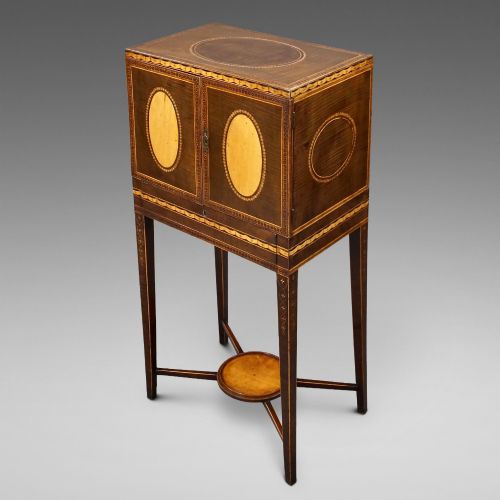
Makers drew heavily on Sheraton Revival design, applying light wood details to dark carcases to suit drawing rooms and reception spaces.
Materials and construction
Timbers like mahogany and satinwood provide the primary structure and smooth contrasting backgrounds, paired with boxwood inlay for delicate linear borders.
Glazing forms the upper display section, sometimes combined with brass mounts, velvet linings and hinged lids that lift to reveal lined interiors.
Edwardian Inlaid Display Table Retail Price Guide 2026
Typical asking prices for edwardian inlaid display table among the pieces listed under this phrase on Sellingantiques today, from the lower quarter to the upper quarter. They describe what is for sale here now, not the wider market.
Some tables hide velvet-lined depths just beneath the tea things.
Distinctions in quality
Quality rests on the crispness of the marquetry and the choice of timbers, where finely figured mahogany and rich satinwood elevate an ordinary frame.
The refinement of the leg profile and the precision of the boxwood stringing separate standard production from exhibition pieces made by premier cabinetmakers.
Trevor Page & Co·Edwards and Roberts
The Edwardian Inlaid Display Table Glossary
- Bijouterie table
- A glass-topped table specifically designed for displaying small valuables, jewellery or curiosities beneath the surface. These pieces often feature hinged glazed lids and fabric-lined wells.
- Marquetry
- Decorative patterns formed by fitting together thin veneers of different coloured woods, shells or ivories into a prepared ground. This technique creates pictorial or geometric ornament on table tops.
- Satinwood
- A durable, lustrous timber native to India and Ceylon with a characteristic golden-yellow sheen. It frequently appears as a contrasting veneer or full carcase material in Edwardian furniture.
- Sheraton Revival
- A late nineteenth and early twentieth century design movement that reinterpreted the neoclassical styles of late eighteenth century designer Thomas Sheraton. It relies on restrained classical motifs and light stringing.
- Stringing
- Thin strips of contrasting wood inlaid into grooves cut into the primary surface to form geometric borders. Boxwood is the standard material used for this linear detail.
Edwardian Inlaid Display Table: Frequently Asked Questions
What is an edwardian inlaid display table used for?
These tables served as sophisticated parlour furniture designed to hold and exhibit small personal possessions, medals and decorative items.
The glazed compartment protected delicate objects from dust while allowing guests to admire them during social calls.
How do I identify an edwardian inlaid display table?
Look for characteristic Edwardian proportions combined with light boxwood stringing or satinwood marquetry set into mahogany or satinwood carcases.
The presence of a hinged glass top or a glazed display well immediately separates these forms from standard occasional tables.
Where should I place one in my home?
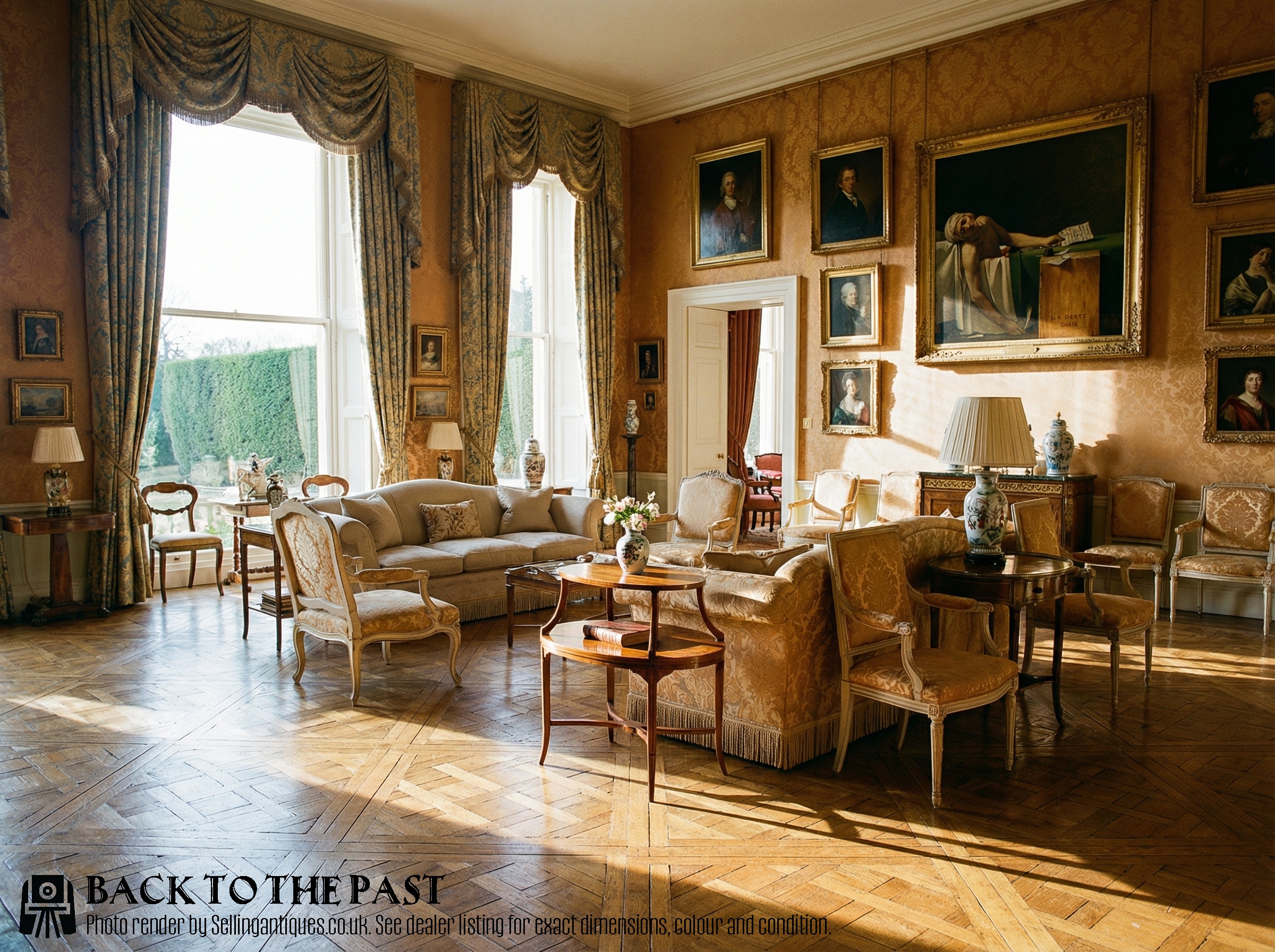
Drawing rooms, living spaces and entrance halls provide ideal settings where natural light can reveal the inlaid details and the contents of the display well.
Keep them away from direct sunlight and strong heat sources to protect the polished wood surfaces and delicate internal fabrics.
How do I care for the inlaid wood?
Maintain the finish by dusting gently with a soft cloth and applying appropriate wax polish sparingly to nourish the timber.
Avoid excessive moisture and protect the glass top with suitable pads when placing items inside the display compartment.