



Edwardian Dumb Waiter
These edwardian dumb waiter pieces are versatile tiered serving stands that bring practical elegance to any dining room.
Edwardian Dumb Waiter
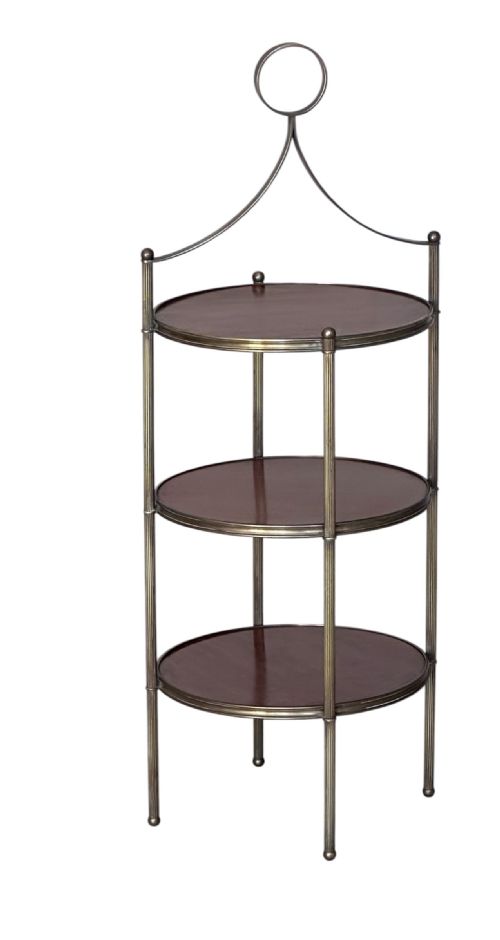
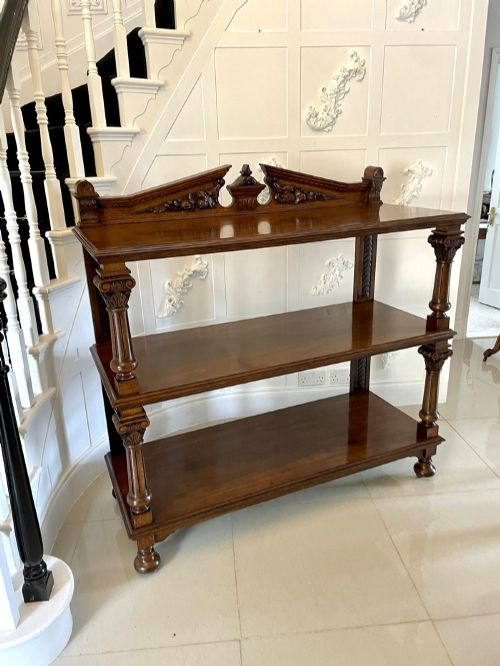
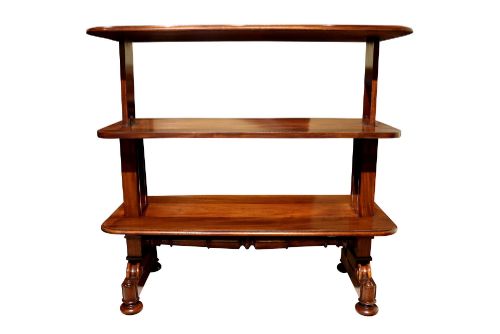
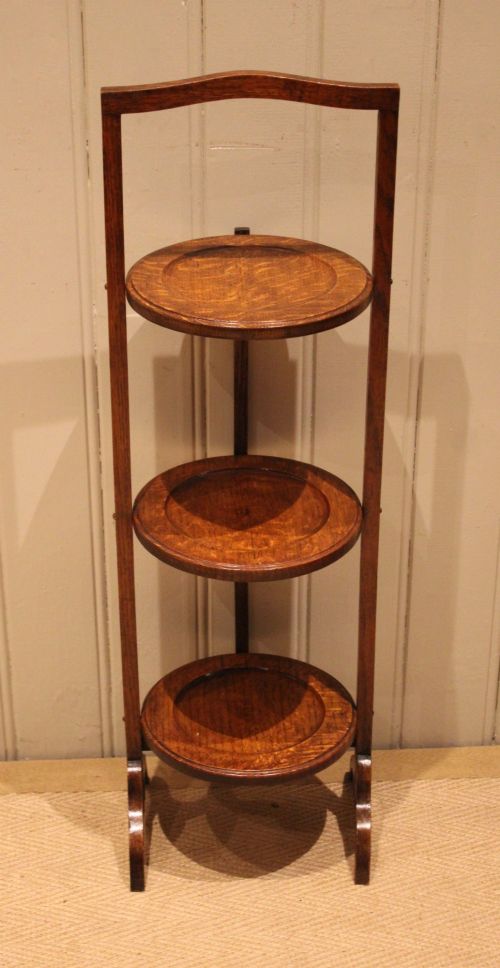
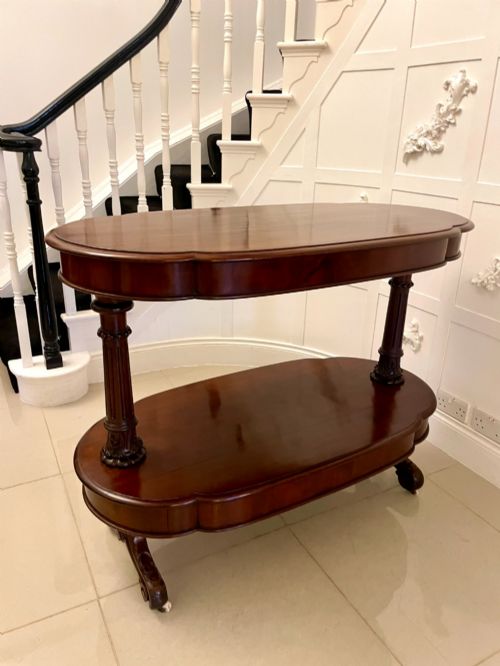
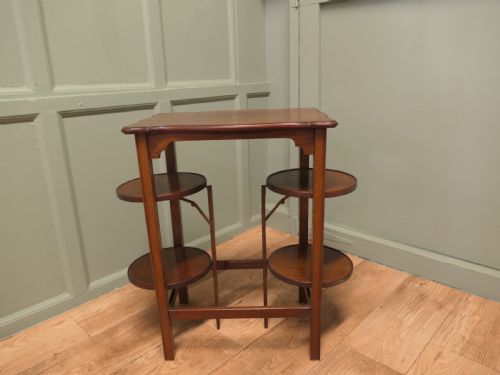
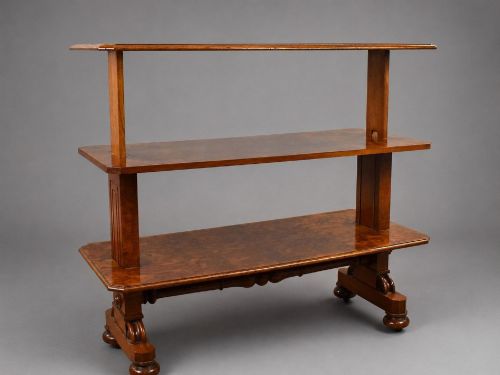
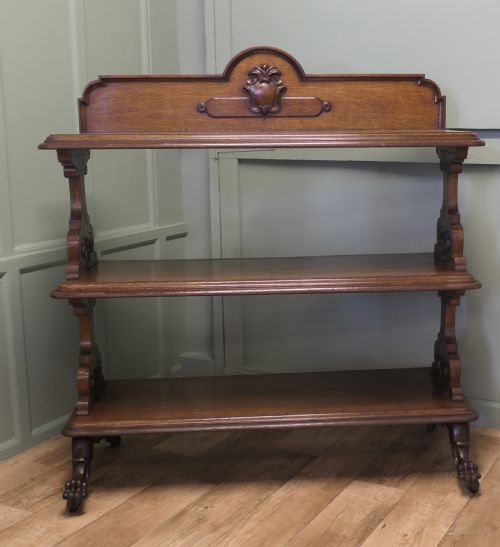
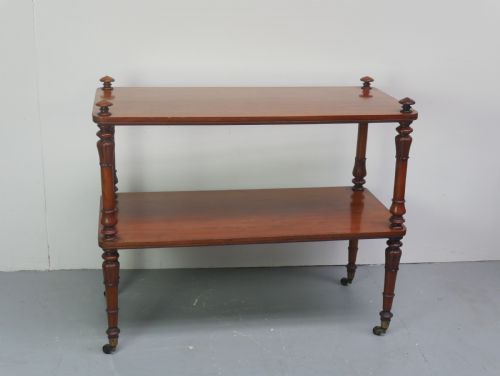
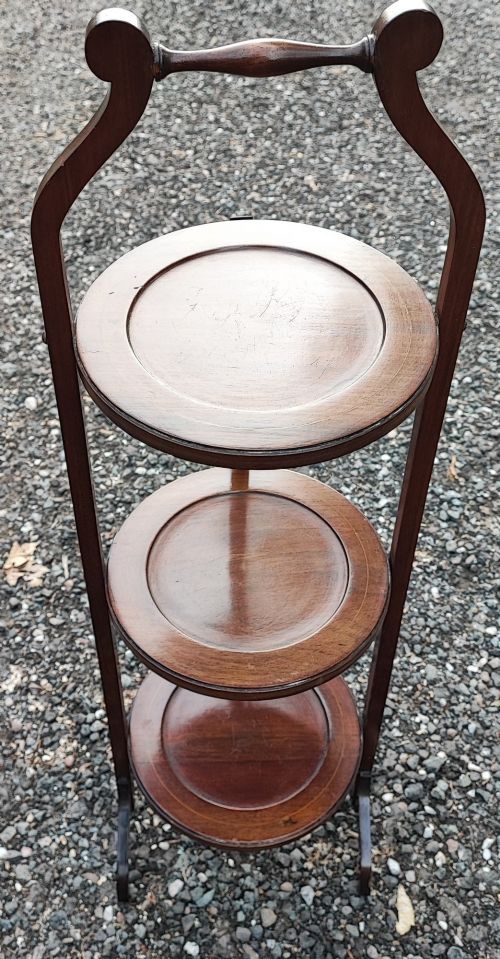
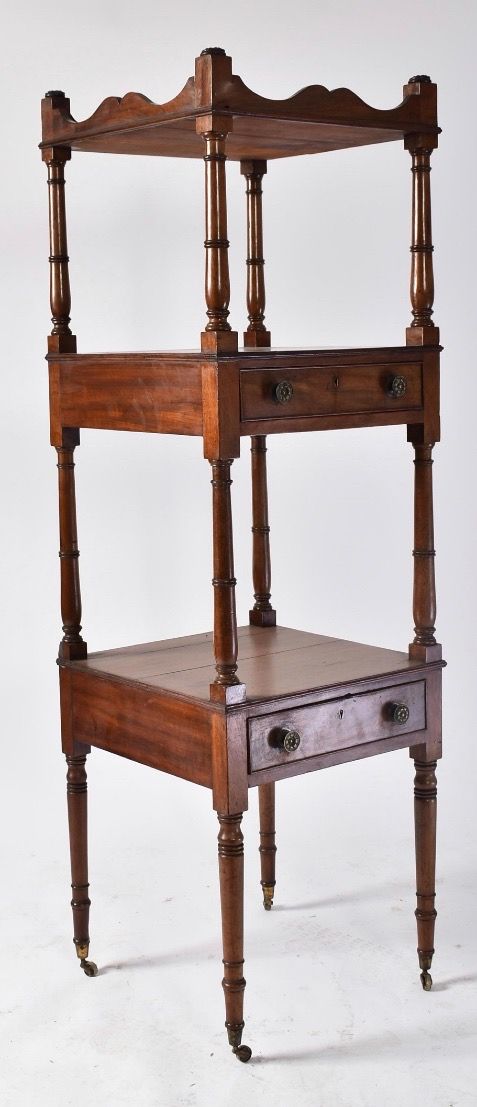
When you search for an edwardian dumb waiter, you are looking at tiered serving furniture designed to hold dishes, tea, or occasional items within easy reach. The pieces listed include two tier and three tier examples, often overlapping with occasional tables and whatnot stands.
You are most likely to meet mahogany versions from the Edwardian period, frequently enhanced with boxwood inlay or circular tiers. While Edwardian pieces dominate the selection, the category also takes in Victorian, Georgian, and 1920s examples.
The form adapts readily from a traditional serving stand to a tiered tea table or etagere. Buyers choose them for their vertical storage capacity and the distinct tiered silhouette that defines the type.
How They Were Made
Cabinetmakers utilised solid timbers and selected veneers, with mahogany serving as the primary wood across the majority of pieces. Burr walnut and standard walnut appear alongside satinwood highlights.
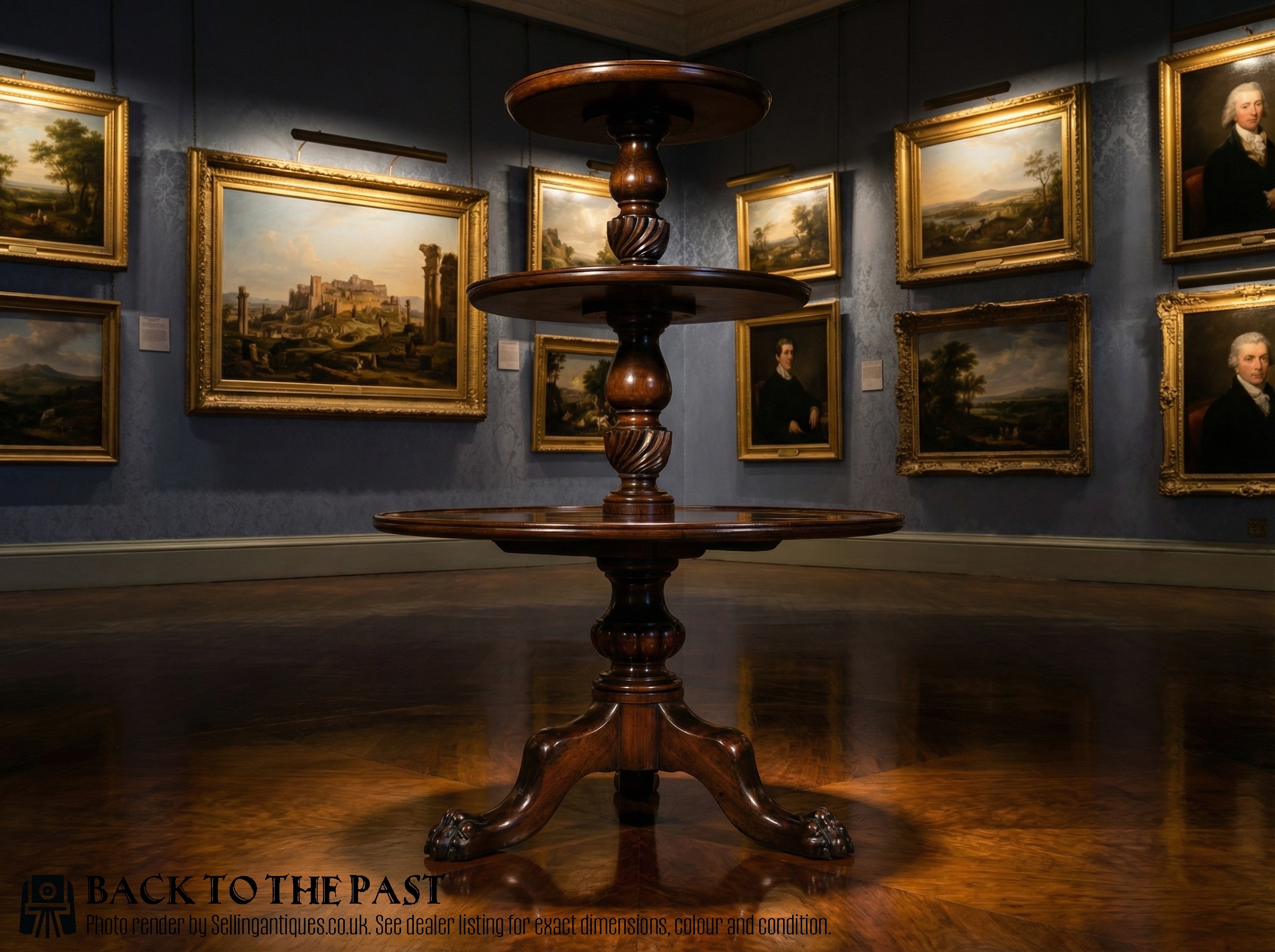
Decoration relied on fine boxwood inlay to accent the timber grain and define the edges of circular or tiered tops. Stands commonly rise on triform bases or upright supports tailored to hold multiple tiers.
Edwardian Dumb Waiter Retail Price Guide 2026
Typical asking prices for edwardian dumb waiter among the pieces listed under this phrase on Sellingantiques today, from the lower quarter to the upper quarter. They describe what is for sale here now, not the wider market.
Listings for this phrase include pieces from the Victorian, Edwardian, and Georgian periods, alongside 1920s examples.
What Varies in Quality
The distinction between standard utility items and finer pieces rests on the choice of timber and the precision of the inlay work. Burr walnut and figured mahogany command attention through richer grain patterns.
Construction details such as the stability of triform bases and the crispness of boxwood stringing set superior examples apart from simpler serving stands.
The Edwardian Dumb Waiter Glossary
- Dumb Waiter
- A tiered stand used for serving food or holding tableware without the need for a servant. These pieces feature multiple levels supported by a central pillar or upright frame.
- Whatnot
- An open set of shelves used for displaying ornaments or holding books. This form overlaps closely with the tiered dumb waiter in the Edwardian selection.
- Triform Base
- A three-sided or three-legged support structure beneath a table or stand. This arrangement provides stability for tall tiered pieces.
- Boxwood Inlay
- Narrow strips of pale boxwood set into contrasting darker wood surfaces to create decorative borders. It frequently outlines the tiers of Edwardian tables.
- Etagere
- A piece of furniture consisting of a set of open shelves for displaying small objects. The term appears interchangeably with certain tiered circular stands.
Edwardian Dumb Waiter: Frequently Asked Questions
What is an edwardian dumb waiter used for?
These tiered stands originally served to hold extra dishes, tea services, or glassware during meals when servants were not required at the table.
Today, they function as versatile display surfaces for plants, books, or decorative objects in living spaces and hallways.
How many tiers do these stands have?
The pieces available generally feature either two or three distinct tiers stacked vertically on a central support or pillar.
Three tier variations offer maximum display space while maintaining a compact footprint on the floor.
What woods were used for these pieces?
Mahogany is the predominant timber found across these stands, complemented by walnut, burr walnut, and satinwood highlights.
Cabinetmakers often incorporated boxwood inlay to add contrast and linear detail to the shelf edges.
Are they the same as occasional tables?
The forms often overlap, as multi-tiered serving stands double easily as occasional tables or tea tables in domestic settings.
Their vertical structure distinguishes them from standard single-surface tables by providing stacked tiers of usable space.