



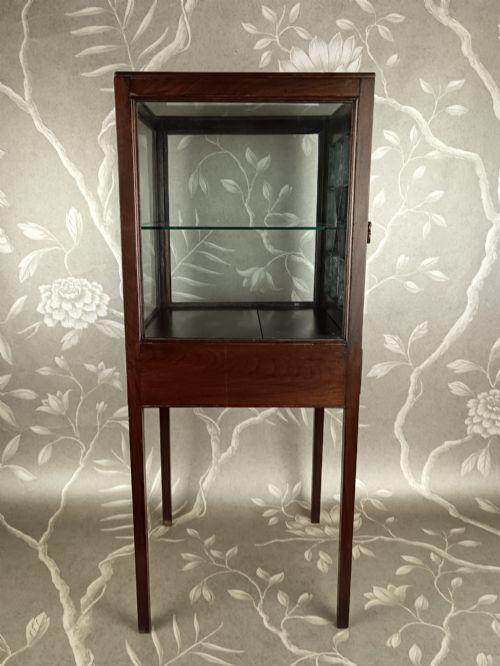
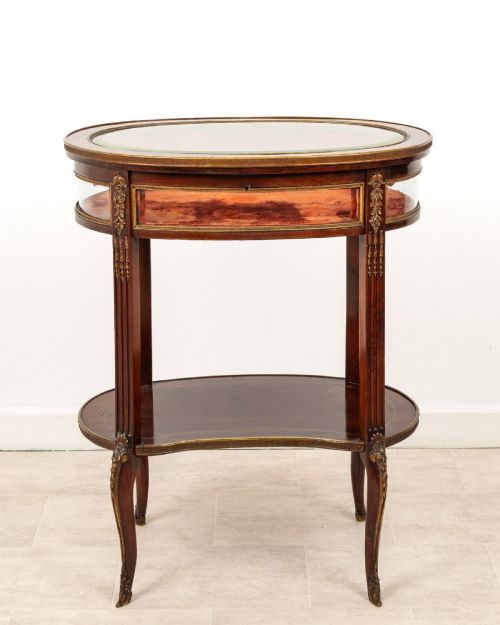
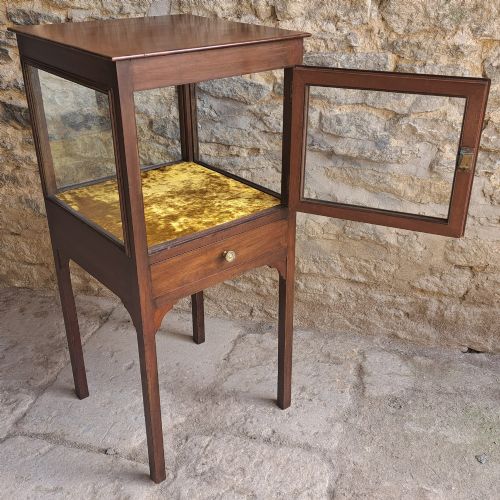


Antique Collector Display Table
An antique collector display table bridges furniture and vitrine, housing small treasures beneath glass tops.
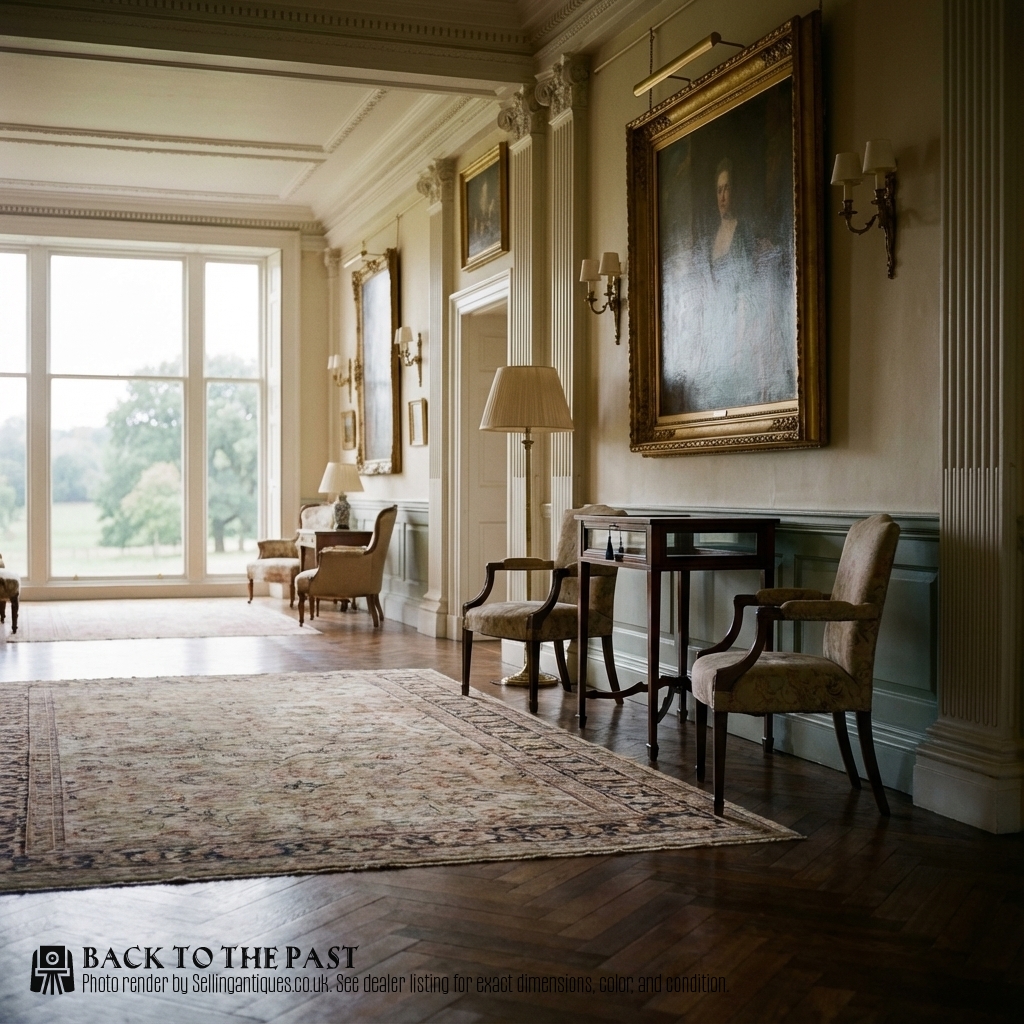
Antique Collector Display Table
An antique collector display table serves as a specialised surface designed for exhibiting small curiosities, jewellery, and precious objects directly beneath a glazed top. These items combine the utility of a traditional table with the secure presentation of a museum showcase, allowing collections to remain visible while protected from dust and handling.
The pieces appearing on this page span the Victorian and Edwardian eras, with notable examples from around nineteen hundred. They take forms such as bijouterie tables, heart-shaped vitrines, and serpentine jewellery cabinets, drawing on French Rococo Revival and Louis XV design influences.
Buyers most frequently encounter mahogany and satinwood frames, often inlaid with marquetry or mounted with ormolu and brass. Interior surfaces are typically lined with velvet or baize to cushion delicate objects placed within the glazed compartment.

How they were made
Cabinet makers utilised dense hardwoods including mahogany, rosewood, satinwood, kingwood, and ebony to construct the primary frames of these display tables. These timbers provided the structural integrity required to support glass panels and hinged lids while accepting fine inlay and marquetry work.
Decorative embellishments often involved cast ormolu, gilded bronze, and brass mounts applied to corners, legs, and rims, paired with glass panes forming the vitrine compartments. Interior wells were lined with soft materials such as velvet or baize to create a contrasting background for jewellery and curiosities.
Antique Collector Display Table Retail Price Guide 2026
Typical asking prices for collector display table among the pieces listed under this phrase on Sellingantiques today, from the lower quarter to the upper quarter. They describe what is for sale here now, not the wider market.
Listings feature mahogany, satinwood, rosewood, kingwood, and ebony, alongside glass, ormolu, brass, velvet, and baize.
What varies in quality
The distinction between standard and superior pieces rests on the precision of the cabinetwork and the refinement of the decorative mounts. Finely cast ormolu, intricate satinwood marquetry, and complex forms like serpentine or heart shapes elevate the standing of a table far above plain rectilinear designs.
Makers such as Edwards and Roberts produced work where timber selection, structural joinery, and supplementary brass or bronze detailing demonstrate a higher level of workshop execution. The choice of secondary woods and the execution of interior velvet or baize linings further indicate the grade of the original commission.
Edwards and Roberts
The Antique Collector Display Table Glossary
- Bijouterie table
- A specialised low table featuring a glazed compartment intended for displaying small decorative items, trinkets, and jewellery. These pieces gained popularity during the Victorian and Edwardian periods for domestic display.
- Ormolu
- Gilded bronze used for decorative mounts and decorative trim on furniture. High-quality pieces feature hand-chased detail after casting.
- Marquetry
- The art of applying pieces of veneer to a structure to form decorative patterns and pictures. Makers used contrasting timbers like satinwood and mahogany.
- Vitrine
- A glass-fronted or glass-topped cabinet designed for exhibiting objects of vertu and collections. They protect contents while offering all-around visibility.
- Baize
- A coarse woolen material resembling felt used to line the interior wells of display tables. It provides a soft contrasting surface for resting delicate artefacts.
Antique Collector Display Table: Frequently Asked Questions
What is an antique collector display table?
An antique collector display table is a specialised piece of furniture featuring a glazed top and a shallow compartment designed to exhibit jewellery, small curios, and precious objects.
These tables combine the function of a display case with domestic furniture, allowing collections to be viewed safely from above while remaining dust-free.
How were these tables used?
Owners used these tables in drawing rooms and parlours to display personal collections of small valuables, medals, miniatures, and fine jewellery to guests.
The glazed compartments kept delicate items protected from handling while remaining visible as a focal point in the room.
Which woods are common?
Mahogany, satinwood, rosewood, kingwood, and ebony appear frequently across these pieces, selected for their fine grain and stability.
Cabinet makers often combined these primary timbers with marquetry inlay and contrasting veneers to enhance the visual appeal.
How do I identify the period?
Dating relies on stylistic clues, construction methods, and materials, with Victorian and Edwardian examples showing distinct revival influences like Louis XV and French Rococo.
Details such as ormolu mounts, serpentine shapes, and specific inlay patterns help align pieces with eras around eighteen sixty to nineteen ten.