


French Bijouterie Table
When hunting for a french bijouterie table, you are looking at glazed display furniture designed to showcase small treasures under glass.

French Bijouterie Table
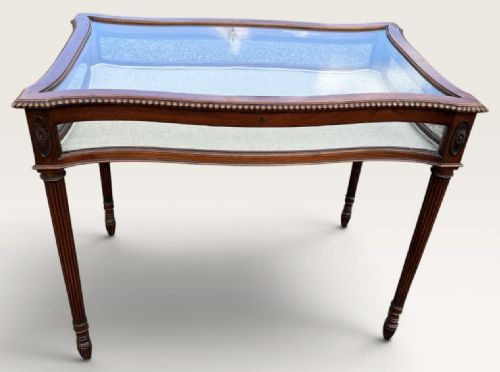
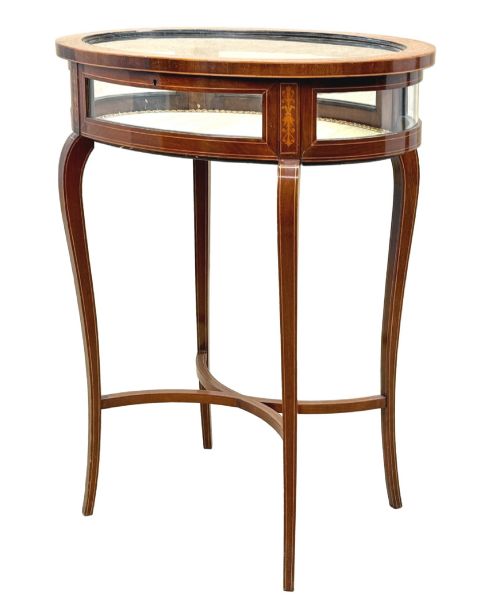
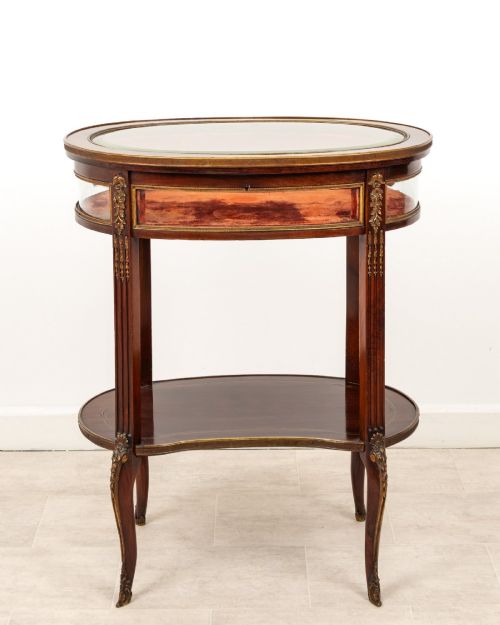
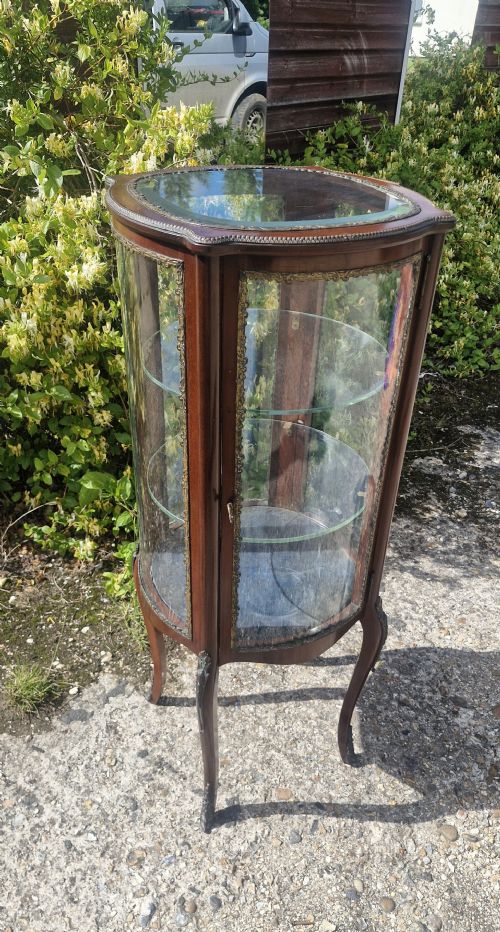
A french bijouterie table is a glazed vitrine designed specifically to exhibit personal trinkets, medals, and jewellery at a comfortable viewing height. These pieces appear primarily in Victorian and Edwardian iterations, spanning the late nineteenth into the early twentieth century.
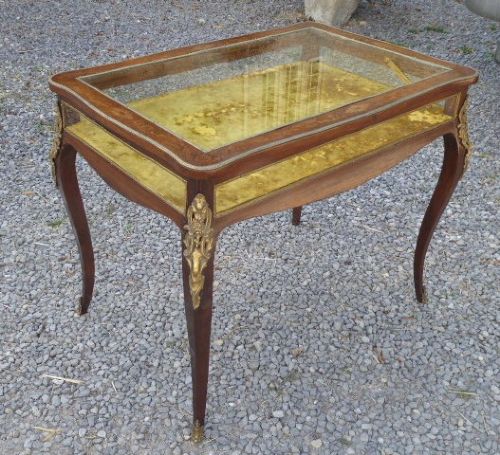
Most examples take rectangular, oval, serpentine, or kidney forms, standing on slender cabriole or tapered legs. They serve equally as functional display cabinets and decorative centrepieces within a formal room scheme.
Makers drew heavily upon Louis XV and Louis XVI design vocabularies, applying revivalist curves and neoclassical straight lines to mahogany, rosewood, and kingwood carcasses.
Materials and Construction
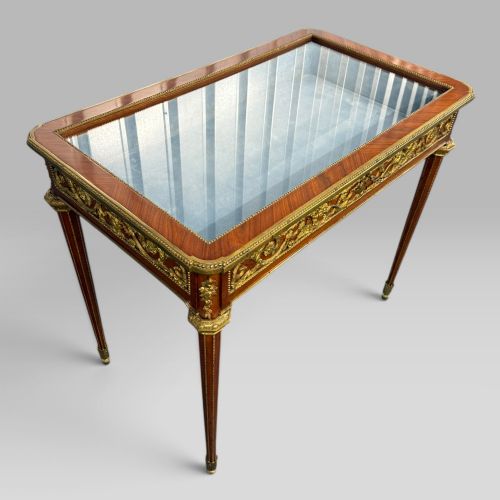
Cabinet makers built the structural frames from dense timbers such as mahogany, rosewood, walnut, and kingwood, frequently applying intricate marquetry or brass inlay. Ormolu mounts in gilded bronze or brass were cast and chased to accentuate the legs, borders, and hinges.
Glazing typically involved bevelled glass plates fitted neatly into hinged lids or lifting frames, allowing unobstructed top and side illumination for the contents within. Interiors were lined with velvet, silk, or fabric pads to cushion the items displayed.
French Bijouterie Table Retail Price Guide 2026
Typical asking prices for french bijouterie table among the pieces listed under this phrase on Sellingantiques today, from the lower quarter to the upper quarter. They describe what is for sale here now, not the wider market.
The inventory spans Victorian and Edwardian eras, including French revivalist designs from the nineteenth and twentieth centuries.
Assessing Craftsmanship and Finish
Quality rests upon the crispness of the cast ormolu mounts and the precision of the timber veneers. Finer specimens display deeply chased bronze details and hand-fitted joints rather than mass-produced cast metal.
The weight and clarity of the bevelled glass, alongside the smoothness of the hinge action and internal fabric lining, distinguish standard production pieces from exceptional workshop creations.
François Linke
The French Bijouterie Table Glossary
- Bijouterie
- A small decorative object or piece of jewellery. Tables built for this purpose feature glazed compartments to protect and exhibit these items.
- Ormolu
- Gilded bronze used for decorative mounts and accents on furniture. High-quality examples show sharp chisel work after casting.
- Vitrine
- A glass-fronted or glass-topped cabinet designed for display. These pieces protect delicate collections from dust while keeping them visible.
- Marquetry
- Inlaid wood veneers forming decorative patterns or pictures. Craftsmen used contrasting timbers to create floral or geometric motifs.
- Cabriole
- A furniture leg that curves outward and then tapers inward. This form is typical of French revivalist designs from the eighteenth and nineteenth centuries.
French Bijouterie Table: Frequently Asked Questions
What were french bijouterie tables used for originally?
These tables served as elevated display cases for wealthy collectors to exhibit pocket watches, snuff boxes, rings, and miniature portraits. Guests could inspect delicate possessions closely without handling them directly.
They functioned as social focal points in drawing rooms, combining practical storage with ornamental display during the Victorian and Edwardian periods.
How do I clean the fabric inside a bijouterie table?
Original velvet and fabric linings require gentle care, typically limited to careful surface suction with a low-power upholstery attachment. Avoid liquid cleaners that might stain the aged textile or damage the underlying wood.
If the lining is severely worn, traditional conservation methods involve replacing the fabric with a period-appropriate silk or velvet matching the original style.
Are these tables sturdy enough for daily use?
While structurally sound, the slender legs and glazed lids require careful placement away from heavy household traffic. They are designed to hold lightweight decorative items rather than heavy objects.
Lifting the glass top should be done slowly to prevent strain on antique brass hinges and delicate framework joints.
How do I distinguish Louis XV from Louis XVI styles?
Louis XV revival pieces feature asymmetric curves, exuberant ormolu scrollwork, and pronounced cabriole legs. The overall aesthetic emphasises flowing organic lines derived from French Rococo design.
Louis XVI style emphasises symmetry, straight tapered legs, neoclassical geometry, and restrained brass or ormolu mounts inspired by classical antiquity.