
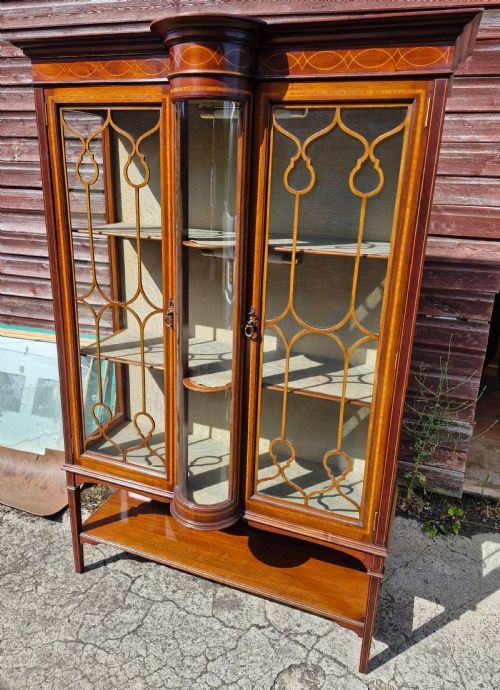


Mahogany Bijouterie Cabinet
A mahogany bijouterie cabinet offers an elevated glass surface designed to showcase small personal treasures and collector items.

Mahogany Bijouterie Cabinet
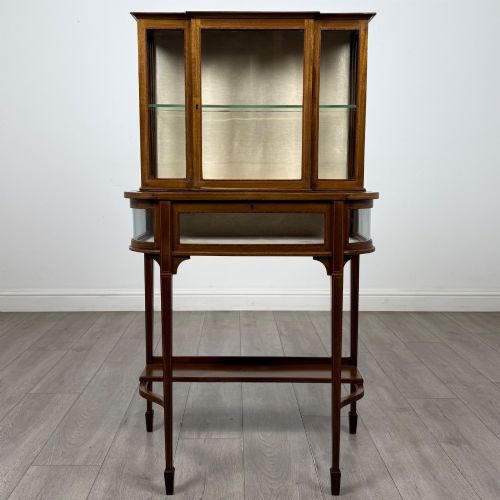
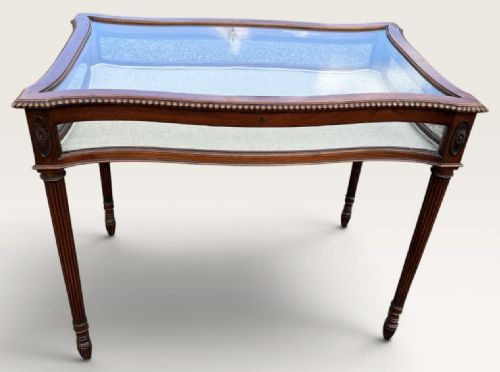
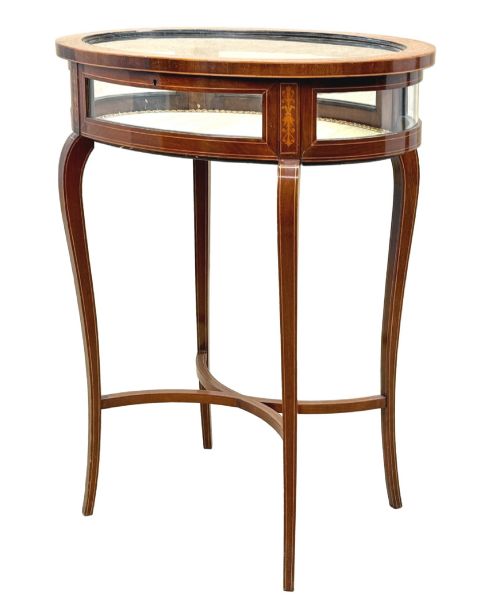
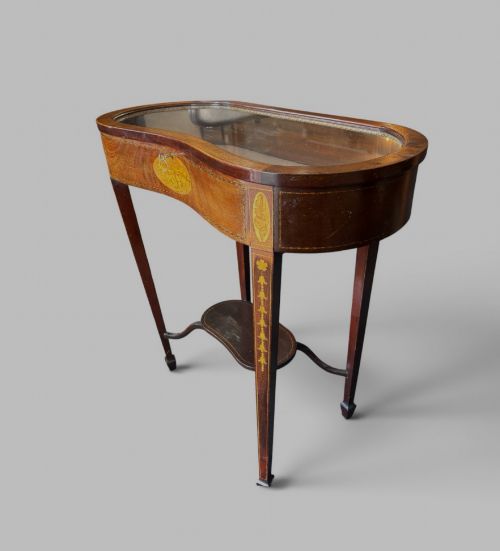
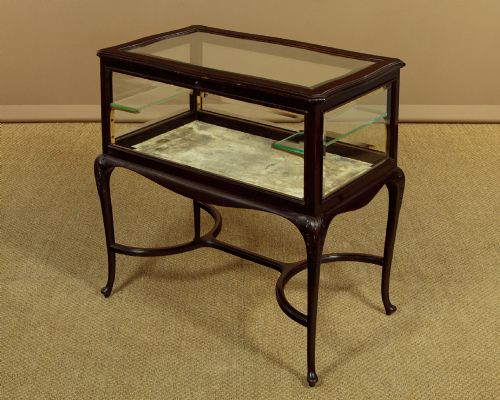
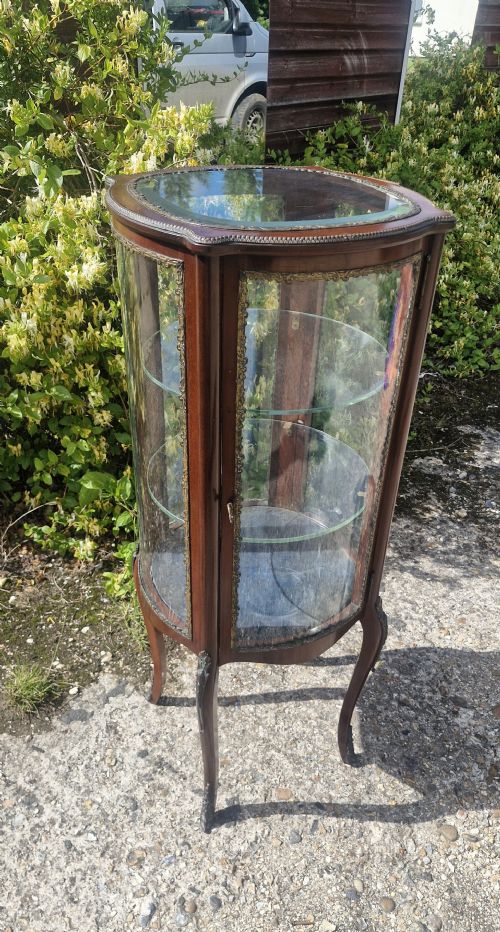
A mahogany bijouterie cabinet provides a specialised display space specifically engineered for small valuables, medals, and jewellery. The selection ranges from tabletop display cases to freestanding vitrines and serpentine tables.
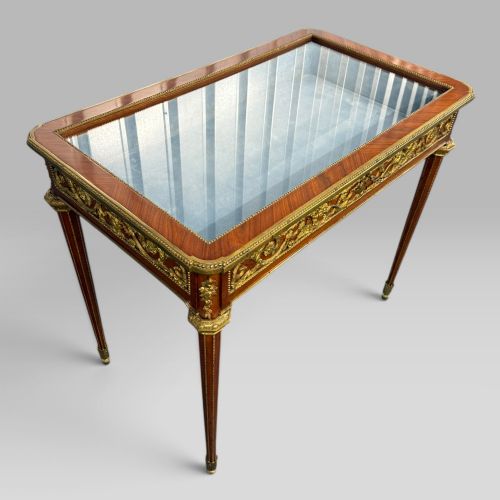
Edwardian examples dominate the available choices, frequently featuring delicate satinwood inlay or marquetry details. Pieces originating from the nineteenth century often lean toward French revival styles with elaborate mounts.
Makers utilised various geometric silhouettes including kidney, oval, and heart shapes to enhance domestic interior presentation. These display tables combine practical glass protection with decorative furniture design.
Materials and construction methods
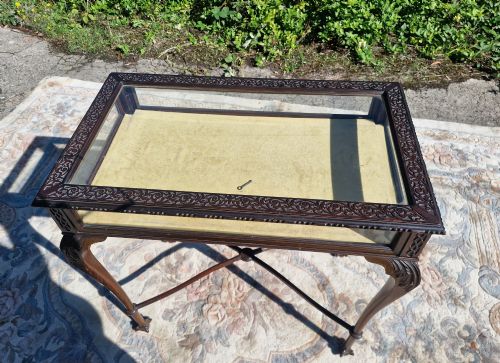
Makers constructed the primary frames from solid mahogany or applied rich mahogany veneers over supportive secondary timbers. Artisans incorporated glass panels into hinged lids and sides to allow light to flood the interior display well.
Interiors were routinely lined with velvet or soft fabric to cushion delicate objects resting on the base. Cast brass or ormolu mounts frequently decorated the corners, legs, and framing edges of French-influenced pieces.
Mahogany Bijouterie Cabinet Retail Price Guide 2026
Typical asking prices for mahogany bijouterie cabinet among the pieces listed under this phrase on Sellingantiques today, from the lower quarter to the upper quarter. They describe what is for sale here now, not the wider market.
Listings span multiple eras from the nineteenth century through the Edwardian period, combining mahogany with brass, glass, and velvet.
Evaluating craftsmanship and detail
Quality rests upon the crispness of the woodwork, the precision of satinwood stringing, and the weight of the metal mounts. Superior cabinets exhibit tightly fitted glass joints and smooth hinge mechanisms that support heavy lids without sagging.
The sophistication of the silhouette dictates overall desirability, with serpentine and kidney-shaped frames requiring greater carpentry skill than standard rectangular boxes. Original fabric linings and functional locks with matching keys elevate the desirability of surviving examples.
François Linke
The Mahogany Bijouterie Cabinet Glossary
- Bijouterie
- A French term describing small valuable items, jewellery, and trinkets. Cabinets built for this purpose elevate these collections to eye level.
- Ormolu
- Gilded bronze mounts applied to furniture. This technique adds metallic highlights to nineteenth-century mahogany frames.
- Marquetry
- Inlaid wood veneers forming decorative patterns. Craftsmen utilised contrasting timbers like satinwood to create floral or geometric motifs.
- Vitrine
- A glass-sided display cabinet designed for precious objects. These freestanding cases protect contents from dust while maintaining visibility.
- Crossbanding
- A border veneer applied perpendicularly to the surrounding grain. This framing technique highlights the curved edges of tabletops.
Mahogany Bijouterie Cabinet: Frequently Asked Questions
What goes inside a bijouterie cabinet?
These glass-topped tables and cabinets were traditionally built to display delicate personal possessions such as pocket watches, rings, medals, and miniature portraits. Collectors utilise them today to exhibit small antiques safely away from dust.
The fabric-lined interior prevents items from sliding or scratching against the wooden base when the lid is lifted. This setup keeps fragile objects organised and fully visible from above.
Are these cabinets secure?
Most antique examples include functional brass locks and keys designed to secure the glazed compartment. They offer basic protection for personal collections within a private home.
The glass panels are intended for viewing rather than high-security storage, functioning primarily as display furniture rather than heavy safes.
How do I date a mahogany cabinet?
Dating relies on examining the timber, construction style, and decorative motifs. Edwardian pieces often display delicate satinwood inlay and light framing, whereas nineteenth-century versions favour heavier ormolu mounts and French revival influences.
Cabinet legs, wood patination, and secondary timbers inside the frame provide further clues regarding the exact period of manufacture.
Where should I place one at home?
Freestanding display tables and cabinets suit drawing rooms, hallways, or studies where natural light illuminates the glass top. They function effectively as centrepieces or paired alongside seating areas.
Positioning them away from direct sunlight protects both the mahogany timber and the velvet interior lining from fading over time.