




Ormolu Display Table
An ormolu display table combines cast gilded bronze mounts with glazed cabinetry to showcase small treasures in domestic interiors.
Ormolu Display Table
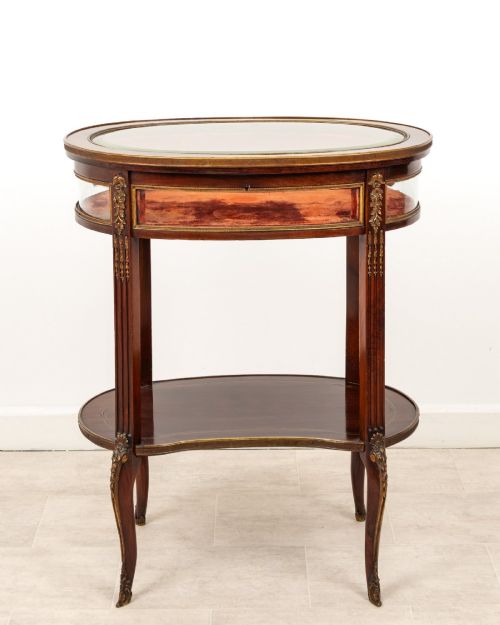
An ormolu display table is primarily a French nineteenth-century form designed to exhibit small items such as jewellery, porcelain, and photographs under glass.
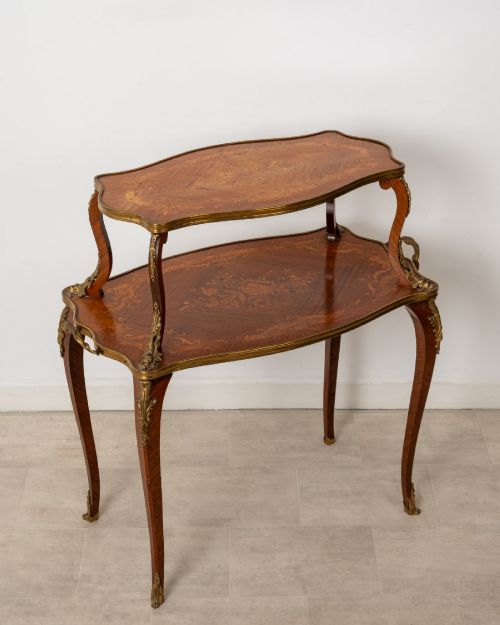
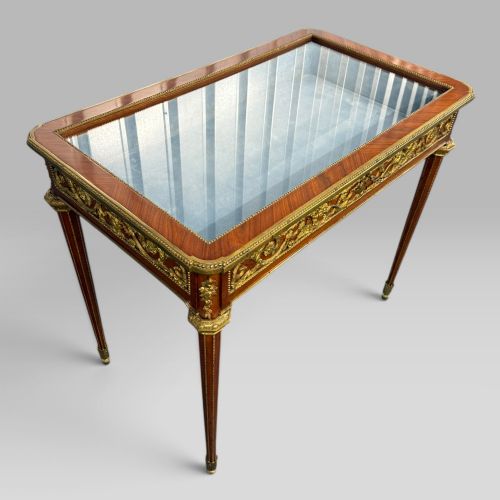
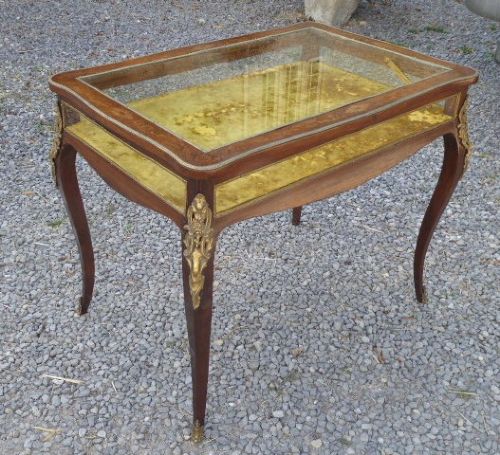
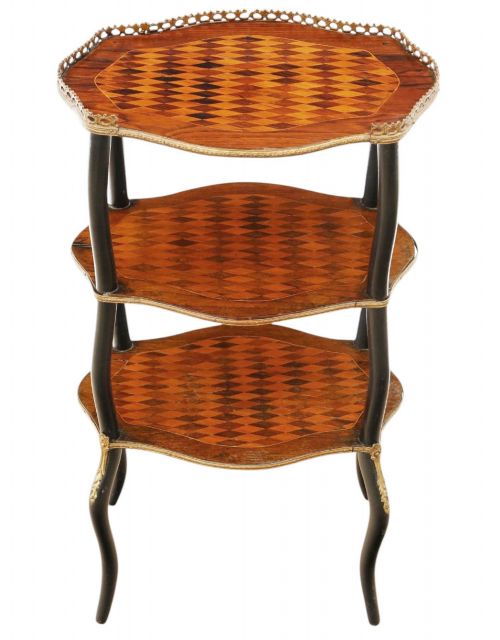
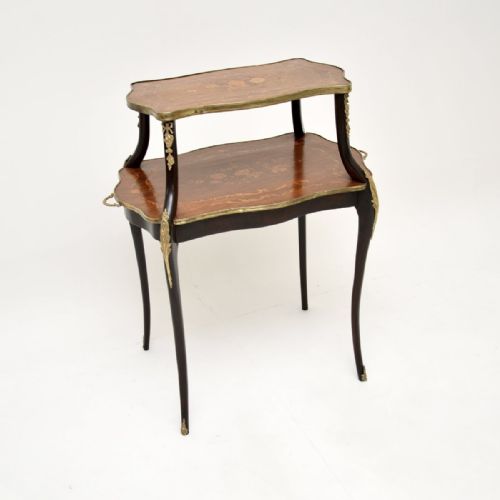
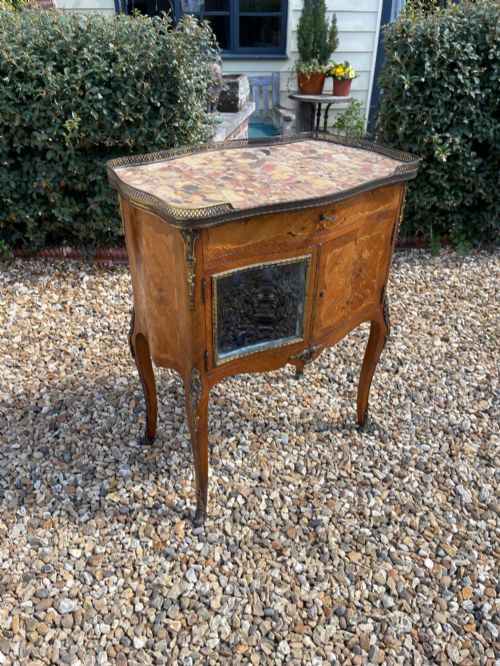
The buyer meets variations ranging from glazed bijouterie tables with hinged glass lids to tiered étagères and side cabinets outfitted with ormolu mounts.
Most examples date from the Victorian and Edwardian periods, adhering to Louis XV and Louis XVI revival styles influenced by French cabinet-making traditions.
How they were made
Frameworks rely on hardwoods such as mahogany, kingwood, walnut, and rosewood, frequently decorated with intricate marquetry and parquetry veneers.
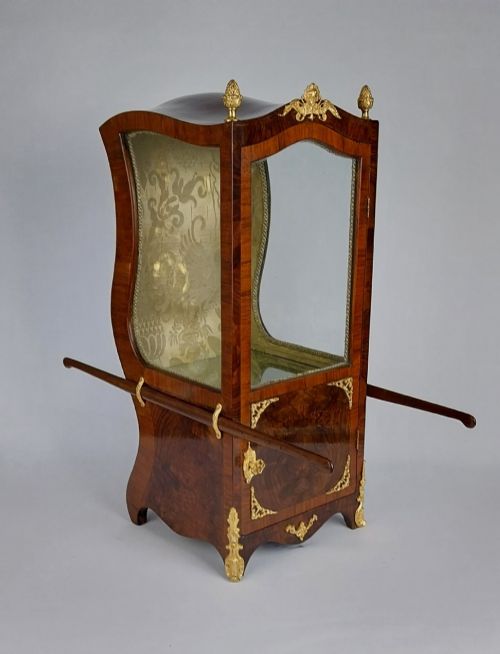
Cast ormolu and gilt-bronze mounts are applied to corners, legs, and borders, complemented by bevelled glass panels and brass details.
Victorian collectors used table vitrines to display tiny porcelain animals that had otherwise nowhere proper to stand.
What varies in quality
The crispness of the bronze casting and the depth of the gilding set superior mounts apart from simpler, flatter brass alternatives.
Hand-cut marquetry patterns in timbers like kingwood and satinwood indicate higher workshop standards than standard veneered surfaces.
Edwards and Roberts
The Ormolu Display Table Glossary
- Ormolu
- Gilded bronze applied to furniture mounts and decorative objects. The process involves coating metal with a mercury and gold amalgam before heating.
- Bijouterie table
- A glass-topped display table created specifically for holding small valuables and trinkets. These pieces often feature velvet-lined interiors beneath the glass lid.
- Étagère
- An open tiered piece of furniture used for displaying ornaments and small objects. Multiple platforms provide stacked display space.
- Marquetry
- Inlaid wood veneers arranged in pictorial or geometric designs. Craftsmen cut contrasting timbers to form intricate surface patterns.
Ormolu Display Table: Frequently Asked Questions
What is an ormolu display table used for?
These tables function as specialised vitrines designed to protect and exhibit small collectables, jewellery, and curiosities inside the home. The glazed top allows viewers to observe items from above while keeping them secure.
In nineteenth-century drawing rooms, they served both as decorative furniture and as personal exhibition cases for a collector's prized possessions.
How do I tell Louis XV and Louis XVI styles apart?
Louis XV style pieces emphasise asymmetrical curves, naturalistic scrolling, and flowing Rococo motifs without straight structural lines. The mounts often feature organic leaf and shell shapes.
Louis XVI style furniture introduces neoclassical symmetry, straight tapered legs, and geometric or classical architectural detailing. The proportions appear more restrained and orderly.
Are these tables strictly French?
While the design vocabulary, cabinet-making techniques, and revival aesthetics originate primarily from French workshops, British makers also produced comparable forms during the Victorian period.
Many pieces found in Britain were imported from France or constructed by London firms utilising continental styles and mounting techniques.
How should I care for the wood and ormolu?
Wood surfaces require standard gentle dusting and occasional waxing with a suitable polish to preserve the grain and veneer. Avoid placing furniture in direct sunlight to prevent timber fading.
Ormolu mounts should be cleaned with a dry, soft cloth only, avoiding chemical brass cleaners that can strip the original fire gilding.