
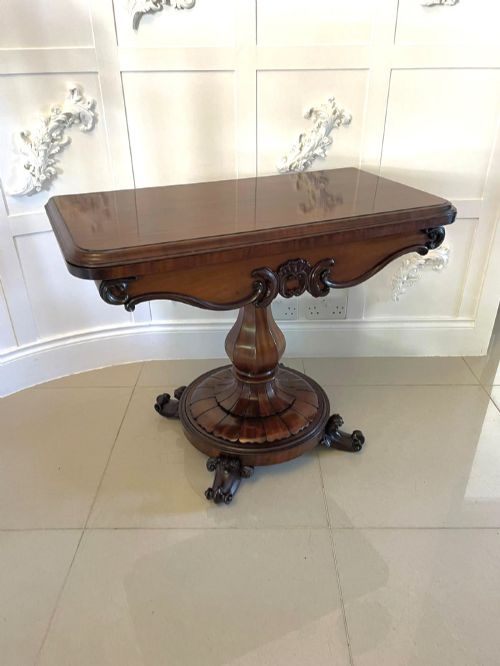

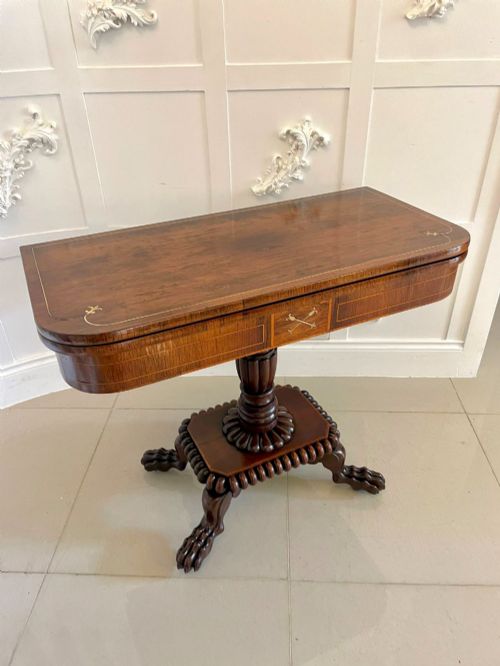
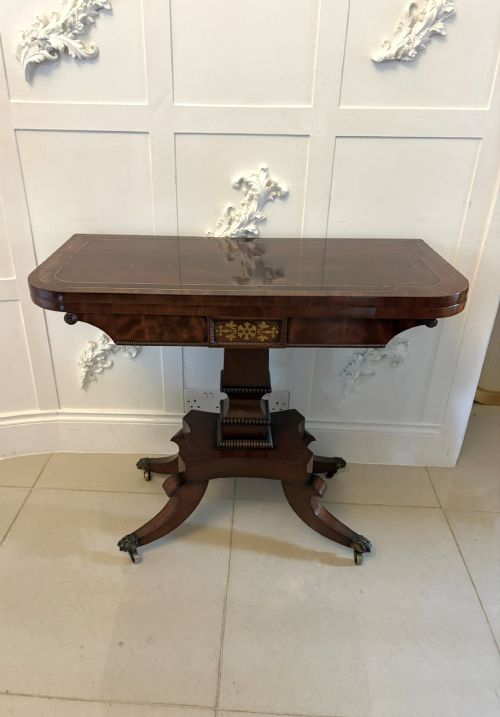
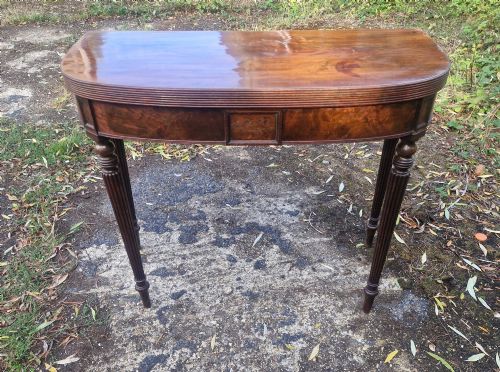
Fold Top Card Table
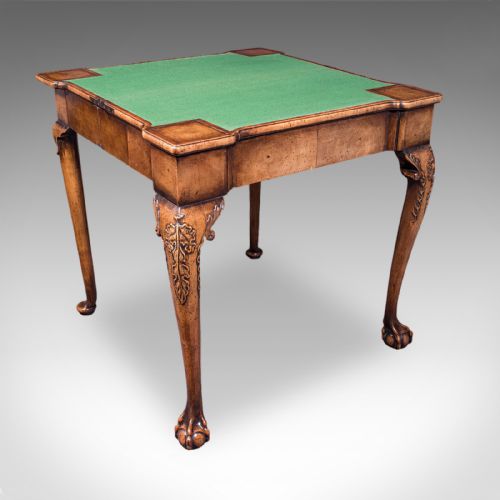
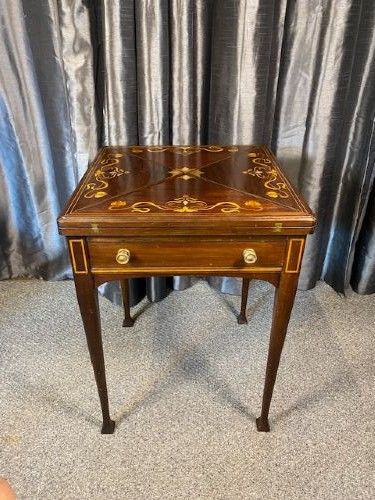
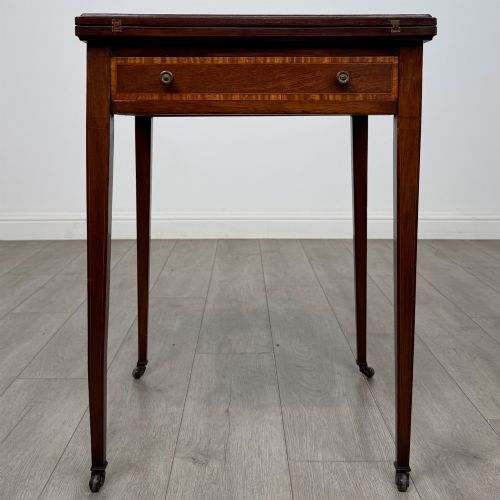
A fold top card table offers a clever folding surface for games or tea, combining period craftsmanship with practical domestic use.
Identifying Fold Top Card Tables
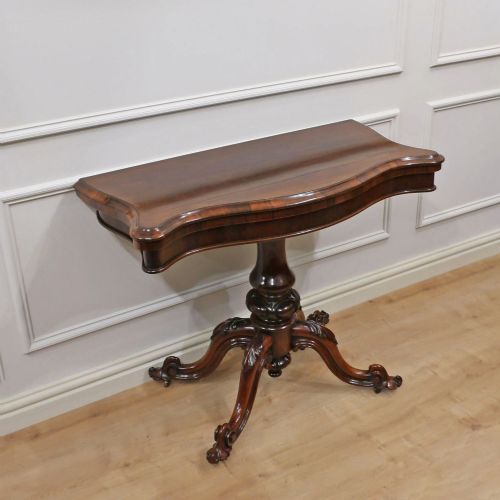
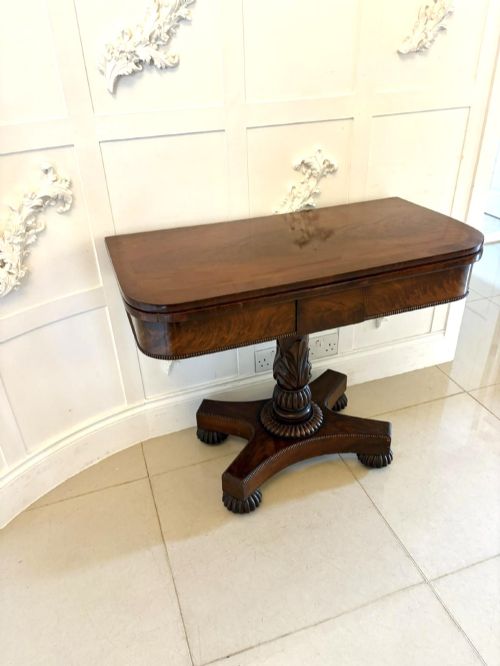
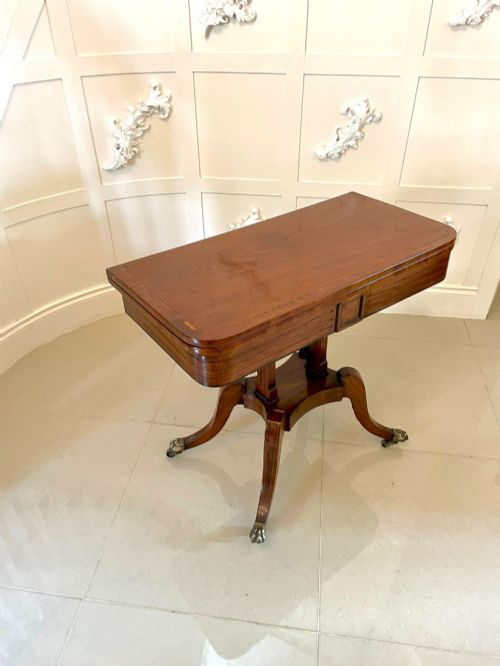
A fold top card table provides a dual-purpose surface that opens from a compact console into a full-size table for evening entertainment. These pieces appear across Georgian, Regency, and Victorian periods, showcasing forms from simple D-shapes to elaborate serpentine designs.
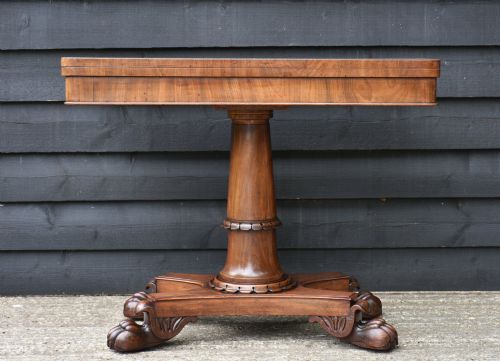
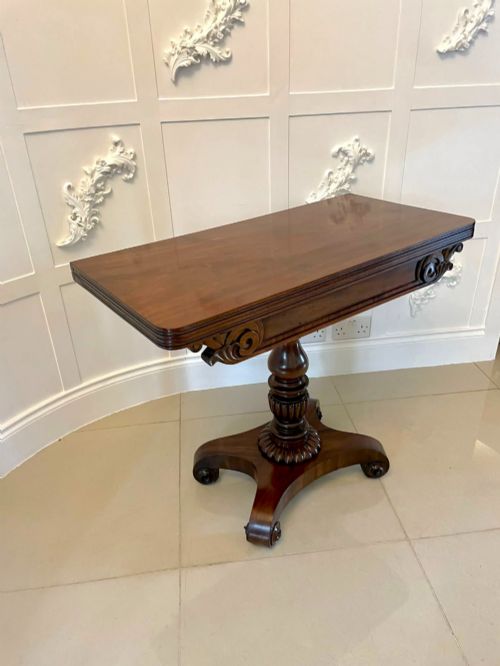
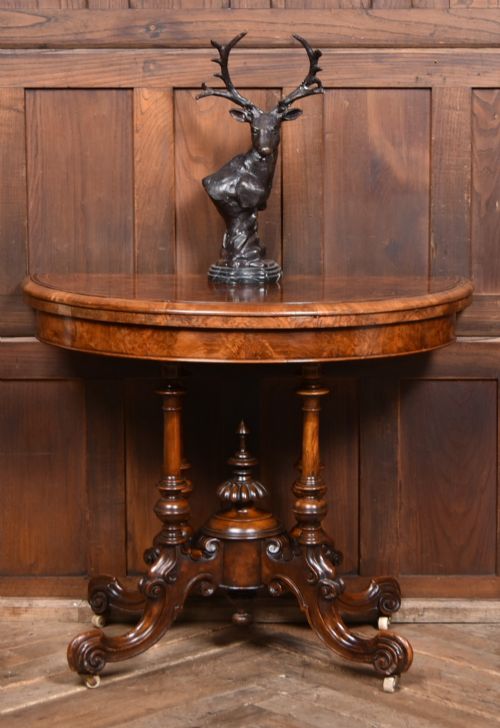
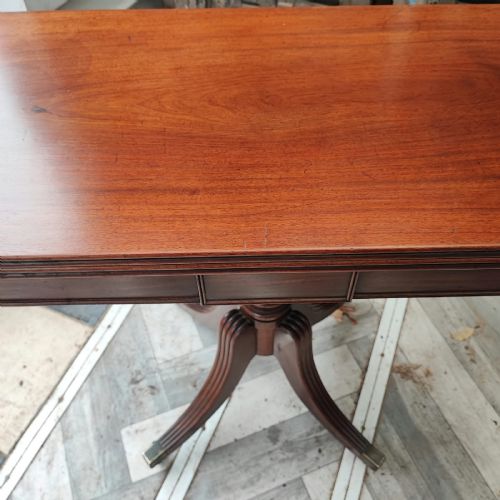
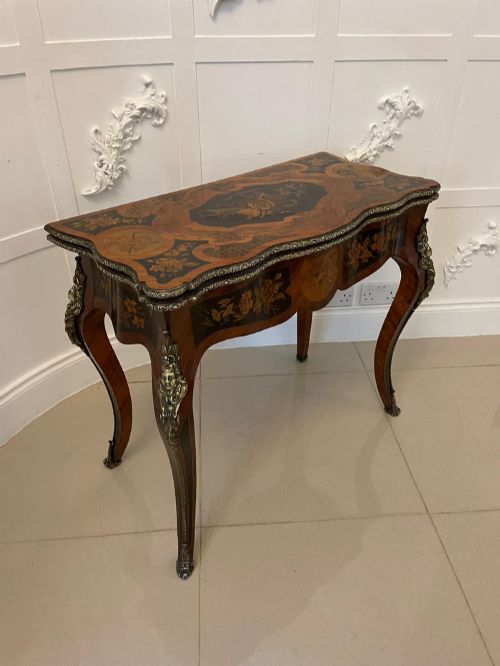
The most common examples on this page are mahogany and rosewood tables from the Georgian and Victorian eras, often featuring fold-over or rotating tops. Walnut and burr walnut also feature prominently, sometimes enhanced with intricate boxwood inlay or ormolu mounts.
Beyond standard card playing, these tables function flexibly as console tables or occasional tea tables when closed against a wall. Their versatility made them essential drawing room furniture throughout the nineteenth century and earlier.
Materials and Construction
Cabinet makers utilised dense timber stocks, predominantly mahogany and rosewood, alongside burr walnut and satinwood veneers for decorative grain patterns. Solid timbers formed the structural frames, whilst brass inlays and boxwood stringing added sharp linear contrast to the dark woods.
Hinged mechanisms allowed the folding leaves to pivot smoothly, supported by swing legs, pedestals, or brass pivoting brackets. Ormolu mounts appeared on mid-Victorian revival pieces, secured to the walnut surfaces to accent the ornate Rococo styling.
Retail Price Guide 2026
Typical UK retail prices for fold top card table, calculated from the Sellingantiques database of over a million retail prices indexed since 2003. This retail price guide relies exclusively on Sellingantiques data; no external sources or auction records are used, so the figures do not describe the wider market.
Many of these tables hide secret compartments beneath the folding top, originally designed to store stray playing cards and bone counters.
Judging Quality in Folding Tables
Quality rests in the selection of timber and the precision of the joinery where the folding leaves meet in the closed position. Superior examples display continuous grain matching across the top panels and tight, hand-cut dovetails within the frame construction.
The sophistication of the support mechanism distinguishes finer workshop output from standard production, with substantial brass hardware and well-balanced pedestal bases providing steady support. Finer pieces also exhibit crisp carving or precise brass inlay rather than simple painted decoration.
Maple & Co. of London·Gillows
The Fold Top Card Table Glossary
- Console table
- A table designed to stand against a wall, often featuring a flat back and decorative front legs. These frequently share forms with folding games tables.
- Ormolu
- Gilded bronze mounts applied as decorative ornaments to furniture surfaces. This technique grew popular during the Victorian revival periods.
- Boxwood stringing
- Thin inlaid lines of pale boxwood set into dark timber surfaces to create geometric borders. This inlay technique defines many Regency and Georgian pieces.
- D-shaped
- A tabletop or frame curved in the shape of a capital letter D. This outline allows the closed table to sit flush against a wall.
- Boulle
- Marquetry technique utilising tortoiseshell and brass inlaid in elaborate scroll patterns. The style originates from French cabinet making.
Frequently Asked Questions
What is a fold top card table used for?
These tables served primarily for evening card games, social gatherings, and tea service in formal reception rooms. The folding leaf doubled the surface area when guests arrived.
Between games, the tables stood closed against the drawing room wall to function as decorative console furniture.
How do I tell a Georgian table from a Victorian one?
Georgian tables generally rely on clean architectural lines, solid mahogany construction, and understated proportions. The wood grain and subtle carved details create the visual interest.
Victorian pieces frequently introduce burr walnut veneers, ormolu mounts, and elaborate inlay work influenced by earlier revival styles.
Are these tables sturdy enough for daily use?
The structural stability depends on the clever internal pivot mechanisms and swing legs designed to support the open leaf. Solid timber frames handle weight well when the leaf is properly supported.
Care must be taken not to lean excessive weight onto the unsupported half of a folding top.
What woods were used to make card tables?
Mahogany served as the primary timber throughout the Georgian and Regency periods, valued for its strength and rich red-brown tone. Rosewood also appeared frequently in Regency designs.
Later Victorian makers favoured burr walnut and satinwood, applying decorative veneers over secondary woods to achieve striking grain patterns.