


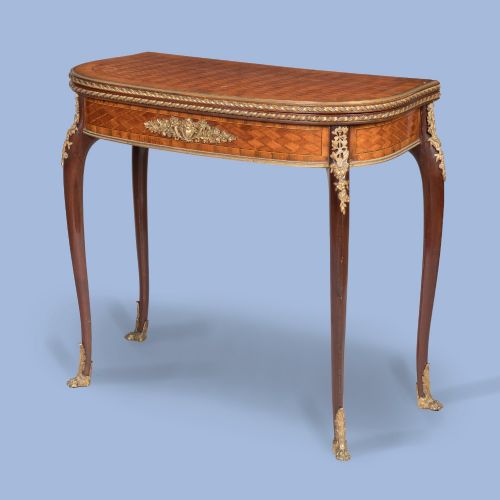
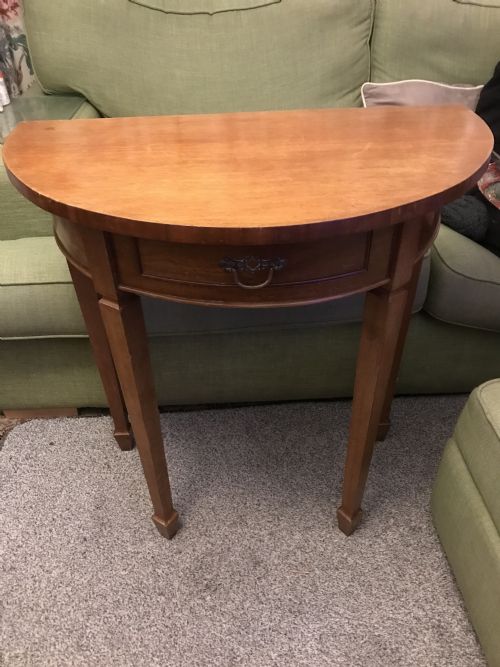
Brown Demi Lune Table
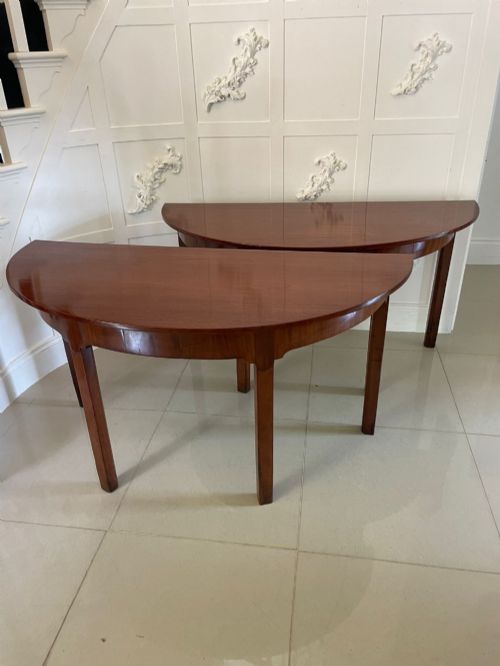
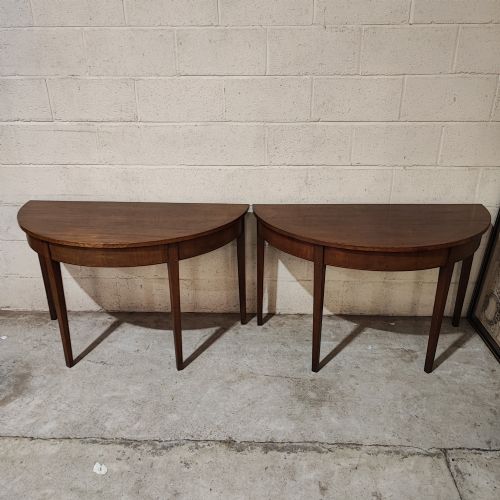
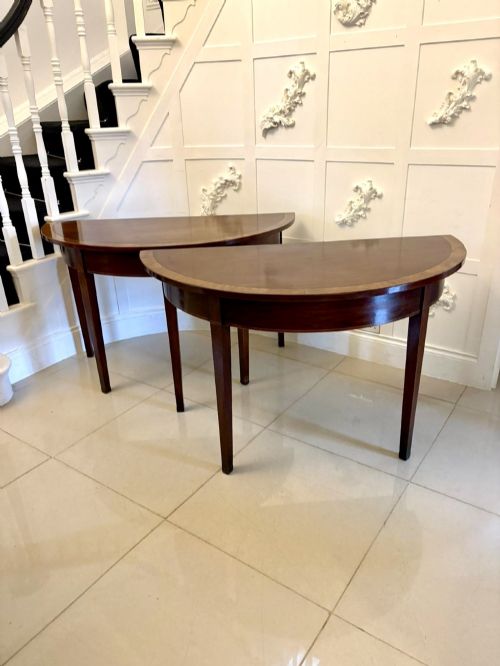
A brown demi lune table brings a graceful half-round silhouette to a hallway or drawing room, prized for sitting flush against a wall.
Brown Demi Lune Table
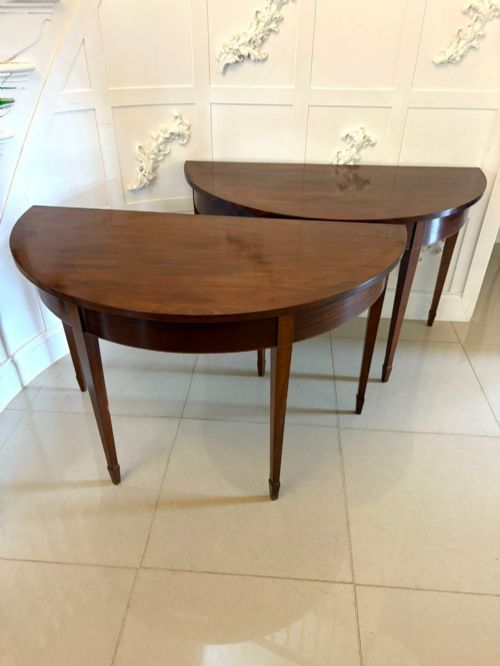
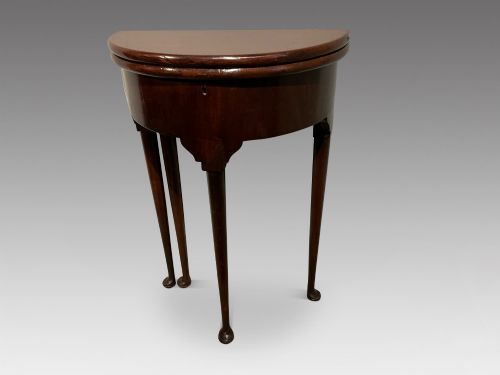
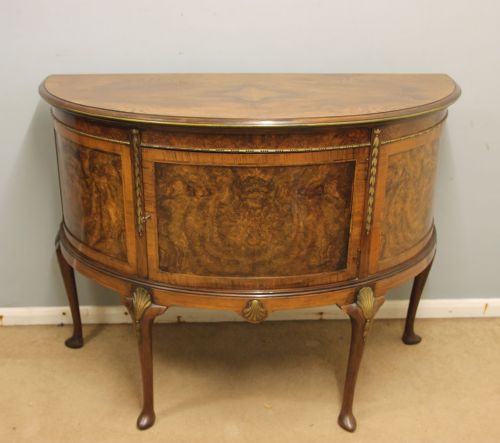
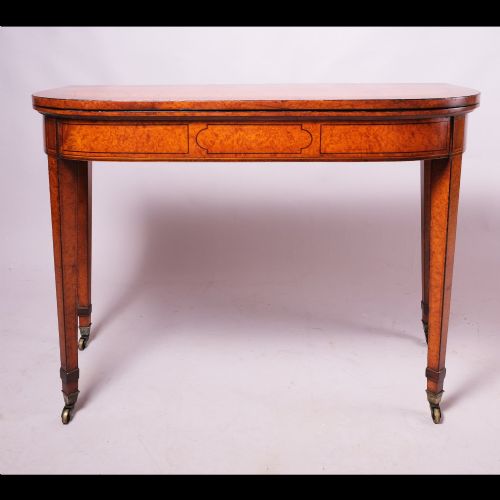
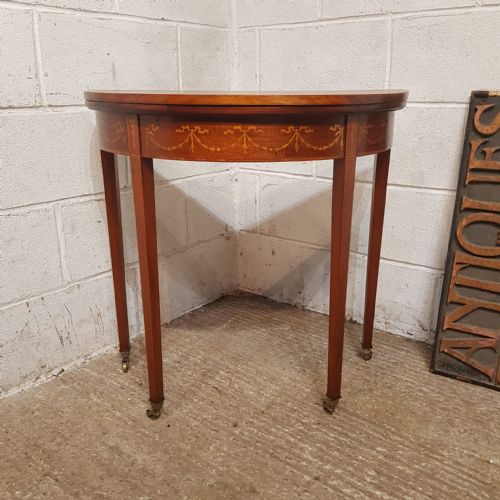
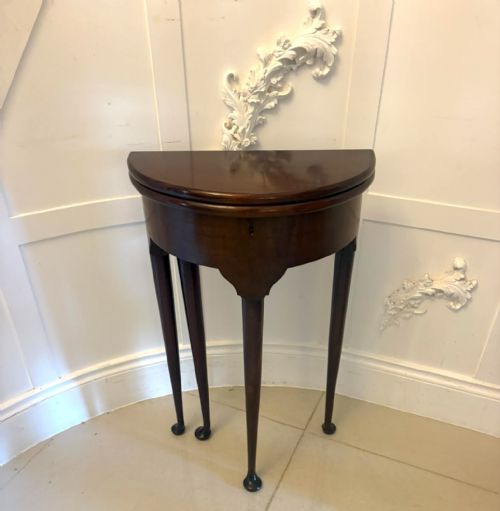
The version most commonly met on this page is the mahogany console or card table from the Georgian period, often featuring a fold-over top. These pieces frequently appear in pairs or as single items shaped to fit slender wall spaces.
Makers and cabinetmakers drew upon styles ranging from George III Neoclassical to Victorian, Edwardian, and Regency. Materials extend beyond standard timber to include figured mahogany, walnut, burr walnut, and occasional satinwood or amboyna.
Materials and construction methods
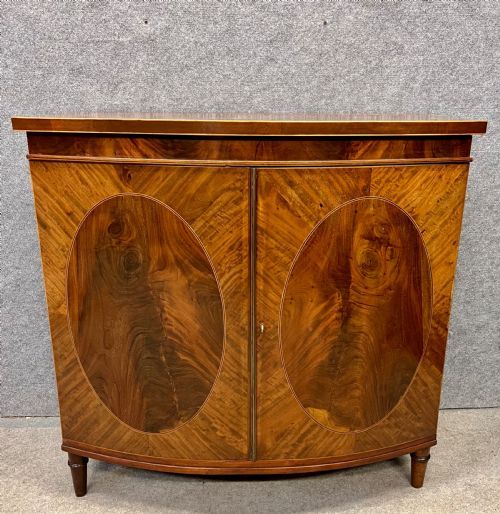
Cabinetmakers utilised solid timbers and wood veneers over secondary woods, selecting figured mahogany and walnut for visual depth. Marquetry, parquetry, and contrasting stringing in boxwood or lighter woods embellish the flat surfaces.
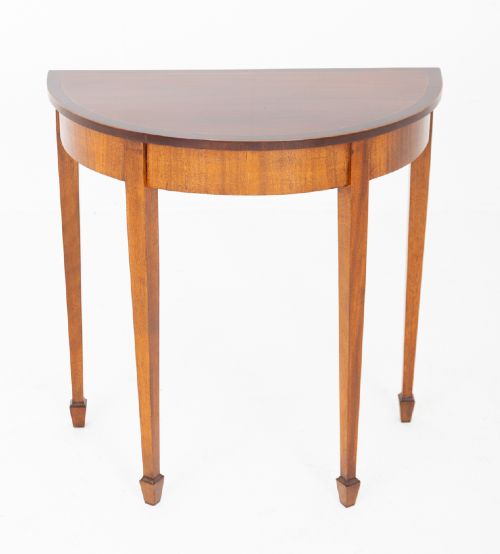
Leg construction varies from straight tapered spade feet to carved cabriole legs, occasionally incorporating brass mounts or ormolu details. Hinged mechanisms allow console tops to unfold smoothly for card and tea playing.
Materials documented across the collection include mahogany, walnut, burr walnut, amboyna, and satinwood.
Distinctions in craftsmanship
The standard of a brown demi lune table rests on the choice of timber figure, such as highly grained burr walnut or figured mahogany, matched symmetrically across the top. Superior examples display crisp hand-cut inlay and tight joinery at the curved aprons.
Refinement in leg carving and the precision of the fold-over hinge mechanisms separate workshop output. Pieces attributed to notable makers or exhibitions display elevated attention to interior secondary woods and subtle decorative mounts.
François Linke·Pietro Ferrario
The Brown Demi Lune Table Glossary
- Demi-lune
- French for half-moon, describing the semicircular shape of the table top and flat rear edge. This profile allows the piece to stand flat against a wall.
- Console table
- A table supported by wall brackets or front legs, designed primarily for display rather than heavy dining. They frequently anchor entrance halls or drawing rooms.
- Card table
- A small folding table with a baize or wood surface, equipped with a pivoting or swing leg to support the opened leaf during games.
- Marquetry
- Decorative veneer work forming pictures or geometric patterns using various woods, shells, or ivory. It adorns the top surfaces of finer tables.
- Spade foot
- A rectangular foot that tapers slightly toward the base, commonly seen on eighteenth and early nineteenth-century furniture legs.
Brown Demi Lune Table: Frequently Asked Questions
What is a demi lune table used for?
A brown demi lune table serves as a decorative console in a hallway or living room, displaying lamps, mirrors, or ornaments against a wall.
Many examples function as convertible card or tea tables, featuring fold-over leaves that open to reveal a baize-lined playing surface when guests visit.
How do I date a brown demi lune table?
Dating relies on observing the secondary woods, leg styles, and inlay techniques characteristic of periods like the Georgian era, Regency, or Edwardian times.
Cabinet construction methods, such as hand-cut dovetails and the type of veneer figure, also provide clear indicators of manufacturing age.
Can I use a demi lune table as a desk?
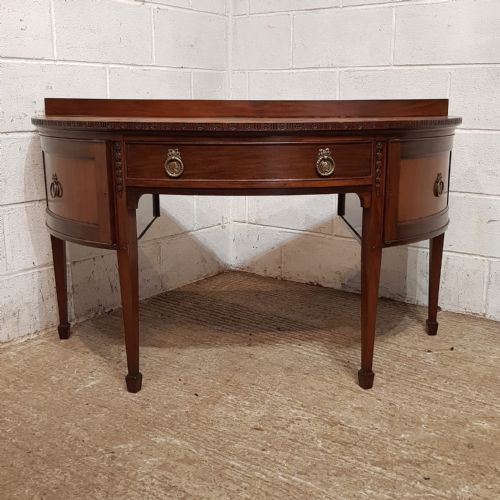
Certain versions function adequately as slim side desks or writing surfaces, provided the height and leg clearance match a chair.
However, tables with folding leaves or delicate console frames are generally built for display and light surface use rather than rigorous daily writing.