

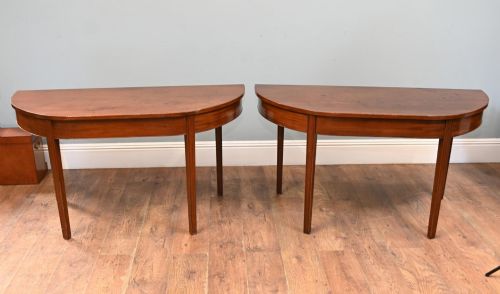
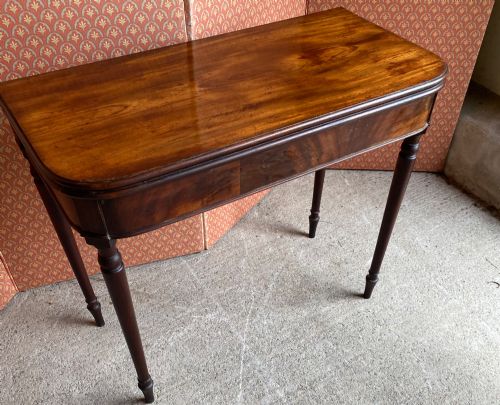
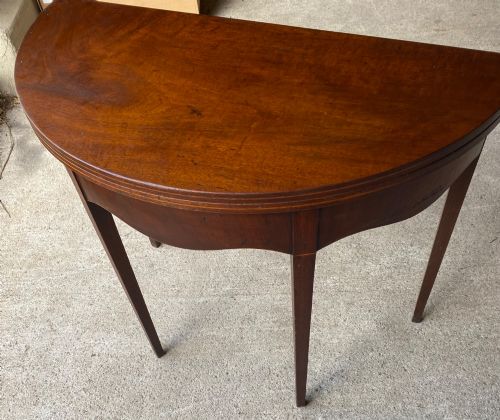
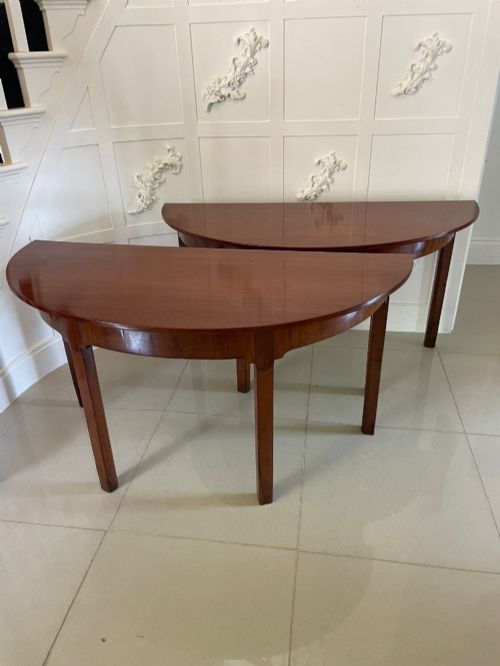
Georgian Demi-lune Table
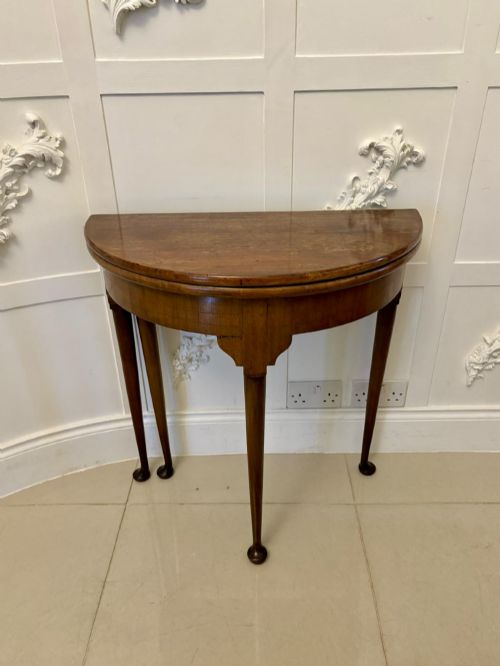
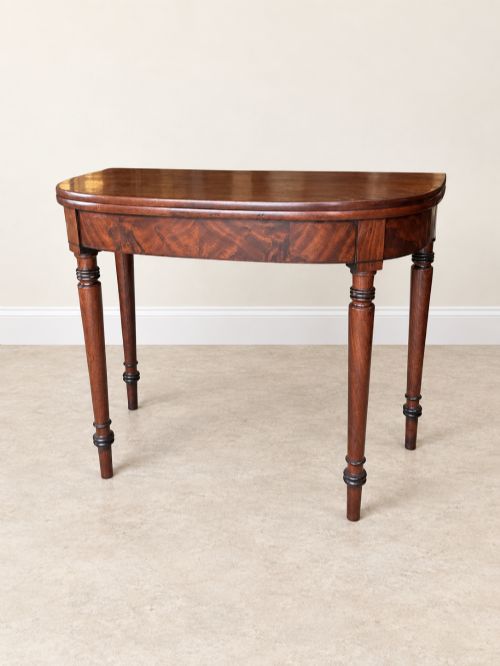
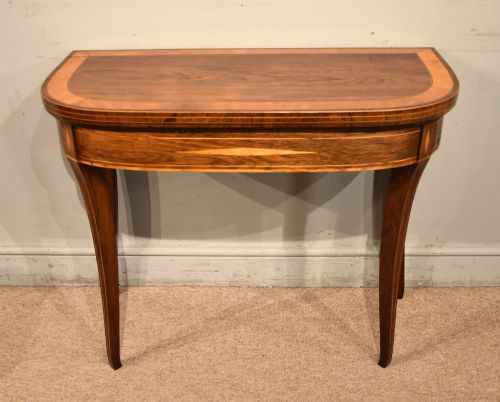
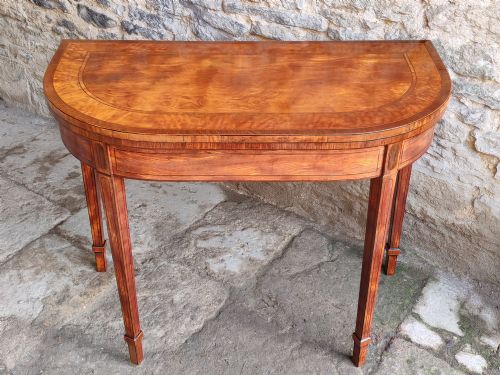
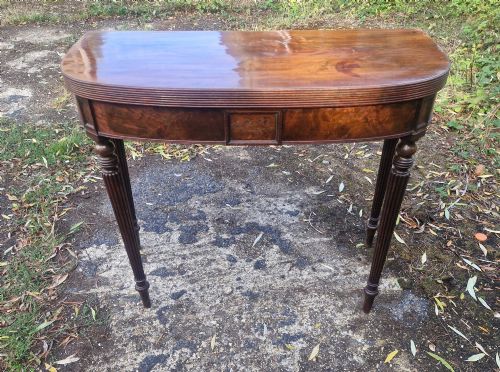
A georgian demi-lune table stands flat against the wall, offering a half-circle silhouette in rich mahogany or satinwood that saves floor space while commanding a room.
Georgian Demi-lune Table
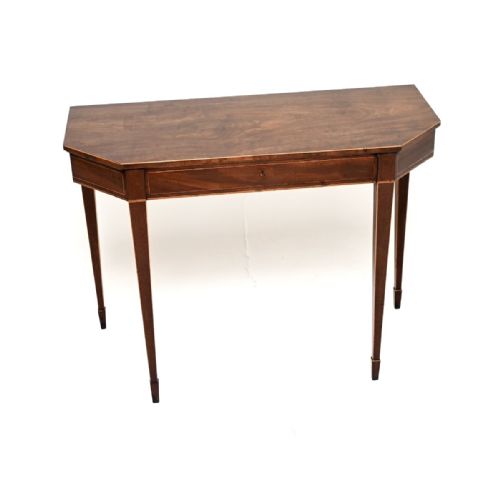
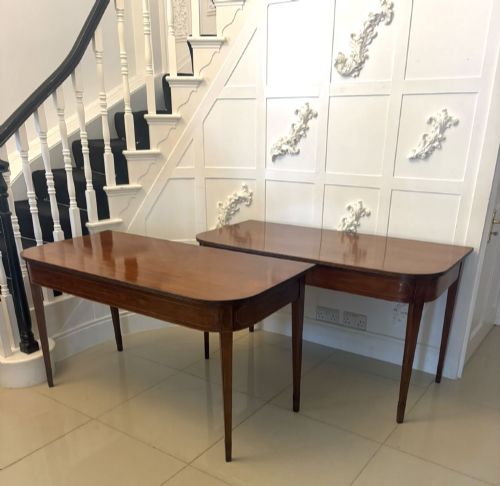
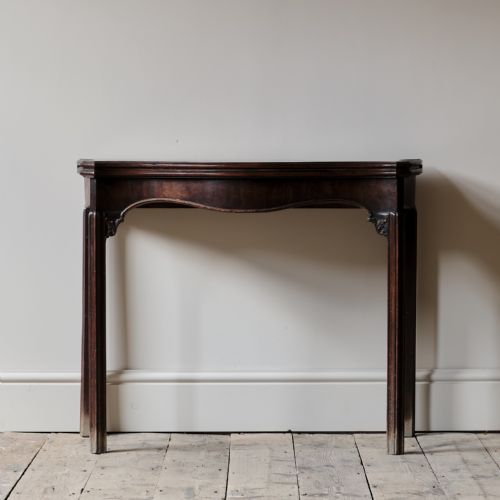
A georgian demi-lune table typically serves as a console, a hall surface, or a folding card and tea table designed to fit neatly against a room perimeter. When opened, the hinged top pivots to reveal a baize-lined playing surface or a polished timber top for afternoon hospitality.
Most examples encountered on this page date from the eighteenth and nineteenth centuries, spanning the George III and Regency periods, alongside later revival pieces. The form adapts from simple console arrangements to complex games tables with intricate folding mechanisms.
Materials and Joinery Techniques
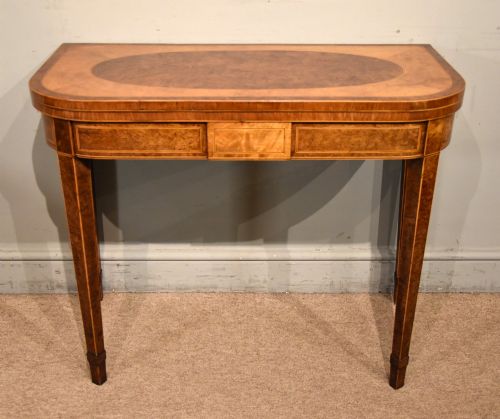
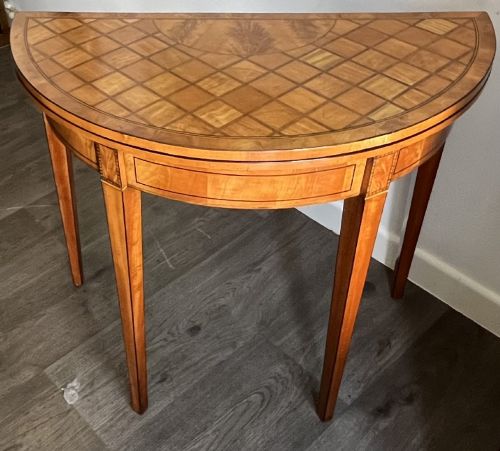
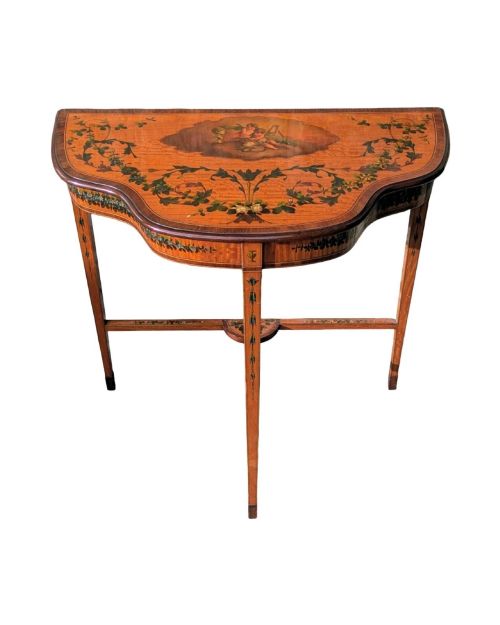
Cabinetmakers constructed these semicircular frames primarily in solid and figured mahogany, cherrywood, or walnut, frequently embellishing the frieze and legs with satinwood, boxwood inlay, and marquetry. Timber selection dictated how light played across the curved top.
The curved apron requires precise steam-bending or segmented rail construction to maintain structural integrity over the sweeping radius. Tapered legs or fluted supports carry the weight, balanced against the folding leaf action of the table top.
Georgian Demi-lune Table Retail Price Guide 2026
Typical asking prices for georgian demi-lune table among the pieces listed under this phrase on Sellingantiques today, from the lower quarter to the upper quarter. They describe what is for sale here now, not the wider market.
Card-playing ancestors required secret swing legs and hidden compartments just to keep their winnings safe from slipping.
Distinctions in Craftsmanship and Detail
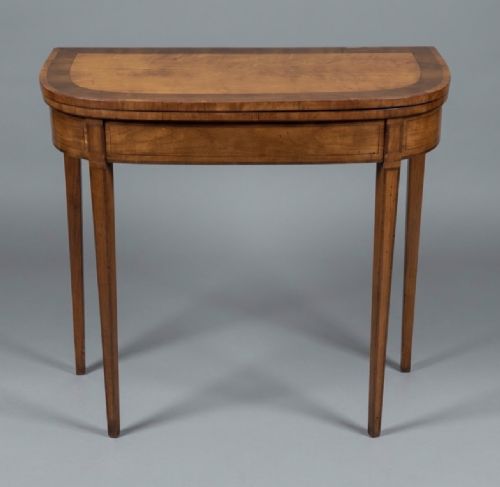
Finer pieces display highly figured timber veneers matched symmetrically across the semicircular top, paired with crisp boxwood stringing and hand-cut marquetry panels. Lower tiers rely on plain boards and minimal surface decoration.
The precision of the hinge mechanism and the alignment of the fold-over leaf determine structural success. Superior examples maintain a seamless fit between fixed and pivoting leaves when closed.
The Georgian Demi-lune Table Glossary
- Demi-lune
- French for half-moon, describing the semicircular plan of the tabletop and matching frame. This profile sits flush against a wall.
- Card table
- A folding table specifically built for evening card games, lined with baize or felt on the interior playing surface. Many include corner wells for coins or candlesticks.
- Crossbanding
- A strip of veneer applied to the border of a tabletop with the grain running perpendicular to the central panel. This technique creates a distinct visual frame.
Georgian Demi-lune Table: Frequently Asked Questions
Where should I place a demi-lune table?
These half-circle tables fit naturally in narrow hallways, entryways, or against living room walls where rectangular furniture protrudes too far into the floor space.
They also function effectively as pier tables positioned beneath a mirror.
How do the folding card tables work?
The hinged top swivels or folds open to double the surface area, supported by a swing leg that pulls out from the frame to bear the weight.
Closed, the table appears as a slim half-circle console against the wall.
What woods are most common?
Mahogany dominates the selection, appearing in both solid form and figured veneer, often accented with boxwood, satinwood, or fruitwood inlay.
Walnut, cherrywood, and painted finishes also occur across different periods.
How do I distinguish George III from later styles?
Authentic period pieces show eighteenth-century joinery methods, timber shrinkage, and hand-cut veneers rather than machine precision.
Revival pieces from later centuries emulate these proportions but utilise nineteenth or twentieth-century construction signatures.