
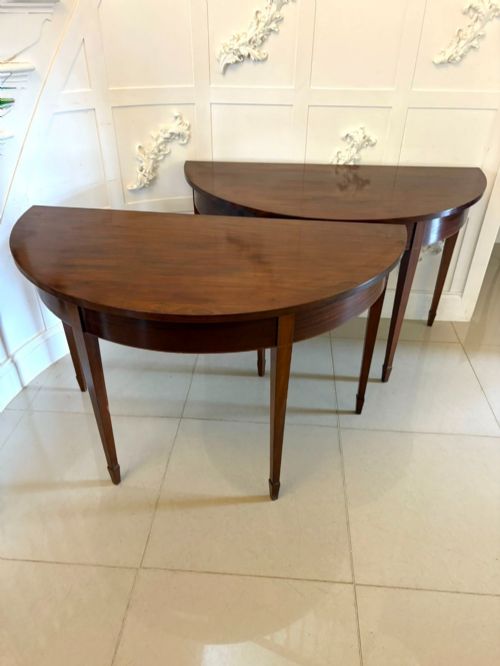
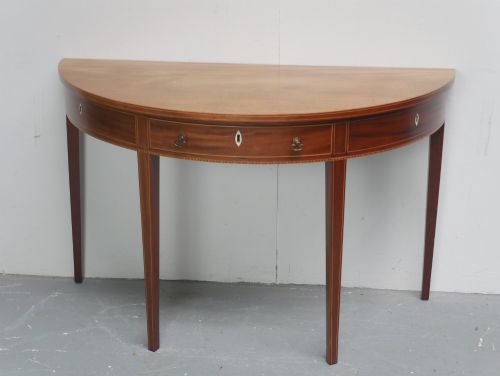
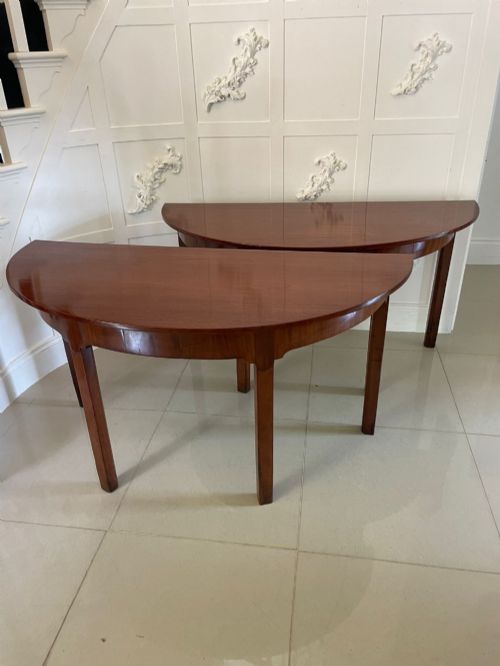
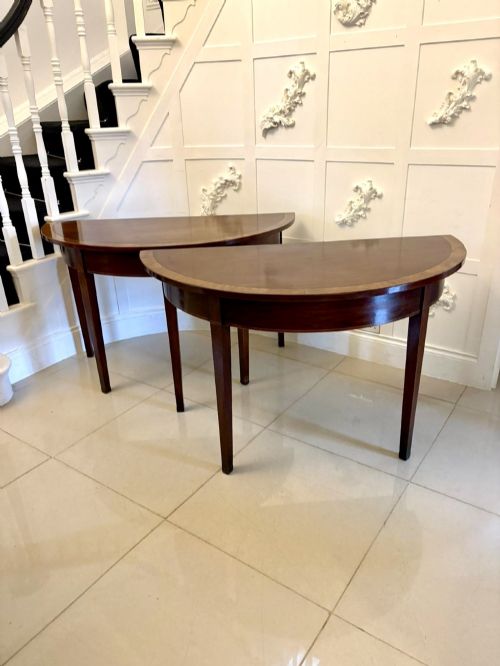

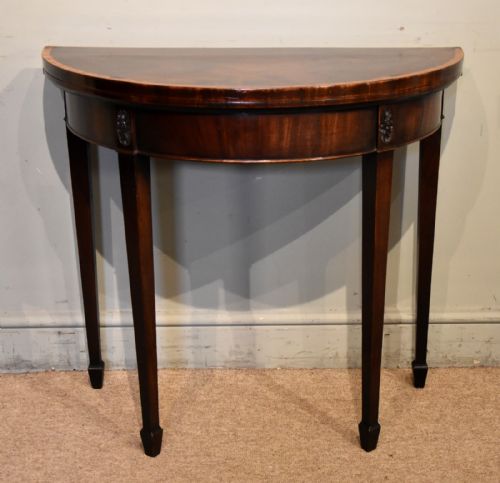
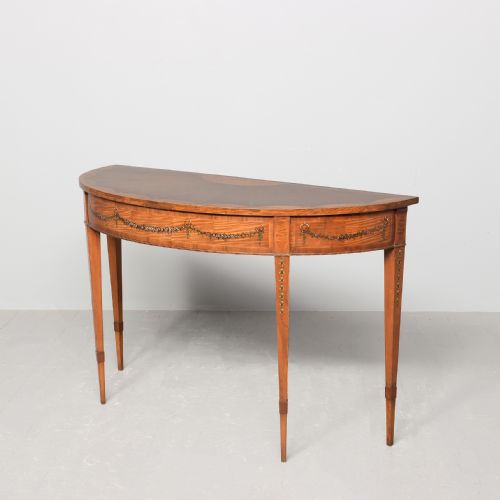
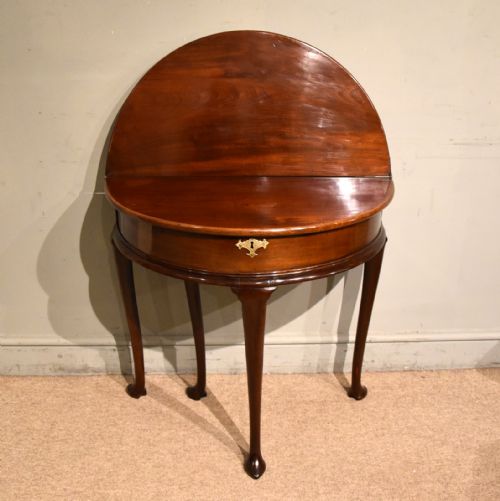


George III Demi Lune
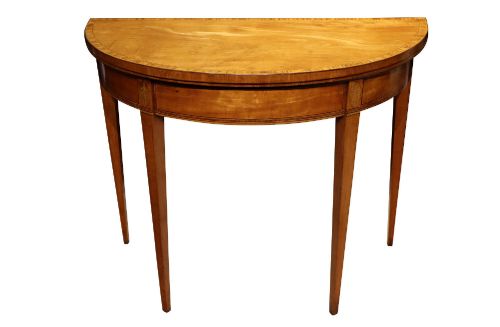
When you examine a george iii demi lune, you meet a semi-circular form designed to sit flat against a wall, bringing elegance to period interiors.
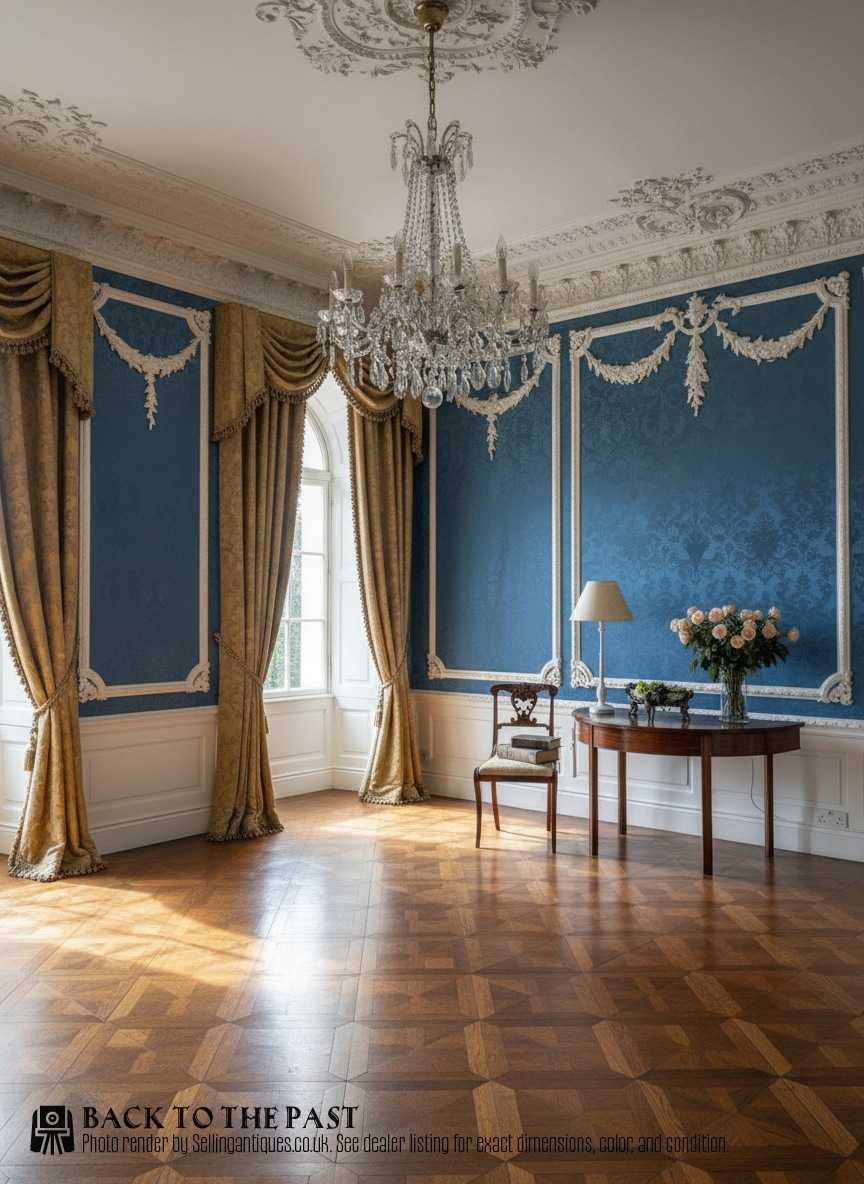
George III Demi Lune
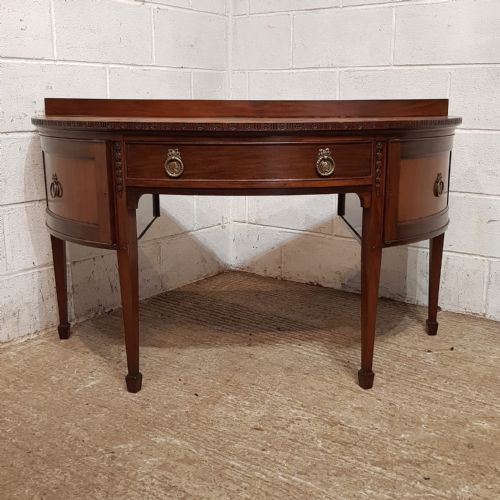
A george iii demi lune takes the shape of a half-circle, functioning primarily as a console table, card table, tea table, or commode against a drawing room wall. The selection centres heavily on eighteenth-century and Georgian pieces, alongside occasional later revivals from the nineteenth and twentieth centuries.
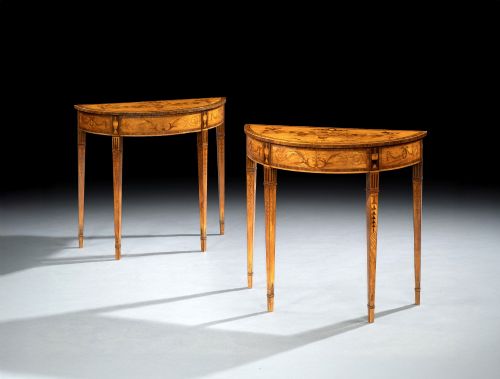
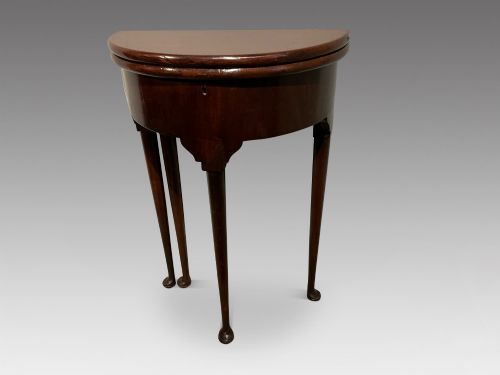
Makers of the period adapted the flat-backed, curved-front format to serve multiple domestic roles, frequently producing hinged tops that unfold to reveal baize-lined gaming surfaces. Pairs of these half-round tables appear with notable frequency, designed to combine into a full circular dining table when pulled together.
The profile accommodates tight spaces while offering a generous surface display area, making the form a staple of neoclassical interior design. Mahogany dominates the surviving record, supported by decorative variations in satinwood, burr elm, and painted finishes.
Materials and Construction
Cabinetmakers relied on solid and figured mahogany as the primary structural timber, often selecting highly grained veneers for top surfaces. Crossbanding in satinwood and boxwood frames the curved edges, creating sharp visual contrast.
Inlaid decoration forms a defining characteristic of the style, utilising boxwood, kingwood, and marquetry motifs in neoclassical patterns. Specialised workshops also applied hand-painted ornamentation directly onto satinwood or softwood grounds.
Internal framing of drawers and folding leaves involved secondary softwoods, joined with traditional mortise and tenon techniques. Giltwood and composition elements occasionally accent high-status side tables and commodes.
Listings feature mahogany, satinwood, and painted finishes applied to versatile table and commode forms spanning the eighteenth to twentieth centuries.
Assessing Quality
The grade of a george iii demi lune rests largely on the choice and movement of the timber figure across the main top. Exceptional examples display book-matched mahogany or intricate satinwood marquetry that aligns precisely across the curved joints.
Construction refinement dictates structural longevity, visible in the tightness of the stringing inlay and the crispness of carved or painted details. Finer pieces maintain original brass hardware and smooth-turning gateleg actions for their folding tops.
The George III Demi Lune Glossary
- Demi-lune
- French for half-moon, describing any furniture piece with a flat back and a curved, semi-circular front. This geometry defined numerous side tables and commodes of the neoclassical era.
- Crossbanding
- A narrow strip of veneer laid along the border of a table top or drawer front with the grain running perpendicular to the main panel. It provides a neat, contrasting frame.
- Marquetry
- Elaborate patterns formed by fitting together different coloured veneers of wood, ivory, or metal onto a structural ground. It appears frequently on neoclassical satinwood furniture.
- Commode
- A decorative low chest of drawers or cabinet designed for formal reception rooms. Eighteenth-century versions often feature curved serpentine or half-round fronts.
- Card table
- A small folding table designed for playing games, featuring a hinged top that opens to double the surface area. The interior surface is traditionally lined with green baize or felt.
George III Demi Lune: Frequently Asked Questions
How were demi lune tables used?
These pieces functioned primarily as decorative side tables or pier tables placed against walls in formal reception rooms. Many incorporated folding tops to serve guests during card games or tea service.
Pairs of tables offered dual utility, standing separately against a wall or pushed together into a full circle for dining and assembly.
How do I tell a Georgian piece from a later revival?
Eighteenth-century examples display authentic hand-cut joinery, period timber shrinkage, and organic patination accumulated over generations of use. Secondary woods like oak or pine inside drawer linings help confirm the eighteenth-century origin.
Later nineteenth-century and Edwardian revivals often show mechanical uniformity in their construction marks and lack the distinctive surface depth found in period timber.
Can I use a card table for daily dining?
Folding card tables feature light gateleg frames intended for games and tea rather than heavy weight. Daily use for dining can strain the delicate hinges and pivoting rear legs.
It is better to utilise these tables for display or occasional entertaining to preserve their antique structural integrity.
What is satinwood inlay?
Satinwood is a dense, lustrous exotic timber with a golden yellow sheen used extensively for fine neoclassical veneers. Inlay involves cutting contrasting woods like boxwood or ebony into recessed channels to form geometric borders.
This technique brightened furniture surfaces and created crisp architectural lines popular during the late eighteenth century.