
Georgian Entry Table
A georgian entry table brings classic proportion and warm timber to a hallway, offering a surface for letters and lamps as it did centuries ago.
Georgian Entry Table
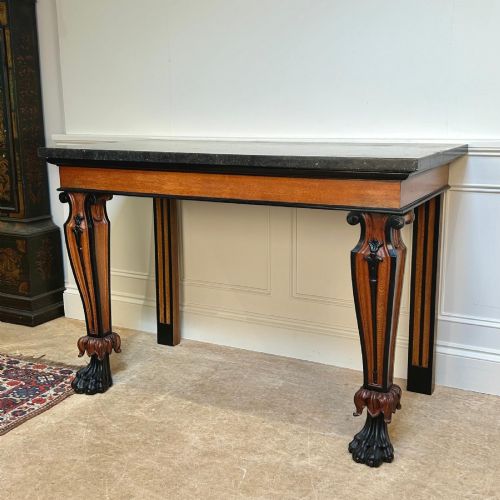
A georgian entry table encompasses several forms designed for hallways, corridors and reception spaces, most frequently appearing as console tables, side tables and demi-lune shapes. These pieces trace their origins to the eighteenth and nineteenth centuries, spanning the Georgian, Regency and William IV periods, alongside later revivals from the twentieth century.
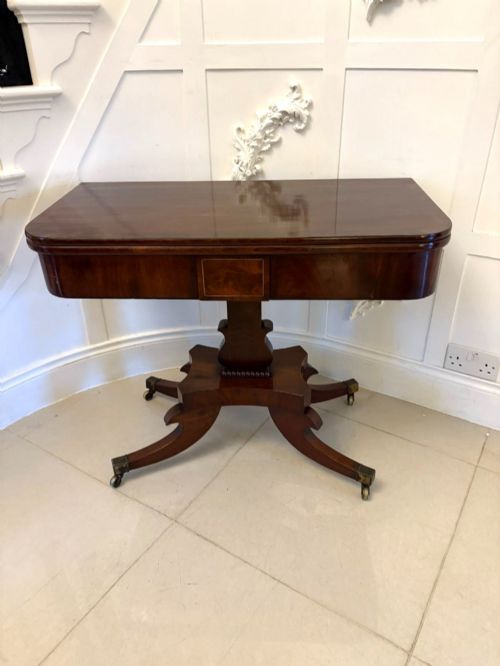
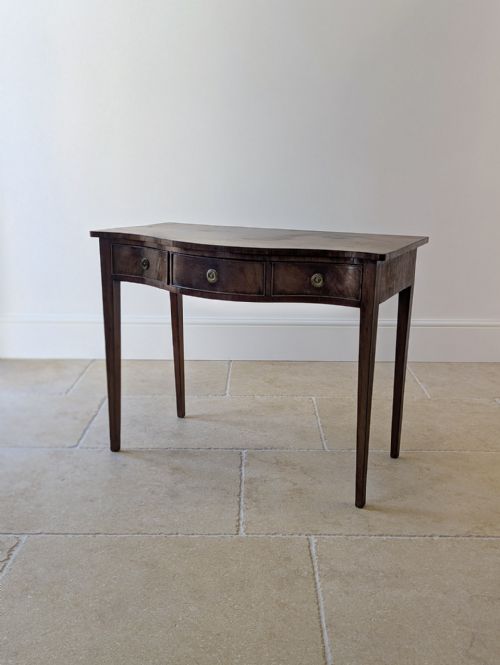
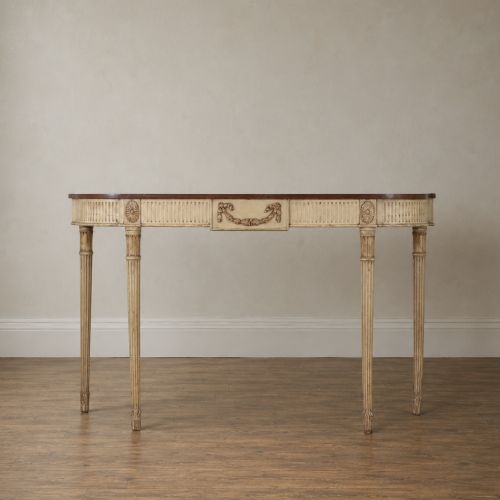
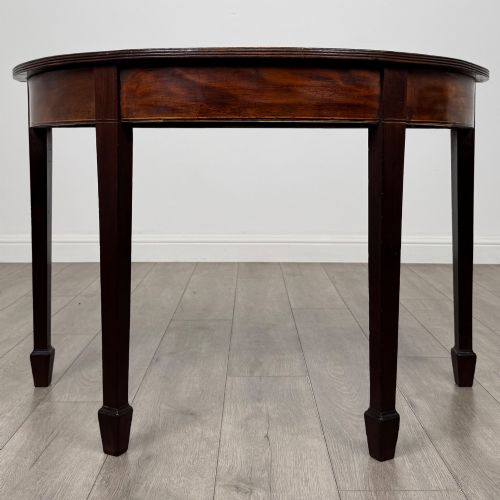
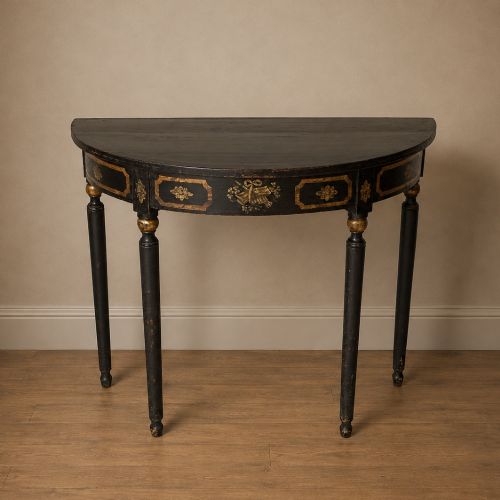
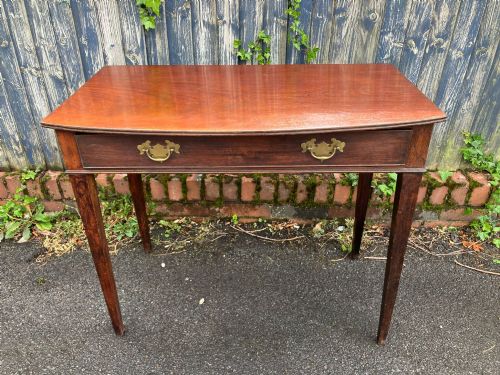
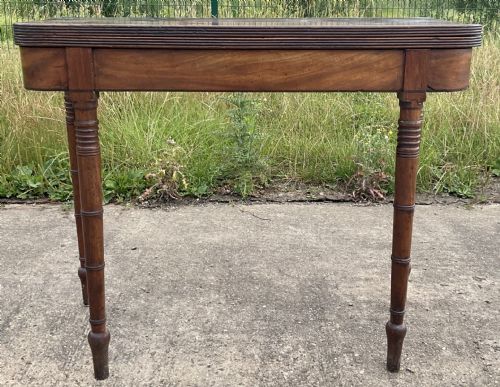
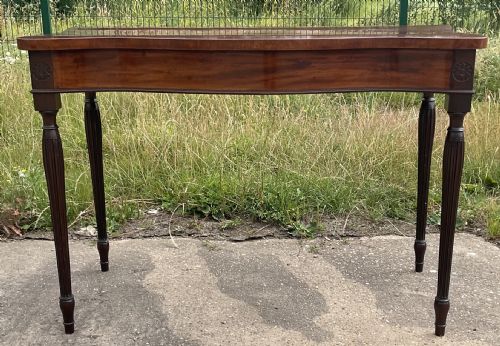
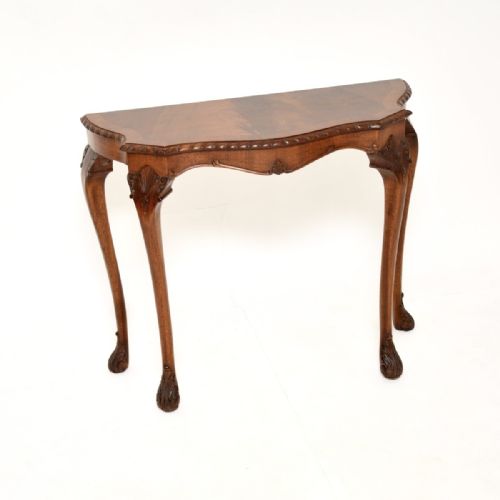
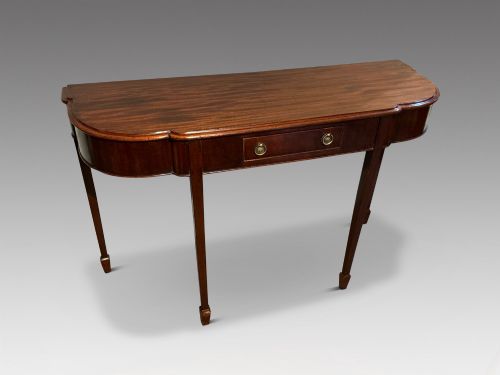
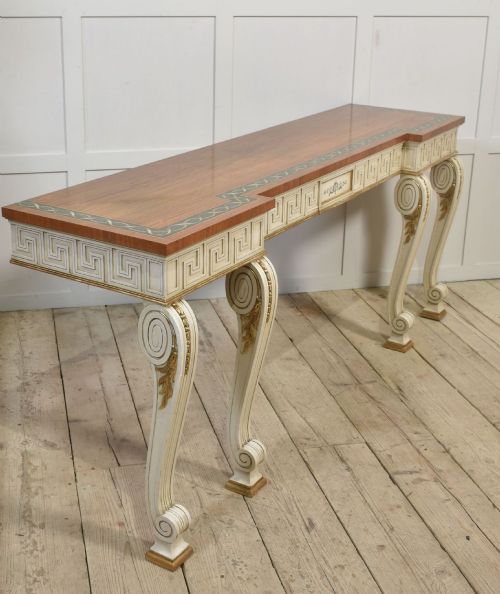
The primary examples met on this page include mahogany serpentine front tables, foldover tea tables, painted demi-lune pieces and oak serving tables. Makers often shaped these tables to sit flush against a wall, utilising semicircular designs or breakfront profiles to maximise floor space in narrow passageways.
Period variations range from authentic George III timbers to later Georgian style and Queen Anne revival interpretations. Buyers find both compact hall tables intended for smaller vestibules and large pair console tables built for country house proportions.
Materials and Technique
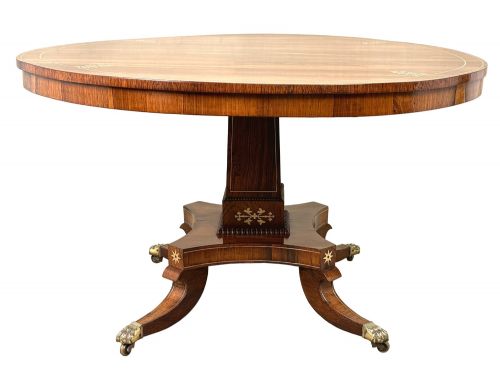
Cabinet makers relied heavily on figured mahogany, burr walnut and oak to construct the frames and tabletops of these tables. Timbers were selected for their rich grain patterns, often enhanced with satinwood inlay, brass stringing or parcel gilt highlights upon painted wood surfaces.
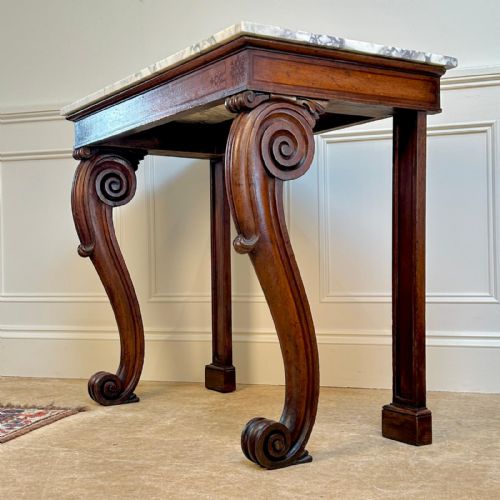
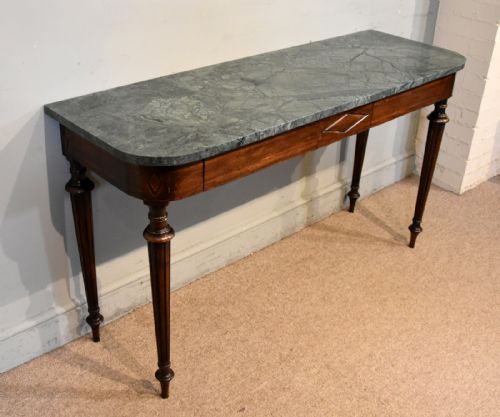
Construction techniques visible across the listings include foldover mechanisms for card and tea tables, carved aprons, and fitted drawers with brass hardware. Surfaces occasionally incorporate inset marble slabs, particularly on Regency and later console designs where stone tops added weight and durability.
Georgian Entry Table Retail Price Guide 2026
Typical asking prices for georgian entry table among the pieces listed under this phrase on Sellingantiques today, from the lower quarter to the upper quarter. They describe what is for sale here now, not the wider market.
Periods represented range from eighteenth-century George III pieces through Regency and Victorian eras to twentieth-century revivals.
Assessing Quality
Quality in a georgian entry table rests primarily on timber selection and the precision of the cabinet work. Pieces featuring highly figured mahogany, burr walnut or substantial oak display greater depth of character than plain secondary woods.
Construction integrity separates standard production from superior workshops. Crisp hand-carving, well-fitted joinery and intact brass inlays or gilt details indicate higher craftsmanship, whereas simpler later revivals rely on painted finishes and straightforward geometry.
Maple and Co.
The Georgian Entry Table Glossary
- Console table
- A table designed to be fixed against a wall, frequently supported by legs at the front and brackets at the back. These pieces often feature decorative aprons suited to prominent hallway positions.
- Demi-lune
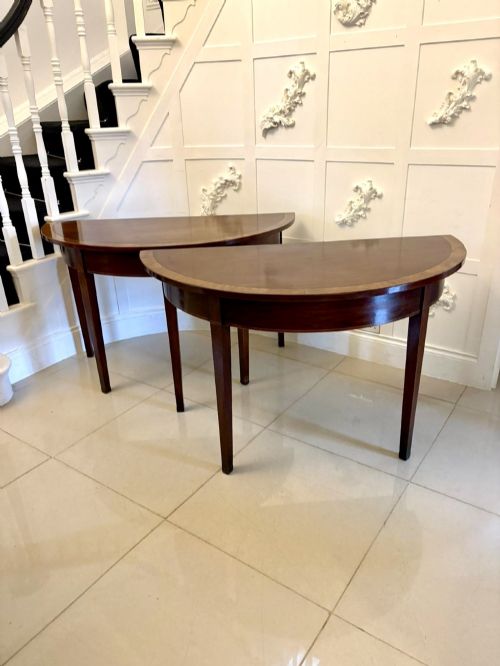
- A half-moon shape used for tabletops and console designs. This profile allows the table to sit flat against a wall while projecting minimally into a corridor.
- Serpentine front
- A furniture front characterised by a central convex curve flanked by two concave curves. This flowing line requires skilled woodworking to shape timber accurately.
- Breakfront
- A cabinet or table front where the central section projects forward from the flanking wings. It adds architectural presence and visual weight to larger pieces.
Georgian Entry Table: Frequently Asked Questions
What is a georgian entry table used for?
These tables provide a functional surface in hallways and entryways for holding everyday items such as correspondence, keys and decorative lighting. Historically, larger examples served as serving tables or console tables during formal gatherings.
Today, their compact depths make them practical for narrow corridors where full-sized furniture would obstruct movement. They combine useful surface area with decorative presence right inside the front door.
How do I identify a genuine period piece?
Look closely at the construction methods, timber ageing and secondary woods used on the underside and drawer linings. Eighteenth and early nineteenth-century pieces exhibit hand-cut joints and timber movement appropriate to their age.
Revival pieces from the twentieth century often utilise cleaner internal machinery and more uniform timber stocks. Comparing the style indicators, such as George III or Regency motifs, helps confirm the era of manufacture.
Will a demi-lune table fit a small hallway?
Demi-lune tables are specifically shaped with a flat back to sit snugly against a wall. Their semicircular front projects less into the room than a rectangular table of equivalent width.
This makes them an ideal choice for narrow entryways and tight landings where floor space is limited. Measuring the clearance between the wall and any opposing doors ensures adequate walking room.
How do I care for antique mahogany and walnut?
Protect timber surfaces from direct sunlight and excessive heat fluctuations to prevent the natural wood from drying out or splitting. Dust regularly with a soft, dry cloth and avoid silicone-based polishes that build up over time.
Applying a traditional beeswax occasionally nourishes the grain and maintains the subtle lustre of the polished surface. Marble tops require simple wiping with a damp cloth to prevent staining from moisture.