

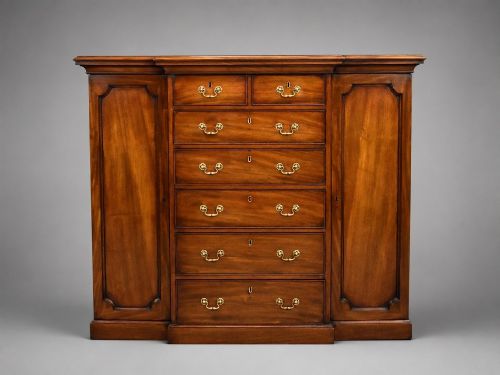
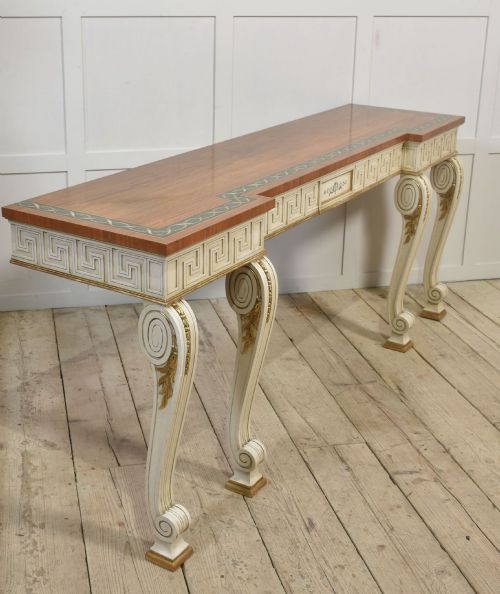


Antique Breakfront Table
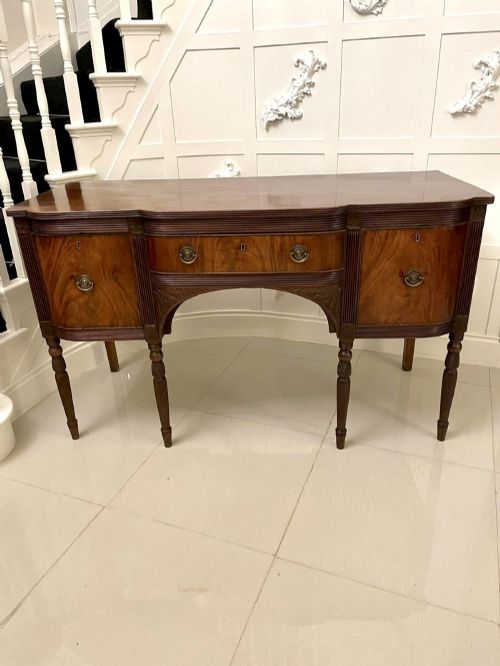
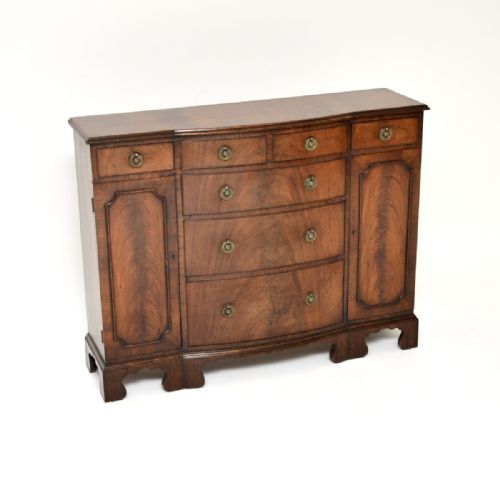
An antique breakfront table brings architectural rhythm and rich timber grain to a room, offering a projecting central section that commands attention.
Antique Breakfront Table
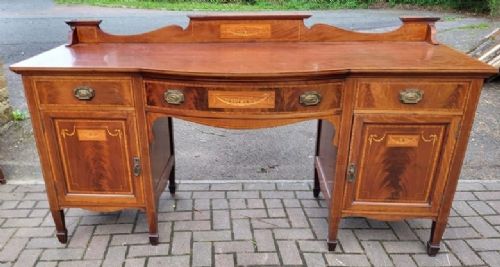
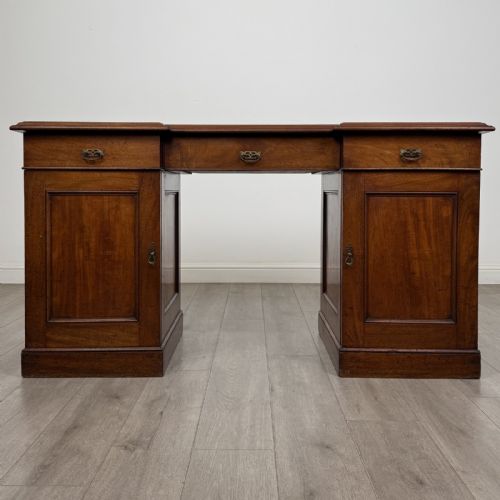
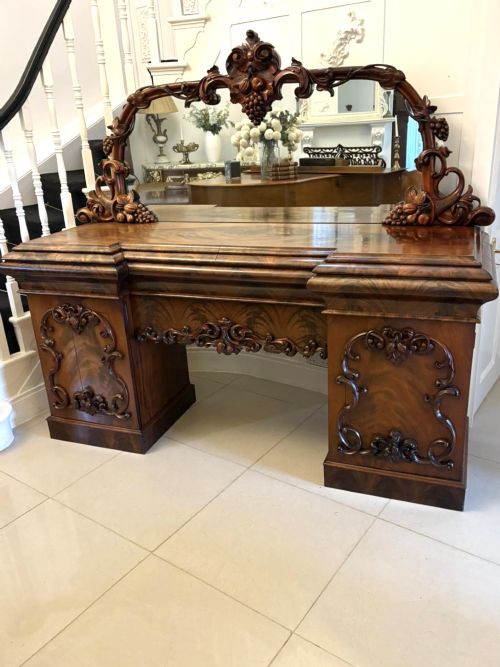
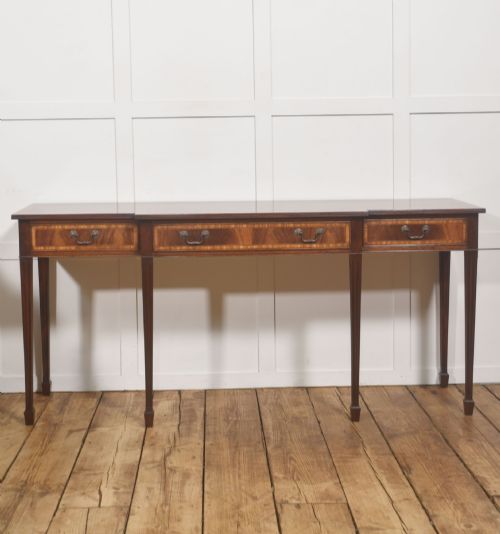
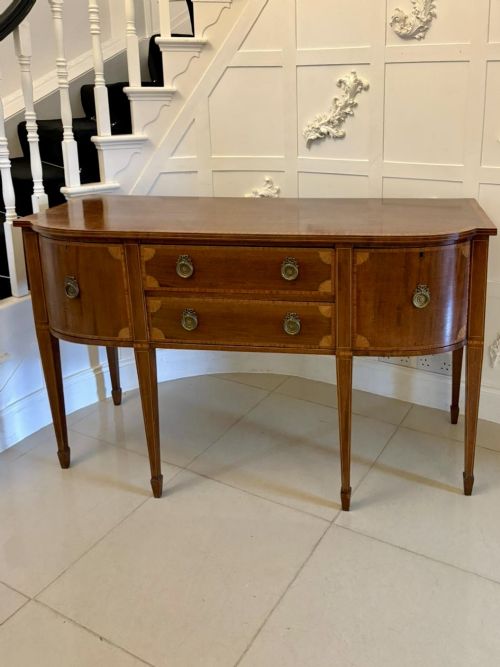
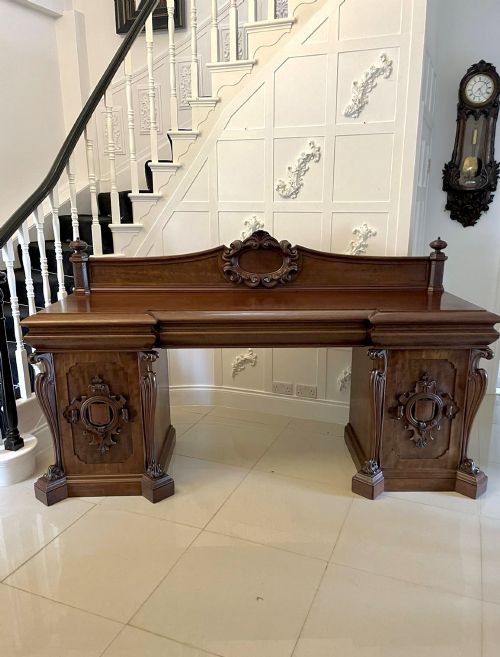
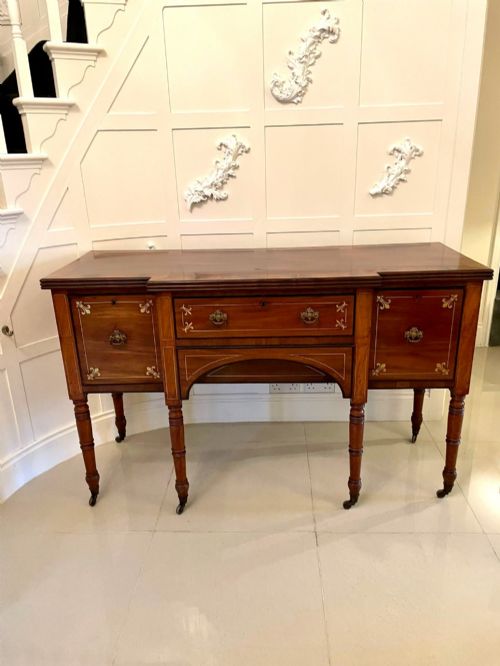
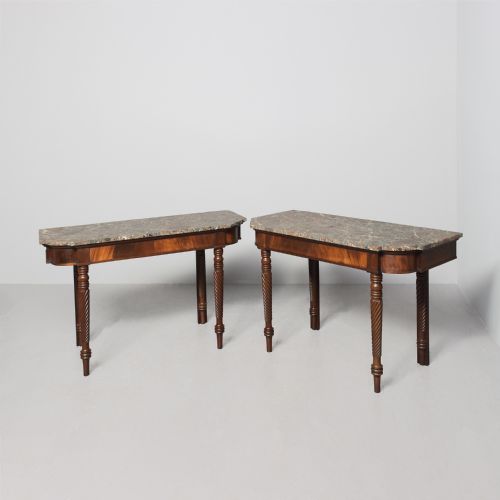
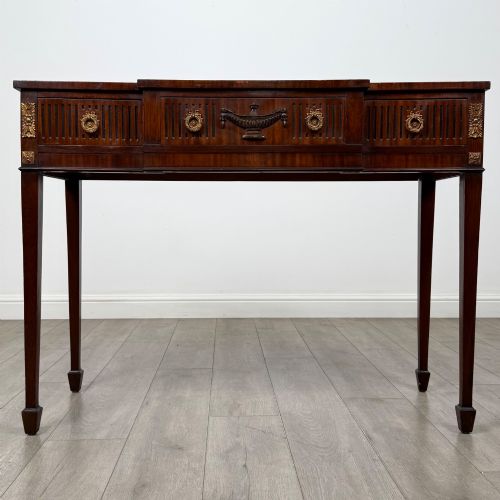
When you search for an antique breakfront table, you encounter forms that span sideboards, console tables, serving tables, and pedestals with a characteristic stepped-forward central section. These pieces appear across periods from the eighteenth century through the Victorian and Edwardian eras, reflecting changing domestic requirements for storage and display.
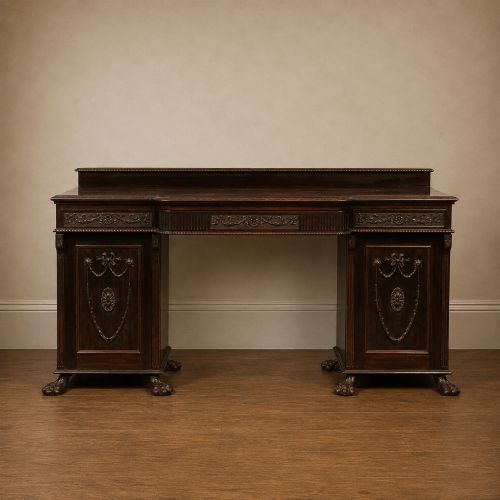
Makers such as Gillow and Co. utilised this geometry for large library desks and sideboards, integrating brass galleries or inlaid details. Whether expressed as a marble-topped hall table or a pedestal desk, the breakfront format provides functional depth and visual balance.
Materials and construction methods
Cabinet makers constructed these pieces using solid timbers like mahogany, walnut, and padauk, frequently applying flame mahogany veneer or burr walnut to create dramatic surface patterns. Secondary woods provided structural stability behind the decorative facades, while brass inlay, brass galleries, and marble tops added refined contrast.
Joinery techniques relied on traditional housing, dovetailing, and framing to support the stepped-forward central section without warping. Surface finishing involved hand-applied polish that accentuated the natural figure of the wood without obscuring the grain.
Antique Breakfront Table Retail Price Guide 2026
Typical asking prices for breakfront table among the pieces listed under this phrase on Sellingantiques today, from the lower quarter to the upper quarter. They describe what is for sale here now, not the wider market.
Marble tops and brass inlay appear frequently on side tables originating from the nineteenth century.
Markers of quality and craftsmanship
The distinction between standard pieces and the finest examples rests on the selection of timber veneers and the crispness of carved details like paw feet or mouldings. Uniformity in the flame figure across the projecting breaks indicates careful selection by the cabinet maker.
Integration of secondary materials such as finely cast brass inlay, intact marble tops, and original hardware elevates a piece's standing. Structural integrity in the drawers and carcass ensures the breakfront maintains its geometry over centuries of use.
Gillow and Co.·Lamb of Manchester
The Antique Breakfront Table Glossary
- Breakfront
- A piece of furniture whose front surface projects forward in the centre section. This architectural device creates shadow and depth.
- Flame Mahogany
- Timber veneer cut to reveal a distinctive undulating grain resembling flames. It is prized for its decorative impact on cabinet doors and drawer fronts.
- Pedestal Desk
- A flat-topped writing table supported by two pedestals containing drawers. The breakfront variation places the central kneehole slightly recessed.
- Console Table
- A table designed to stand against a wall, often secured with brackets. Early examples frequently feature marble tops and painted or carved frames.
- Chiffonier
- A low cabinet or sideboard developed in the Regency period. It often incorporates enclosed shelving and a raised superstructure.
Antique Breakfront Table: Frequently Asked Questions
How do I date an antique breakfront table?
Dating relies on identifying timber choices, construction techniques, and stylistic markers associated with periods like George III, Regency, or Victorian.
Secondary woods and hardware styles also provide reliable clues to the decade of manufacture.
Where should I place a console table?
These tables suit hallways, living rooms, or dining spaces where wall placement allows the projecting central section to be appreciated.
Marble-topped versions work well in entrance halls for durability and visual weight.
How do I care for mahogany furniture?
Maintain mahogany surfaces by keeping them away from direct sunlight and extreme temperature fluctuations that can dry out the timber.
Regular dusting with a soft cloth preserves the hand-polished finish.